
The phrase describes an output, not a method, and that is the first thing to settle before comparing anything. A buyer who wants a three-dimensional model of a foot types “3d scanner for foot” into a search engine, and the market answers with whatever it happens to sell, dressed in the vocabulary the buyer supplied. Two listings can share a headline and share almost nothing underneath it.
The result is a shortlist that mixes categories. One machine builds a surface model from cameras arranged around a foot. One records where the sole presses when a client stands or walks. One watches the alignment of the lower limb while the client moves. Each of them can put a rotating foot on a screen, which is exactly why the confusion survives a whole purchasing cycle.
We build plantar pressure measurement systems: a pressure-sensing layer, camera posture capture and analysis software. That makes us one of the categories rather than all of them. This article is written so that a buyer can eliminate us quickly if the category is wrong, which is a better outcome for both sides than discovering it after the machine has cleared customs.
Why one search term returns three different machines
Search vocabulary lags behind product vocabulary, always. Buyers describe the thing they want to see; suppliers describe the thing they have. When the visible output of a system is a rotating foot on a screen, every supplier in that room will call the output three-dimensional, because that is what the customer is looking for and because nothing in the naming conventions prevents it.
The practical consequence is that a headline carries almost no information about the measurement inside. A surface digitizer, a pressure platform and a posture station can all produce a foot on a screen, and the screen is the least interesting part of each of them. What separates the three is the sensor that produced the data and the question that sensor can answer.
There is a second consequence, less obvious and considerably more expensive. Because the listings use the same words, buyers compare specifications across categories as though the numbers were commensurate. They are not. A figure describing how finely a surface is subdivided cannot be set beside a figure describing how often a pressure reading is refreshed, and neither of them tells you whether the system will survive your appointment book.
A buyer who understands this stops reading the headline and starts reading the method. The question becomes: what does this device physically sense, and what does it do with what it senses? Everything else, including the rendering, the interface and the trade-show display, follows from that answer rather than leading it.
It also helps to know that many suppliers carry more than one category under one brand, and some bundle two sensors into one cabinet. That is legitimate engineering, and often good value. The problem is not the bundle. The problem is the buyer who believes a bundle has removed the need to choose, when a bundle still has a primary sensor and the primary sensor still sets the shape of the consultation.
The three families behind the label
The first family captures surface geometry. Cameras, structured light or a line projected across the foot reconstruct the skin: length, width, the height of the arch, the shape of the heel, the volume of the forefoot. The output is a shape, and a shape is genuinely useful when the next step in your process is a shell, a last or a digital file that somebody else will manufacture from.
What this family cannot do is tell you how that shape behaves under body weight. A foot held in the air and a foot carrying a person are different objects in the parts that matter most, because the arch is a structure that responds to load. A surface model taken off weight is a starting geometry, not a statement about support.
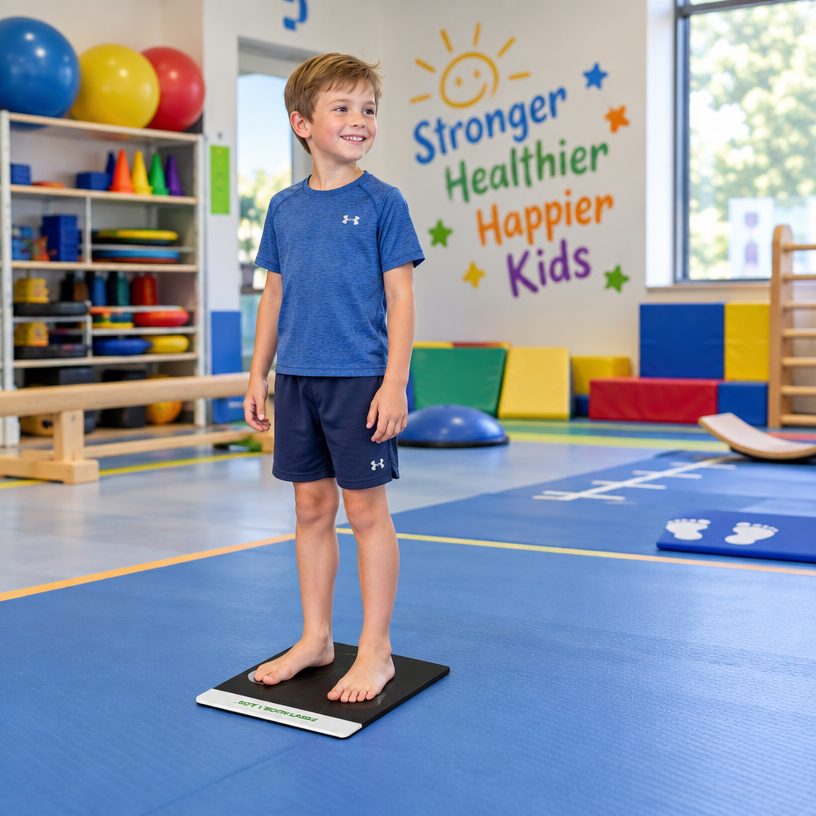
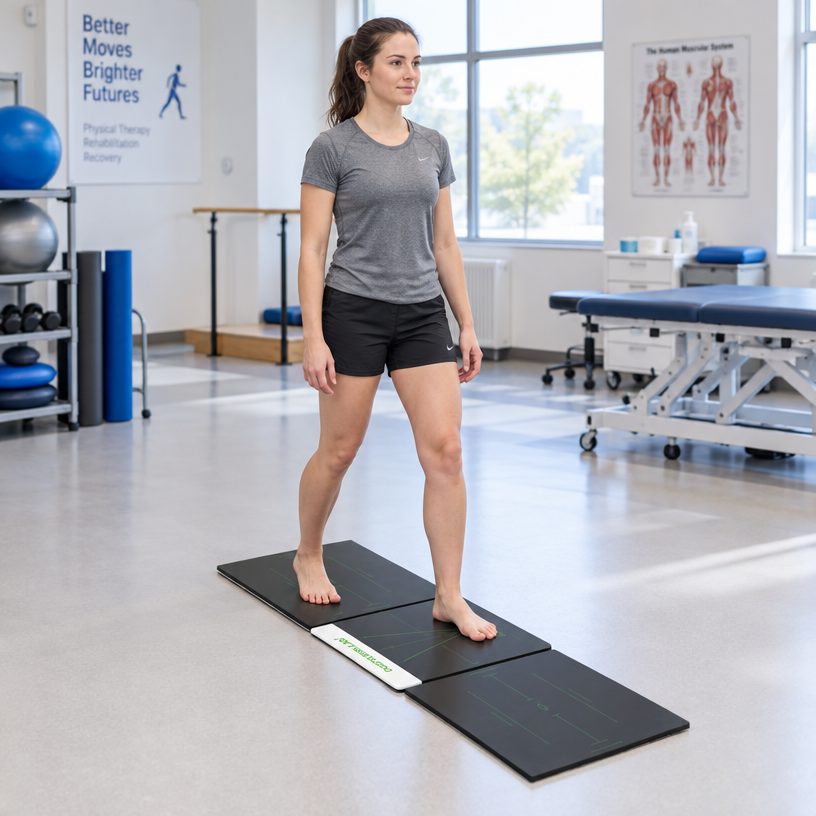
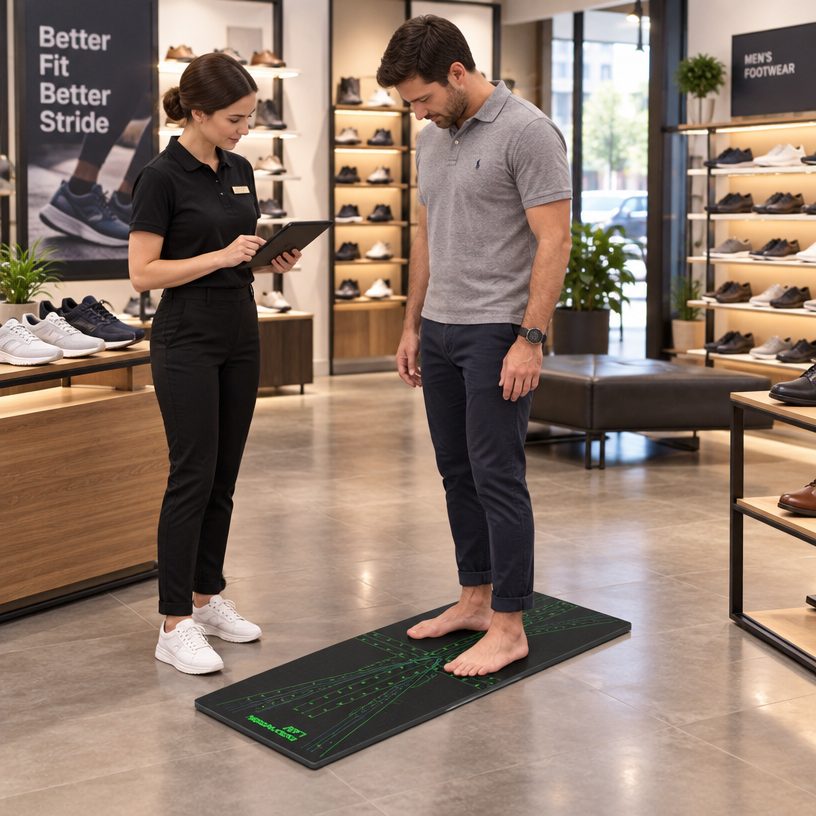
The second family senses pressure. A plate or a mat measures where the sole presses and how hard, and the software turns that into a map with peak locations, regional loading and a left-right comparison. Ask the client to walk across the same surface and the layer also reports timing: how long the foot spends on each region, where the load travels, how the two sides differ in sequence rather than only in total.
The third family watches alignment. A camera records the client standing or walking and reports how the foot sits relative to the lower limb, the lower limb and the trunk. It does not measure pressure and it does not reconstruct a surface. It records posture, which is the context that makes the other two readings interpretable instead of merely interesting.
Every one of those families gets called a foot scanner, and each of them can render a foot in three dimensions if the software is written to present it that way. The rendering is a presentation layer. The measurement is the product. A buyer who keeps that sentence in view will read the rest of the market as it is, including the parts of it that are trying not to be read.
What the specification line is really telling you
Specification lines are written to be compared, which means they are written to be won. A number without a stated unit, a stated position and a stated test condition is decoration. The first thing to establish about any figure in a listing is which physical quantity it refers to; the second is where in the field that figure was obtained.
Three properties get conflated constantly: resolution, accuracy and repeatability. Resolution is the smallest step the system can report. Accuracy is how close a reading sits to a reference. Repeatability is whether the same input produces the same output twice. For assessment work the third matters most, because a system that reports a slightly offset number consistently is far more useful than one that reports a finely subdivided number that wanders between sessions.
So ask how repeatability was established. A demonstration in which the same client is measured twice, with the two maps laid side by side, answers the question in a way no brochure can. If the two maps differ in the regions you care about, then the figure on the specification line is not describing your use case, whatever it says.
Refresh rate is the next trap. A high rate is meaningful for walking and irrelevant for standing. A buyer planning dynamic assessment should ask what the software does with the samples, not only how many it takes. A buyer planning standing assessment should ignore the figure altogether and spend the attention on the report instead, because that is where the value of a static capture is realised or lost.
Software deserves the same scrutiny and rarely receives it. Ask what file leaves the system, whether the raw data is retained, whether a report can be edited before it reaches a client, and whether the archive can be opened without the vendor’s help. Ten years of records that require a licence to read is not an archive. It is a hostage, and the ransom is whatever the renewal costs at the time.
One more line item is worth reading closely: the sensor area. A platform sized for a standing adult and a mat sized for a walking stride are different products with different room requirements, and a listing that quotes only one dimension is usually quoting the flattering one. Bring a tape measure to the demonstration. It sounds absurd until the machine arrives and does not fit the space you had planned.
Shape or load: the distinction that decides the purchase
The purchase usually follows the deliverable. If your process ends with a physical object made to a shape, geometry is the input you need and a surface capture family is the natural fit. If your process ends with a recommendation about support and load distribution, geometry is context and load is the evidence. Most buyers know which of those they do. They simply have not translated it into a filter.
This is where people get talked into the wrong category, and usually without any dishonesty on the supplier’s side. A supplier selling surface capture shows a clean model and a shell cut from it, which is compelling and true. A supplier selling pressure shows a map with a region of high reading under the forefoot, which is also compelling and also true. Each demonstration answers the question its own sensor can answer, and neither answers the other one.
The buyer’s job is to know which question the appointment actually asks. In a screening setting where the output is a conversation, the load map does more work, because it shows a client something they can recognise as their own experience of standing. In a manufacturing setting where the output is a pair of insoles built to a shell, the surface model does more work, because it defines the object that will be milled or moulded.
Many practices need both, and the honest way to buy both is in sequence. Start with the sensor that serves the current appointment, learn what the data changes in your decisions, and let that experience specify the second purchase. Buying two at once is how a clinic ends up with a cabinet used once a month and a routine that never absorbs it. The second machine is not the problem; the unbought learning is.
One test cuts through the whole discussion. Take three recent clients whose cases you found difficult, and write down what you would have needed to know about each of them. If the answer is a shape, you are buying geometry. If the answer is where the load sits and how it moves, you are buying pressure. If the answer is why the foot behaves as it does inside that person’s stance, you are buying context, and context is the camera. Most buyers find that two of the three answers point the same way, which is the shortlist.
Testing a demonstration against your own appointment
Demos are staged. The floor is level, the light is good, the operator has done the sequence a thousand times and the client is a colleague who stands still on request. Your Tuesday afternoon is not that. The useful test is to run the system with someone who has never seen it, time the whole sequence from first click to finished output, and watch where that person hesitates. Hesitation is the honest specification.
Ask for the ordinary output rather than the presentation output. Every system has a view built for exhibitions and a view built for daily work, and your staff will live in the second one. If a supplier cannot show the working view, read that as information about how the product is used in the field rather than as a gap in the demo script.
Ask what the system cannot do. A supplier who can draw the boundary clearly usually understands the product in a way that survives contact with a difficult case; a supplier who claims the device covers every assessment need is describing a sales process rather than a machine. The boundary question also protects you later, on the day a client asks for something the instrument was never built to give.
Then walk the room with the tape measure still in your hand. A system needs somewhere to stand, a surface that stays level, power where nobody trips over it, and a screen the client can see without leaning across the practitioner. Those four constraints eliminate more shortlisted machines than any specification sheet does, and they are much cheaper to check before the order than after delivery, when the only remaining option is to rearrange the building.
Finally, ask to see the second session rather than the first. A demonstration shows a capture on a client with no history. Your real work is a client you have seen before, where the question is what changed. If the software cannot lay two sessions side by side in a form you would show to the client, then the system is a camera rather than a record, and it will be used less than you expect once the novelty has gone.
Commercial terms that decide year four
The invoice tells you what the machine costs. The terms tell you what owning it costs. Start with who is actually making it. A trading company can sell a good machine and still be unable to answer a question about its firmware, because the answer lives in a factory it does not own. We are the factory, with research and production in house since 2014 and our own plant since 2018, which is the reason an engineer can be put in front of a customer instead of a sales desk.
Ask about the test routine before dispatch. Ours runs seven days on every machine. That is a slow way to run a production line and the only way we have found to catch the faults that appear after a few thermal cycles rather than on the bench. Then ask what the warranty covers and for how long. Ours is twelve months on non-human damage with free replacement parts, which is a statement about parts rather than about luck.
Ask how support works at eight in the morning in your time zone, when a client is already in the room. Ours is a dedicated WhatsApp group per customer, direct access to the engineers, remote assistance where the site permits it, and over-the-air updates for connected units. None of that is unusual to promise. The question is whether the promise has a name attached to it and whether that person answers on a Sunday.
Ask about minimum order and lead time in the same conversation, because they interact. Machine orders start at one unit, and we accept ODM on equipment with OEM negotiable separately. Machine capacity runs three to five units a day, so a single unit and a small fleet are both realistic orders. Insole samples leave us within three days and insole capacity runs roughly five hundred to a thousand pairs a day. Transit by express takes six to seven working days, by air ten to twelve, by sea thirty to thirty-five.
The last term is the one nobody asks about: what happens when the person who runs the machine leaves. Training held in one employee’s head is a risk that surfaces two years in, on the day that employee resigns. Ask whether a new operator can be trained remotely, whether the software has a guided mode that a receptionist can follow, and whether the report template can be adjusted by your own staff rather than through a service ticket. Those three answers predict year four better than any feature list predicts year one.
Frequently asked questions
Is a 3d scanner for foot the same thing as a pressure plate?
No. The phrase is a search habit rather than a technical category. It is used for machines that reconstruct surface shape, for machines that measure pressure under the sole, and for camera systems that record posture. Read what the sensor actually captures before comparing any figure in the listing.
Can I buy a single unit first and add more later?
Yes. Machine orders start at one unit and we accept ODM on equipment, with OEM negotiable separately. If a multi-room build-out is planned, say so at the first order so the software setup stays consistent across units.
Do we need a camera if we already measure pressure?
Not always, but the camera answers a different question. Pressure tells you where the load sits. Camera posture capture tells you how the lower limb and trunk are arranged above it, which is the context that makes a reading interpretable rather than merely recorded.
How long does delivery take after an order?
Every machine runs a seven-day test before it leaves, and our capacity is three to five units a day. Transit is six to seven working days by express, ten to twelve by air and thirty to thirty-five by sea. Insole samples leave within three days.
Can we edit a report before it goes to a client?
The software assembles the report from the session data and the practitioner edits the interpretation. The division is deliberate: the system reports what it measured, and the professional decides what it means and how it is worded.
What certification do your devices carry?
European Union certification and ISO quality system certification. That is the full scope of the documentation we hold, and we do not quote approvals we cannot produce on request.
What happens if something fails in the first year?
The warranty runs twelve months on non-human damage with free replacement parts. Support runs through a dedicated WhatsApp group with direct engineer access, plus remote assistance where the site allows it and over-the-air updates for connected units.
What we would do next
If the three-client test above points at load and posture rather than shape, look at the F2 plantar pressure system, which is the configuration most clinics start with, and compare it against the rest of the range on the product overview. If you want the commercial answers first, the FAQ page covers minimum order, ODM terms, lead times and support without a sales conversation. For the cost side of this category, our guide to what drives the cost of a foot scanner explains the structure without quoting figures.
This article is intended for professional and educational reference. It is not medical advice. Foot assessment equipment produces measurements and images; clinical interpretation and any decision about care remain the responsibility of a qualified professional. Certification scope is limited to the documentation we hold: European Union certification and ISO quality system certification.