
Running looks like walking done faster, and every assumption that follows from that sentence will mislead a practitioner reading a running record. Walking always has one foot on the ground. Running does not. There is a phase in every stride where neither foot is in contact, the body is in the air, and the surface below is measuring nothing at all. A pressure platform does not see that phase, cannot see it, and will not warn you that it is missing.
That single fact reorders the whole assessment. Contact time shortens, the load arrives faster, the peak under the foot rises, and the gaps between contacts carry information that a walking record never has to account for. A clinic that captures a runner the same way it captures a walker will produce a record that looks plausible and describes the wrong event.
We build systems that capture both, and we make insoles that go into running shoes, so the runners in this article are our commercial neighbours. The article is written for the practitioner who has to read the record afterwards, which is where the difficulty actually sits.
The flight phase changes the record
In walking, the body hands weight from one foot to the other with a moment of double support: both feet briefly on the ground, load transferring across. In running, that moment disappears and is replaced by its opposite. The foot leaves, the body travels through the air, and the next foot arrives. The pressure surface records the contact and nothing about the flight, which means the record is a series of islands separated by gaps the instrument cannot describe.
Those gaps matter because they are where a great deal of running mechanics lives. How long the body stays in the air, how the leg is prepared before contact, where the foot lands relative to the body’s mass — none of it appears in the pressure data. The camera layer can contribute some of it, particularly the posture and the line of the limb as the runner passes, but a pressure-only record of running is a record of the contact phase and should be described as one.
Being honest about this boundary is not a limitation of our equipment; it is a property of measuring contact with a surface. The practical consequence is that a running assessment should combine what the surface can see with what the practitioner observes and what the runner reports. A record that claims to describe an entire stride from pressure alone is overstating what any surface can deliver.
What the practitioner can add during the passes is therefore not decoration. Watching the runner from the side while the surface records the contact gives a second channel: how high the swing leg travels, how much the trunk leans, whether the arms cross the midline, whether the foot appears to reach forward before it lands. None of this is measurement in the strict sense, and all of it is what turns a set of contact maps into a description of a runner. Write it down in the same note as the record, because the observation is not reproducible and the map is.
The contact phase is still rich. Within it, load arrives quickly, travels across the sole, and leaves. The shape of that travel, the regions that carry the most, and the way the two sides compare across many contacts are all available, and all of them change when the runner changes speed, shoe or fatigue state.
Cadence, stride and what a pressure record can see
A running record has a rhythm that a walking record lacks. Contacts arrive more often, each one is shorter, and the sequence is more regular in timing even as it becomes more variable in shape. The pressure surface captures the timing of contact and release, from which the software can report how long each foot was loaded and how the two sides compare.
What it does not capture directly is cadence in the sense a coach uses the word, because cadence is a property of the whole cycle including the flight. It can be inferred from the interval between contacts, and inferred values are useful as long as everyone in the conversation knows they are inferred. The distinction matters when a runner arrives with a number from a watch and the clinic produces a different number from a platform. Neither is wrong; they are counting different things.
The same caution applies to stride length. A pressure surface knows where the foot landed on the surface, which is not the same as where the foot landed relative to the previous one, especially if the runner drifted across the platform during the capture. Practitioners who read landing position as stride length will draw conclusions about the runner’s mechanics that the record cannot support.
What the record does well is describe the contact itself: how much of the sole is loaded, how quickly the load arrives, whether it concentrates in one region, and how consistent that pattern is from contact to contact. On a runner, that consistency is often the most useful output, because a pattern that repeats across many contacts is a pattern worth discussing, and a pattern that appears in one contact out of ten is usually noise.
Speed selection: the treadmill number is not the outdoor number
Running speed changes the record more than most practitioners expect. Faster running shortens contact time, raises the peak load and shifts where the foot lands relative to the body. A record taken at an easy pace describes easy running, and using it to reason about a runner’s race pace is a category error that happens in clinics every week.
That is why the speed condition has to be explicit, and why a single capture at a single speed is a thin basis for a specification. Where the system supports it, capture at two or three clearly defined speeds and keep each as its own record: an easy pace, a working pace, and whatever pace the runner actually cares about. Three labelled records answer far more questions than one record described as “running”.
The treadmill adds its own distortion. A treadmill belt moves under the runner, the surface compliance differs from a road or a track, and the runner’s stride often shortens slightly because the ground is arriving rather than being left behind. None of that makes treadmill capture useless — it makes it a condition, in the same way that a shod capture is a condition. The error is presenting a treadmill record as if it were an outdoor one.
Overground capture on a platform avoids the belt but introduces the approach problem: the runner has to arrive at speed, in a straight line, and land on the sensing area rather than reaching for it. Runners adjust when they can see where they are supposed to step, and the adjustment changes the very thing being measured. The practical compromise is a long enough approach that the runner is not aiming, several passes, and a note about how many of them looked like the runner’s normal gait rather than a target practice.
Footwear is a variable, not a backdrop
A running shoe is not a neutral container. Stack height, drop, midsole construction and the shape of the last all change how the foot loads the surface, and the insole sits inside that system rather than beside it. A record captured in one shoe describes the runner in that shoe, and a specification written for a different shoe is a specification for an unmeasured condition.
This is why the shoe should be on the table at intake and why the assessment should name it. The shoe the runner trains in and the shoe the runner races in are often different, sometimes dramatically so, and the difference in volume alone can decide whether a device fits. A racing shoe with a low, close-fitting upper may leave less room above the foot than a daily trainer, and a device specified without that constraint will either be uncomfortable or be left out.
Where the appointment allows, capture the runner in both: the daily shoe and the racing shoe. The two records will differ, and the difference itself is useful information about how much of the runner’s pattern belongs to the shoe. Where only one capture is possible, choose the shoe the runner uses most, and write down why.
Wear is data as well. A shoe with a compressed midsole on one side, a worn lateral heel or a collapsed inner lining tells you what the record cannot: how long the runner has been loading that shoe in that pattern. Photograph the outsole, note the mileage if the runner knows it, and keep the note with the record. Two years later, a shoe history explains more about a change than a pressure map ever will.
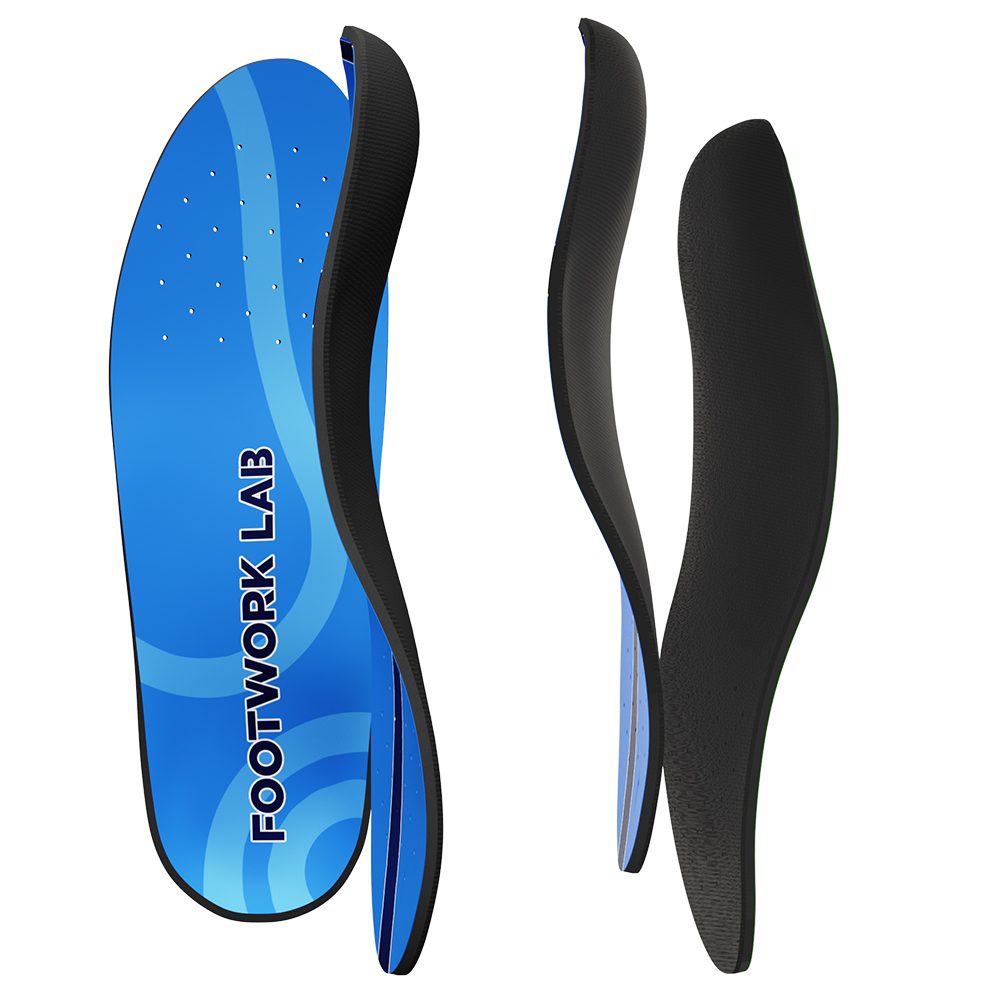
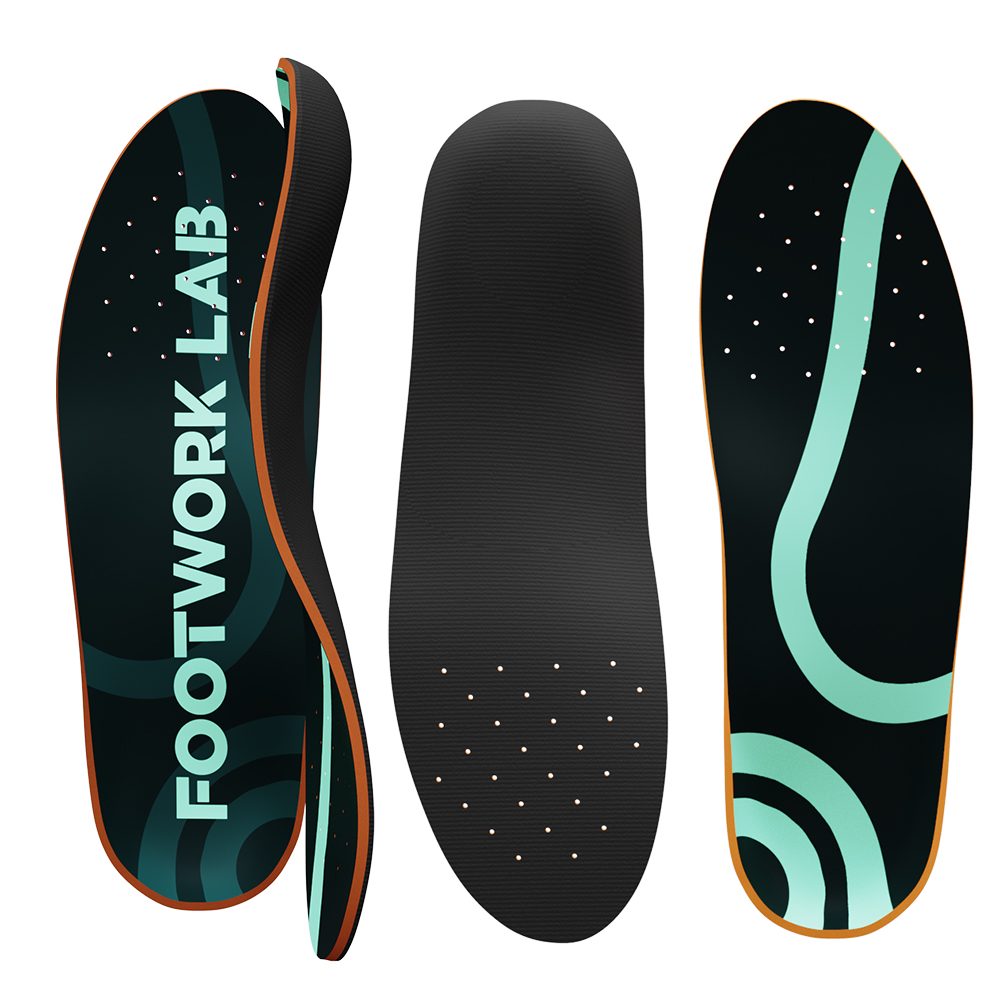
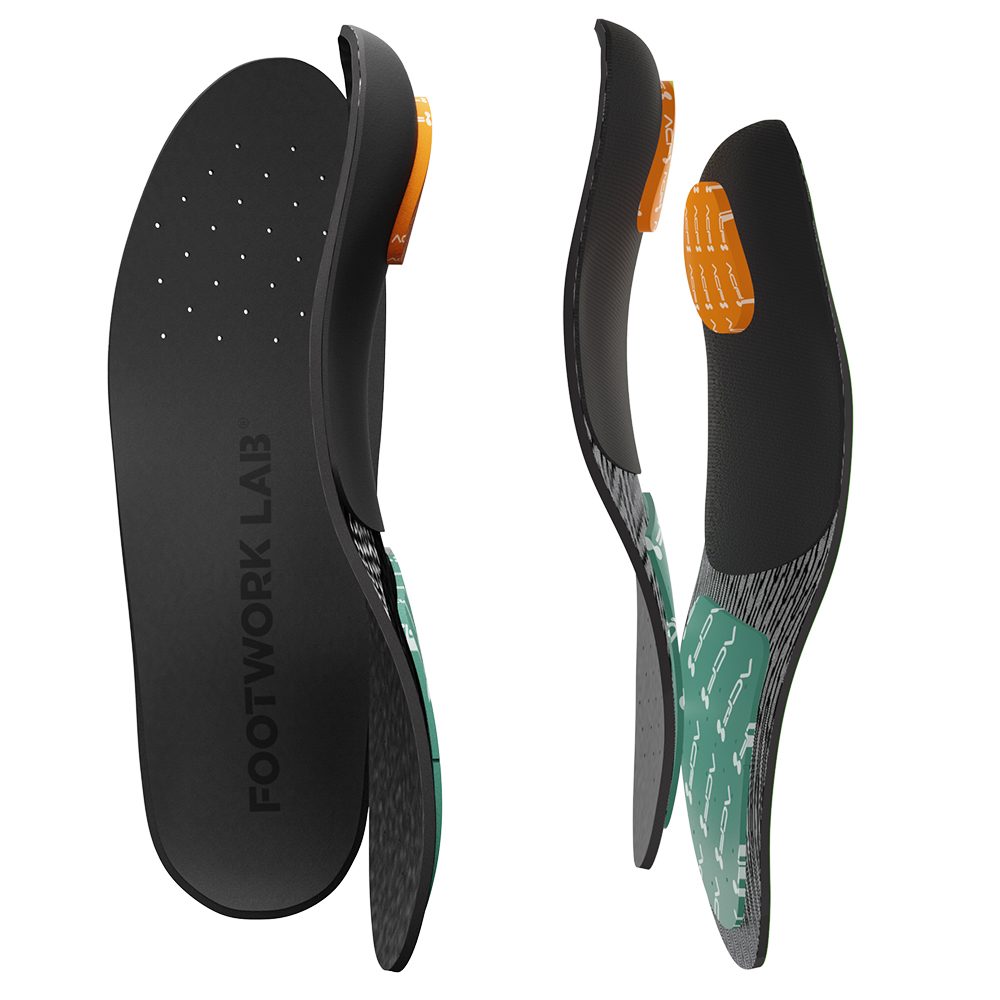
Inside the shoe, the insole has less freedom than in everyday footwear, and the constraints are worth naming. The shell has to sit under a foot that is moving faster and loading harder, the heel cup has to hold without pressing on the sides of the heel, and the top cover has to survive friction that a walking shoe never generates. Arch fill has to be judged against the volume the shoe leaves, which in a close-fitting racing shoe can be very little. Each of those is a specification decision informed by the record, and each of them can be wrong in a way the runner will feel within a few minutes of running.
Reading a running record without over-reading it
The temptation with a running record is to narrate everything. There is more data on the screen than in a walking record, more contacts, more variation, and a colour map that invites a story about every region. The discipline that keeps a running assessment useful is the same as in walking: choose a small number of observations, put them in order, and leave the rest in the file.
Start with consistency. Does the pattern repeat across contacts, or does it appear once? A repeated pattern is worth a conversation; a single unusual contact is usually a stumble or a repositioning. This is the first filter and it removes most of the noise before anyone starts interpreting.
Then look at symmetry in timing rather than in shape. Two feet rarely produce identical maps, and expecting them to is a route to over-diagnosing normal variation. What tends to be more stable, and more worth discussing, is whether the two sides spend similar time under load, and whether a difference is consistent across contacts.
Then look at the path of load. On a running record the path is short and fast, and its shape is influenced by speed and shoe as much as by the runner. A path that runs along one edge across many contacts at the same speed is a solid observation. A path that differs between two passes at the same speed is a reason to capture more passes, not a reason to write a conclusion.
Comparing the running record with a walking record of the same runner is worth the extra captures when the appointment allows it. Walking shows the foot under a load it can accommodate at leisure; running shows the same foot under a load that arrives before the body can respond. Where the two differ sharply — a pattern that is unremarkable in walking and pronounced in running — the difference is usually about control under speed rather than about shape, and that is a more interesting conversation than either record alone.
What to leave out is any statement about what the pattern will do to the runner later. The record describes a loading pattern under specific conditions. It does not predict, and a practitioner who turns a recording into a forecast has moved from measurement into a claim the equipment cannot support. The useful sentence is descriptive: here is where the load goes, here is how it compares, here is what we would change in the device and re-check.
What the runner leaves with
A runner should leave with three things, and only the first is a measurement. The first is a record they have seen and had explained, with the conditions named: which shoe, which speed, how many passes. The second is a decision about the device, expressed in terms the runner can repeat — more support under a region, a different top cover, a shell that fits the racing shoe rather than the trainer.
The third is a re-check plan. Running changes with training load, and a specification made in a base phase is being tested in a race phase. A review after a block of training, using the same protocol and the same shoe, tells you whether the device is doing what it was specified to do. A review scheduled by the calendar alone tells you less, because it may land in a week when the runner is doing something completely different.
For the clinic, the practical value of running work is that it repeats. Runners come back, they change shoes, they change goals, and each return is a comparison rather than a new assessment. That is the commercial case for capturing properly: a labelled record from last season is the reason the next appointment is short and specific.
For the insole side, running work also concentrates the specification. Volume is tighter, tolerance for a foreign feeling is lower, and the shoe constrains the design more than in everyday footwear. Our own line builds to submitted foot data and accepts orders from 200 pairs with mixed styles and sizes, with samples dispatched within three days, which is the arrangement most clinics and specialist retailers need when they are testing a running specification before committing to a season.
Frequently asked questions
Why does a running record look so different from a walking record?
Because running has a flight phase. The surface records contact only, so the record is a series of short, fast contacts separated by gaps it cannot describe. Contact time shortens, load arrives faster and peaks are higher, which changes the shape of the map as well as its numbers.
Do we need a treadmill to assess runners?
No, but the choice changes the record. A treadmill gives a controlled speed and a repeatable condition; overground capture avoids the belt but needs a long enough approach that the runner is not aiming at the platform. Either is usable if the condition is labelled.
How many strides should we record?
Enough to see whether the pattern repeats. Several passes at each speed is the practical approach, and keeping the passes rather than selecting the tidiest one is what makes the variability readable.
Should the runner be assessed barefoot?
Barefoot capture is useful as a reference, but the shoe is the condition that matters for a specification. If only one capture is possible, use the shoe the runner wears most and record which one it was.
Can a pressure record predict a running problem?
No. It records how load was distributed under specific conditions at a specific time. Prediction is not what the equipment does, and any statement about what will happen later belongs to clinical judgement rather than to the recording.
Can you make insoles for racing shoes?
Yes. The constraint is volume rather than the device itself, which is why the shoe should be part of the assessment. Orders start from 200 pairs with mixed styles and sizes allowed, ODM and OEM are both accepted, and samples are dispatched within three days.
What support comes with a system?
A dedicated WhatsApp group, direct access to our engineers, remote assistance where the site allows it, and over-the-air updates for connected units. Every machine is tested for seven days before dispatch, and the warranty runs twelve months on non-human damage with free replacement parts.
What we would do next
If running is part of your service, capture one runner at two speeds in two shoes before you buy anything, and see whether the difference is large enough to change what you would specify. The F5-LAB dynamic gait platform is the system we build for running capture, the insole categories page shows the running constructions we produce, and our guide to reading a plantar pressure map covers the interpretation basics. If you want the protocol reviewed against the runners you actually see, send us the details.
This article is intended for professional and educational reference. It is not medical advice. Foot assessment equipment produces measurements and images; clinical interpretation and any decision about care remain the responsibility of a qualified professional. Certification scope is limited to the documentation we hold: European Union certification and ISO quality system certification.