
Corrective and orthopedic insoles are two adjectives that carry a great deal of expectation into a product page, and most of that expectation was never part of the product. One suggests a direction of change, the other suggests a clinical context, and both are used by the trade in ways that are hard to defend when a customer asks what exactly will be different.
The problem is not the words themselves; it is the sentence they tend to appear in. ‘Corrective insoles correct flat feet’ is a claim about anatomy, and no insole can support it. ‘Orthopedic insoles are designed for people who need a firmer structure’ is a description, and it can be defended.
This article separates the wording from the function, sets out what these products actually do, and offers a way to write a product page that keeps the search term without borrowing a clinical promise. We produce insoles, so the boundary described here is the one we apply to our own catalogue language.
What the two adjectives point at
Corrective points at direction: something is being moved towards a better position. Orthopedic points at context: something is being made for a clinical or medical-adjacent setting. Neither word describes a construction, and construction is what a factory can build.
In the trade, corrective is often used for a firmer shell with a defined arch region and heel cup, and orthopedic for a broader family that includes those shells plus cushioning and accommodative designs. The mapping is loose, which is exactly why it drifts.
For a buyer, the drift is a specification risk. An order placed for corrective insoles without a field list can be read as a firm shell, a modified stock product, or a softer accommodative design, and the factory will choose the reading that fits its line.
The fix is to keep the adjective in the marketing layer and to put the construction in the specification layer. That is the same discipline that keeps 3D and 2D words out of equipment descriptions while allowing them in search copy.
There is also a grammatical clue worth noticing. Corrective is an adjective attached to a device, which implies the device does something to the foot; orthopedic is an adjective attached to a context, which implies the device belongs in a clinical setting. The first invites a claim, the second invites a description.
What an insole can actually change
An insole changes how load is distributed under the foot during wear. It can raise or soften a region, hold a heel in a cup, spread pressure across a wider area, and change the angle at which the foot meets the ground. Those are mechanical effects, and they are observable in a pressure record.
An insole does not change the shape of bones, the length of a tendon, or the structure of an arch. Claims that imply otherwise are claims about anatomy, and they belong to nobody in this supply chain — not to the factory, not to the retailer, and not to the marketing agency writing the page.
The useful middle ground is directional language: supports, cushions, redistributes load, provides a defined arch region, holds the heel. Each of those describes a mechanical behaviour, and each of them can be checked against the object in the box.
When a customer asks whether an insole will change their feet, the honest answer is that it changes how load is carried while it is worn, and that anything beyond that is a question for a professional who has examined them.
It is worth being concrete about the mechanical list, because it is short and defensible: changing the area over which load is distributed, changing the angle at which the foot meets the ground, holding the heel in a defined position, and cushioning a region that would otherwise take concentrated load. Four effects, all observable, all describable without a clinical claim.
There is a useful test for a sentence on a product page: would a factory be willing to sign it? A sentence about load distribution would be signed; a sentence about changing a foot would not. The test is quick and it catches most of the problems before publication.
Why the words persist
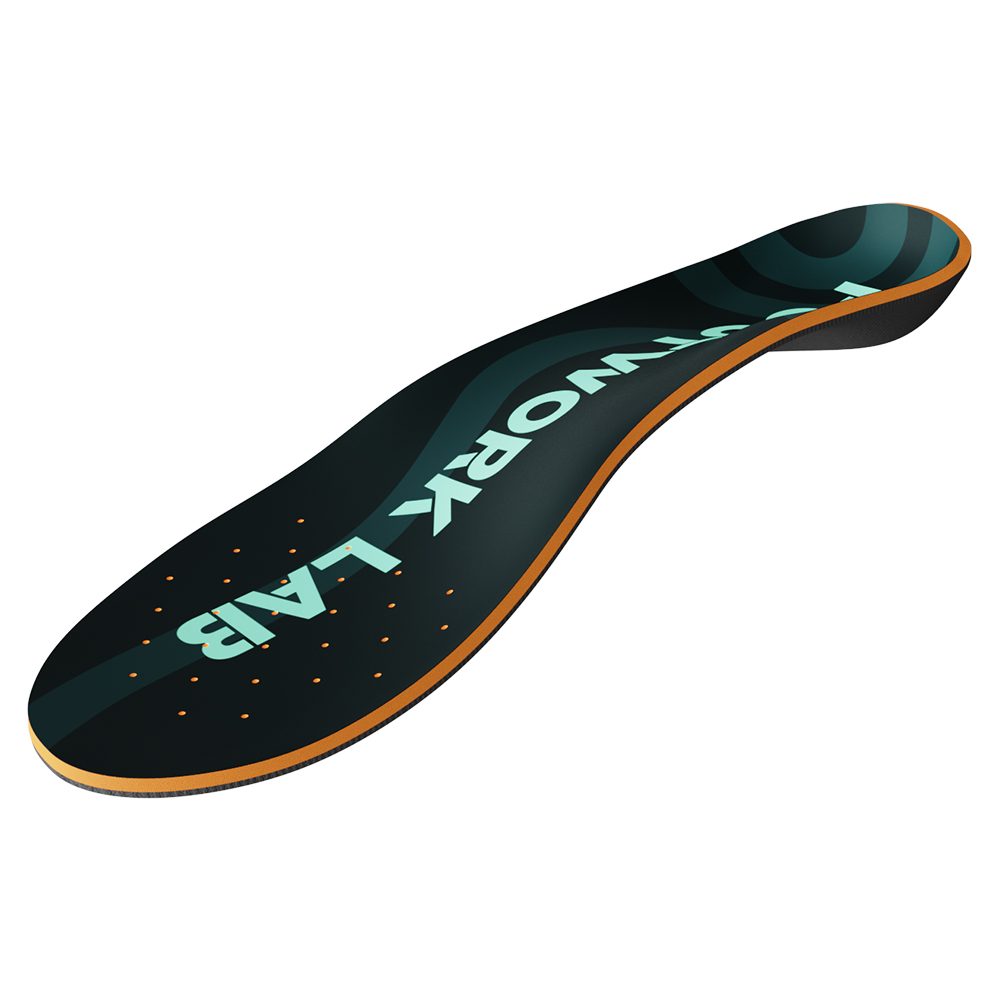
The words persist because they match how customers search. People look for corrective insoles when they believe something is out of place, and the phrase is the door they come through. A page that refuses the phrase loses the visit before it can explain anything.
So the practical approach is to use the phrase in the places search engines read — title, opening paragraph, one heading — and to describe the product in construction terms immediately afterwards. The reader arrives on their own vocabulary and leaves with the trade’s.
This is not a trick. It is the ordinary work of translation between a market’s language and a product’s reality, and every serious catalogue does it. What makes it honest is that the description that follows the phrase is accurate, and the claim that follows the phrase is not inflated.
The line to hold is simple: the phrase may appear, the promise may not. A page can say corrective and orthopedic insoles and then explain what the shell, the cover and the heel cup do.
The phrase also has a commercial function that the trade often forgets: it tells the customer which shelf to look on. A page that refuses the market’s vocabulary is not more honest, it is simply harder to find, and a page nobody reads cannot correct anybody’s expectation.
It is worth checking the page’s opening against the product’s reality once a quarter. Language drifts when a page is edited by several hands, and the sentence that survives the edits is usually the most flattering rather than the most accurate.
Writing a page that survives scrutiny
Open with the market’s phrase in a natural sentence, then state what the product is made of and what it does mechanically. One paragraph of translation is enough; the rest of the page should be construction, context and care.
Name the fields: arch geometry, heel cup, shell stiffness family, cover material, thickness budget, target shoe. A customer who reads those fields learns to compare products, and a customer who compares products is a customer who returns with a specific question rather than a complaint.
State the boundary once, plainly: this is an insole, not a medical device, and a professional assessment is what decides whether it suits a foot. That sentence costs a sale occasionally and prevents a return regularly.
Then state the production facts that a buyer needs: minimum order, customisation scope, sample lead time, capacity, transit. Facts of that kind are what a trade customer is actually reading for, and they age better than adjectives.
It also helps to separate the page into two audiences. The first two paragraphs are for the customer, in their vocabulary; the specification block is for the trade buyer, in fields. Pages that try to serve both in every paragraph end up serving neither.
It also helps to keep one sentence in reserve for staff: describe what the insole does while it is worn. That sentence answers most questions honestly and hands the rest to a professional, which is where they belong.
The construction behind the words
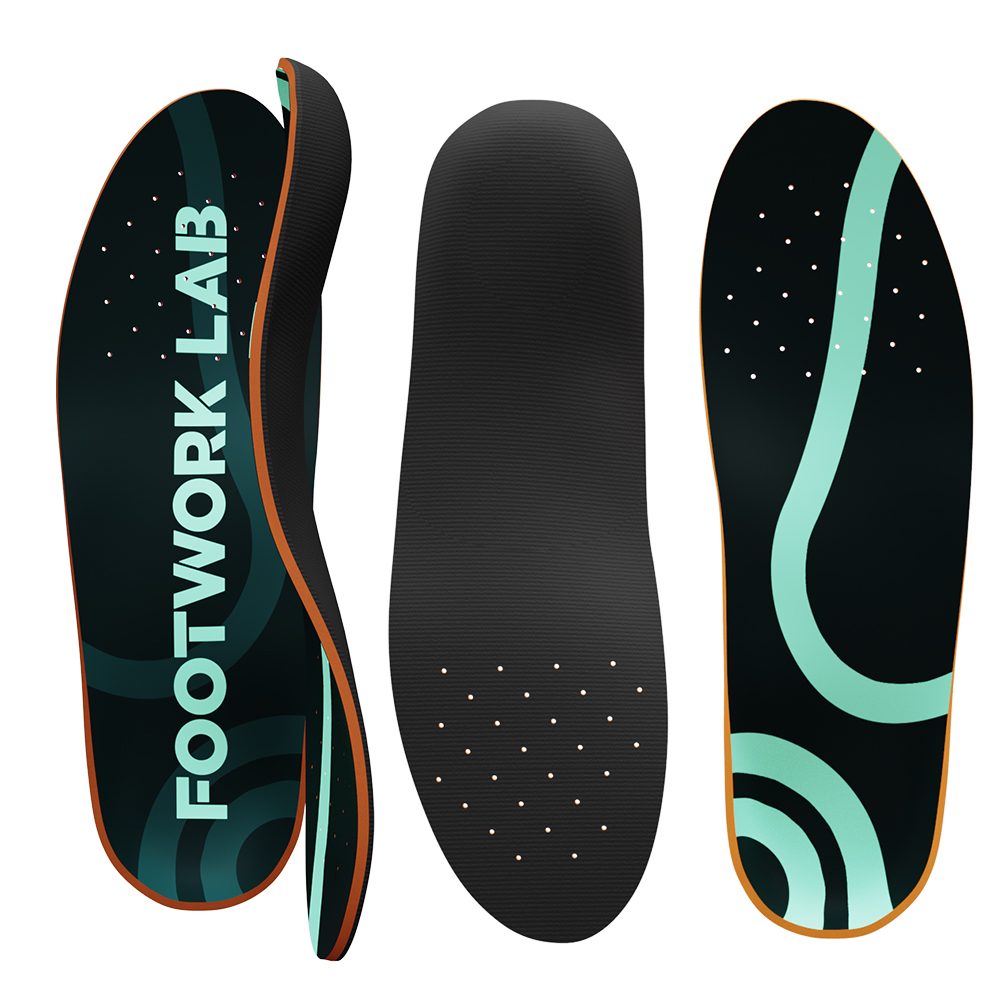
A firmer shell with a defined arch region and a deep heel cup is the construction most buyers mean by corrective. It is produced by forming or milling a thermoplastic shell to a specification, then finishing the edges and bonding a cover.
A softer construction with cushioning layers and a shallower cup is what most buyers mean by accommodative. It is produced from foams and softer thermoplastics, and its brief is to distribute load gently rather than to define geometry.
Between the two sits the majority of the market: a moderate shell, a moderate cup, a cushioning cover, sold under both adjectives. That middle product is legitimate and it is what most customers will actually be satisfied with, provided the page describes it accurately.
Naming which of the three a product belongs to is the single most useful sentence on a page, because it lets a customer choose between them instead of choosing between claims.
It is worth adding that the same three constructions exist at different quality levels. A firmer shell can be well formed or badly formed, and the adjective tells you nothing about which. That is why a sample and a specification matter more than a category name.
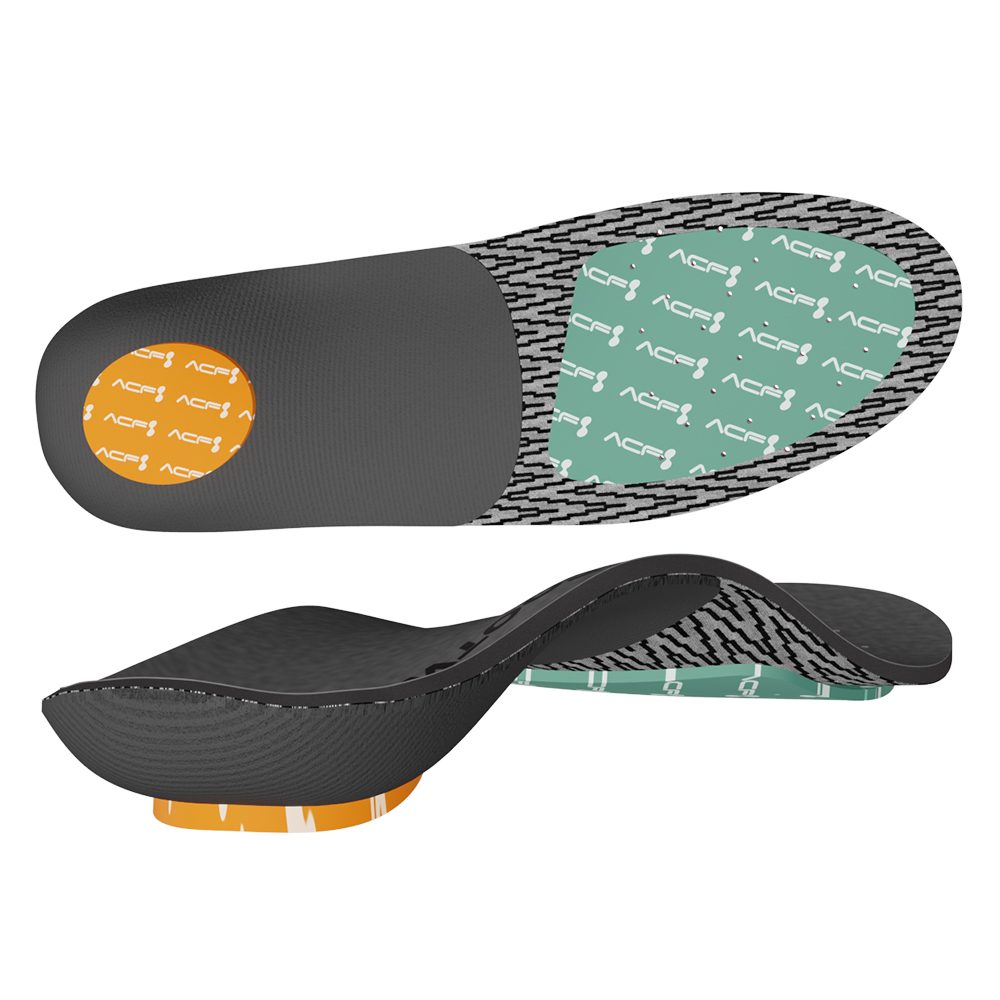
It also helps to show the construction in a photograph with the cover lifted. Buyers who can see the shell, the cup and the cover understand the product faster than any paragraph, and a photograph cannot overclaim.
Talking to a customer who wants a correction
The customer who uses the corrective word usually has a belief about their foot, and the belief is often more specific than the product. The conversation that works starts by asking what they have noticed — shoes wearing unevenly, a feeling of collapse, discomfort after long standing — and then mapping that to a construction.
Mapping is a shortlist, not a conclusion. Uneven shoe wear suggests a look at load distribution; a feeling of collapse suggests a firmer shell and a deeper cup; discomfort after long standing suggests cushioning and a cover that manages moisture. Each answer points at a product, and none of them settles a clinical question.
Where the conversation reaches the limit of a retail setting, say so. That is not a lost sale; it is the beginning of a referral relationship, and referrals come back with customers attached.
Shops that hold that line build a reputation for straight answers, and straight answers sell firmer shells at higher prices than adjectives do, because the customer understands what they are buying.
It also helps to have one example ready for each construction, so the customer can compare. People understand a comparison between two objects far more easily than a description of one, and the comparison also makes the price difference legible.
The conversation also benefits from a written note the customer takes away. A short summary of what was recommended and why turns a fitting into a record, and a record is what makes the second visit efficient.
It also helps to write the boundary sentence once and reuse it across the range. Consistency across pages is what makes a catalogue trustworthy: a customer who reads the same honest sentence on five products stops looking for the one that overclaims.
A short internal standard
One page, three rules. Use the market’s phrase in the title and opening, never in a promise. Describe the construction in fields immediately afterwards. State the boundary once, without apology.
Add a fourth rule for staff: if a customer asks whether a product will change their feet, the answer describes what the insole does while it is worn, and offers an assessment if the question is really about their feet.
Add a fifth for buyers: order by construction, not by adjective. A purchase order that says corrective without a field list hands the definition to the factory, and the factory will choose the definition that suits its line.
Five rules, no more. They fit on a page, they can be taught in an afternoon, and they remove the most common source of disappointment in this category — not a bad product, but a product that was described as something else.
The standard should be reviewed once a year, because vocabulary drifts and staff change. A page written three years ago and never revisited usually contains one sentence that nobody can defend any more, and that sentence is the one a customer will quote back.
The standard is also worth sharing with any agency that writes product copy. A one-page note of five rules prevents the drift that happens when a page is rewritten by someone who has never seen the product, and it costs a forwarded email.
Frequently asked questions
Are corrective insoles different from orthopedic insoles?
The two words are used loosely in the trade. Corrective usually points to a firmer shell with a defined arch region and heel cup; orthopedic is broader and includes cushioning and accommodative designs. The construction, not the adjective, defines the product.
Do insoles change the shape of a foot?
No. An insole changes how load is distributed while it is worn. Anything beyond that is a question for a professional who has examined the foot.
What construction should we order for a firmer feel?
A firmer shell with a defined arch region and a deeper heel cup, specified by arch geometry, cup depth, shell stiffness family, cover and thickness budget rather than by adjective.
What is the minimum order for custom insoles?
Two hundred pairs, mixable across models and sizes, so a range can be built from several constructions.
Can we see samples before ordering?
Yes, samples ship within three days. Test them in the target shoe under real wear before placing a volume order.
Can the insoles carry our brand?
Yes, as ODM or OEM, with the design following an agreed specification and your branding applied. Scope is confirmed in writing before production.
How do you describe these products on your own pages?
By construction and by context, with the market’s search phrase used where it belongs — in the title and opening — and no clinical promise attached to it.
What we would do next
Order by construction, describe by construction, and keep the market’s phrase for the places where it belongs. The Insole Categories page shows the ranges we produce, and Our Factory describes the design review behind a firmer shell.
The article on arch geometry gives the four fields that turn a firmness request into something a production team can build.
This article is intended for professional and educational reference. It is not medical advice. Foot assessment equipment produces measurements and images; clinical interpretation and any decision about care remain the responsibility of a qualified professional. Certification scope is limited to the documentation we hold: European Union certification and ISO quality system certification.