
Dynamic balance measurement sounds like a sports-lab phrase, yet the buyers who ask about it most are clinic owners. They have a static footprint record that answers what the foot looks like standing still, and a growing queue of questions about what happens when the same patient starts to move — sway, weight transfer, confidence on the walkway. The static record is silent on all of it.
This article separates what a dynamic balance record adds from what it borrows, because the two are often sold as one thing. Weight-shifting, steadiness during transitions and load redistribution under movement are measurable; labelling them as a medical finding is not something a measurement device should do, and a careful buyer will want that boundary in writing.
Our equipment sits in the foot assessment category: pressure sensing for the sole, camera capture for posture and alignment, and software that assembles the two into a record a professional can read. We describe dynamic measurement from that position — what our systems record, what they leave to the clinician, and where the phrase belongs in a purchase decision.
Static records end where movement begins
A standing record is a snapshot taken at the quietest moment a foot will have all day. It shows arch shape, heel position and how load shares across the sole at rest — all genuinely useful, all captured in seconds. What it cannot show is the foot’s behaviour one second later, when weight begins to shift and the body starts compensating for its own geometry.
Dynamic measurement picks up at exactly that point. As the person walks, steps in place or shifts weight between feet, the sensor layer reports how quickly load moves, whether one side hesitates, and how the forefoot and heel trade responsibilities through each step. None of that appears in the standing print, and much of it is what referral letters are actually asking about.
The practical takeaway for a room planner is sequencing. The static record takes seconds and belongs at the start of any session; the dynamic record takes a few minutes and belongs after it, when the static result has raised a question worth answering. Rooms that only buy one capability tend to discover the gap at the exact moment a patient needs the other.
A concrete session shows the sequencing in practice. The client steps on for the standing record — ten seconds, three instructions. The map appears, the assistant notes the session name, and the client steps off while the equipment resets. When the walking task follows, it inherits a calm, briefed subject rather than a surprised one. Rooms that rehearse this two-step rhythm once report that the second capture of every client takes less time than the first — the routine is doing the work the first session spent learning.
What the sensor layer actually reports
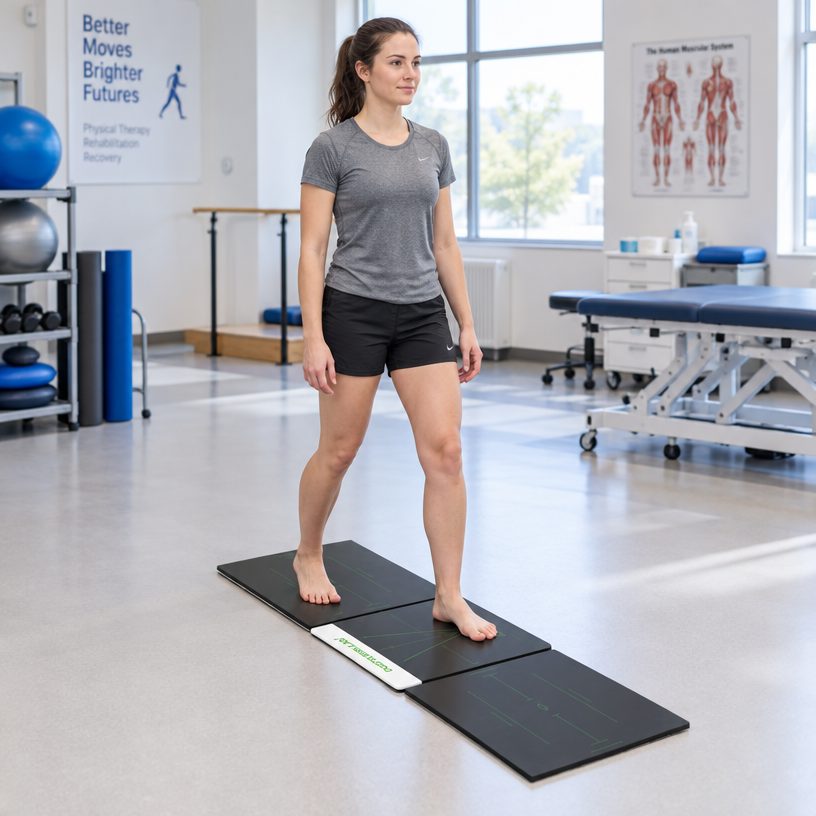
Underneath the walking surface sits a grid of pressure sensors. Each reports the load landing on it, many times per second, and the software turns that stream into two views: a map of where pressure concentrated, and a timeline of how the concentration moved. The first view resembles the familiar footprint; the second is a curve that rises and falls with every step.
From the timeline, the software derives the descriptors clinics ask about: how long each foot carried load, how quickly weight transferred from heel to forefoot, and how the left-right split moved across a walk. These are measurements of the recording — no more, no less. Reading them against a specific person’s history and condition is the professional’s task, and our reports are laid out to hand that task over cleanly.
Buyers comparing systems should ask one question early: does the report export the underlying record, or only a summary page? A summary suits the consultation; the underlying record suits follow-up, second opinions and the Remake conversations that happen months later. Storage of full records is a feature that costs little at purchase and pays for years.
Sensor counts deserve a paragraph of scepticism, because they dominate listings and explain little. A denser grid renders smoother pictures; it does not decide whether the record means anything. Stability, repeatability and the calibration routine decide that, and none of the three appears in a number on a page. Buyers who rank vendors by sensor count buy the listing; buyers who ask for a repeat-capture demonstration at the demo buy the instrument.
Balance is a behaviour, not a footprint
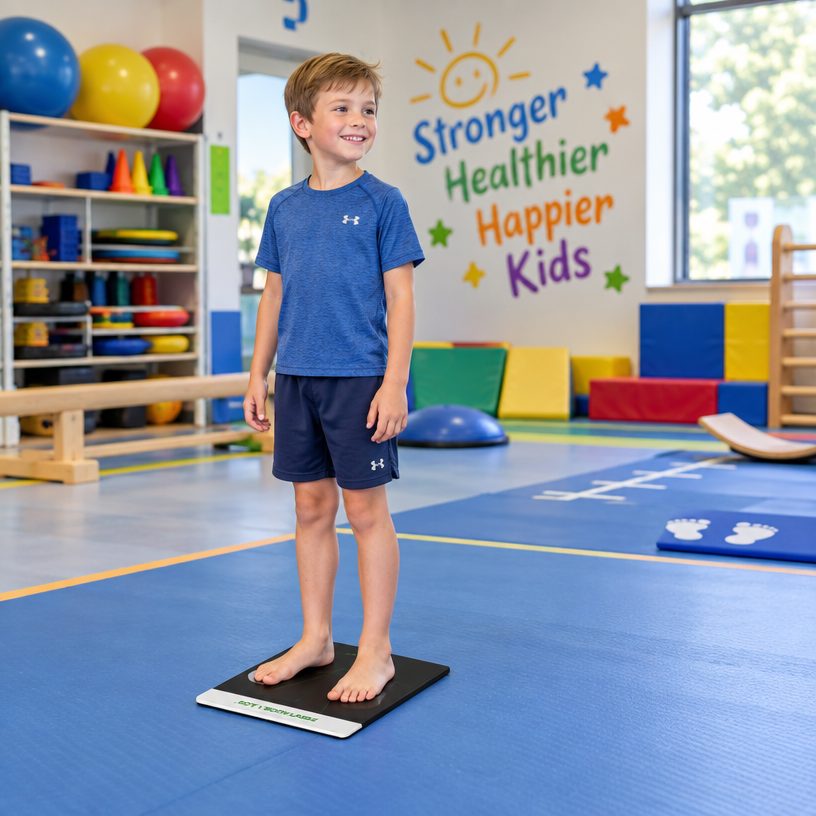
The word balance carries weight beyond mechanics. When a patient says they feel unsteady, they are describing an experience that involves vision, the inner ear, joint sense and strength — systems a floor-mounted sensor layer does not touch. An honest dynamic record says what it measured: how load moved across the sole during a recorded task, on a flat surface, in a controlled session.
That boundary is not a weakness; it is what makes the record useful inside a clinical workflow. A physiotherapist combines the record with their own observations and tests; the record contributes the sole-of-foot data that observation cannot supply, in a form that can be compared visit over visit. The device contributes evidence; the professional contributes interpretation.
Suppliers who blur that line do buyers a disservice. In our quotations and manuals, dynamic measurement is described as capture and reporting, and the phrase clinical interpretation is reserved for the professional using the system. Buyers should expect the same sentence structure from every supplier on their list, and should be suspicious of any brochure that promises a conclusion instead of a record.
The vocabulary boundary also protects the room’s referrals. When the record says what it measured and stops, the professional’s letter can lean on it cleanly: the assessment recorded the load behaviour during the task; the clinical picture completes the account. Referring physicians read that structure easily, and a record that overstayed its evidence would make the letter harder, not easier, to write.
The camera half of the picture
Pressure under the sole is half of what a foot assessment needs. The other half is visible above it: how the ankles line up, whether the knees track inward, how the pelvis sits during the recorded task. A camera captures that posture and alignment data in the same session, and the analysis software puts the two records side by side in one report.
The pairing matters because the sole rarely misbehaves alone. A load pattern that looks asymmetric in the pressure timeline often has a visible explanation in the alignment frames, and a professional who has both in front of them writes a better-informed note than one working from a curve alone. This is why our systems are specified as pressure sensing plus camera capture rather than as a pressure plate with extras.
For the buyer, the specification to check is synchronisation. Two records that were captured together can be compared; two records captured separately, on different days or with different instructions, cannot. Asking a supplier how the pressure and camera streams stay aligned is a better question than asking about sensor counts, and the answer separates systems that were designed together from those that were assembled.
Synchronisation failures are visible if you know where to look. Ask a vendor’s demonstrator to walk a task, then scrub the timeline against the posture frames: the heel strike in the pressure record should land in the same instant the camera frame shows the heel meeting the surface. When the two drift, every combined reading inherits the drift. Two minutes of scrubbing at a demo saves a room from owning the discrepancy for the life of the instrument.
Where the record goes after the session
A dynamic balance record has three lives. In the room, it supports the consultation happening now. In the file, it becomes the baseline that the next visit is compared against — did weight transfer become more even, did the left-right split move toward a steadier share. And in production, for the minority of cases that continue to a custom insole, selected fields feed the design brief.
The production handover deserves its own paragraph in any purchase plan. Our insole line accepts specifications built from assessment records, and the fields that travel are the ones a professional selects: pressure regions, standing and walking observations, the shoe context. The record does not order the insole by itself; the professional decides what the factory receives.
For rooms that never produce insoles in-house, the same record supports ordering from any workshop that accepts written specifications. This is worth confirming with suppliers before purchase: a system whose reports export cleanly makes the clinic independent; one that locks records into a proprietary summary makes the clinic loyal by accident.
The production handover deserves a worked boundary. A dynamic record that shows the load lingering under one heel does not travel to the factory as a curve; it travels as the professional’s written decision — cushioning and cradle adjusted for that region, stiffness family named, shoe context attached. The curve justifies the decision and stays with the room. Buyers who understand that division write briefs that production teams thank them for, quietly, in the confirmation reply.
Specifying a system for balance-focused work
A room buying for dynamic work should check four things. First, the walking surface: its length constrains how many steps a recording holds, and its height matters for patients who step onto it cautiously. Second, the software output: timeline and map together, exportable, readable by staff who are not engineers. Third, the camera pairing and its synchronisation with the pressure stream. Fourth, support — who answers when a capture goes wrong mid-session.
On the fourth point, our own model is specific: a dedicated WhatsApp group per customer, an engineer on the other end, remote assistance for software questions, and over-the-air updates for connected units. Systems ship after seven days of factory testing, and the warranty runs twelve months. Those terms are published because support failures, not sensor failures, are what turn an assessment room quiet.
Price is the question buyers expect last and should ask first — but structured, not numeric. What is included in the base system, what arrives as software options, what a service year costs, and what happens when a component fails out of warranty. A supplier who answers all four in writing is comparable on a like-for-like basis; a supplier who answers none of them is selling a box, not a room.
Service questions belong in the same demo as the specification ones. Ask the demonstrator what happens when a session is interrupted mid-capture, what the calibration reminder looks like after a month of disuse, and who answers when the answer is needed before tomorrow’s clinic list. The quality of those three answers predicts the ownership experience more reliably than any page of the catalogue, because they describe the supplier’s habits rather than the instrument’s hopes.
A realistic first quarter with the system
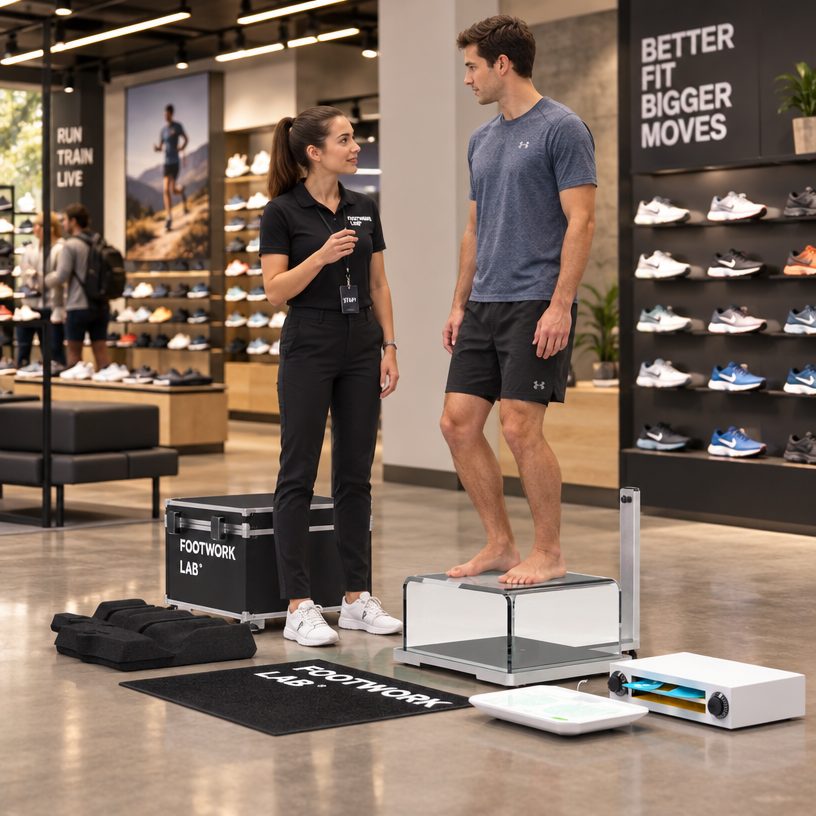
The first weeks with a dynamic capability follow a pattern worth planning for. Sessions start slow while staff learn the capture routine; the static workflow already familiar to the room extends naturally into the dynamic one. The reports that get used most are the simplest ones — the side-by-side of map and posture frames — and the timeline earns its place once staff trust it.
By the second month, the records start compounding. Review visits arrive with a previous record to compare against, and the conversation changes from description to direction. Rooms that store full records find this is where the purchase pays back; rooms that only kept summary pages re-capture from scratch and lose the comparison.
Our factory perspective on the whole cycle is straightforward: the equipment’s job is to produce trustworthy records quickly enough that the room forgets it is operating an instrument. Everything else — interpretation, planning, the decision to order an insole or refer onward — belongs to the professional. Buyers who buy on that division of labour end up satisfied; buyers who expect the machine to think end up disappointed.
A final note on staffing the first quarter. The rooms that settle fastest assign one person to own the routine — the protocol, the naming, the calibration habit — while the rest of the team learns by assisting. Ownership avoids the diffusion where everyone assumes someone calibrated the surface. Once the routine holds for a month, the ownership can widen; starting with it diffuse is how instruments become furniture.
Frequently asked questions
Does dynamic balance measurement replace a static footprint?
No. The static record shows the foot at rest and takes seconds; the dynamic record shows how load moves during a task. They answer different questions, and most rooms use both in the same session.
Can the system identify the cause of unsteadiness?
No. The system records pressure and posture data. Balance involves vision, the inner ear, joint sense and strength, which the equipment does not measure. Interpretation belongs to the professional.
What does the camera add to a pressure record?
Camera capture records posture and alignment — how ankles, knees and the pelvis line up during the task. The software presents pressure and posture side by side so a professional can read both together.
Are the pressure and camera records synchronised?
Yes, in our systems the two streams are captured in the same session and presented together. Buyers comparing suppliers should ask specifically how the streams stay aligned.
What support comes with the equipment?
A dedicated WhatsApp group with an engineer, remote assistance, over-the-air software updates for connected units, a twelve-month warranty, and seven days of factory testing before shipment.
Can records be exported for follow-up?
Our reports export the underlying record as well as the summary, so review visits can compare against the original session. Buyers should confirm export capability with any supplier before purchase.
Do you sell a balance training device?
No. We manufacture foot assessment equipment and custom orthotic insoles. We state the boundary early so buyers can plan the rest of the room with the right suppliers.
What we would do next
Tell us what your room needs to record — static, dynamic, or both — and we will return a system proposal structured around the four specification checks above, with support terms and warranty stated in writing.
Our FAQ page covers minimums, transit times and after-sales in plain figures, and our team answers specification questions directly — before a quotation, not after.
This article is intended for professional and educational reference. It is not medical advice. Foot assessment equipment produces measurements and images; clinical interpretation and any decision about care remain the responsibility of a qualified professional. Certification scope is limited to the documentation we hold: European Union certification and ISO quality system certification.