
An orthopedic products range converts in a sequence, not on a shelf. The measurement station sits at the front of that sequence because a recorded assessment gives every product behind it a reason: the entry support insole answers the record’s broadest finding, the custom pair answers its specifics, the footwear answers the fit question the record raised. Buyers who plan the order deliberately find each product sells the next one. Re-measurement then closes the loop and starts it again.
Clinics, rehabilitation centres and footwear retailers tend to ask which orthopedic products to stock. The better question is in what order the products meet the customer. A range that begins with a measurement turns browsers into people with a document in their hands, and a document changes how every later conversation goes: recommendations attach to findings, price differences attach to explanations, and returns fall because expectations were set by evidence rather than by advertising. This article sets out that sequence shelf by shelf.
We manufacture custom orthotic insoles and the assessment equipment that feeds them at our own plant in Ruichang, Jiangxi, in production since 2018 under a company founded in 2014, and we exhibit at the Canton Fair and at shows in Dubai, Vietnam, Brazil and Hong Kong. This article is written from the production floor side of the sequence: what each shelf demands from the factory behind it, and what wholesale terms make the whole range possible at once.
The measurement counter comes first
The first shelf in the sequence is not a shelf at all but a counter with equipment on it. A plantar pressure assessment system reports where load lands across the sole, a camera captures posture and alignment in the same session, and the analysis software assembles both into a record the customer can see and the professional can annotate. The record is the entry product: it has a modest price, it takes minutes to produce, and it gives the customer something concrete to keep. Nothing else on the floor can do that job, because nothing else produces a document about this particular foot.
The record earns its place in the sequence by giving every later product a why. When a staff member later recommends an entry support insole, the recommendation can point at a printed region of the map rather than at a hunch; when a custom pair is proposed, the specification quotes the record directly. A range sold without a measurement relies on the persuasiveness of the person behind the counter. A range sold after one relies on evidence the customer watched being produced. The difference shows up in the numbers that matter to a buyer: attachment rates rise and disputes shrink.
One boundary keeps the counter credible: the record describes the foot, it does not interpret it. The software reports where pressure concentrated and how posture lined up; saying what those findings mean for a particular person is the professional’s task, and our documentation keeps the two jobs in separate columns. Retail staff can read and show; clinicians can read and conclude. A store that respects that division builds a measurement service its neighbouring clinics are happy to accept rather than question. That professional acceptance is worth more over a season than any single sale the counter makes.
Entry support insoles: the widest shelf
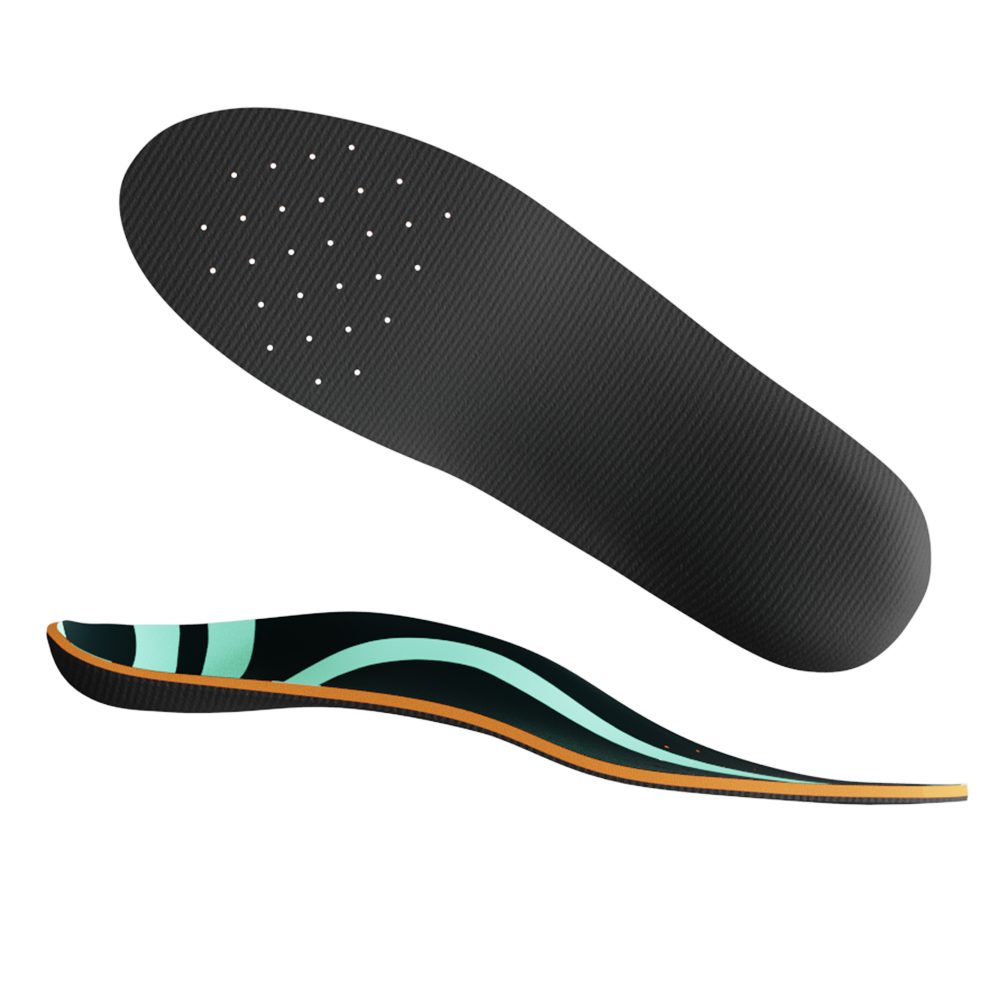
Next in the sequence comes the entry tier: pre-designed support insoles in standard sizes, priced for an unhurried decision. This is the shelf a customer buys from on the same visit, and its job is to deliver the first experience of supported load distribution. The record helps here in a narrow but honest way: the map’s arch family and pressure regions guide size and model choice, so the fitting takes a minute and fits first time more often than guesswork manages. A wrong first experience at this tier is expensive, because the customer reads it as a verdict on the whole range.
Stock depth is the operational question at this tier. Entry insoles sell in volume and in many size combinations, which is why our minimum order of two hundred pairs can be mixed across models and sizes: a retailer can cover the full size curve of two or three entry models rather than sinking the budget into a single line. Samples ship within three days, so the tier can be trialled on real customers before the full order lands. Replenishment then follows a rhythm rather than a crisis, which is what a production line with daily capacity in the hundreds of pairs is designed to support.
The entry tier also teaches staff the vocabulary the rest of the range uses. Arch support, heel cradling, forefoot cushioning and load spreading are all visible in a standard product, and a customer who understands those words from a modest purchase arrives at the custom conversation already fluent. Retailers who skip this shelf usually find the custom tier carrying all of the explaining on its own, at a price point where explanation alone rarely closes the gap. Sequence is what makes the price ladder feel like progress rather than a push; the customer moves up because the previous step made sense.
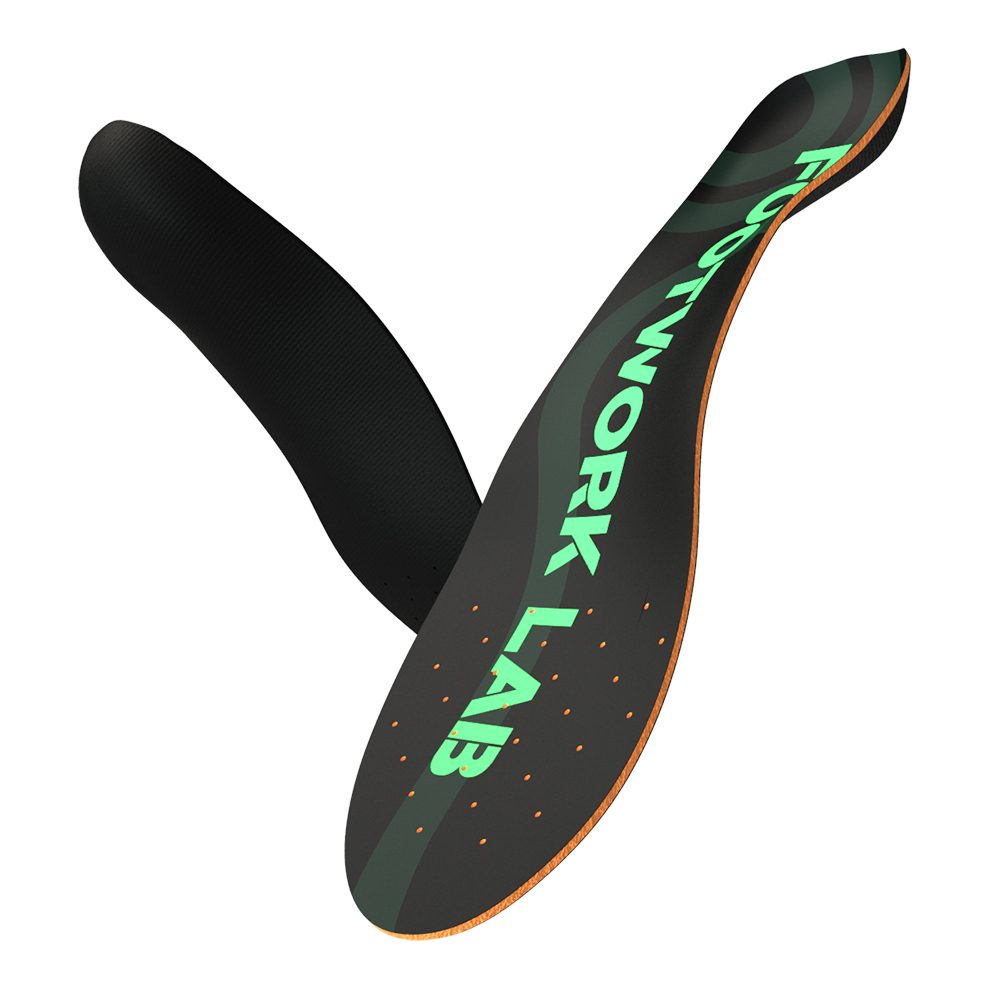
Custom insoles backed by the record
The third shelf is where the record becomes a specification. A custom pair is ordered against fields the assessment produced: pressure regions, arch family, standing and walking observations, shoe context and daily hours. The professional selects what the factory receives; the record does not order anything by itself. At our plant the specification is the working document — design builds to it, quality inspects against it, and any remake measures against the same page rather than against memory. That chain of custody from record to design file to finished pair is the strongest sentence a retailer can say at this shelf.
Commercially, the record is what makes the custom price explainable. A customer who watched their own pressure map being captured does not need to be persuaded that a custom pair differs from a standard one; they saw the difference on the screen. The sale becomes a continuation of the assessment rather than a new negotiation. Shelves arranged this way tend to lose fewer arguments, because the evidence was produced in front of the customer before the price was ever mentioned. Remakes, when they happen, read as diligence rather than as failure, because both sides can see what changed.
Production reality at this shelf: our insole line forms custom pairs to written specifications, ships samples within three days, and runs at a daily capacity between five hundred and a thousand pairs. That capacity matters to a buyer planning a region, because custom demand arrives unevenly — a clinic chain converts its locations one at a time, and the factory has to absorb the wave without pushing lead times out. Wholesalers should ask any supplier how surge weeks are handled before signing. A capacity answer measured in pairs per day is a better signal than a promise measured in enthusiasm.
Pedorthic footwear joins the sequence
The fourth layer pairs insoles with footwear. A pedorthic shoe is designed with the volume and depth an insole needs, and an insole designed for generous support may simply not fit inside a fashion shoe with a shallow heel cup. The two products are complements, and the sequence should present them that way: after the record and the insole decision, the footwear conversation answers whether the customer’s existing shoes can host the design or whether a second pair of shoes should be part of the plan. Either answer is honest; only the unasked question causes trouble.
We manufacture insoles and assessment equipment, not footwear — a boundary worth stating plainly to buyers planning a full range. What we contribute to the footwear layer is specification discipline: our design template carries a shoe context field, our quotations ask for the shoe the insole must live in, and our fitting guidance describes what a pedorthic last adds that an ordinary one does not. Retailers source footwear from their own suppliers and use the record to decide which customers to walk toward it. The honest boundary, stated early, prevents the kind of assortment promise no factory can keep.
The pairing also has a sequencing logic for the till. A customer who buys footwear and insoles together receives one fitting story: the record explains the insole, the insole justifies the shoe, and the shoe protects the insole’s geometry. Separated, the two purchases invite mismatch — a supportive pair slipped into a shoe that erases it. Retailers who train staff to ask about the shoe before finalising the insole see fewer of those quiet failures, and the returns counter stays quiet too. Both silences are revenue: one at the fitting bench, one at the refunds desk.
Re-measurement turns buyers into repeaters
The final layer of the sequence loops back to the first. A stored assessment record makes a return visit concrete: the new map is placed beside the old one, and the conversation moves from description to direction. Wear context changes — a new job, new footwear, a season of different activity — and the record shows what those changes did to load distribution. Re-measurement is the natural moment to introduce the next product in the sequence, whatever tier it belongs to. Ranges without stored records restart from zero at every visit, and zero is an expensive place to begin a sale.
For the buyer, repeatability is the economics of the whole arrangement. An assessment-led range does not depend on walk-in traffic alone; it grows a book of customers with records on file and a scheduled reason to return. Second pairs for different shoes, replacements as wear accumulates, upgrades from the entry tier to custom — each of these is a planned conversation rather than a hoped-for one. Distributors should weigh that repeat structure as heavily as the margin on any single product. A range that only sells once has to be re-earned every season; a range that re-measures keeps part of its revenue on standing order.
Our equipment supports the loop directly: reports export the underlying record as well as the summary page, so review visits compare against the original session instead of a recapture. Connected units receive over-the-air software updates, and the same export habit keeps a customer’s history portable — a clinic can hand a record to a colleague or a fitter without losing the baseline. A range built on portable records survives staff changes; one built on a locked file does not. Portability is a purchasing question worth asking in writing before the order, not a feature to discover a year in.
Staff who can read the record sell the range
Sequencing fails at the counter, not in the plan, and it fails when staff cannot read the document the sequence is built on. Reading a record is a learnable skill: the pressure map’s darker regions are higher load, the timeline shows how the pattern moved during walking, the posture frames show how the body lined up above it. A week of guided practice with sample records is usually enough for retail staff to explain all three without inventing claims. The discipline to stop at description is part of the skill, and it is the part that protects the store.
Training should include the negative space as firmly as the positive. Staff need sentences for what the record does not say: it does not name a condition, it does not predict an outcome, and it does not replace the examination a clinician performs. Stores that give staff this vocabulary find an unexpected benefit — referral relationships with local clinics strengthen, because the clinic sees the store measuring responsibly. A measurement counter that overreaches loses exactly the partnerships that make a range durable. The partnerships, in turn, send the customers who arrive pre-sold on the value of a record.
We support the training side from the factory because it protects the product. Our WhatsApp support groups give every customer a direct line to an engineer, remote assistance covers software questions, and the documentation is written to be used as training material, not shelved as a manual. Equipment arrives after seven days of factory testing and carries a twelve-month warranty. A confident counter is part of what we are shipping, whether the invoice says equipment or insoles. Buyers should ask every supplier on their list who answers the phone in week forty — the answer separates factories from forwarding agents.
Wholesale terms that let a range land whole
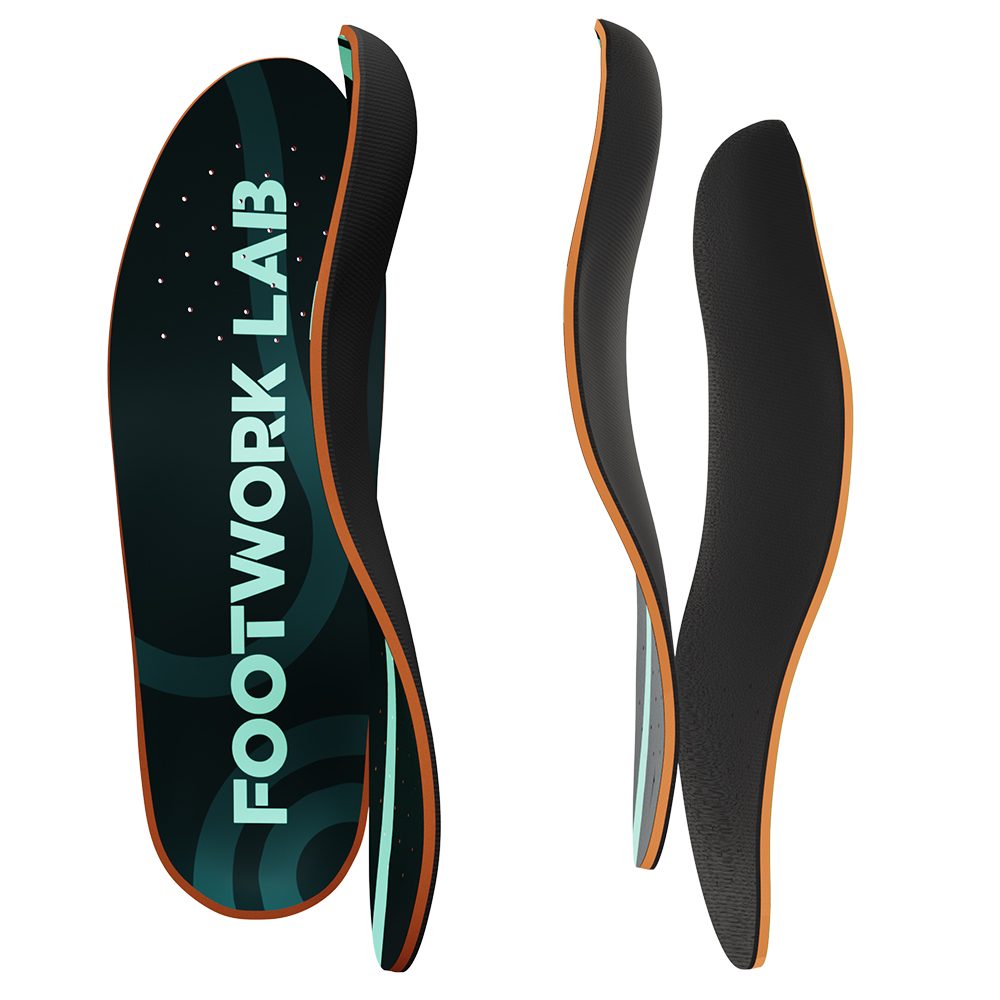
A sequenced range lives or dies on whether the buyer can stock all its layers at once. Our terms are built for that: the insole minimum is two hundred pairs, mixable across models, sizes and both custom and standard lines, so a single order can open the entry shelf, the custom shelf and the replenishment pipeline together. Samples ship within three days of agreement, which lets a buyer validate fit and finish before the main order is confirmed. Mixing is not an exception we occasionally grant; it is how the programme is designed to work from the first order.
Replenishment is the quieter half of the terms. Insole production runs at a daily capacity between five hundred and a thousand pairs, which is what makes a standing rhythm possible: a distributor can forecast by layer, order the entry tier monthly and the custom tier against clinic conversions, and expect the factory to absorb both without extending lead times. Buyers comparing suppliers should ask how capacity behaves in peak season — the answer is more predictive than the quotation itself. Our own answer is published in figures on our FAQ page alongside warranty and after-sales terms.
One caution belongs in this section because buyers raise it at every fair from Canton to São Paulo: the sequence is a merchandising structure, not a promise about outcomes. The record supports conversations; the products support load distribution and fit. Ranges marketed in those terms generate fewer disputes and steadier reviews, which is why our co-branded materials for ODM and OEM partners carry the same wording discipline we use ourselves. Structure first, claim never — the range sells on order. Dealers who adopt the wording wholesale find they rarely need to defend a single sentence of it later.
Frequently asked questions
Do we need the assessment equipment to stock the insole range?
No. The insole range stands on its own, and many retailers begin there. The equipment strengthens the sequence because the record gives every later product a documented reason, but the entry and custom shelves can operate from written specifications supplied by a partnering clinic. We quote the two layers separately so buyers can add the measurement counter when the floor is ready.
What is the minimum order for a first range?
Two hundred pairs for insoles, mixed across models and sizes. A first order typically covers two or three entry models across the full size curve plus a custom slot for clinic conversions. The mixing rule applies from the first order, not from a later reorder.
How fast can we receive samples?
Insole samples ship within three days of agreement. The useful trial places them in the target shoes and, where possible, alongside a recorded assessment, so the reorder decision is based on the same evidence structure the range will use on the floor.
Do you supply pedorthic footwear as well?
No. We manufacture custom orthotic insoles and foot assessment equipment; footwear comes from your own suppliers. Our contribution to that layer is specification: design templates carry a shoe context field, and our fitting guidance describes how insole geometry and shoe volume need to agree.
What capacity backs a replenishment programme?
Insole production runs at roughly five hundred to a thousand pairs per day, and machines at a few units per day. Standing rhythms work because the mixed minimum lets distributors order by layer — entry tiers monthly, custom volumes against clinic conversions — without hitting order minimums twice a season.
Can we sell the range under our own brand?
Yes. Insoles are available as ODM and OEM, covering design to specification, branding and packaging, agreed in writing before production begins. Co-branded shelf materials follow the same wording discipline described in this article: load distribution, fit and support, with no claims beyond what the products do.
What after-sales support comes with the equipment?
A dedicated WhatsApp group per customer with an engineer on the line, remote assistance for software questions, over-the-air updates for connected units, a twelve-month warranty, and seven days of factory testing before shipment. Transit runs six to seven working days by express, ten to twelve by air, and thirty to thirty-five by sea.
What we would do next
Send us your retail floor plan — existing shelves, traffic, and whether a measurement counter is already in place — and we will return a stocking proposal that sequences the range layer by layer, with the two hundred pair minimum, three-day samples and daily capacity figures stated in writing.
Questions about the equipment side, ODM and OEM branding, or after-sales support terms are answered directly by our team — see our FAQ page for published figures or our contact page to start a conversation. Factory, not trading company: the people who quote are the people who produce.
This article is intended for professional and educational reference. It is not medical advice. Foot assessment equipment produces measurements and images; clinical interpretation and any decision about care remain the responsibility of a qualified professional. Certification scope is limited to the documentation we hold: European Union certification and ISO quality system certification.