
Arch height is a measurement; stiffness is a decision. An arch support machine can produce both, and the two are routinely conflated in a way that produces pairs which are technically correct and practically wrong. Separating them on the specification is the single change that most improves outcomes.
The conflation is understandable. Ranges are organised by arch height, listings are written the same way, and a fitting conversation naturally starts from what was measured. But the measurement describes the foot, and the stiffness describes what the device has to do inside a particular shoe for a particular day.
We build devices and the equipment that specifies them, so we see both ends. What follows is how the two are specified separately, what each depends on, and how to avoid the most common error in this category.
What the measurement gives you
A measurement gives the geometry: how the foot presents under load, how the arch sits, and where load concentrates. That is real information and it is what the shape of a device is built from.
It does not say how much the device should resist. Two people with identical measurements can need different stiffness, because one works on concrete in a rigid boot and the other on a track in a soft shoe. The shoe is already doing part of the work in the first case.
A specification that records the measurement and leaves stiffness to a catalogue default is therefore guessing at the half of the problem that depends on the wearer’s day rather than on their foot.
What stiffness depends on
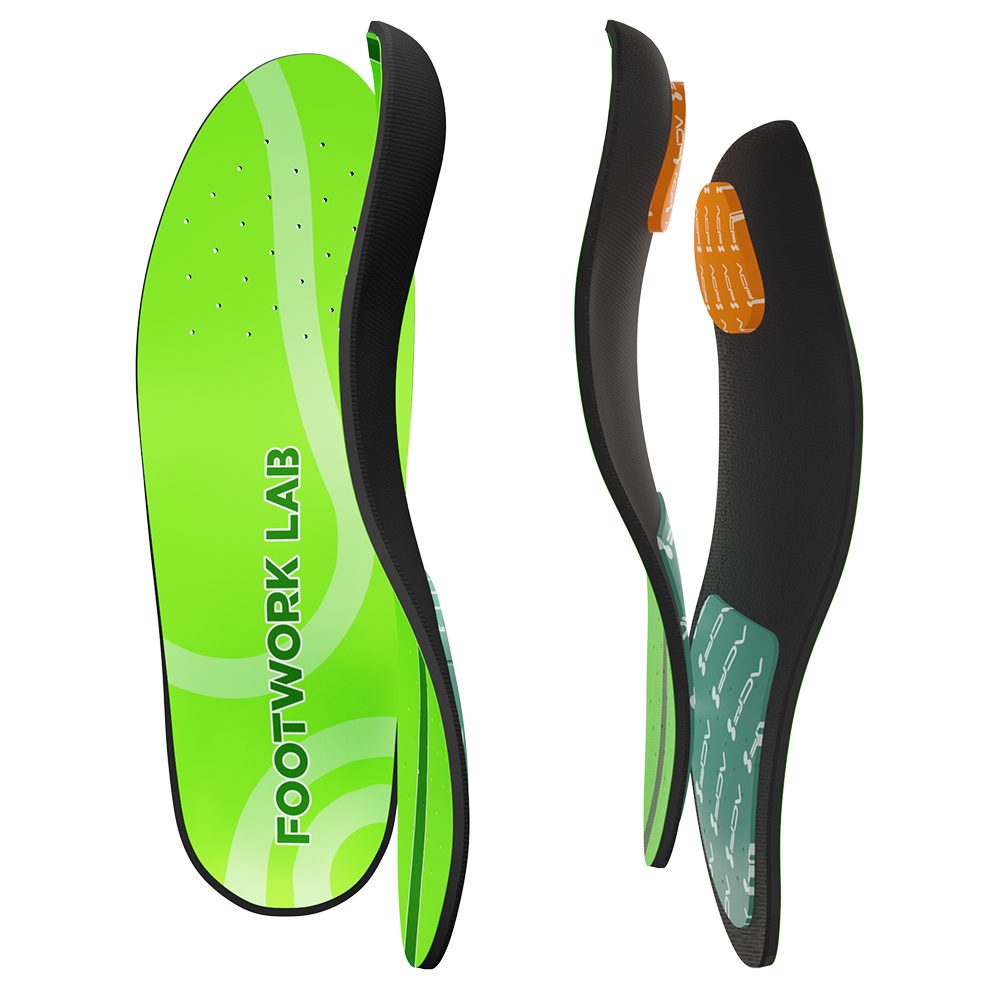
Four things, in rough order of importance: the shoe the device goes into, the hours it is worn for, the activity, and the wearer’s preference once they have tried one. The foot’s geometry is not on that list, which is the point.
A rigid work boot on a hard floor for ten hours is the case that most often gets too much resistance, because the boot is already stiff and the day is long. A soft trainer for an hour of sport is the case that most often gets too little.
Preference is the last item and the one that resolves ties. A wearer who has worn one device before will usually have a view, and asking is faster than deducing.
Reading a catalogue that conflates the two
Most ranges are organised by arch height, with stiffness implied by the model name or not mentioned at all. That is workable if the specification records stiffness separately, and it is a source of error if it does not.
The practical approach is to specify the range by geometry and then state the stiffness as a separate line: the shell family, and the reason for choosing it. Two lines on a form, and the bench can act on both.
Where a supplier cannot separate them, that is worth knowing before ordering, because it limits how precisely a device can be matched to a wearer’s day.
The distribution question
How height is distributed along the arch matters as much as how high it is. A short, steep support and a long, gradual one of the same height feel completely different under the same foot, and the specification should say which is intended.
The measurement does not determine this either. It is a decision about how the load is managed along the length of the arch, and it is usually made from what the wearer reports rather than from what was captured.
Leaving it to a default is the most common cause of a pair that measures correctly and feels wrong, and it is one line on the form to fix.
When to start below the measurement
The instinct is to build to the measurement, and for a first pair it is usually better to start slightly under and review. Support that is higher than a person tolerates produces discomfort within a session, and the usual response — adding more — compounds it.
Starting slightly under means the first review is an increase rather than a decrease, which is a much easier conversation and a much easier adjustment. It also means the device gets worn, and wearing is the outcome everything else depends on.
Where a wearer has worn a device before and knows what they like, that overrides the general rule. Preference beats deduction, and asking takes twenty seconds.
What the machine needs to be able to do
An arch support machine needs to produce the geometry specified, repeatably, in the material family specified, with a finish that fits the shoe. Those four capabilities are what matter, and they are worth checking in that order.
Repeatability first, because a machine that produces the same shape from the same input is a machine a workshop can build a service on. Material range second, because cover and shell options are what let an adjustment be small rather than a rebuild.
Finish third, because a device that is correct and does not sit properly in the shoe is a device that comes back. Throughput last, because it is the least of the four in practice.
Adjusting rather than rebuilding
Where a specification separates geometry, distribution, stiffness and cover, an adjustment is usually one line. A wearer who likes the support and dislikes the heat gets a different cover. One who finds it too firm in a particular shoe gets a different shell.
Where the specification conflates them, the same problem requires a rebuild, because there is no way to tell which variable was responsible. That is the practical argument for four separate lines, and it is why the form matters more than the range.
It is also the argument for recording the reason for each choice. A line that says why a stiffness was chosen is worth more than the value itself when the pair comes back for review.
Where the wearer actually feels the difference
Stiffness is felt at three points: when the foot first loads the device, through the middle of the step, and at push-off. A shell that is too stiff for the wearer is usually noticed at first load, because it resists rather than supports; one that is too soft is noticed at push-off, because it has already given way.
Asking a wearer where they felt it, rather than whether it felt better, produces a usable answer. Most wearers can locate the moment precisely even when they cannot describe the sensation, and that moment maps directly onto a specification line.
Weight matters here as much as arch height, and it is the line most often left off the form. Two wearers with the same measurement and different body weight should not receive the same stiffness, which is why the measurement alone is never the specification.
Left and right are rarely identical
Almost nobody has two identical feet. The difference is usually small and usually ignored, and it is one of the commonest reasons a pair feels right on one side and wrong on the other despite being built from a single specification.
Capturing both feet separately, and specifying both sides separately, costs a few minutes and removes a whole class of adjustment appointments. Where a workshop specifies one side and mirrors it, the mirrored side is the one that comes back.
The same applies to footwear. A wearer’s two shoes may differ in wear, and a wearer who rotates between a work boot and a trainer is really asking for two different devices. Asking what the device has to fit inside is as important as asking what it has to do.
What to record so the second pair is easier
The second pair is where a workshop makes its margin, and it is only easy if the first pair was recorded. The useful fields are the capture, the specified stiffness and the reason for it, the shell and top cover used, the footwear it was built for, and any adjustment that followed.
With those six fields, a reorder is a specification rather than an appointment. Without them, every pair is a first pair, and the workshop pays the full cost of the conversation each time while charging for it once.
Recording the reason for a stiffness decision matters more than recording the number. Numbers are repeated blindly; reasons survive a change of staff, a change of material supplier and a change of machine, which is exactly when they are needed.
How stiffness interacts with the top cover
The shell carries the stiffness and the top cover carries the contact, and the two are specified together more often than buyers expect. A soft top cover over a firm shell changes how firm the shell feels, and a firm cover over a soft shell does the opposite.
For a wearer who stands all day, the cover usually matters more than the shell. For a wearer who is active, the shell usually matters more. Asking which of the two describes the wearer is a faster route to a specification than any further measurement.
It is also worth noting that covers wear. A pair that felt right in week one and wrong in month six has often lost its cover rather than changed its shell, and replacing a cover is a cheaper and quicker answer than rebuilding the device.
When the answer is not a device at all
Some of the wearers who arrive for a device are better served by different footwear, by a change in how they load the foot during the day, or by being referred onward. Saying so costs a sale and buys the referral that follows, and it is the part of the work that separates a bench from a counter.
The measurement helps here too. Where the recorded pressure pattern does not explain what the wearer describes, that is information: the cause is probably somewhere other than the foot, and building a device to a measurement that does not match the complaint usually produces a pair that comes back.
Equipment suppliers are not the right people to make that judgement, and we do not make it. What we can do is make sure the measurement is recorded well enough that the person who does make it has something reliable to look at.
Two questions that settle most specifications
What does the device have to fit inside, and how much of the day is the wearer on their feet. The first sets the shell shape and the cover thickness; the second sets the stiffness and how much the cover matters relative to the shell.
They are ordinary questions, and they are more predictive than any further measurement. A specification derived from them usually survives the first fortnight, which is the only test that counts.
What we would do next
At the fitting, measure the geometry and then ask about the shoe, the hours and the activity. Specify stiffness and cover as separate decisions with reasons, and start support slightly under the measurement for a first pair. Book the review before the wearer leaves. Our insole range is specified along these axes, and a short conversation settles which machine fits a workshop.
Frequently asked questions
Is arch height the same as support stiffness?
No. Height is measured from the foot; stiffness is decided from the shoe, the hours, the activity and the wearer’s preference. Specifying them separately is the single change that most improves outcomes.
What does shell stiffness depend on?
The shoe it goes into, the hours worn, the activity, and previous preference. A rigid work boot already does part of the work, so it needs less resistance than a soft trainer for the same foot.
Should a first pair be built to the measurement?
Usually slightly under, then reviewed. Support higher than a person tolerates causes discomfort within a session, and the usual response of adding more compounds it. Starting under means the review is an increase.
Why does height distribution matter?
A short steep support and a long gradual one of the same height feel completely different. The measurement does not determine it; it is decided from what the wearer reports.
What should an arch support machine be judged on?
Repeatability first, then material range, then finish quality, then throughput. Repeatability is what lets a workshop build a service rather than a series of one-offs.
What minimums and lead times apply?
Two hundred pairs for insoles, mixed across models and sizes, with one unit for machines. Samples ship within three days of agreement.
This article is intended for professional and educational reference. It is not medical advice. Foot assessment equipment produces measurements and images; clinical interpretation and any decision about care remain the responsibility of a qualified professional. Certification scope is limited to the documentation we hold: European Union certification and ISO quality system certification.