
“Portable 3D foot scanner” is the phrase buyers type when they want a small device that captures the foot outside a clinic. It is a useful search term, but it names a category of shape-capture thinking, not our hardware. The FOOTWORK LAB X1 is a Portable Foot and Lower Limb Detection System. It records foot and lower-limb data through a temperature-sensing footprint board, then the analysis recommends shoe size and model. The confusion starts because “3D scanning” in the market means recording the outer shape of the foot; what the X1 does is record arch, alignment and load characteristics from the footprint and the alignment image. This article works through where a portable unit belongs, what the X1 actually records, how it differs from a fixed clinic system, and how the two can sit in one workflow.
Where a portable unit gets used
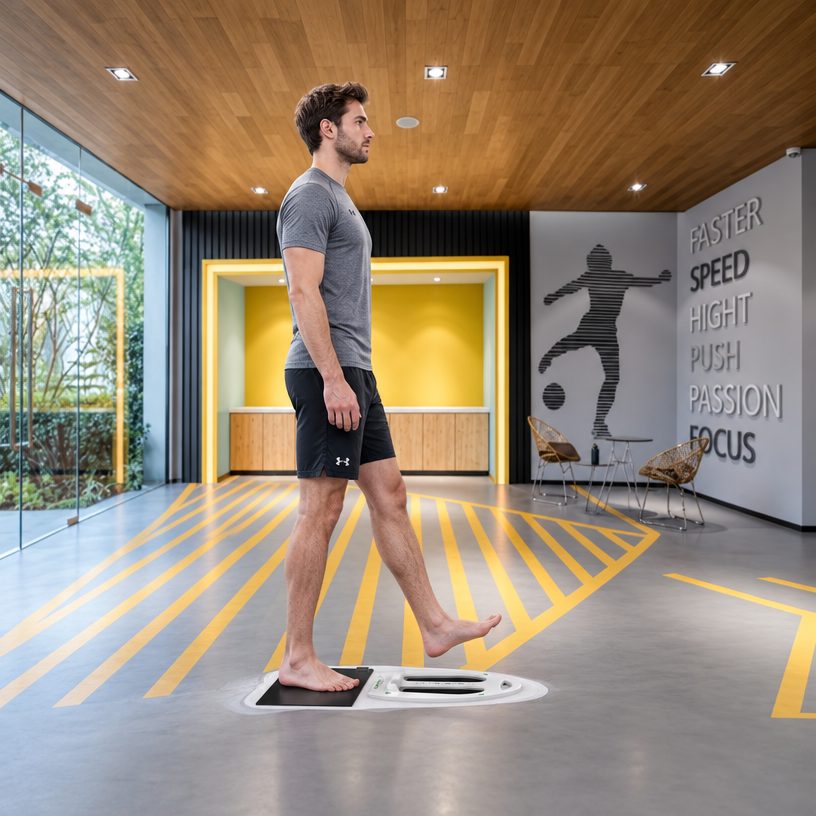
A portable foot device earns its place wherever the foot cannot conveniently come to a fixed plate. The X1 manual lists six settings: sports training institutions, sports venues, foot therapy centres, shoe stores, gyms and children’s fitness institutions. The shared thread is movement and throughput — the device travels to the foot, captures, and packs away, instead of asking a client to book a clinic appointment.
At one Canton Fair booth, a buyer running weekend mall events for a retail chain described the exact problem: his staff needed something that came out of a bag at a pop-up stand, recorded a customer’s arch and foot length in about a minute, and recommended a shoe size on the spot. He had been searching “portable 3D foot scanner” but what he described was a fitting-and-recommendation job, not a shape file. We showed him the X1’s footprint-and-alignment capture and the size recommendation, and the gap between the search term and the task became clear.
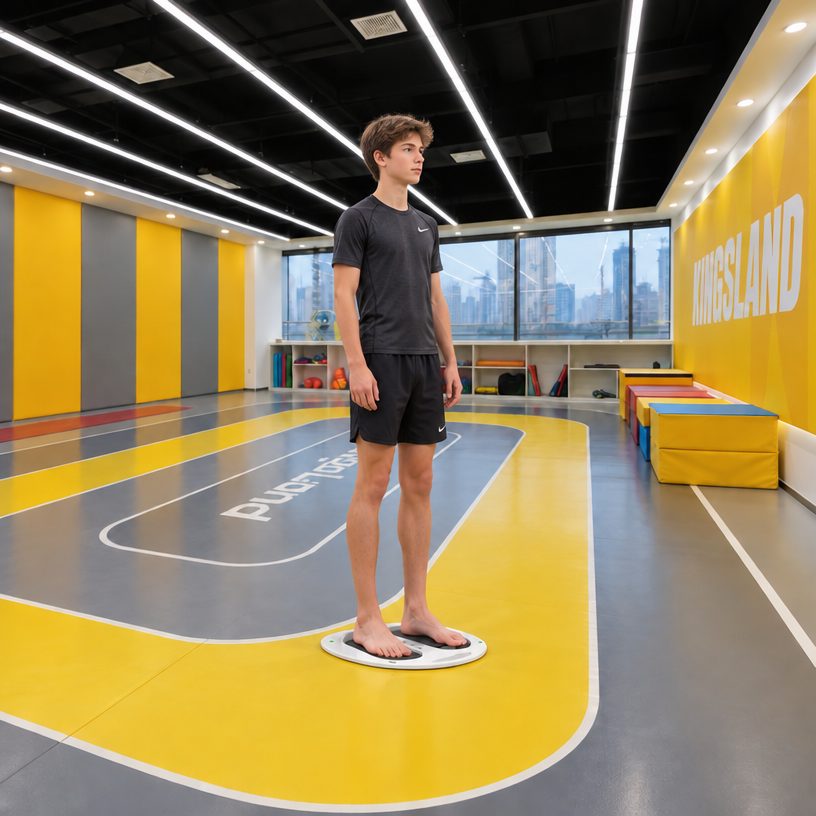
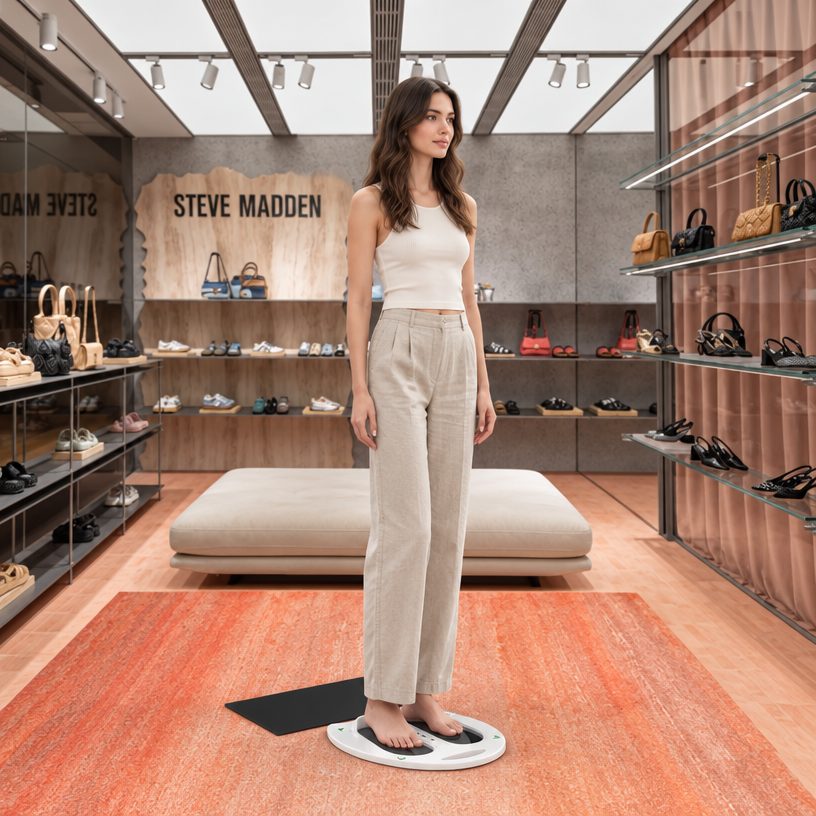
For a shoe store the use is direct: stand on the board, read arch type and foot length and width, get a recommended size range and, where the catalogue is loaded, a shoe model suggestion. For a screening day at a sports venue the same capture supports a gait-health screening, including flat-foot-risk screening, across a crowd in a short window. A children’s fitness centre checks growing feet at intervals. None of these need an installed laboratory; they need a device that sets up fast and stores in a case.
A sports training institution uses the X1 between sessions to track a roster without sending athletes to a clinic. A gym adds it as a quick add-on at the front desk. A foot therapy centre offers a standing check as part of a visit. The pattern across all six is the same: the capture happens where the person already is, and the record travels with them to the next step. At the exhibitions we attend in Guangzhou, Dubai, Vietnam, Brazil and Hong Kong, that portability is exactly what lets us show the capture to a shoe-store owner and a screening organiser in the same afternoon — the unit moves between conversations, not the other way round.
What the X1 records
Three core functions define the X1 in the manual: foot arch detection, lower-limb biomechanical alignment detection, and AI analysis with intelligent recommendation, carried out through AI-assisted report generation. The capture device is a temperature-sensitive footprint board. It works on a different principle from a pressure plate — it reads the footprint and the alignment image rather than recording the pressure map under load. That distinction is the point of the whole comparison: a pressure plate answers “how does load behave”, a temperature-sensitive board answers “what is the arch and alignment shape”, and a shape-capture scanner answers “what does the foot look like in space”. Three instruments, three questions.
The arch reading comes first. The system records arch type across a range from normal through mild, moderate and more pronounced presentations, and it reads the transverse arch as well. Alongside that it records tibial rotation and calcaneal status, so the lower-limb alignment view is part of the same capture rather than a separate appointment. Foot length and width close the measurement, which is what makes the size recommendation possible. Reading the alignment image alongside the footprint is what separates the X1 from a simple measuring mat; the tibial rotation and calcaneal status it records are part of the same standing capture, so a store or screening desk gets a lower-limb view without a second appointment.
The AI analysis then does two jobs. First, it recommends a shoe size range drawn from foot length and width. Second, where the system holds a footwear catalogue, it recommends specific shoe models. The recommendation can only draw on what the system knows, so a retailer who has not loaded their stock will not get useful model suggestions — which is why catalogue setup belongs in commissioning rather than as an afterthought. The size recommendation is the part buyers underestimate: because it draws on foot length and width captured in the same step, the store needs no separate measuring device, and the suggestion lands in the same conversation rather than after a back-office calculation.
The gait-health screening use is the fourth job. The same footprint and alignment capture supports a flat-foot-risk screening across a population, which is why the X1 fits screening days as well as retail benches. It is a screening and assessment record, not a clinical finding, and the report’s own wording points any medical need to a professional institution. The report carries a risk hint and an improvement suggestion, and the manual states the analysis is for reference, with any medical need referred to a professional.
How it compares with a fixed clinic system
In our pre-sales calls we keep hearing the same concern from clinics: “Will a portable unit replace our fixed plate?” The honest answer is that the two answer different parts of the same journey. A fixed system such as our F2 or F2-Pro pressure platform sits in a room, records static, dynamic and balance pressure in detail, and the report carries foot axis angle, contact and flat-phase proportions, maximum and average pressure, contact area and centre-of-pressure traces. It is built for the depth a clinic needs when a professional is interpreting the result.
The F2 platform’s three core functions — static pressure detection, dynamic pressure detection and balance pressure detection — give the clinician the load-distribution picture the X1 does not capture. For a podiatry or rehabilitation room interpreting a patient’s load pattern, that detail is the working material. The X1 never competes for that job; it competes for the job of being there when the clinic is not.
The X1 is not that instrument. It records arch, alignment and a gait-health screening in a device that weighs little and runs from a standard connection, so it reaches people a fixed plate never will — at a field event, in a store, at a training session. The trade is resolution and the range of measurements: the X1 gives a fast, repeatable foot-and-ankle record and a footwear recommendation; the fixed system gives the pressure-distribution detail a clinician works from. The trade is honest: a fixed platform needs a room, a bench and a trained operator; the X1 needs a flat surface and a host device. Neither is “more advanced” — they answer different questions, and a buyer who forces one to do the other’s job ends up with a record that misses the point.
The comparison is not “which is better”. It is “which question is being asked where”. A fixed platform answers “how does this foot load and move under controlled conditions”. A portable unit answers “what is the arch and alignment, and what size or model fits” in a setting with no installed lab.
How the two fit one workflow
The two devices stop competing once you map them to steps. A portable unit handles the first contact and the repeat contacts — field screening, retail fitting, a season of checks at a training centre. A fixed platform handles the detailed assessment a professional interprets in the clinic. In a distribution setup the X1 can sit at partner stores while the F2 platform stays at the hub clinic, so a customer gets a fast record at the shop and a deeper read where a clinician is present.
Our engineers, on a support call through our WhatsApp group, once walked a clinic through exactly this split: they moved the gait-health screening to the X1 at a partner gym, and reserved the pressure-platform session for the cases the trainer flagged. The clinic had been trying to run everything on one fixed plate and losing the field data entirely. After the change, each X1 session fed the same foot-and-ankle record, and the over-the-air update kept the software aligned across both sites.
Support for the X1 runs through a dedicated WhatsApp group with our engineers and over-the-air updates, so a setting that adds the unit to an existing clinic workflow gets help without a site visit. Where a buyer also runs our FX custom insoles, the X1’s foot-and-ankle record feeds the insole specification, so the field capture and the clinic assessment both feed one connected workflow rather than two disconnected files. The over-the-air update keeps the analysis software current across every site, so a store and a hub clinic reading the same record stay on the same version. For a children’s fitness centre the repeatable capture is the quiet advantage: the same stance instruction and operator, session after session, turn scattered measurements into a growth record a parent and a coach can actually read.
Frequently asked questions
Is the X1 a portable 3D foot scanner?
No. The X1 is a Portable Foot and Lower Limb Detection System. It captures data through a temperature-sensitive footprint board and dedicated analysis software, then analyses and recommends shoe size and model. The phrase “portable 3D foot scanner” is a market term for portable foot-capture devices; it is not how we describe the X1, because the X1 records arch and alignment rather than scanning foot shape. Three-dimensional scanning in the market means shape capture — a different question from the one the X1 answers.
Where would a portable unit actually be used?
In the field: community or workplace screenings, markets and retail events, home visits by a mobile service, and exhibitions where a device has to travel and set up quickly. The X1 manual lists six settings — sports training institutions, sports venues, foot therapy centres, shoe stores, gyms and children’s fitness institutions — all of which share the need for a device that comes out of a case, captures, and packs away.
What does the X1 record, and how is it powered and connected?
It records arch type, transverse arch, tibial rotation, calcaneal status, foot length and width, a recommended shoe size range, and an AI conclusion with a risk hint and improvement suggestion. The X1 runs on a web-based analysis system and connects to a host through the supplied cable, so the whole unit packs into one case without a separate power brick to manage.
How does it compare with a fixed clinic system?
A fixed platform such as the F2 or F2-Pro records static, dynamic and balance pressure in detail for a clinician to interpret. The X1 records arch, alignment and a gait-health screening in a portable form for field and retail use. The fixed system answers “how does load behave”; the portable unit answers “what is the arch and alignment, and what size or model fits”. They cover different steps, not the same one at different quality.
What is the minimum order and how is it supported?
The X1 is ordered as a single unit — the machine minimum order is one. Support runs through a dedicated WhatsApp group with our engineers and over-the-air updates, so a new site gets help without a visit. Our FAQ page lists warranty, testing and transit terms in full.
Does a portable scanner replace a full assessment?
No. A portable unit records in the field — arch, alignment and a gait-health screening — and feeds a foot-and-ankle record. The full assessment, with pressure-distribution detail and professional interpretation, stays in the clinic on a fixed system. The portable record is the first contact, not the conclusion.
What we would do next
If you are comparing devices under the term “portable 3D foot scanner”, send us one line describing the question you need answered — shoe size, shoe model, alignment record, or shape file — and we will tell you whether the X1 fits. Our FAQ page lists the order, warranty and transit terms in full.
If your workflow needs both a field record and a clinic-grade pressure read, look at the F2-Pro pressure platform alongside the X1; the two cover different steps rather than competing. The X1 product page shows the capture and report in detail.
This article is intended for professional and educational reference. It is not medical advice. Foot assessment equipment produces measurements, support and load-distribution records; clinical interpretation and any decision about care remain the responsibility of a qualified professional. We do not diagnose or treat. Certification scope is limited to the documentation we hold: European Union certification and ISO quality system certification.