
The buy meeting has been running for two hours. The line sheet is on the wall, the size curve is agreed, the depth per door is settled, and the markdown money has been argued over twice. Then someone asks whether the chain should carry insoles this season, and the room goes quiet — not because nobody likes the idea, but because the insole supplier talks about reorders while everyone in the room is still thinking in forward seasons. That silence is the whole problem in miniature. A footwear buy is a commitment made months before the goods land. An insole programme is a replenishment business that runs on weeks. Put them on the same calendar and one of them will be wrong.
This article is written for the person holding the buy plan. It is not about which insole to choose; it is about where an insole programme attaches to a shoe assortment without dragging the shoe buy out of shape. The sequence that works is unglamorous: build a fit list from the actual samples, tier the doors by what they can physically do, size the first order to the list rather than the buy, and then argue about attach rate instead of unit margin. Each of those has a failure mode, and the failure modes are predictable.
Two calendars that were never meant to meet
A shoe buy is a forward commitment. Styles are selected well before the season, the size curve is set from history, depth is allocated by door, and a markdown provision is made in the knowledge that some of it will not sell at full price. The whole apparatus assumes a long lead time and a large batch, because that is what shoemaking rewards. A buyer who tries to add anything to that plan at short notice is fighting the structure of the industry, not the supplier.
An insole programme runs on the opposite logic. It is a replenishment business: small batches, fast reorders, a range that stays on the shelf across seasons rather than being replaced twice a year. The two rhythms are not incompatible, but they are not the same rhythm, and the standard mistake is to treat the insole as one more line on the shoe sheet. That works for the first order and fails at the second, because the reorder arrives after the shelf has been reset and the sizes that sold are the sizes that are missing.
The consequence is familiar to anyone who has tried it. The first drop sells through on two or three sizes, the reorder lands six weeks later, the remaining stock sits in the tail, and the programme is declared a failure in a season where the product was never actually on the shelf in a buyable size range. Nobody in that story did anything unreasonable. The calendar did it.
The way out is not a longer lead time on insoles; the supply side can already move faster than the shoe buy. The way out is to decide, at the moment the buy is signed, which styles in the assortment will carry an insole at all — and to write that decision into the plan rather than leaving it to the store to improvise in front of a customer.
The fit list comes before the buy is signed
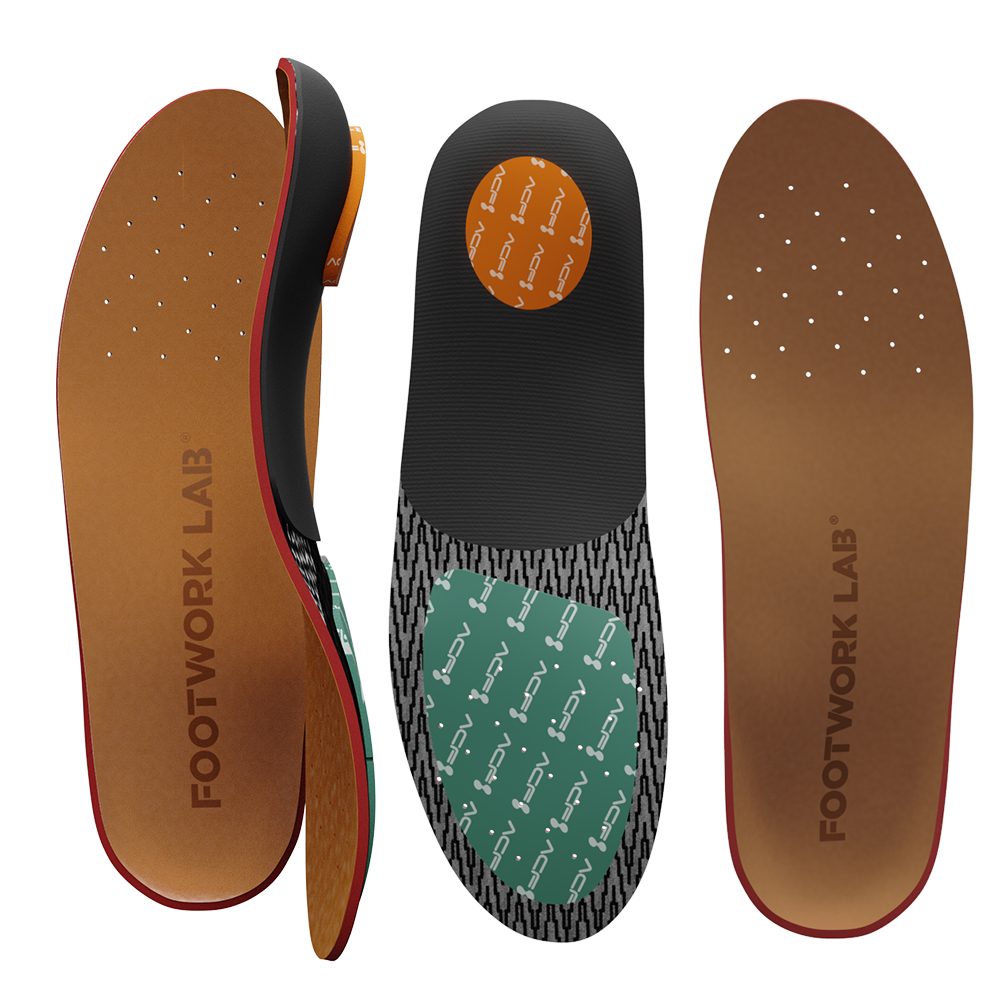
For every style in the plan there is one question worth asking: does it take a removable sockliner, and is there depth above it once that sockliner is out. The answer puts each style into one of three buckets. The first takes a full-length insole comfortably. The second takes a shorter piece under the heel and arch, or a thin full-length build, but nothing with volume. The third takes nothing at all — too shallow, or the sockliner is glued in and removing it changes the fit of the shoe.
This work has to be done while the samples are still in the room. After the buy, samples go back to the supplier and the list gets rebuilt from catalogue photography and a hopeful memory, which is guesswork with a spreadsheet around it. Pull the sockliner out of the sample, put a hand inside, press the toe box, and note what happens to the heel counter when a build goes in. It takes a few minutes per style and it is the single most useful hour in the whole programme.
The list then becomes a sales document rather than a buying document. Staff need to know which styles they can offer an insole with, which styles they can offer a thin one with, and which styles they should not promise anything on. A store that improvises here does damage twice: once to the customer whose shoe no longer fits, and once to the category, because the customer concludes that insoles ruin shoes.
We cannot build this list for you, and we would be wary of any supplier who offers to. We do not know your lasts, your upper materials or the depth your factory left above the sockliner. What we can do is send the measurements we need and read the list back for anything that looks wrong. The list is yours; the reading is a second pair of eyes.
Depth by door, not one programme for the chain
The second decision is where the programme actually lives. Chains tend to approve a range centrally and ship the same depth everywhere, which is efficient on paper and expensive in practice. A door that cannot fit an insole properly will not sell a range; it will discount it. A door that can fit one will sell a range faster than the plan predicts and run out in the middle of the season.
Tier the estate by capability rather than by revenue. The top tier is a door with a measurement step, a bench or at least a seat and a clear metre of floor, and a person whose job includes fitting. That door can carry the full range, take a measurement, and hold stock in the sizes its customers actually buy. It is also the door where a made-to-fit conversation is possible, which is a different sale from a shelf purchase.
The middle tier has space and a trained person but no measurement step. It carries a curated range — the builds that suit the shoe mix and need the least explanation — and it holds stock in a narrow band of sizes. The bottom tier is a small-format door with neither space nor a fitting habit. It gets a display and a referral, and the referral should point somewhere real: a flagship, a partner clinic, a date.
The temptation is to put a small range into every door so the chain can say the programme is national. That produces a thin spread of stock in places that cannot sell it, and the first sell-through report then argues against a programme that never had a fair test. Depth in fewer doors is a better first season than a token presence in all of them.
MOQ, samples and the rhythm of replenishment
The supply terms are what make the tiering workable. The minimum order for insoles is two hundred pairs, and mixed styles and mixed sizes count towards the same minimum. For a buyer this is the important line, because it means a single order can cover a size run across two or three models instead of forcing a choice between a full size run of one build and nothing.
Samples ship within three days, which is fast enough to be useful in a buy meeting rather than after it. Production runs at roughly five hundred to a thousand pairs a day, so a reorder placed in season does not need the lead time of a shoe. That is the structural advantage of the category, and it is wasted if the reorder is triggered on a fixed calendar rather than on sell-through.
Trigger replenishment on size-level sell-through, not on the average. A range can look healthy in aggregate while the three sizes that account for most of the demand are empty, and the aggregate figure will not tell you that. The tail sizes need presence rather than depth; the middle of the curve needs depth and a review every few weeks. This is ordinary retail discipline applied to a category that is usually managed by instinct.
The season boundary is the other rhythm to get right. Shoes reset; insoles do not. A build that suits a walking shoe in spring still suits it in autumn, and the customer who bought in March may come back in September for a second pair. Planning the insole range on the shoe calendar forces a markdown cycle onto a product that does not need one, and it teaches the customer to wait for a sale that should never have existed.
Argue about attach rate, not unit margin
Every insole conversation eventually reaches margin per unit, and that is the wrong argument to have first. On unit margin the insole competes with a commodity insert on a hook, and it loses on the only measure the buyer is looking at. The measure that decides whether a programme is worth its shelf is the attach rate: of the customers who bought a pair of shoes, how many left with an insole as well.
Attach rate is a function of three things, and only one of them is the product. The first is the fit list — whether the staff can offer an insole with the shoe the customer has chosen. The second is the fitting conversation, which is a short script at the bench rather than a pitch: a question about how long they stand, an observation about the shoe, an offer to try something. The third is stock in the sizes that sell, because an offer that cannot be fulfilled is a training exercise rather than a sale.
It is measurable, which is what makes it useful in a buy review. Count it at the till for a month: shoe transactions, insole transactions, and the overlap. Compare doors rather than seasons, because a programme in its first month is still teaching staff a script. A door with a fit list and no script will sit below a door with a shorter list and a habit, and that comparison tells you where to spend the next quarter.
We do not set retail prices, and we do not quote prices in a first conversation. That is the retailer’s decision, made against their own market, and a supplier who pushes a price position is usually protecting a margin rather than a shelf. What we will talk about is basket composition, markdown exposure and the fact that an insole does not go out of season — all of which belong to the buyer’s arithmetic rather than ours.
Doors where the programme should not go
The most useful thing a buyer can do in the first season is decide where not to launch. A door without a measurement step is the first exclusion, and it is not a comment on the staff. Without a measurement, the recommendation is a guess dressed as advice, the customer can tell, and the insole becomes a commodity insert competing on price with everything else on the rack. The category does not recover from that positioning quickly.
A door without fitting space is the second. Fitting needs a seat, a bench or a low surface, and enough room for a person to take a shoe off without leaning on a display. A store that fits shoes standing up in a narrow aisle can sell shoes; it cannot demonstrate an insole, and the demonstration is most of the product. Space is a floor-plan question, and it is cheaper to answer on paper than after the stock arrives.
The third exclusion is a door with no owner. If the programme belongs to the store manager, the assistant manager and the area manager at once, it belongs to nobody, and the first month’s stock sits in the back room because nobody has been given an hour to learn the script. One named person per door, with an hour of training and a way to ask questions, changes the outcome more than any range decision.
The fourth is a shoe mix that cannot take the product. A door whose assortment is mostly shallow, glued-sockliner styles will produce a fit list with almost nothing on it, and forcing a programme there means selling against the shoes. Saying no to these four doors in the planning meeting is cheaper than a failed first season, and it protects the doors that can carry the programme properly.
Frequently asked questions
Can insoles be added after the shoe buy is signed?
They can, but the fit list becomes guesswork because the samples have gone back. The workable compromise is to keep one sample of each key style, or to photograph the sockliner and record the depth while the samples are still in the room. Adding the range later is easy; rebuilding the list later is not.
What is the minimum order for a first season?
Two hundred pairs, and mixed styles and mixed sizes count towards the same minimum. That lets a buyer cover a size run across two or three builds rather than committing to one. A first order sized to the fit list, not to the shoe buy, is the usual recommendation.
How quickly can samples and reorders arrive?
Samples ship within three days. Production runs at roughly five hundred to a thousand pairs a day, so an in-season reorder does not carry the lead time of a footwear buy. The constraint on a reorder is usually the buyer’s decision cycle rather than the factory’s capacity.
Should every store in a chain carry the full range?
No. Tier the estate by capability: measurement and fitting space, fitting space alone, or neither. Depth in fewer doors produces a fairer first season than a token presence everywhere, and it keeps stock out of doors that would discount it.
Does an insole programme need a foot scanner?
Not strictly, but a measurement step changes the conversation from a shelf sale to an assessment, and it gives staff something to point at. A podoscope-style screening station is often enough for a shoe shop. What matters is that the measurement is part of the session rather than an optional extra.
How is attach rate measured?
Count shoe transactions, insole transactions and the overlap at the till over a month, then compare doors rather than seasons. A programme in its first month is still teaching staff a script, so the door-to-door comparison is more informative than a month-on-month one.
Do you set retail prices for the retailer?
No. Retail pricing belongs to the retailer and their market. We discuss order structure, range depth and replenishment, and we do not quote prices in a first conversation. A supplier who pushes a price position is usually protecting a margin rather than a shelf.
What we would do next
Bring the line sheet to the conversation. If you send the styles you are planning and the shoe samples you already hold, we will read the fit list back with you and flag the builds that will not sit inside a particular last. The insole categories page sets out the three series and the grading that separates them, and it is the right starting point before any range decision.
If the estate is mixed, tell us which doors have a measurement step and which do not. The tiering above is the part most chains skip, and it is the part that decides whether the first season produces a number worth reviewing. The article on a footwear store that fits by record describes what a door with a measurement step looks like in practice, and foot assessment as a session rather than a device covers the staffing side.
For distributors building a programme across several retail accounts, the partner page explains how we work with resellers, and the contact page reaches the team directly. We would rather spend the first call on your fit list than on a brochure.
This article is intended for professional and educational reference. It is not medical advice. Foot assessment equipment produces measurements and images; clinical interpretation and any decision about care remain the responsibility of a qualified professional. Certification scope is limited to the documentation we hold: European Union certification and ISO quality system certification.