
A pharmacy chain buyer stopped at our Canton Fair stand two fairs ago, picked up a daily-walk insole, bent it once, and said: this is the first thing at this show I could put on a shelf next week. She was right, and the observation is worth taking seriously rather than flattering. A footcare kit for pharmacy retail is a shelf object before it is anything else — it competes for a wire hook or a small bay, it must explain itself without a fitter present, and it must survive being picked up, bent and put back by a customer who has never heard of arch support grades. This article is about stocking that object well: what goes in the box when the range is our FX daily comfort series, how the two-hundred-pair minimum order works when the buyer wants mixed styles and mixed sizes, which claims stay off the packaging and why, and how the seasonal rotation keeps the bay earning its space through the year. It is written for the buyer who will never meet the customer at the moment of purchase, which is exactly why every decision in it matters more than it would in a fitted clinic.
The daily comfort series exists for the three situations a pharmacy customer actually lives in: everyday walking, leather shoes, and long hours of standing. Each situation has its own build, its own materials and its own grade profile, and the kit that stocks all three without explaining the difference will sell whichever one is at eye level — which is a stock decision, not a fitting one.
What a footcare kit is before it is a product story
On the shelf, a footcare kit is a bounded promise: a pair of insoles, a package that says what they are for, and a price a customer can decide about in seconds. Unlike a clinic fitting, nobody measures the foot. Unlike a shoe shop, nobody checks the shoe. The package does all the work a fitter would do, which means the kit’s contents have to be chosen for recognisability — situations the customer already knows they are in — rather than for technical breadth.
That constraint shapes the assortment from the start. The pharmacy customer walking past the footcare bay is not shopping for a biomechanical assessment; they are shopping for relief from a day they recognise — walking the dog, the commute in stiff shoes, the shift on a concrete floor. The FX daily comfort series maps onto those three recognitions almost one to one, which is why it is the natural backbone of a retail kit and why we steer pharmacy buyers towards it rather than towards the sport or rehab series for a first order.
The kit also has to be honest about what it is not. It is not a diagnosis, it is not a treatment plan, and nothing on the box should imply either. A pharmacy, of all retail environments, carries the credibility of its counter staff; a footcare kit that overpromises spends that credibility on a product that cannot cash it. The buyer who writes the packaging copy holds the same professional line the fitter does, just in print.
One more pre-story fact: the kit has a working life, and the customer should be told so. Our manual puts the everyday wear life of the daily builds at four to six months, and notes that high-intensity activity shortens both life and support. A package that says that plainly reads as more trustworthy than one that stays silent, and it sets up the repeat purchase honestly — the rotation section below comes back to this.
What goes in the box: three builds for three days
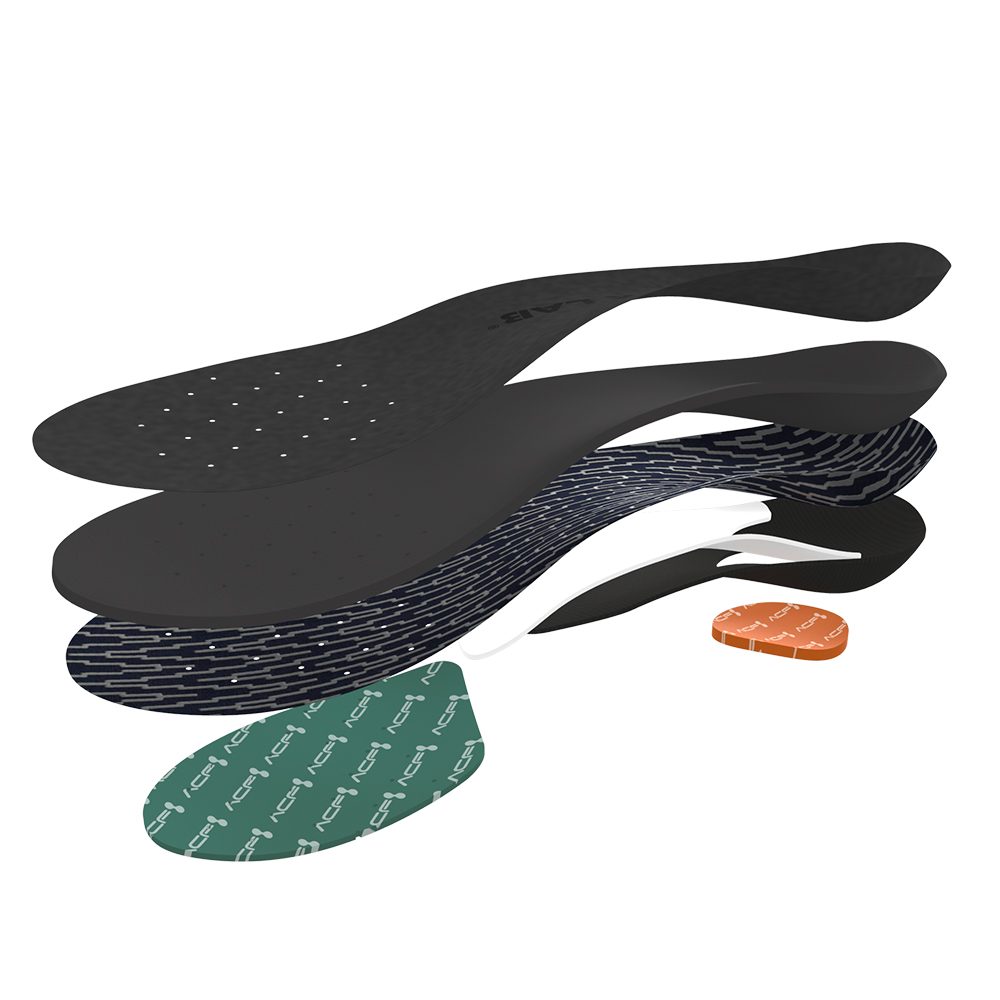
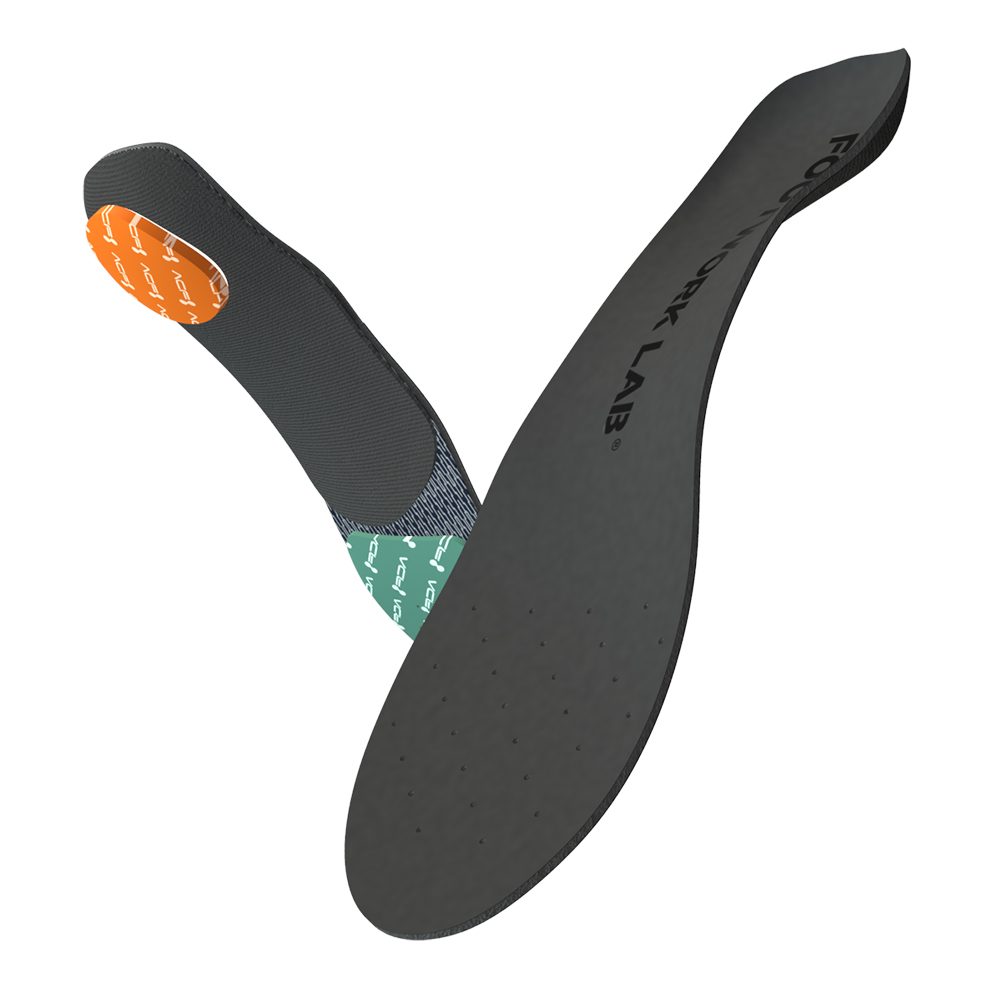
The everyday walking build is the anchor. Its stack runs from a mesh cloth through a cushioning layer to a shaped polymer board, with the design emphasis on the load zones a walk actually loads — the ball of the foot and the heel. The package line we suggest is situational, not technical: for everyday walking and daily comfort. Customers recognise their own day in it, which is what a shelf product needs.
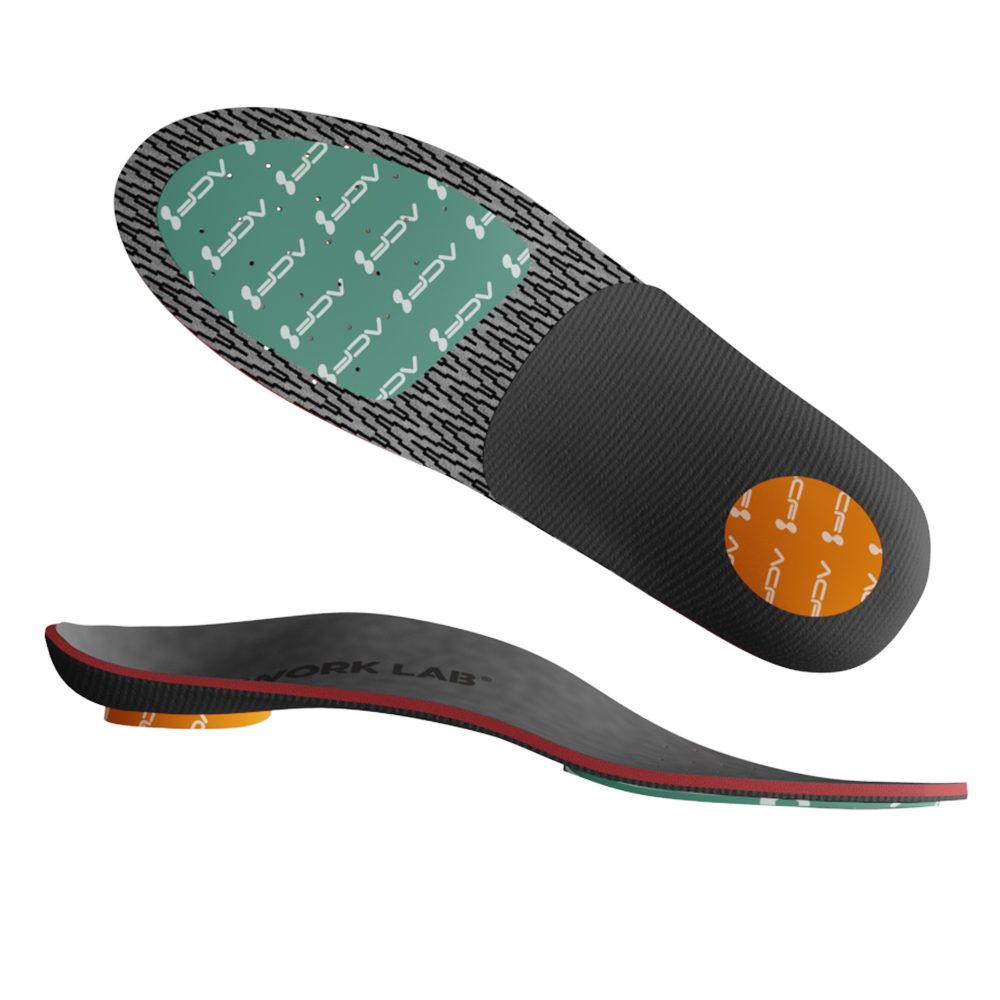
The leather shoe build answers a different and very specific complaint: the hard, shallow dress shoe. This build uses a suede top surface with a firmer shaping board and external cushioning pads at heel and forefoot, because a leather shoe has no depth to give and the cushioning has to sit where it can still work. The situational line writes itself — for dress and work shoes — and the pharmacy customer who stands all day in such shoes is one of the most reliable repeat buyers in the category.
The long-standing build is the third member, built with the standing day in mind: arch support that holds through hours on hard floors, cushioning at heel and forefoot, and stability against the small side-to-side sway that standing produces. Nurses, shop staff, kitchen workers and factory lines are all in this frame, and the package line for the situation is for long hours of standing. Stocked together, the three builds cover the working week of most customers who stop at the bay.
What we leave out of a first retail kit matters as much as what goes in. The sport builds assume a fitting conversation about the sport, the season and the shoe; the rehab care builds assume a professional in the loop. Dropping either into an unsupervised bay invites the wrong customer into the wrong product, and the returns and disappointments land on the pharmacy’s counter, not on ours.
The two hundred pairs: mixing styles and sizes without guessing
Insole minimum order is two hundred pairs, and styles and sizes can be mixed freely within the quantity. For a pharmacy buyer the number only becomes workable once it is read as an assortment problem rather than a hurdle: two hundred pairs spread across three builds and the size run is not a bulk order, it is a planned first season. The mixing right is what makes a first kit possible for a single region or even a single flagship store.
How to split it? Our suggestion, drawn from the orders that re-order most consistently: weight the everyday walking build heaviest, the standing build close behind, and the leather shoe build third but not token — dress-shoe customers are fewer and more loyal. Across sizes, follow the pharmacy’s own existing footwear or hosiery sales data if it exists; if it does not, the middle of the size run carries the bay and the extremes should stay shallow. Nothing in this split is clever; all of it is checkable after the first season, which is the point.
Samples make the split safer. Insole samples ship within three days, so a buyer can hold all three builds before committing the two hundred pairs — feel the board stiffness difference between the walking and standing builds, see how the leather shoe build sits in an actual dress shoe, and photograph the three packages against the planned bay. A three-day sample round is cheap against a mis-sized first season.
Production rhythm matters for the re-order, and it is part of the same arithmetic: insole capacity at the plant runs at roughly five hundred to a thousand pairs a day, and delivery runs from express at around six to seven working days to sea freight at around thirty to thirty-five days depending on the route. A pharmacy chain planning quarterly rotations can therefore plan re-orders against known dates rather than guesses — and the ODM and OEM options mean a chain that wants its own branding on the kit can have it within the same terms.
Packaging: the claims that stay off the box
The packaging conversation is where retail footcare goes wrong most often, and it is where our review process is strictest. What stays off: any promise that the insole treats, cures or corrects a named condition; any sentence that implies the product replaces professional care; any wording that turns a comfort claim into a medical one. The builds redistribute load and hold the foot’s position — those are physical descriptions of an object, and they are the claims the object can carry.
What can go on: the situational lines from the section above, the material structure in plain language, the wear-life honesty, and the wearing note our manual itself makes — that a first period of wear can feel unfamiliar and the wearing time should be increased gradually. That note sounds like a warning and functions as a promise kept: the customer who reads it is not surprised by the first day, and a customer who is not surprised does not return the product.
The four build grades — support, anti-torsion, cushioning and starting ability — mostly stay off pharmacy packaging, not because they are secret but because a shelf customer cannot act on them. They belong on the inside insert for the curious, and in the training sheet for the counter staff, who should be able to answer one question well rather than four questions badly. Counter staff who understand the three builds situationally sell the kit better than any front-of-pack copy.
We review packaging copy for our ODM and OEM partners before it prints, not because we enjoy vetoing marketing but because the box is the furthest extension of our factory and the claim on it is a claim about our product. Buyers are sometimes surprised that a factory pushes back on copy; the surprise usually ends the first time a competitor’s overpromised kit gets pulled from the same chain’s shelves.
Rotation: seasons, wear life and the re-order rhythm
A footcare bay earns its keep through rotation, and the daily comfort kit rotates on two clocks. The first is the wear-life clock: builds live four to six months in everyday wear, so a customer who buys in March is a re-order candidate in late summer. Chains that put the wearing note and the date on the receipt — or simply train staff to mention it — convert that clock into a planned return visit instead of a slow fade.
The second clock is seasonal, and it is gentler than footwear seasonality because feet do not change hobbies quarterly. What changes is emphasis: standing-work customers spike when the region’s retail and hospitality seasons hire; dress-shoe builds move around wedding and formal seasons; walking builds are steady year-round with a lift at New Year resolutions and pre-holiday shopping. The two-hundred-pair re-order is where those emphases get adjusted — the mixing right applies to re-orders exactly as to first orders, so the assortment drifts towards what the bay actually sold without a new contract.
The wear-life honesty pays a second dividend here. Because the package stated the four-to-six-month life and the effect of hard use, the customer returning at month five is returning on schedule rather than returning disappointed. A replacement sale built on a stated lifespan is the cleanest repeat business in retail, and it exists only because the first box told the truth.
Stock discipline closes the loop: check the bay monthly, pull damaged packaging immediately, keep the size run shallow at the extremes, and log what sold by build. A buyer who arrives at the re-order conversation with that log can adjust the split confidently; a buyer without it re-orders last season’s guess.
Where an assessment corner fits — and where it does not
Some pharmacies add a foot assessment corner beside the footcare bay, and the question of whether to is really a question of what the corner changes. A capture system such as the X5 detection system turns the bay from self-serve to staffed: a session records load, alignment and posture, the report feeds the conversation, and — where the FX builds are assessed through the BODYFIT AI evaluation with senthmetic flexible-fabric sensing — the record can specify a build the pharmacy then orders. That is a bigger service than a kit, and it needs a named operator and a protocol, exactly as in any other room.
The assessment corner and the kit are complements, not substitutes, in the rooms where both work. The kit serves the customer who wants today’s answer off the shelf; the assessment serves the one whose situation needs a measured build; and the corner’s reports should point the second customer at the first product when the record shows the standard build is enough. The failure mode is the reverse — selling assessments to customers a shelf product would have satisfied — and it fails on staff time long before it fails commercially.
What the corner must never do, in a pharmacy more than anywhere, is drift into diagnosis. The record is for reference, the reading belongs to a qualified professional, and the report says so on its face. A pharmacy that keeps that line sells both the kit and the service with its credibility intact; a pharmacy that blurs it has rented out its counter to a claim nobody in the building can stand behind.
For most buyers, the honest sequence runs kit first, corner later. The kit teaches the chain what its customers ask for, in which builds and sizes, and that sales log is precisely the evidence that justifies — or rules out — the assessment corner. We would rather a buyer open with two hundred pairs and learn, than open with a device and guess.
Frequently asked questions
What should a first pharmacy footcare kit contain?
The three daily comfort builds — everyday walking, leather shoes and long standing — weighted towards walking and standing, with the middle of the size run stocked deep and the extremes shallow. Leave the sport and rehab care builds out of an unsupervised bay; they assume a fitting conversation or a professional in the loop.
How does the two-hundred-pair minimum order work for mixed styles?
Styles and sizes mix freely within the two hundred pairs, so the quantity spreads across the three builds and the size run as one planned season. Re-orders carry the same mixing right, which lets the assortment drift towards what the bay actually sold.
Can we sample the builds before committing?
Yes. Insole samples ship within three days, enough to hold all three builds, test the leather shoe build in an actual dress shoe, and photograph the packages against the planned bay before the first production order.
What claims are not allowed on the packaging?
No treatment, cure or correction promises, and nothing that replaces professional care. The honest claims are physical and situational: load distribution, foot position, wear life of four to six months, and the note that unfamiliar builds should be worn in gradually. We review ODM and OEM packaging copy before it prints.
Can the pharmacy put its own brand on the kit?
Yes. Insoles are available for ODM and OEM programmes, so a chain can carry its own branding within the same minimum order, sample and production terms. Packaging copy is reviewed jointly before printing.
How often should the kit be re-ordered?
Plan around the wear-life clock — four to six months of everyday wear — and adjust the build split at each re-order against the bay’s own sales log. Production runs at roughly five hundred to a thousand pairs a day with express delivery at around six to seven working days, so quarterly rotations are realistic.
Does a pharmacy need an assessment device to sell the kit?
No. The kit is designed to work off the shelf. An assessment corner using the X5 detection system is a later, staffed service for customers whose situation needs a measured build, and the kit’s own sales log is the best evidence for whether the corner is worth opening.
What we would do next
Send us the bay: the width, the neighbouring categories, and whatever footwear or hosiery data the chain already holds. We will propose the two-hundred-pair split build by build and size by size, and the sample round ships within three days. The insole category page sets out the three FX series in the factory’s own wording.
For how a foot care range is built beyond the first kit, see a foot care product line, and for the order in which orthopedic products sell on a shelf, orthopedic products sell in order covers the sequencing we suggest to retail buyers. Sample and order terms sit on the FAQ page, and the contact page reaches the team directly.
This article is intended for professional and educational reference. It is not medical advice. Foot assessment equipment produces measurements and images; clinical interpretation and any decision about care remain the responsibility of a qualified professional. Certification scope is limited to the documentation we hold: European Union certification and ISO quality system certification.