
A visitor at our booth in Dubai laid out the situation most partnerships start from: she ran two shoe shops, her staff could capture a customer’s feet in fifteen minutes, and she wanted the finished builds to come from a factory rather than from a machine she would have to learn to run. Her question was not about equipment at all. It was about what actually crosses between a shop with a foot scanner and a custom orthotic insole machine line a thousand kilometres away — what gets sent, what gets checked, what happens when a pair comes back wrong, and what the factory can honestly promise about output. This article answers in her order. It covers how the two halves of one order are divided, what a handover must contain to be producible, how a batch is held to the sample that won it, the capacity and transit figures stated in plain words, the remake conversation that should happen before the first purchase order, and the point at which a partner should stop outsourcing and buy the line instead.
The structure behind the whole arrangement is simple to state. One partner captures; the other produces. The store or clinic owns the customer conversation, the record and the fitting. The factory owns materials, construction, consistency and delivery. Everything that goes wrong in this kind of partnership, in our experience, goes wrong in the space between those two halves — which is why the space deserves its own article.
Two rooms, one order: how the work divides
The capture side is a service business. A customer sits down, a record is taken on the assessment system — for our partners that is usually the X3, the X5 or the Q1P depending on the room — and the professional reads it beside the shoes and the customer’s account of their day. The output of that half is not a product. It is a decision: which build, which grades, which size, for which foot, inside which shoe. A store that treats the capture as a formality and lets the factory invent the decision has given away the part of the job the customer actually pays for.
The factory half of the arrangement is a manufacturing business. It receives decisions, not people. It never sees the customer walk, never hears the complaint about the right heel, and cannot rescue a vague order with intuition. What it can do is hold a construction stable across hundreds of pairs, which is precisely the thing a single workshop cannot hold steady. The division of labour works because each side does what the other cannot, and it fails the moment either side assumes it can do the other’s job from a distance.
The arrangement suits particular rooms. A shoe store that wants a fitting service without a workshop in the back, a rehabilitation clinic that captures but does not manufacture, a distributor assembling a network of small retailers who share one production relationship. What these buyers have in common is that their volume justifies a factory relationship but not yet a machine of their own — and the honest version of that sentence is a working plan, not a compromise.
At the Canton Fair we met a distributor who had spent a year trying to hold that middle position with three separate workshops and no written specification. Every shop in his network received builds that differed slightly, and every complaint landed on him. What he needed was not better workshops; it was one factory and one document.
What the foot scanner side owes the custom orthotic insole machine line
A producible order has four things in it, and the first is the record itself. The capture side sends what the assessment system generated: the contact pattern, the pressure readings, the alignment images, the arch and foot-type entries. Not a photograph of a screen — the actual record, in the form the factory’s intake process expects. A build that has to be reconstructed from a screenshot inherits every guess the screenshot leaves out.
The second is the build specification, written as entries a stranger can act on: support grade, anti-torsion grade, cushioning grade, starting ability grade, the series the build belongs to, and any construction note the fitter considers essential. The grades exist precisely so that a decision made in a shop in one country survives the trip to a production floor in another. Free-text descriptions — “a bit firmer than last time” — do not survive the trip, and we ask partners to translate every such sentence into a grade before the order leaves.
The third is quantities and sizes, stated so the line can schedule: how many pairs, in which sizes, split across which builds. Minimum order is two hundred pairs, and styles and sizes can be mixed within that minimum, which changes what a first order can look like — a store does not need two hundred pairs of one build; it needs two hundred pairs of its customers’ builds.
The fourth is the shoe context for each build where it matters. A build for a shallow leather shoe and a build for a deep trainer are different objects, and the factory can only respect that difference if the order says which shoe each build lives in. We do not accept a specification we cannot check against a record and a shoe; an order that arrives without those two anchors comes back with questions, and the schedule slips while everyone waits.
Inside the batch: how a production run holds its shape
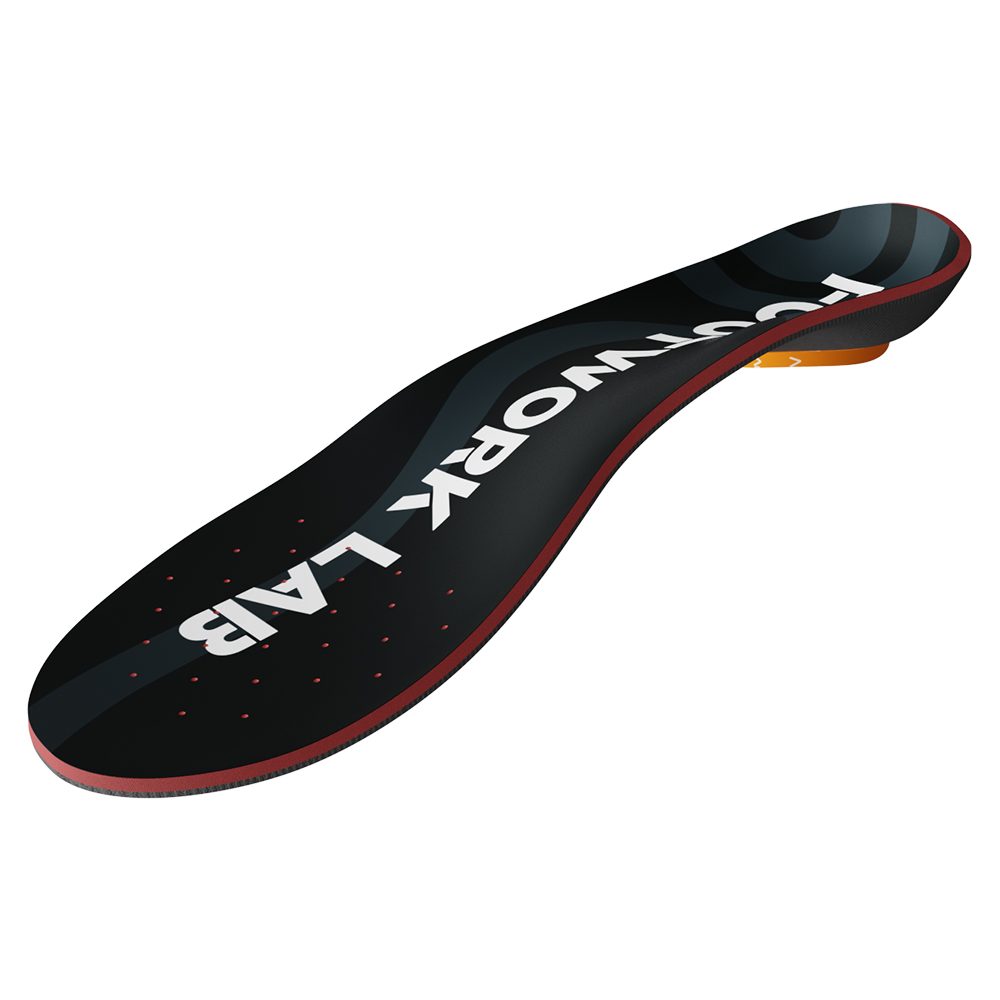
Our plant in Ruichang has been running since 2018, and the logic of a batch is the logic the whole factory is arranged around: the approved sample is the standard, and the batch is held to it. A partner does not buy a promise of what the builds will be like. They buy the pair they have already held, repeated. That is why we push the sample step so hard in pre-sales — samples ship within three days of a build being agreed, and the three days matter less than the principle: nothing enters production that the partner has not verified in their own hands, on their own customer, inside their own shoe.
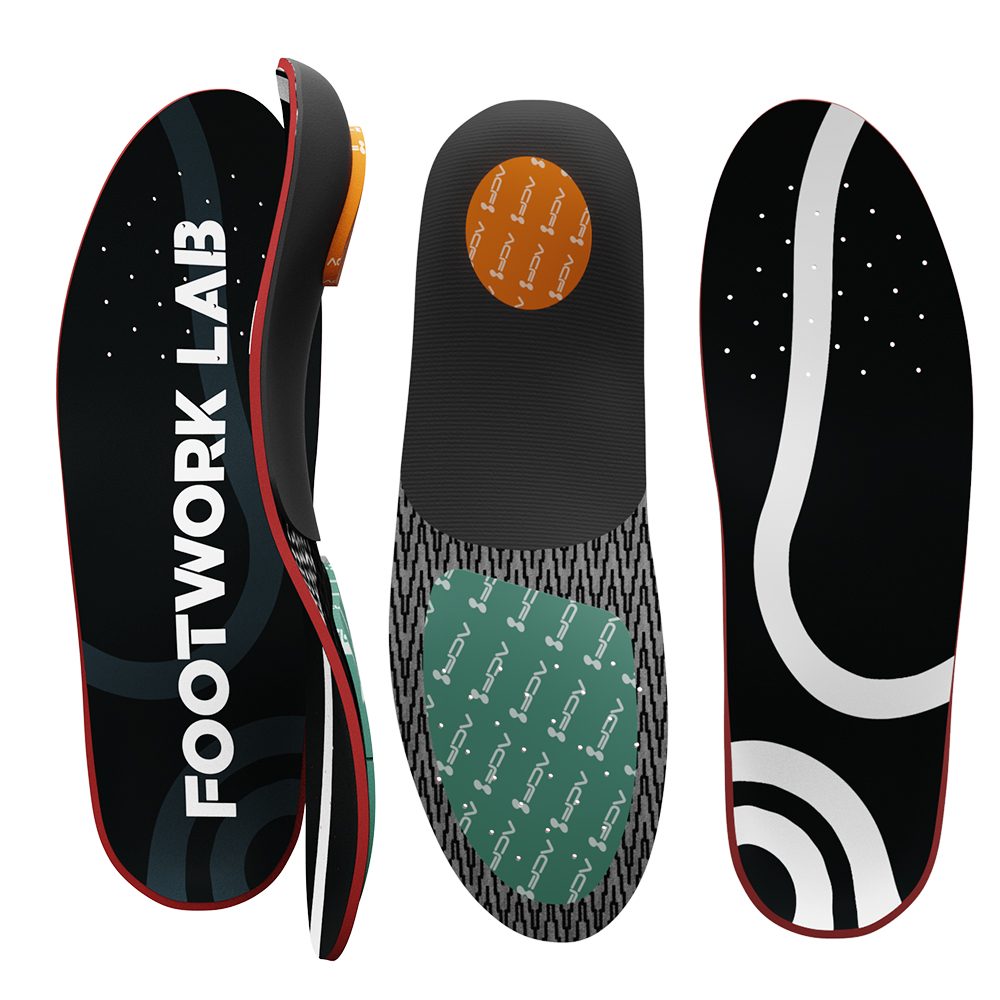
What consistency means in practice is worth spelling out, because it is the thing a trading company structurally cannot offer. The materials in each build — the mesh cloth surface, the Osolite cushioning layer, the AQ polymer shaping board — come from our own stock and our own construction records, not from whatever a subcontractor bought that week. The plant is ours; the people who made the sample are the people who make the batch. When a partner reorders a build a year later, the construction reference is still on file, and the new batch is compared to the same standard the first one was.
Batch thinking also changes how a partner should read the capacity figures. Roughly five hundred to a thousand pairs leave the line per day, and where a given order sits in that range depends on how many distinct builds it contains — a thousand pairs of one construction move faster than a thousand pairs of forty. Mixing is worth having, but it is paid for in changeover, and a partner who understands that plans orders that the line can run efficiently, which usually means consolidating rather than trickling.
One pre-sales conversation stays with me: a clinic group asked whether we could promise their fiftieth pair would match their first. Our answer was that no manufacturer can promise perfection across a batch, but a factory that owns its materials, its line and its construction records is the only structure in which the question even has an answer. A middleman can only forward the question to someone else.
Capacity, samples and transit, stated plainly
The numbers we publish are the ones we can stand behind, and they are fewer than some listings offer. Insole output runs at roughly five hundred to a thousand pairs per day across the plant. Samples ship within three days. From dispatch, courier delivery runs six to seven working days, air freight ten to twelve days, and sea freight thirty to thirty-five days. Those are the figures we give every partner, and we give them as ranges because a promise of the fastest possible number in every case is a promise no plant can keep.
The ranges also shape how a partner should schedule. A store running a fitting service on captured records lives or dies by turnaround: the customer who has been scanned wants to know when the pair arrives. The honest answer combines the two figures — production plus transit — and the partner who quotes the combination, rather than the optimistic end of each, keeps the appointments they make. We would rather a partner promised the customer four weeks and delivered in three than the reverse, and we build our communication around that preference.
Machines are quoted on the same plain-words principle. Minimum order is one unit, every unit is tested for seven days before it leaves the plant, and the figures for equipment output — three to five units per day across the machine line — are ranges for the same reason. A partner planning a rollout across several shops should plan on the slower end and treat anything faster as margin.
Remakes: agreeing the terms before the first order
Every partnership meets its first remake, and the partnerships that survive it are the ones that agreed what a remake is before the first purchase order was signed. The distinction we ask every partner to write down is between a build that does not match what was specified, and a build that matches the specification but does not suit the customer. The first is a production matter and comes back to the factory; the second is a fitting matter and belongs in the room where the record was taken. Neither category is shameful, but they have different owners, and confusion between them is what turns a small correction into a relationship problem.
The practical habits that keep remakes rare are unglamorous. Sample first, batch second, on every new construction. Grades written as grades, not as adjectives. The shoe named on every order line. Sizes double-checked against the size run the store actually sells, which we ask for precisely because the most common remake in this trade is not a construction error at all — it is a size run planned from memory rather than from stock records.
What we ask in return is that the fitting side owns its half. If a build arrives exactly as specified and the customer reports that the arch feels too firm, that is the professional’s judgement call to make with the record in hand — a grade adjustment, a review appointment, sometimes simply the break-in period the care notes describe. A remake claim filed for a fitting question burns goodwill in both directions, and it hides the information the fitter actually needs: which builds their customer base keeps coming back for.
When a genuine production error does occur, the conversation runs through the dedicated support group each partner gets — a shared channel with our engineers in it, not a ticket queue. The record of what was specified is on file, the sample is on file, and the discussion starts from evidence rather than from recollection. That is the real reason the paperwork in the earlier section matters: it is what both sides reach for on the day something goes wrong.
When the partner should buy the machine instead
The partnership structure has a ceiling, and honest suppliers name it. A workshop, clinic group or distributor whose volume grows past a certain point reaches the place where outsourced production costs more than a line of their own — not only in per-pair terms, but in turnaround, in the ability to offer same-day fitting, and in owning the whole story from capture to finished pair. When a partner starts asking about that, we answer it as a machine question, because that is what it is.
The equipment terms are the same ones we publish for every buyer. Minimum order is one unit, so the decision can be taken one machine at a time rather than as a factory-scale commitment. Each unit runs a seven-day test before dispatch and carries a twelve-month warranty covering non-human damage with free parts. After installation, support runs through the dedicated group with our engineers, remote assistance when a problem needs eyes on the software, and over-the-air updates for systems that stay connected. Machine bodies are available on an ODM basis; OEM branding of machines is a separate discussion with its own terms.
What the machine does not replace is the discipline. A workshop with its own line still needs a written specification, a sample-then-batch habit and a named operator — the failure modes just move in-house. A distributor we work with in Vietnam bought a machine for his flagship shop and told us the purchase had taught him more about our production floor than three years of ordering had, because he now faced the same changeover and consistency questions on his own bench.
Whether to partner or to produce is not a loyalty question and we do not treat it as one. Some rooms should never buy a machine; some rooms outgrow us as a supplier and become something more interesting — a manufacturer in their own right, with a factory relationship behind them. Both outcomes are fine by us, and we would rather a partner reached the right one for their volume than kept paying for the wrong arrangement out of politeness.
Frequently asked questions
What has to accompany a customer record when an order goes to the factory?
Four things: the record itself as generated by the assessment system, the build specification written in the four grade entries, quantities split by size and build, and the shoe context where the build has to fit a particular shoe. An order missing the grades or the shoe context comes back with questions before it enters the schedule.
Can styles and sizes be mixed within the minimum order?
Yes. The two-hundred-pair minimum can be mixed across styles and sizes, so a first order can cover the daily walking, leather shoe and standing builds in the size run a store actually sells, rather than two hundred pairs of one construction that may move slowly.
How quickly can a sample pair be produced and shipped?
Samples ship within three days of the build being agreed. The sample step exists so the partner can verify construction, fit and feel in their own hands before any batch is scheduled — nothing goes into production that the partner has not already held.
What does daily production capacity look like at the plant?
Insole output runs at roughly five hundred to a thousand pairs per day. Where an order sits in that range depends on how many distinct builds it contains, since mixing is paid for in changeover time. Partners planning rollouts are advised to schedule on the slower end of the range.
How are remakes handled between a store and the factory?
By agreeing the boundary first: a build that does not match the agreed specification is a production matter and returns to the factory; a build that matches the specification but does not suit the customer is a fitting matter for the professional who took the record. The sample and the written grades are what both sides refer to when the question arises.
If a partner buys the machine instead, what support comes with it?
Minimum order is one unit, tested for seven days before dispatch, with a twelve-month warranty covering non-human damage and free parts. Ongoing support runs through a dedicated group with our engineers, remote assistance where needed, and over-the-air updates for connected systems. Machine ODM is available; machine OEM is discussed separately.
Can the factory produce builds under a partner’s own brand?
Yes. Insoles are available under both ODM and OEM arrangements, which covers a partner’s own branding and packaging on the builds. What we do not offer is regional exclusivity — a partner’s brand is their own, but the factory’s capacity remains open to the market.
What we would do next
If you are weighing the two structures, start by writing down your real numbers: how many customers you capture a month, how many builds that implies, and what a week of turnaround is worth to your fitting conversations. Those three figures answer the partner-versus-machine question more reliably than any conversation with us can. The insole categories page and the partner page set out the arrangement in the factory’s wording, and our article on choosing between in-house production and a factory walks the same decision from the buyer’s side.
If the machine route is the one your volume points to, our article on a custom insole machine line from the inside describes what running one actually involves day to day. Order, warranty and transit terms sit on the FAQ page, and the contact page reaches the production team directly — include the monthly capture numbers when you write, and the first reply will be an arrangement rather than a brochure.
This article is intended for professional and educational reference. It is not medical advice. Foot assessment equipment produces measurements and images; clinical interpretation and any decision about care remain the responsibility of a qualified professional. Certification scope is limited to the documentation we hold: European Union certification and ISO quality system certification.