
A distributor stands in front of a planogram with a problem that sounds simple: her customers keep asking for “something for the feet”, and the shelf currently answers with forty loose items that have never been read as one offer. The question behind the planogram is really a question about assembly. Which things belong together on a shelf called foot care, what holds the combination together once the shopper picks it up, and — the part most buyers leave until too late — what the packaging is legally and honestly allowed to say about all of it. This article works through that assembly from the manufacturer’s side of the conversation. It covers why a foot care set sells only when nothing in it needs explaining twice, where an insole belongs in the combination and why it usually carries the set, how the packaging copy has to be written to stay inside what the products can actually claim, and how a two-hundred-pair minimum order spreads across the shelf without leaving the buyer holding a warehouse. The aim is a set a customer can understand in the time it takes to lift the box.
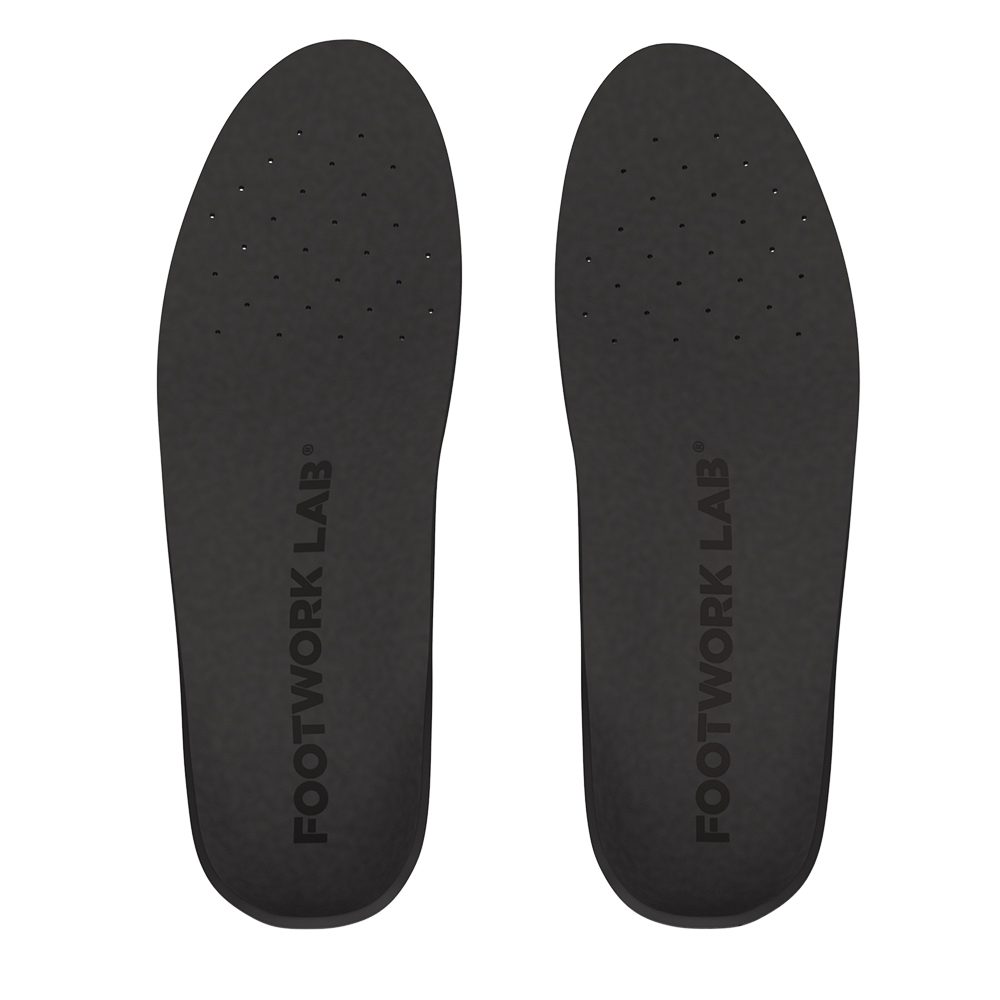
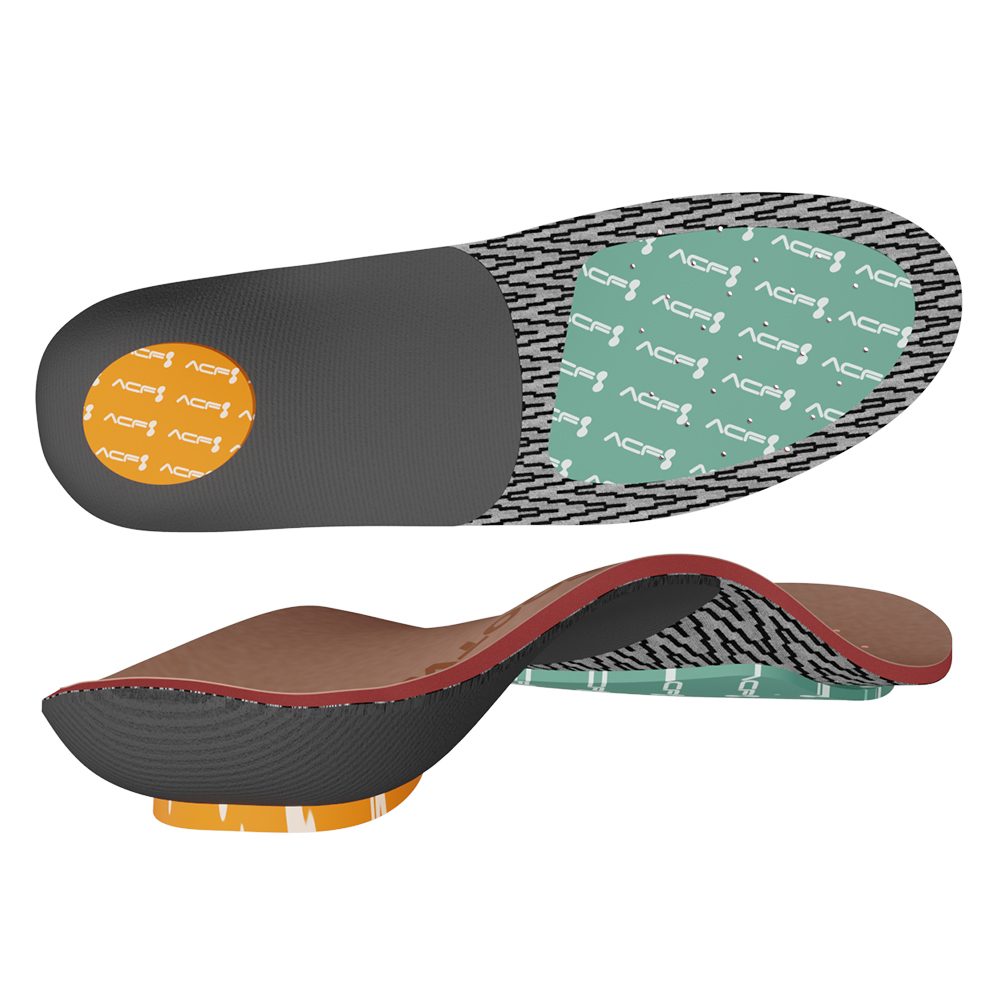
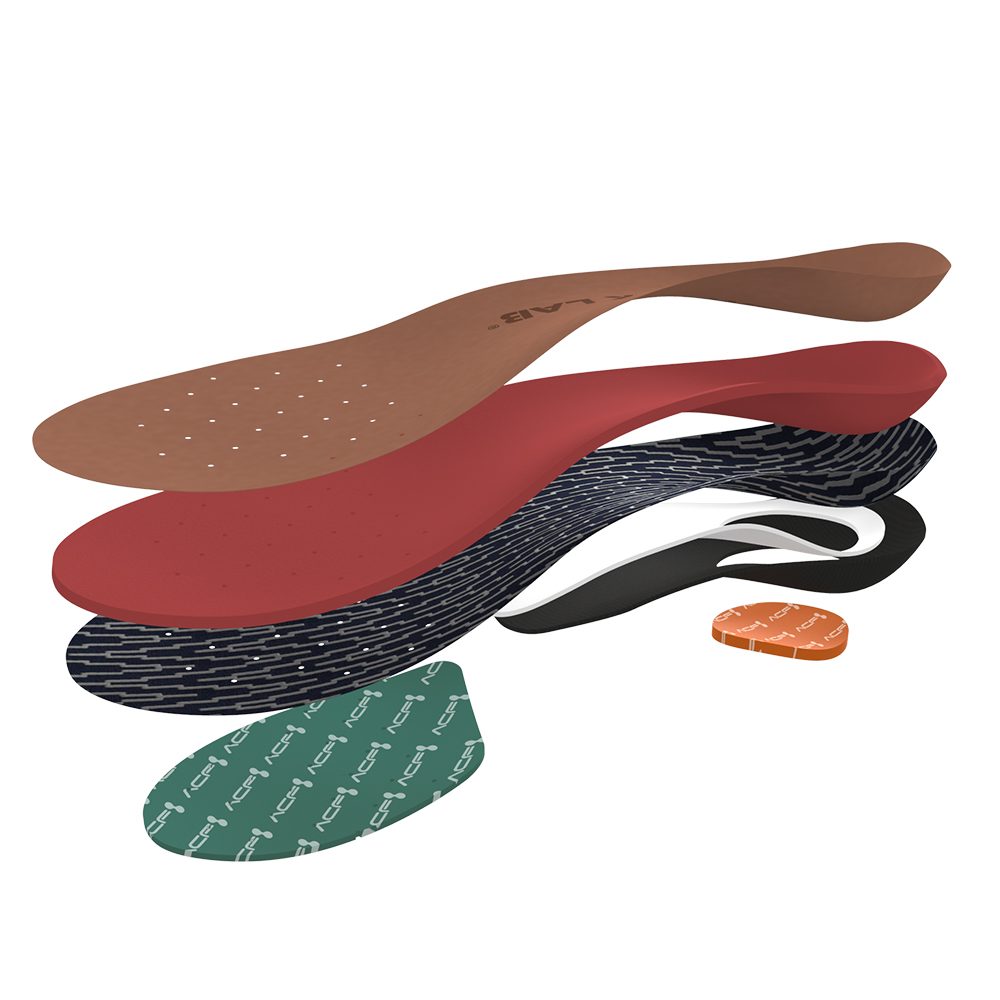
The insole at the centre of the discussion is the FX daily build: a mesh fabric top, an Ortholite comfort layer beneath it, and an AQ polymer shaping board carrying the contour. Around it, the FX range splits into three series — daily comfort, recovery care and sport — each graded on support, torsion resistance, cushioning and propulsion, which is the vocabulary a set’s shelf talker has to borrow from.
What a foot care set is, once it is on the shelf
A set is not a bundle. A bundle is two or three items sold at one price, and shoppers read it as a discount with extra steps. A set is an argument: these things belong together because they answer one need, in one order, and the shopper who buys it finishes the day with a complete answer rather than a collection. On a foot care shelf the argument usually runs — clean and soften, support and cushion, repeat daily — and every item in the box has to earn its place inside that sentence or the set reads as padding.
The test we hand distributors is brutal and quick: hold the set in one hand and explain it aloud in two sentences. If the explanation needs a third sentence, an item is doing work the shopper cannot see, and that item either moves to another shelf or waits for a different set. Sets that pass the two-sentence test survive contact with a busy shop floor; sets that fail it end their lives as discounted singles, which is the worst of both worlds for the margin. The test costs nothing to run, and it works just as well before the set exists as after — which is the moment to apply it.
The composition of the argument matters more than the composition of the box. Cream, socks, tools and an insole can all sit inside a foot care set, but they are not equal partners: the care items maintain, the insole supports, and the set only makes sense if the shopper can tell which job each piece does without reading the small print. This is a design constraint before it is a marketing one, and it shapes every decision that follows.
One discipline belongs at this stage, and buyers resist it: resist the temptation to add. A set with five items where two would do is not richer; it is slower at the shelf and heavier in the stockroom. The distributors whose sets reorder are the ones who removed something at the planning stage. The set is finished when there is nothing left to take out, not when there is nothing left to add.
Why the insole usually carries the set
Among the candidates for the anchor position, the insole wins on one criterion that matters more than margin: it is the piece whose benefit the customer re-notices every day. A cream is applied and absorbed; a sock is worn and washed; an insole sits under the foot through every hour of standing and walking, and the shopper who forgets why she bought it is reminded by the afternoon. That daily re-encounter is what turns a one-time set purchase into a habit, and habits are what the second order is made of.
The insole is also the piece with a natural expiry. Our guidance for daily wear is a working life in the four-to-six-month range, sooner under heavy use or constant heat. For a shelf planner that expiry is not a defect; it is a metronome. The set sells once, the insole inside it wears on a schedule, and the customer returns on that schedule for the replacement — which the retailer should hold as a single, ready to sell. No other item in a typical foot care set generates its own return date.
Anchor does not mean most expensive, and the planogram should not be built as if it did. The care items around the insole carry their own margins and their own impulse appeal; the insole’s job is to justify the set’s existence and to carry the story. The price point of the set should follow from the cost of the argument, not from the cost of the priciest item inside it. In practice the insole is also the piece that benefits most from being sold with a conversation — a fitting, a record, a word about support — which is exactly what a set display next to a counter makes possible.
There is a version of the set for every tier, and the tiering should follow the FX series rather than price points invented at the shelf. A daily comfort build anchors an everyday set for customers who stand and walk. A recovery care build anchors a set aimed at the flat foot group and at customers asking for pressure relief under a loaded sole. A sport build anchors the version for the gym bag. Three sets, one grammar, three conversations — and the shelf stays legible instead of sprawling.
The packaging conversation: what the box may and may not say
Packaging is where foot care sets live or die, because packaging is where the temptation to overclaim is strongest. A set is being sold as a complete answer, and the fastest way to write a complete answer is to promise something none of the components delivers. The red lines we hold on our own packaging, and ask buyers to hold on theirs, are simple: no cure claims, no treatment promises, no medical language on a consumer box, and no borrowing of conditions the product was not built for.
What the box can say is what the object does. The insole holds a contour under the arch, spreads load across the sole, cushions the landing points and carries a grade for each of those jobs. That is a description, it is accurate, and it is enough. Descriptions sell better than buyers expect, because a shopper who understands what the object does can explain it to the next person — and the set that gets explained between customers is the one that moves without the shelf talker doing overtime.
The insole inside a set is a consumer product, and the consumer context tightens the language further than the trade context does. A clinic’s packaging can sit next to a report and a professional’s judgement; a shelf’s packaging stands alone in an aisle. Phrases that imply a diagnosis or a promised outcome — the classic relief-and-fix formulations — are the ones that return as complaints, refunds and, in some markets, regulatory attention. We decline OEM packaging copy that crosses the line, and we would rather lose the artwork than lend the factory’s name to a claim.
One more line belongs on every set’s inner card, and it costs nothing: the insoles are one part of foot care, not a substitute for it. A customer whose reason for buying is a symptom that has lasted months should hear — from the card, not only from the staff — that a professional is the right address for that question. The card protects the retailer, and paradoxically it raises trust in everything else the box says.
The order behind the shelf: how two hundred pairs spread
The insole minimum order is two hundred pairs, mixed across models and sizes, and the planogram should be drawn around that clause rather than around a fantasy of uniform stock. Two hundred pairs spread across three series and a realistic size curve is the opening inventory of a set programme; two hundred pairs of one build is a promotional one-off. The buyers whose sets survive the first season are the ones who treated the minimum as a range, not a quantity.
The size curve deserves its own hour of planning, because the most common failure of a first order is not the mix of builds but the shape of the sizes inside each one. A set aimed at staff who stand all day weights the middle sizes heavily; a family-facing shelf spreads wider. We ask for the split rather than shipping a default curve, and buyers who can answer from their own traffic data — however rough — reorder with fewer dead sizes than buyers who guess.
Samples belong in the sequence before the two hundred pairs, not after. Insole samples ship within three days, and the sensible routine is to sample the anchor builds of each set, put them into the shoes the target customer actually wears, and correct the specification before the shelf inventory exists. A set built around a sample that has been worn for a fortnight by the buyer’s own staff is a set with a story the counter can tell honestly.
Behind the order, capacity and cadence. Insole production runs at roughly five hundred to a thousand pairs a day, so a first order is a slot rather than a project; ODM and OEM work — the buyer’s brand on the set — adds lead time for artwork and packaging that should be planned at the start, not discovered at the end. And because the insole wears on a four-to-six-month schedule, the reorder conversation should be booked at the moment of the first delivery. A set programme that has to remember to reorder will forget; one that has a date will not.
Selling the set: the counter conversation that explains it once
A foot care set asks more of the counter than a single product does, because the shopper is buying an argument and the counter has to deliver it in one exchange. The stores that sell sets well run a short routine: ask what a typical day on the feet looks like, show the anchor insole and name its grades in plain words, hand over the set as the complete answer. No item needs a separate pitch, which is the whole point of having assembled one in the first place.
Where the store has assessment equipment, the set gains a front door. A pressure record taken at the counter gives the insole recommendation something to stand on — where load rests, how the arch behaves, how the sides compare — and the customer who has just seen her own footprint accepts the shelf talker’s description as a description of her. The assessment also filters honestly: some customers’ questions belong with a clinician, and the record makes that visible before the set is sold to the wrong question.
The sale is also the start of the second one, and the counter should treat it that way. The set carries the story home; the insole carries the daily reminder; the wear schedule carries the customer back. A card in the box with the replacement window written on it turns the return into an appointment rather than a coincidence. Retailers who run this loop describe the second sale as easier than the first, which is what a well-built set is supposed to achieve.
The last word on selling belongs to restraint, and it is the same restraint that shaped the packaging. A set sold as care is returned when it fails to care; a set sold as support, comfort and a daily habit is a product with a job the customer can verify. The stores that keep the language on the product’s side of the line are the ones whose foot care shelves are still stocked, and still believed, a year later — and the belief, once earned, is transferable to whatever the retailer adds to the category next.
Frequently asked questions
What should a foot care set actually contain?
Whatever passes the two-sentence test: care items that maintain, and an insole that supports, arranged so the shopper can tell which piece does which job without reading the small print. Three or four pieces usually complete the argument; anything more slows the shelf and loads the stockroom. The composition should follow the FX series grammar — daily, recovery or sport — rather than price points.
Why put the insole at the centre of the set?
Because its benefit is re-noticed daily and it wears on a schedule. The insole sits under the foot through every working hour, and our guidance puts a daily-wear build’s life at four to six months, which sets a natural return date for the replacement purchase. No cream or sock in a typical set generates its own reorder.
What can the packaging legally and honestly say?
What the object does: holds a contour under the arch, spreads load, cushions the landing points, carries grades for support, torsion resistance, cushioning and propulsion. No cure or treatment claims, no implied diagnosis, no relief promises on a consumer box. We decline OEM copy that crosses that line, and we recommend the same rule for the buyer’s own artwork.
How does the two-hundred-pair minimum spread across a set programme?
Mixed across models and sizes, by design. The recommended shape is two or three anchor builds — one per set tier — each weighted to the size curve of the buyer’s actual traffic. Two hundred identical pairs is a one-off promotion; two hundred spread pairs is the opening inventory of a programme.
Do we need samples before committing the first order?
Yes, and they arrive quickly: insole samples ship within three days. Wear the anchor builds in real shoes before the specification is finalised, ideally for a fortnight on staff whose days resemble the target customer’s. The corrections that surface in that fortnight are the ones that would otherwise surface in the returns.
Can the set be sold with the buyer’s own brand?
Yes — insoles accept ODM and OEM work, so the buyer’s brand, packaging and size curve can start from the factory rather than from a catalogue. The planning point is lead time: artwork, packaging and labelling conversations belong at the start of the schedule, because they are the part least recoverable at the end.
Where does an assessment device fit into a foot care shelf?
As the front door, not the shelf itself. A pressure record taken at the counter grounds the insole recommendation in the customer’s own footprint and makes the set’s story verifiable. It also filters honestly: questions that belong with a clinician become visible before the set is sold against the wrong question.
What we would do next
Draw the set on one page before ordering anything: the pieces, the job of each, the anchor build and its grades, and the two sentences the counter will say. Send that page through the contact page and we will mark where the set is carrying weight it cannot hold. The insole range page lists the three series and four grades in the factory’s own wording, and the FAQ page carries the sample and minimum-order terms.
For the shelf context, a foot care product line follows one retailer’s assortment from single items to a programme, and orthopedic products sell in order explains why the sequence in which a customer meets the products decides what they buy next. Both make useful briefings for a category manager.
This article is intended for professional and educational reference. It is not medical advice. Foot assessment equipment produces measurements and images; clinical interpretation and any decision about care remain the responsibility of a qualified professional. Certification scope is limited to the documentation we hold: European Union certification and ISO quality system certification.