
A distributor stands at the stand at the end of a long fair day and asks the question that sounds like one purchase: should we buy a machine for orthopedic insoles, or keep outsourcing? He has been quoting fitted pairs to clinics for two years, his supplier’s lead times have started to slip, and a machine looks like control. The honest answer is that he is not weighing one decision but three: whether a bench covers his order book, whether a line ever pays for itself at his volumes, and how much of the work he will keep sending away even after either one arrives. Buyers who treat the question as a single switch tend to buy the wrong thing quickly; buyers who separate the three decisions tend to buy the right thing slowly, which is the better trade. This article takes the three decisions one at a time, puts real order-book arithmetic under each, and spends a fair amount of space on the part nobody quotes: quality control and the remake question, because whoever owns the fault owns the customer relationship. It ends with the limits we state from our side of the table, including the fact that we sell equipment and make insoles both, and what that means for the advice we give.
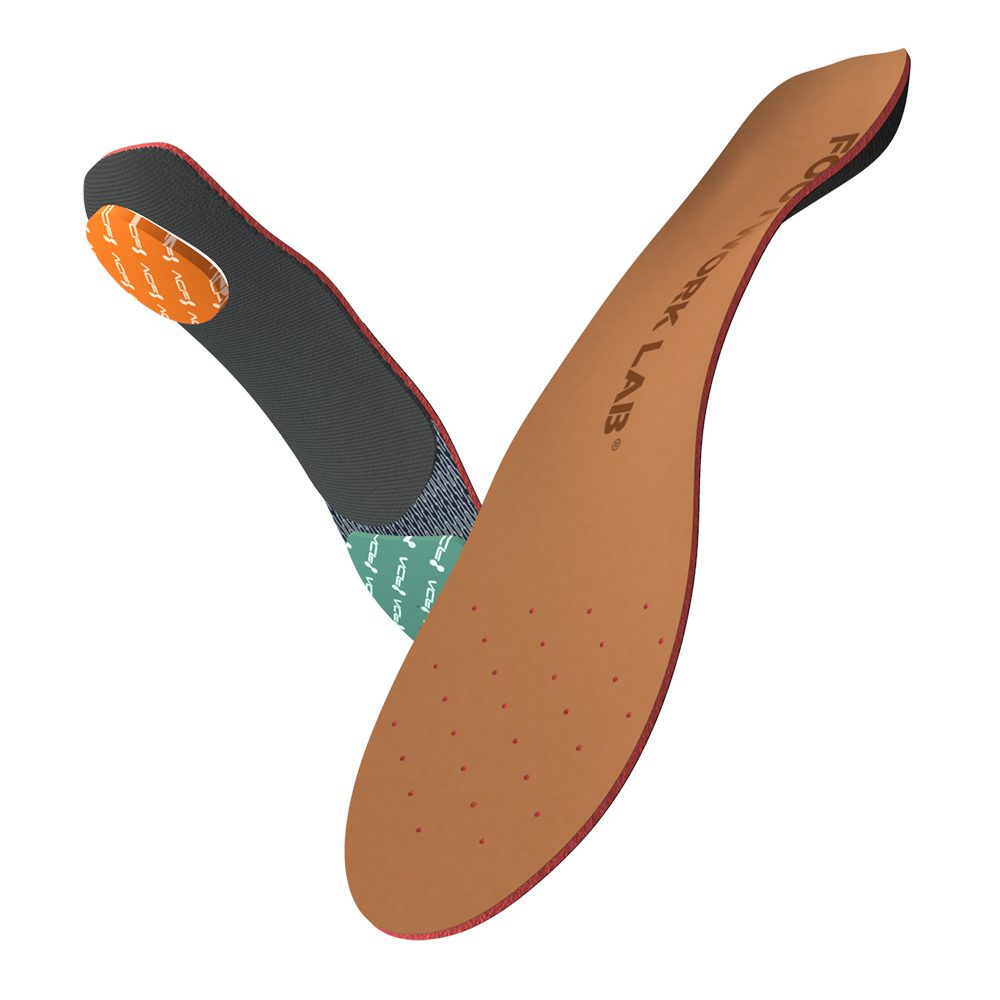
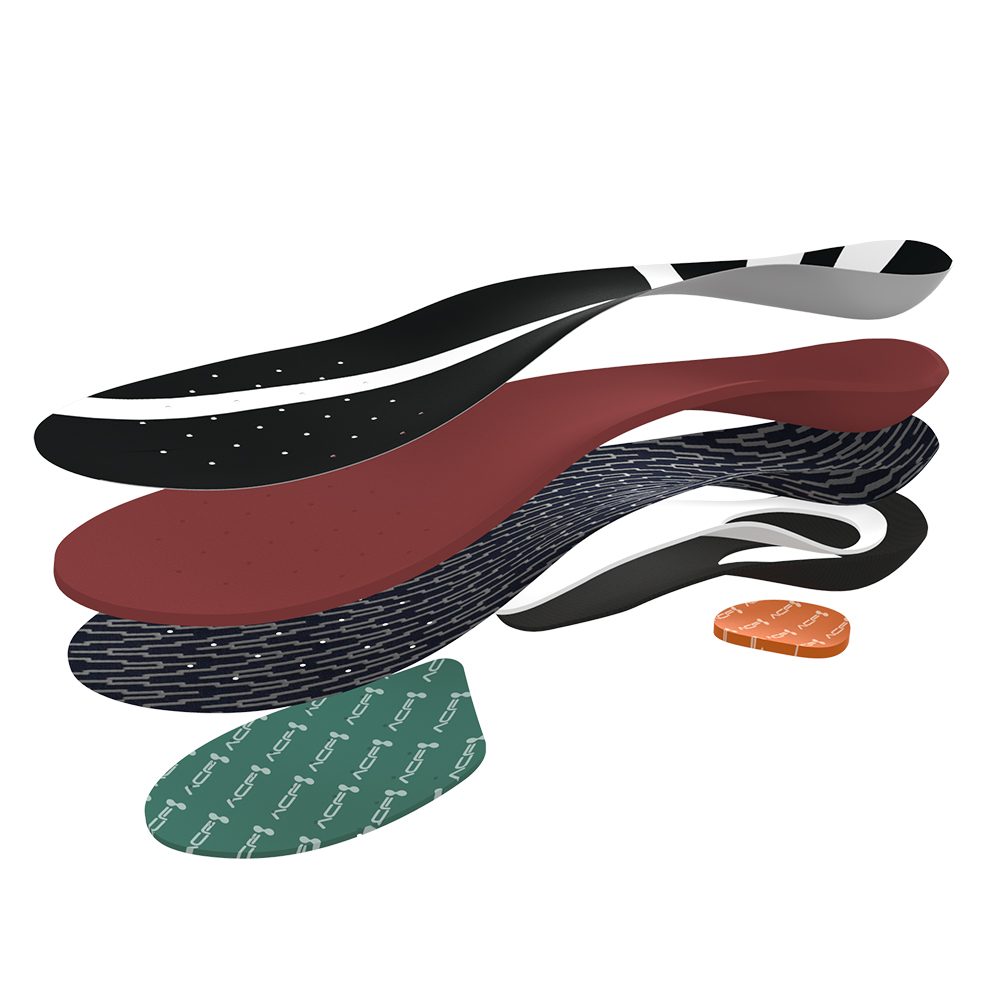
Some context first, because the three-way choice only makes sense against what production actually involves. A custom orthotic insole is a layered object: a cover against the foot, a cushioning layer, and a shaping board that holds the arch contour and decides how the build behaves. Producing it means heating, forming, grinding and finishing, with a specification written by somebody who assessed the foot. The equipment question is really a question about where those steps happen and who answers for them.
The three purchases hiding inside one question
The first purchase is a bench: a workstation that produces fitted pairs one at a time, in the same room where the customer is assessed. This is the on-site customisation model — a heating box, shaping pillows for adults and children, and the auxiliary pieces, exactly the module that sits inside our FMP system. A bench serves a service business: podiatry clinics, shoe stores with a fitting counter, rehab rooms. Its output is measured in pairs per day that a single operator can honestly finish, and its value is measured in the appointment, not in the warehouse.
The second purchase is a line: moulding, cutting and finishing equipment arranged for continuous production, with more than one person working it and quality control running as a stage rather than as a glance. A line serves an order book, not an appointment diary. It changes the business from “we fit insoles” to “we supply insoles”, which is a different company wearing the same name, and the buyers who regret their line rarely regret the machine itself — they regret the company it turned them into.
The third purchase is no purchase at all: continued outsourcing, with the specification written in-house and production left with a factory. This is the option buyers treat as a stopgap and professionals treat as a standing part of the mix, because even line owners outsource something — overflow, unusual builds, the first sample of a new style. The real question is not whether to outsource but which parts of production are worth owning and which never were. Holding all three options in mind at once is what turns a fair-day impulse into a defensible plan.
What a bench actually covers, and what the order book asks of it
A bench produces what the room in front of it can sell. In a clinic, that is the pairs fitted to patients during appointments — a handful a day, each one specified from that patient’s own record. In a shoe store, it is the pairs fitted to customers who bought the assessment session. What the bench cannot do is fill an external order book: a wholesaler asking for a few hundred pairs across six sizes will not be served by a machine that makes one pair at a time while a customer watches.
The arithmetic most buyers run before the exhibition conversation ends is simple and worth running on paper. Count the fitted pairs the business realistically sells in a week. Compare that against what one trained operator can produce in the same hours, allowing for the assessment, the specification, the forming, the grinding and the fitting check. If the first number sits below the second, a bench covers the order book with room to grow. If it sits above, the business already needs either a second bench and a second operator or a relationship with a factory — and the buyer usually knows which one the labour market will give them.
The bench’s quiet advantage is that it changes nothing about the sales conversation. The customer sees the pair made, which is a demonstration no catalogue can match, and the specification never leaves the building, which shortens the loop between what the record showed and what the build did. Its quiet cost is the operator: a bench without a trained person behind it is furniture, and training a person takes longer than installing a machine.
When a line pays for itself, and when it just fills a room
A line earns its place at volumes a bench cannot touch. For comparison, our own plant runs insole production at roughly five hundred to a thousand pairs a day, and that figure exists for a reason: it is the range at which dedicated moulding capacity, multiple stations and a real quality-control stage start to make sense against their own costs. A buyer whose order book holds a few dozen pairs a week is not underusing a line by not buying one; they are using it correctly by not buying one.
The honest test is sustained demand, not peak demand. Order books spike — a retail chain places a push, a season starts, a contract lands — and a line bought against a spike spends most of the year as expensive idle capacity. The buyers who justify a line are the ones who can show two years of flat, repeating demand: steady reorders from clinics, a replenishment rhythm with retailers, a contract with predictable volume. One good quarter is not a reason to buy a production line, however good the quarter felt.
Space, labour and quality control are the three costs that arrive with the line and never leave. Moulding equipment needs floor, power and extraction. Continuous production needs more than one pair of hands, arranged in shifts. And quality control stops being a glance and becomes a stage with records, because a line producing hundreds of pairs a day produces rejects at a rate no single person can track from memory. Buyers who budget for the machine and forget the three costs usually rediscover them in the first quarter of operation.
There is also the question of what the line is for. Some buyers want to produce their own specified builds; others want to manufacture for other brands, which takes the business into OEM work with its own demands — customer packaging, customer size curves, customer tolerances. Both are legitimate. They are not the same purchase, and the second one, in our experience, is the one buyers are less prepared for when it starts working.
Quality control and the remake question: whoever owns the fault owns the customer
Outsourced production has a clear contract: the factory owns the making faults, and the buyer owns the specification. That sounds clean until the first remake, when the conversation runs the other way — why does the build not match the record, whose specification was wrong, and who pays for the pair. Buyers who write vague specifications discover that the contract’s clarity was an illusion resting entirely on the paperwork they never wrote. The factory can only answer for what was specified.
In-house production flips the contract. The bench or the line means the business owns every fault, including the ones caused by an operator who rushed the forming or a board that came off the station half a grade soft. What it buys back is speed and privacy: the remake happens the same week, in front of the same customer if needed, and nobody’s catalogue reputation takes the hit. Clinics, in particular, value the short loop — a remake promised for Thursday rather than argued about for a fortnight.
Either way, the record is what both parties stand on. A foot record, a written specification and an agreed acceptance test are what turn a remake from an argument into a procedure: compare the pair against the specification, find the stage that drifted, redo the work. This is why we keep saying that the assessment and the paperwork are the business, and the machine is only the furniture the business stands in. A buyer with clean specifications can outsource for years successfully; a buyer without them will produce the same disputes whether the pair is made in-house or three provinces away.
What outsourcing never stops doing, even after the machine arrives
Buyers who purchase a bench or a line do not exit the factory relationship, and it is worth being clear about the parts that stay. Overflow is the first: the week the order book doubles, the line that was sized for steady demand cannot follow, and the factory that made the pairs before the machine arrived is the one that saves the contract. Buyers who kept that relationship warm treat it as insurance; buyers who burned it during the machine purchase rediscover it at exactly the wrong moment.
Trial builds are the second. A new style — a different board stiffness, a sport-specific build, a pediatric size run — is cheaper to prove at a factory bench than on a production line, and our own sample terms exist for this reason: a sample pair ships within three days, so the buyer tests the build in a real shoe before committing a line to it. Line owners who stop sampling stop improving, and their range ossifies around whatever the line was set up for in its first year.
Components and capacity limits are the third. A two-hundred-pair minimum order, mixed styles and sizes, remains the natural unit for topping up a range or serving a market segment the bench does not reach — the occasional builds, the size outliers, the volumes below what in-house production can touch profitably. The buyers who run the longest in this trade are the ones who never describe themselves as fully in-house or fully outsourced. They describe themselves by what they own: usually the assessment, the specification and the customer, which were the valuable parts all along.
What we tell buyers from the factory side of the table
We are unusually placed to answer this question and therefore unusually obliged to declare the interest: we sell assessment equipment with on-site customisation modules, we run an insole production plant, and we accept ODM and OEM work on the insole side. When a buyer asks whether to bring production in-house, the answer we give is the one that fits their order book even when it points away from our equipment. A bench sold into a business that needed a factory relationship is a bad sale, and bad sales come back as refunds, returns and reputation damage that outlast the commission.
The limits we state are the same on either path. We do not publish prices in an article of this kind, because a quotation depends on the build, the quantity and the destination. We do not promise production outcomes — no throughput figure becomes a commitment, and no efficiency claim becomes a promise of a business case. On the equipment side the machine carries a minimum order of one unit, every unit is tested at the plant for seven days before dispatch, and the warranty covers twelve months against non-human damage with free parts; on the insole side, samples ship within three days and the two-hundred-pair minimum mixes styles and sizes freely.
What we do offer, and what buyers tell us they actually valued, is the arithmetic conversation itself. Bring us the order book — the weekly pair counts, the mix, the remake history — and we will say which of the three decisions it supports. Sometimes the answer is a bench. Sometimes it is a factory relationship with our production line behind it. Occasionally it is both at once, with the bench serving appointments and the factory serving the shelf. The question that sounds like one purchase stays three purchases, and the buyers who keep them separate are the ones still happy with their answer two years later.
Frequently asked questions
What is the minimum equipment order, and how is it tested?
The minimum order for a machine is one unit. Every unit runs a seven-day test at the plant before dispatch, and the warranty covers twelve months against non-human damage with free parts. Machines accept ODM; OEM on the machine side is discussed case by case.
Can insoles be ordered without buying any equipment?
Yes, and that is the third option in the article. The minimum order is two hundred pairs, mixed styles and sizes, samples ship within three days, and both ODM and OEM work are accepted on the insole side. Many buyers run this path for years before deciding whether any equipment belongs in their business.
What production capacity justifies a line instead of a bench?
Sustained demand at a scale a single operator cannot serve — think of the range where a factory plant runs five hundred to a thousand pairs a day. Peak demand does not justify a line; two years of flat repeating reorders do. Space, labour and a real quality-control stage arrive with it and stay.
Who pays for a remake when production is outsourced?
The factory answers for making faults against the written specification, and the buyer owns the specification itself. This is why the record and the acceptance test matter more than the contract’s wording: a clean specification turns a remake into a procedure, and a vague one turns it into an argument.
Can a bench serve wholesale orders?
Not realistically. A bench makes fitted pairs one at a time in front of the customer, which suits clinics and fitting counters. A wholesaler asking for a few hundred pairs across six sizes needs factory production, whether outsourced or in-house on a line.
How do samples work before committing?
A sample pair ships within three days, so a build can be tested in a real shoe before any volume is ordered. Line owners use samples the same way first-time buyers do: to prove a new style at a factory bench before setting their own production up for it.
What logistics terms apply to insole orders?
Express runs six to seven working days, air freight ten to twelve days, and sea freight thirty to thirty-five days. The rhythm matters more than the mode: reorders sized against the four-to-six-month working life of a daily-wear pair keep the shelf stocked without swelling the warehouse.
What we would do next
Put the order book on one page: weekly pair counts, the style and size mix, the remake history, and the hours a trained operator can honestly give production. Send it through the contact page and we will tell you which of the three decisions it supports — bench, line, or a factory relationship — even when the answer points away from our equipment. The insole range page lists the series and grades a factory order can hold, and the FAQ page carries the sample, minimum order and delivery terms.
For the first-machine conversation in more detail, your first orthotic insole making machine walks the beginner’s path, and in-house or factory weighs the same three-way choice from the buyer’s ledger rather than ours.
This article is intended for professional and educational reference. It is not medical advice. Foot assessment equipment produces measurements and images; clinical interpretation and any decision about care remain the responsibility of a qualified professional. Certification scope is limited to the documentation we hold: European Union certification and ISO quality system certification.