
A retailer in Seville opens her first order with a photograph of her own shelf and a sentence she has rehearsed: “plantillas personalizadas para pies — I want to start with a small order.” The photograph is useful. The sentence is not yet an order, and the gap between them is where most first orders go wrong. Her shelf tells a factory what her customers already buy; it does not tell the factory which builds she wants, in which sizes, in what proportion, packed under which label, or how the second order should be recognised as a reorder of the first rather than a new conversation.
This article is about that gap, and it is written for the retailer rather than the end customer. It sets out what the Spanish phrase actually covers now that personalizadas has been added to it, what a first order has to contain before a factory can cut anything, how a size band is written so it can be produced rather than argued about, why a batch code is the cheapest piece of administration in the whole process, what the sample and the minimum actually commit both sides to, and which promises we decline to make at the quotation stage.
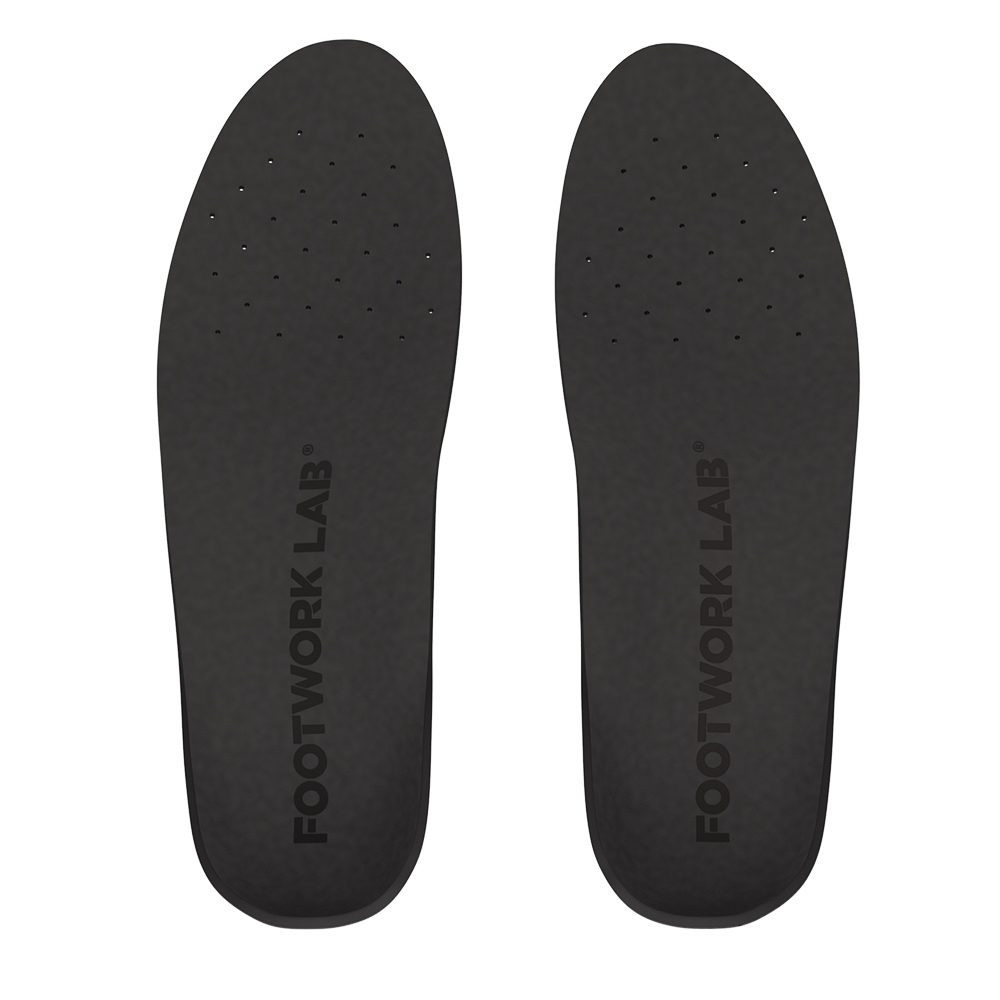
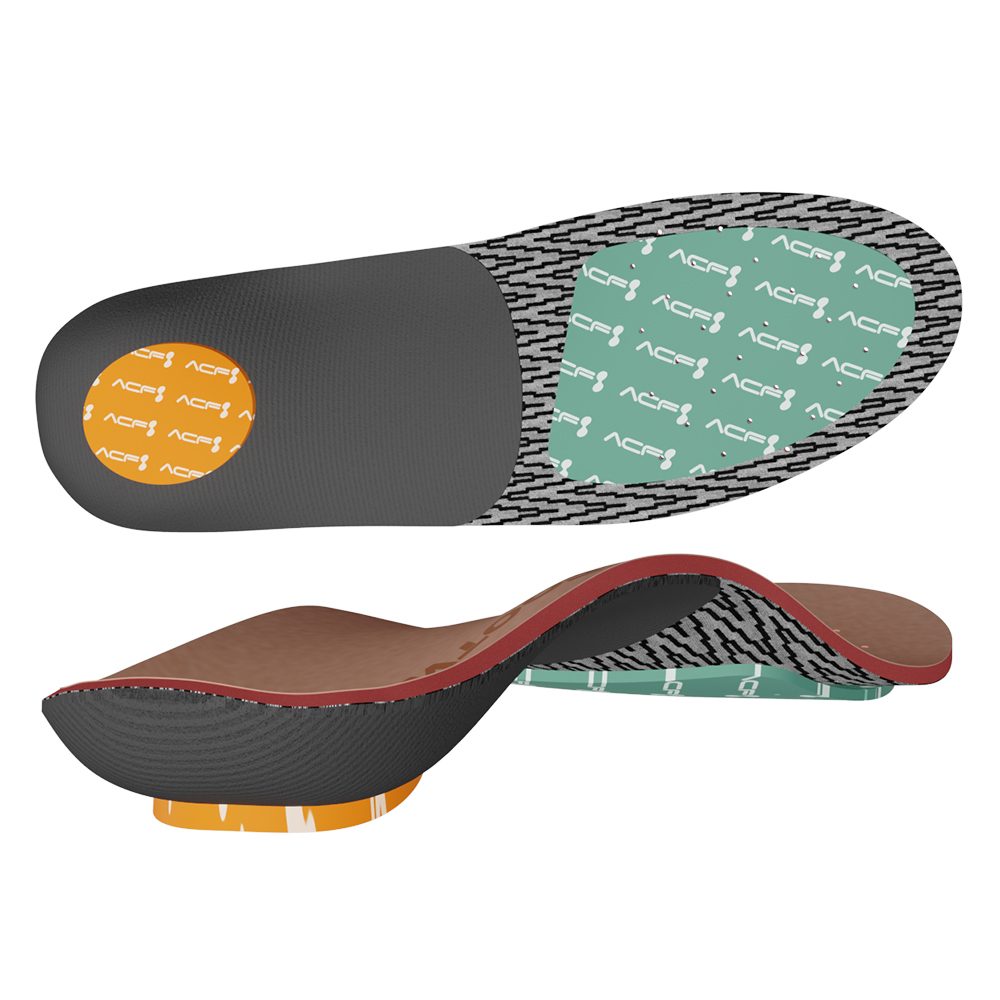
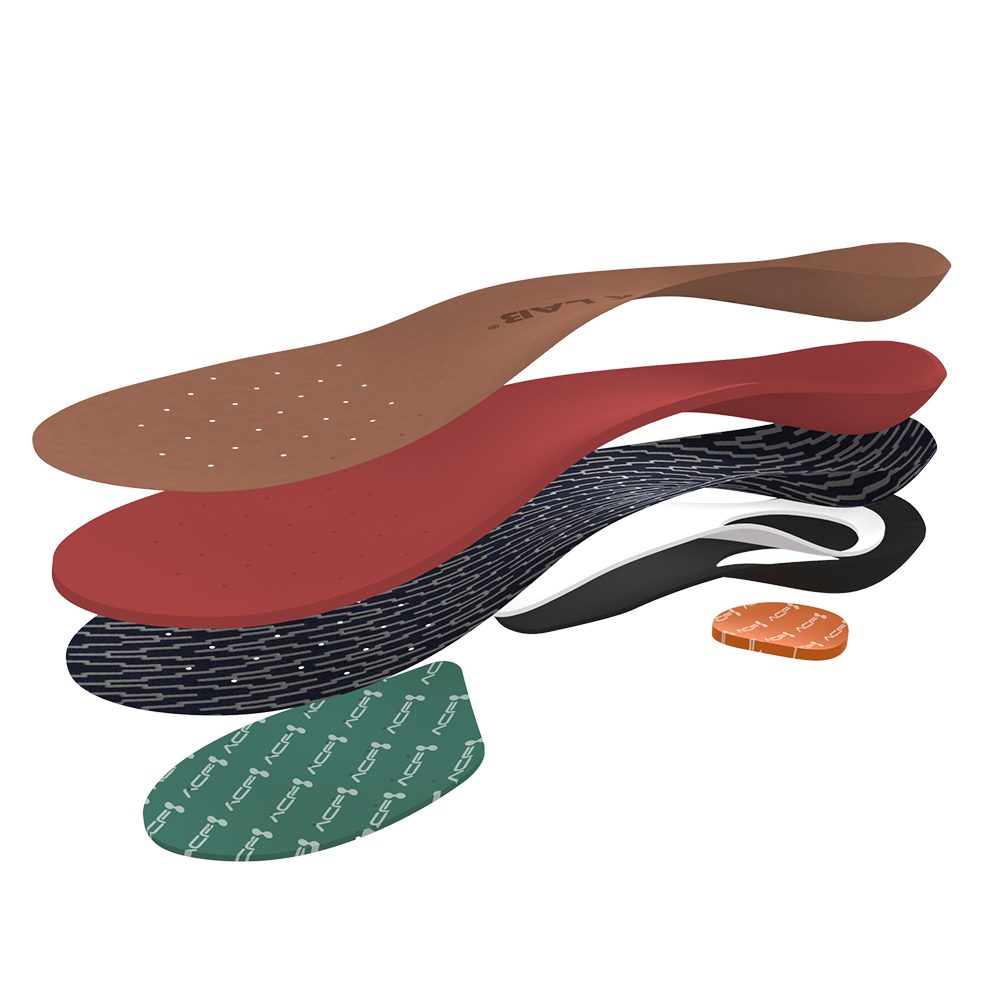
Some context on the product, because the vocabulary of an order is not the vocabulary of a search phrase. The range behind the phrase is a finished insole built in series: a mesh fabric top, an Ortholite comfort layer beneath, and an AQ polymer shaping board carrying the contour. It splits into three series — daily comfort, recovery care and sport — and each build is graded on four independent levels: support, torsion resistance, cushioning and starting ability. Those four words, not the phrase, are what an order is written in.
What the longer phrase has changed about the enquiry
Plantillas personalizadas para pies is a newer search than plantillas ortopedicas, and the difference is not decoration. The older phrase names a category on a shelf. The newer one names a promise about the individual: something made for this foot, or at least sold as though it were. Buyers who use it are usually closer to a decision than buyers who type the shorter phrase, and they are also more likely to have the wrong decision in mind.
Three kinds of buyer arrive with it. The first is the shoe shop that wants to add a fitting service: a customer is measured, a pair is recommended from a stock range, and personalisation means the right build for that foot rather than a mould taken of it. The second is the specialist shop or pharmacy that wants its own label on the box, with its own series names and its own shelf talkers. The third is a small workshop that genuinely intends to make per-customer pairs and is not yet sure which half of that work belongs in the shop and which belongs at the factory.
The phrase covers all three, and the first order each one needs is different in kind. The shoe shop is buying an assortment it can recommend from. The pharmacy is buying a brand. The workshop is buying components and a specification. A factory that receives “plantillas personalizadas” without knowing which of the three is being asked will quote something plausible and useless, which is why the first reply should be a question rather than a price.
A first order is three lists, not one
The commonest mistake in a first order is to treat it as a list of styles. It is three lists, and the factory needs all three before it can plan a cutting schedule. The first is what to make: series, build, grade mix, colourway, cover material. The second is how much of each and in which sizes. The third is how the goods are to be identified when they arrive — the label, the code, the paperwork that lets a shop assistant find the right pair without opening eight boxes.
Most buyers arrive with the first list only, and even that one is usually short a line. A series name is not a build. “Daily comfort, the supportive one” narrows the range; it does not specify the grade mix that makes one retailer’s supportive build different from another’s. Because the four grades move independently, a pair can hold a firm contour while staying moderate in cushioning, and that combination is a decision the buyer makes, not one the factory infers from a photograph of a shelf.
The second list is where first orders are won or lost, and it is discussed in the next section. The third list is the one buyers forget entirely, and it costs them the most later: a shipment that arrives without a code scheme is a shipment that has to be counted, relabelled and explained before it can be sold, and the labour for that lands on the retailer’s own staff in the busiest week of the season.
Written as one page, the three lists take an afternoon to assemble and save a season of correspondence. They also do something less obvious: they force the buyer to decide what the first order is for. An order placed to test a category and an order placed to stock a wall for a year have different shapes, and a factory cannot tell them apart from a sentence about wanting to start small.
Writing a size band the factory can cut
A size band is not a range with two ends. It is a distribution, and the distribution is what the factory cuts to. “From small to large, a bit of everything” produces a shipment weighted towards whichever sizes were easiest to run. The workable version names the smallest and largest fitting in the order, then states how many pairs of each size, or at least the proportion — a deliberate over-weight at the middle of the range, a thin tail at both ends, and a note on which sizes the local market actually asks for.
Spanish and Latin American curves do not distribute identically, and neither matches the curve a factory would assume by default. This is the line where local knowledge is worth more than any catalogue: the retailer knows whether her town runs large, whether school shoes dominate, whether the same customer buys for two generations. A buyer who writes the curve from last season’s till rather than from memory gets an assortment that sells through; a buyer who writes it from optimism gets a shelf of the sizes nobody asked for.
Width and fitting belong in the same list, and they are the most commonly omitted item. Two customers who wear the same length may need different widths, and a range that ignores the second dimension produces returns that look like quality problems and are actually specification problems. If the range offers width options, the band has to say how they are distributed; if it does not, the buyer should know that before promising a fit to a customer who has been hard to fit elsewhere.
The last line of the band is the odd one: what to do about the sizes that sit outside the range. A single pair in an unusual fitting is not a production problem, it is an ordering problem, and the answer is usually to keep a small stock of blanks rather than to ask the factory to break a run. Buyers who plan that line in advance stop improvising at the counter in front of the customer.
The batch code that makes the second order cheap
A batch code costs nothing and returns more than any other line in the order. It is a short string — season, series, build reference — carried on the box, on the packing list and on the invoice, so that a pair sold in March can be traced to the run that produced it and a complaint in June can be answered with a batch number rather than an apology. Without it, every quality question restarts from “which ones do you mean?”
The code also carries the specification forward. When the second order is placed, the buyer does not need to rewrite the page; she refers to the batch, states what changes, and the factory can see at a glance what is being repeated and what is being altered. This is the difference between a reorder and a renegotiation, and it is the reason buyers who use codes tend to grow their range while buyers who do not tend to churn suppliers.
There is a marketing use too, and it is worth naming because it is often dismissed. A retailer who can say, honestly, that a build has been the same since a dated batch is making a claim about consistency that a customer can verify by looking at the box. Consistency is the one promise a factory can actually keep, unlike the promises about outcomes that we will come to later.
The mechanics are unglamorous: agree the format before the first run, print it on the label rather than writing it by hand, and keep the page that defines it. A code scheme invented after the goods arrive is a code scheme applied with a marker pen to two hundred boxes, which is exactly the week nobody has time for it.
Samples, the minimum, and the calendar
A sample pair ships within three days, and the three days are part of the order rather than a courtesy before it. What the sample proves cannot be read off a specification: how the shaping board feels under the arch after a day of standing, how the mesh top behaves inside the shoes the shop’s customers actually wear, whether the cushioning grade reads the way the grade table promised. A buyer who wears the sample in her own shoes before writing the page writes a different page.
The minimum is two hundred pairs, and the sentence that follows it matters as much as the number: mixed styles and mixed sizes are allowed. The minimum is a floor, not a shape. Read as “two hundred of one thing”, it plans a wall nobody wants; read as a spread, it builds a first assortment of several styles in a working size band, with the experiments kept to a few pairs each rather than to a corner of the shelf.
Capacity is worth knowing so the calendar is honest. The insole line runs at roughly five hundred to a thousand pairs a day, which means an order at the minimum occupies it for about a working day rather than a season; what actually sets the delivery date is the packaging preparation and the shipping mode. Express runs six to seven working days, air freight ten to twelve days, sea freight thirty to thirty-five days, and the first order should be planned against the slowest leg, not the fastest.
The calendar also has to include the buyer’s own work, which is the part first-time importers underestimate. Customs paperwork, label approval, a shelf plan for the week the goods land, and a member of staff briefed on what the four grades mean — none of that is the factory’s job, and all of it sits between the container and the first sale. An order that arrives before the shop is ready is an order that occupies the stockroom.
What a first order should not contain
Three things we decline to put into a first-order conversation, and buyers should be suspicious of any supplier who offers them readily. The first is a price in an email before the specification exists. A figure quoted against a photograph of a shelf is a figure for a different order, and the difference surfaces later as a change order — which is the most expensive way to discover what a build costs.
The second is a territory promise. “You will be the only one in your city” is a sentence that sounds like partnership and behaves like a trap for both sides: the factory cannot police it, the buyer cannot verify it, and the day another shop in the same street orders the same range, the relationship is damaged over something that was never enforceable. What a factory can offer instead is a build that is specific to the buyer’s specification, which is a real form of differentiation.
The third is a clinical promise. Insoles are sold in shops by people who are not clinicians, and any sentence promising that a build will resolve a named complaint should end the conversation. What the product does is support, distribute load and hold a contour; what a particular customer needs is a professional judgement, and the honest retailer says so at the counter in the same words the factory uses in its documentation.
What remains after those three are removed is still a substantial offer: ODM and OEM work accepted on the insole side, a sample in three days, a minimum that can be spread across styles and sizes, and a capacity that can absorb a growing range without changing supplier. That is enough to build a first season on, and it has the advantage of being true after the goods arrive.
Frequently asked questions
What does plantillas personalizadas para pies mean in an order?
Customised insoles for feet, with the emphasis on the individual. In practice it covers three different purchases: a stock range a shop recommends from, an own-label range for a pharmacy or chain, and per-customer pairs for a workshop. The first order each of those needs is different, so the phrase has to be narrowed before anything is quoted.
What has to be in a first order?
Three lists: what to make (series, build, grade mix, cover), how many in which sizes, and how the goods are identified on arrival. The third is the one buyers forget and the one that costs the most later, because goods without a code scheme have to be counted and relabelled before they can be sold.
How does the two-hundred-pair minimum work?
It is a floor, not a shape. Mixed styles and mixed sizes are allowed, so two hundred pairs can build several styles across a working size band, with the experimental builds kept to a few pairs each. A buyer who reads it as two hundred of one thing plans a wall nobody asked for.
How long do samples and delivery take?
Samples ship within three days. Express freight runs six to seven working days, air freight ten to twelve days, and sea freight thirty to thirty-five days. Plan the first order against the slowest leg, and count the buyer’s own paperwork and shelf preparation as part of the same calendar.
Can the insoles carry our own brand?
Yes. ODM and OEM work are both accepted on the insole side, which covers the buyer’s packaging, naming and presentation. The choice has to be written into the order before production starts, because packaging decided afterwards is packaging that ships late.
Are the insoles a medical product?
They are a footwear product sold in shops. A build supports, distributes load and holds a contour; whether a particular person needs one, and what it should do, is a judgement for a qualified professional. Any supplier promising to resolve a named complaint in a shop is overreaching.
How is a reorder kept consistent with the first order?
With a batch code on the box, the packing list and the invoice, plus a one-page specification kept by the buyer. The reorder refers to the batch and states only what changes, which is the difference between repeating a build and renegotiating it.
What we would do next
Draft the one page before you ask for a quotation: the three lists, the size band with its proportions, the label wording, and the batch format. Send it through the contact page and we will answer line by line, including the lines we think will not sell in your market. The insole range page sets out the three series and the four grading scales a build is specified against.
Two pieces go further into the parts of this that are easy to underestimate. Custom moulded orthotic inserts covers what a build actually holds, and orthopedic products sell in order is about the shelf sequence a first assortment should follow. What a scanner adds to an orthopedic insole business is the bridge between this order and the equipment question, for buyers who intend to recommend rather than simply stock.
This article is intended for professional and educational reference. It is not medical advice. Foot assessment equipment produces measurements and images; clinical interpretation and any decision about care remain the responsibility of a qualified professional. Certification scope is limited to the documentation we hold: European Union certification and ISO quality system certification.