
A buyer typing escaner de pie into a search bar is, more often than not, describing one counter. The singular matters. Where a chain operations manager might type in the plural — scanners, fleet, rollout — the singular form of the Spanish phrase usually belongs to a shop owner, a clinic lead, a foot therapy centre manager: one room, one machine, one counter where the assessment happens. The two buyers share a catalogue and almost nothing else. One is buying a working position; the other is buying consistency across working positions, which is a different product wearing the same listing. This article takes the singular seriously from start to finish: what one counter actually needs and what it does not, how a chain rollout differs in everything except the hardware, what the report has to carry between visits for either model to work, and where our X3 system — a foot pressure and force-line detection and insole customisation system — fits into each picture, with the limits we state plainly from the factory side kept visible throughout.
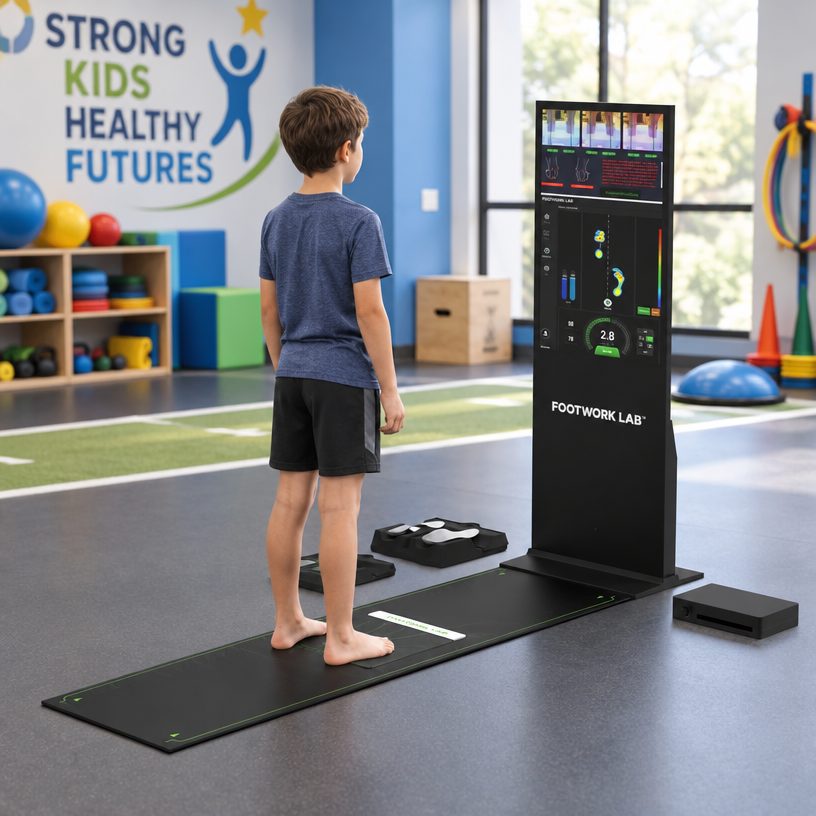
Context first. The X3 records arch condition, lower-limb force line, static pressure and dynamic gait, adds a back-and-forth gait video, and pairs the record with an insole customisation module on the same floor. Its software also carries a shoe recommendation feature that works only after the store has entered its own shoe range into the system’s library — a fact worth knowing early, because it makes the store, not the vendor, the owner of the recommendation’s quality. Reports reach the customer by scanned code, by email, or printed on the spot. The rooms it was built for are children’s fitness and activity centres, podiatry clinics, shoe stores and foot therapy centres — one-counter rooms, mostly, which is why this article’s framing suits it.
Why the singular search usually means one counter
Search language is a mirror of the buyer’s situation, and the singular form of a scanner phrase almost always reflects a single point of service. A shop owner does not think in fleets; she thinks in floor plan — where the machine goes, who stands at it, how long a session takes, what the customer sees. The same is true of the clinic lead and the therapy centre manager. Their questions are concrete: how much floor the unit needs, whether the customer walks back and forth for the gait video, where the report prints, and what happens to the queue when a session runs long. Listings written for chains answer none of these, which is why one-counter buyers often finish a catalogue more confused than they started.
The one-counter purchase has a shape all its own. There is one operator to train, so training depth matters more than training breadth. There is one room, so the machine’s physical footprint and the customer’s path through the session decide the fit. There is one report flow, so the way the document leaves the machine — scanned code, email, paper — decides the counter’s rhythm. And there is one retest relationship, because the customer who returns compares this visit with the last one held at the same counter by the same hands. Every one of these is a single-point question, and the hardware is the easiest of the lot.
What the one-counter buyer is really purchasing is a working position that earns its rent. A counter machine pays for itself through the sessions it hosts: assessments sold, records kept, recommendations made from them, customisation added where the record supports it. The purchase conversation should therefore run on session economics rather than on specification admiration — how many sessions a week the room can honestly fill, what each session produces, what brings the customer back. A buyer who cannot sketch that flow should not buy yet, whatever the listing says.
Suppliers complicate this by selling to the plural buyer in every headline. Fleet language, rollout language, multi-store language — all of it lands on a single-counter reader and makes the purchase feel smaller and more manageable than it is, or larger and more intimidating than it needs to be. The corrective is a sentence we ask buyers to say out loud in the first conversation: this is one counter, one operator, one room. Everything after that sentence sorts itself quickly.
What one counter needs, and what it does not
The needs list for a single counter is short and checkable. A capture routine the one operator can run identically every time — stance instructions, the walk for the dynamic pass, the back-and-forth path for the gait video. A report that carries the record items in a fixed order: arch presentation, force line, static pressure, dynamic gait. A handover format that suits the room — code, email or print. A customisation module within reach, because the session that ends in a formed pair is the session that pays twice. And an after-sales channel that answers fast, because a one-counter room has no spare machine to fall back on while it waits.
The does-not-need list is just as clarifying. One counter does not need multi-store account structures, central dashboards, or licence tiers priced for a rollout it will never run. It does not need duplicate hardware for redundancy it cannot afford. It does not need a features list longer than its operator can master in the first month — an operator overwhelmed by a menu is an operator who uses a third of it. And it does not need promises about what the record means; the one-counter relationship is close enough that the professional’s reading is delivered face to face, which makes the boundary between record and interpretation more visible, not less.
The shoe library point deserves its own paragraph because it is where one-counter buyers either win or quietly lose. A recommendation feature is only as good as the catalogue behind it, and in our system the store enters its own range into the library before the feature works at all. A shop that does the entry work carefully — sizes, models, the stock it actually holds — gets recommendations that end at its own till. A shop that skips the work gets generic output and blames the machine. The feature rewards the store’s diligence, which is exactly as it should be, and exactly what a chain centralises at its peril.
What a single counter should insist on instead is depth of one: one routine, one report, one operator done properly. We tell one-counter buyers that the first month’s goal is not volume but identity — the same session run the same way until the operator could do it half-asleep. From that identity comes comparability, and from comparability comes the retest, which is the counter’s real product. A shop that reaches the second month with an unchanged routine has bought the right machine; a shop that has already improvised three versions of the session has bought a distraction.
How a chain rollout differs from the counter
A chain is not several counters added together; it is a different purchase with different failure modes. The hardware repeats, but the things that decide success do not ship in a box: the routine that every location runs identically, the training that survives staff turnover, the data that aggregates comparably from every floor, and the governance that decides who reads what. A chain that buys machines and assumes the rest is buying a drawer of inconsistencies — ten counters running ten versions of the session, producing records that cannot be compared and reports that mean different things in different stores.
The first structural difference is the centre. A chain needs a written session routine before the first machine ships, because every location will run what the centre writes — or whatever each location improvises, which is the default and the enemy. The routine fixes the instructions, the walking path, the video capture, the report flow. Alongside it comes training as a repeatable package rather than a one-room apprenticeship: a curriculum a store manager can hand to a new hire, with the machine’s own materials carrying the standard rather than each store’s habits.
The second difference is the data’s direction. In one counter the record serves one relationship; in a chain it also serves comparison — between stores, between staff, across a season. That only works if every session is captured the same way, which is why the centre’s routine and the report’s fixed shape matter more to a chain than any single feature. Aggregated pressure records, retest rates and recommendation outcomes become management information only when their inputs are uniform, and uniformity is bought in the rollout plan, not in the specification sheet.
The third difference is procurement rhythm. A chain does not buy ten machines in one gesture; it pilots, corrects the routine, then extends in waves, and a supplier who encourages the single grand gesture is setting the chain up to standardise a mistake. Our own advice to chain buyers is to run the pilot against the same three questions a one-counter buyer asks — traffic, consumables, hands — then write the corrections into the routine before wave two. The machine-side terms stay constant through the waves: minimum order of one unit per site, ODM accepted, seven days of plant testing before each dispatch, a twelve-month warranty against non-human damage, and an after-sales channel that every location can reach.
What the report has to carry between visits
Whether the buyer is one counter or a chain, the report is the thing that travels. Between visits, the report has to do three jobs: remind the customer what was found in terms a layperson can hold, give the professional a fixed baseline to compare the next capture against, and carry the specification forward if a build was recommended. A report that does not survive the gap between appointments — because it was a print nobody kept, or a file nobody could reopen — quietly deletes the retest, and with it the whole reason the record was taken.
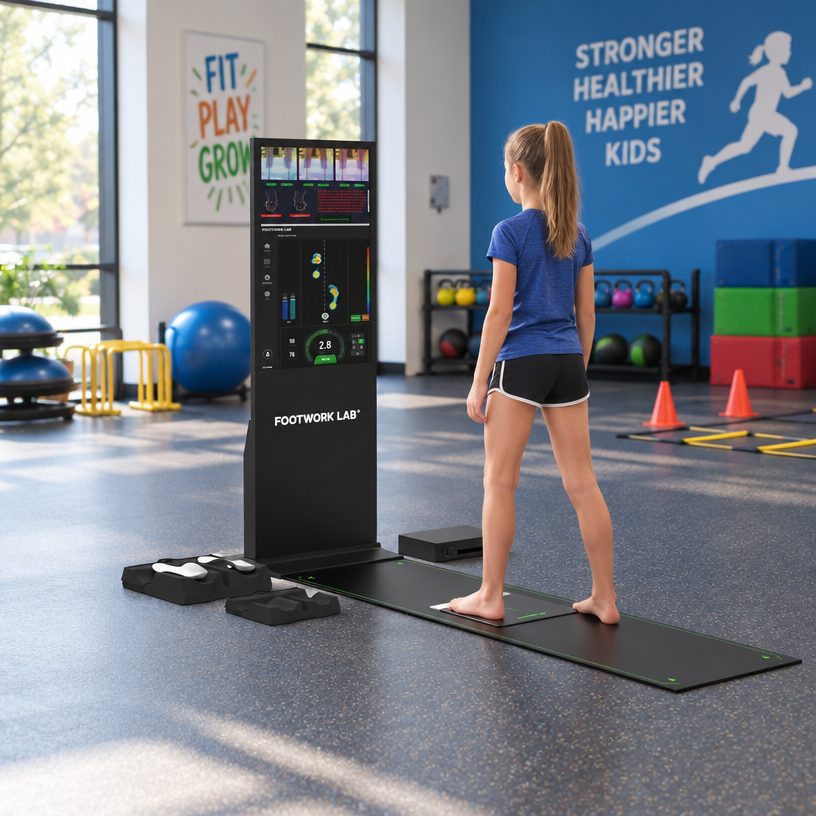
The X3’s handover options exist for that reason rather than for convenience. A scanned code puts the report on the customer’s phone before she leaves the counter, which is where the phone already lives. Email puts a copy where it can be found months later. Paper puts it in the hand, which still suits some rooms and some customers best. Rooms should choose deliberately rather than by default, and chains should choose one primary route for every store so that follow-up looks the same across the estate. What matters is not the medium but the certainty: the customer leaves holding the record, and the store holds a copy tied to a retest date.
The content side matters more than the container. Every item on the report is a recorded quantity — arch presentation, force line, static pressure distribution, dynamic gait behaviour — and none of it is a verdict. The reading belongs to a qualified professional, and the report should make that visible rather than hide it; our own reports carry the line that the data is for reference and that medical questions belong with a professional. That line is not small print; it is the boundary that keeps the counter’s relationship with the customer honest, visit after visit.
The retest is where the report earns its keep, and it deserves a booking, not a hope. The visit that ends with a next visit on the calendar — six weeks out, three months out, whatever the room’s rhythm — converts the record from a document into a programme. The comparison at the retest only lands if the first capture left a routine behind, which closes the loop this article has been drawing from the start: singular or plural, one room or ten, the machine’s whole value is a consistent record, read by a professional, compared at the next visit.
What we state plainly from the factory side
Three statements for the escaner de pie buyer, whichever model they are running. First: we do not publish prices in an article, because a quotation depends on configuration, quantity and destination, and a figure printed here would be wrong for almost every reader. Structure we will state — one-unit minimums, the seven-day test, the twelve-month warranty, the after-sales channel — and a quotation follows a configuration, not a search phrase.
Second: we do not promise regional exclusivity as part of a pitch, to a counter or to a chain. Exclusivity sold ahead of performance is a debt the partner repays rather than a privilege they enjoy, and our experience says the honest version — build the sessions, earn the area — serves both sides better. Chain buyers hear this most often, because exclusivity language is the usual sugar on a rollout offer, and we would rather be the supplier who declines the sugar.
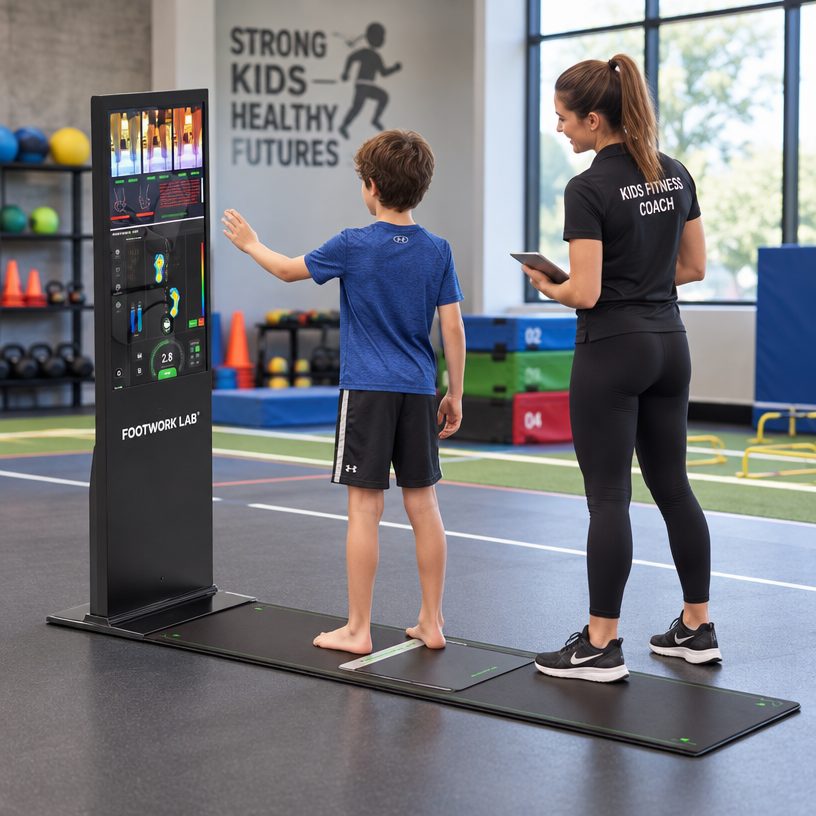
Third: the equipment records, the professional reads. The arch and force-line items, the pressure figures, the gait video — all recorded quantities; none a diagnosis; none a promise about what any intervention will do for any foot. We keep that line in our reports, our marketing and our training, and we expect the rooms we supply to keep it too, because it is the line that makes the record trustworthy at the retest. A customer who was oversold at visit one does not return at visit two, in a single counter or across a chain.
What we offer instead is the fit conversation: one counter or ten, and what each shape needs beyond the hardware. Bring us the floor plan, the session rhythm and the staff reality, through the channels in the final section, and we will answer against your shape rather than against our catalogue — including the answer that a room is not ready, which we give without apology.
Frequently asked questions
Does the singular in escaner de pie tell us anything about the buyer?
Usually, yes. The singular form mostly reflects a single point of service — one shop, one clinic room, one counter — while plural and rollout language tends to come from chain buyers. Matching the purchase conversation to that shape is the first step: one operator, one room and one report flow are single-point questions.
What does the X3 record in a session?
Arch condition, lower-limb force line, static pressure, dynamic gait and a back-and-forth gait video, with an insole customisation module on the same floor. Every item is a recorded quantity; the reading of the record belongs to a qualified professional, and the report carries the line that the data is for reference.
How does the shoe recommendation work?
Only after the store has entered its own shoe range into the system’s library, which makes the recommendation end at the store’s own till. The feature rewards the store’s diligence in maintaining the catalogue, and a chain should think carefully before centralising that entry work away from the floor that benefits from it.
How does the customer receive the report?
Three routes: a scanned code on the customer’s phone, email, or a print at the counter. Rooms should choose deliberately and chains should standardise one primary route, because the report has to survive the gap between visits for the retest comparison to work.
How is a chain rollout different from buying one machine?
The hardware repeats, but success lives in what does not ship in a box: a written session routine every location follows, training that survives staff turnover, uniform capture so records aggregate comparably, and a pilot-then-waves procurement rhythm rather than one grand gesture that standardises a mistake.
What are the machine order terms?
Minimum order of one unit per site, ODM accepted on machines. Every unit is tested at the plant for seven days before dispatch and covered by a twelve-month warranty against non-human damage with free parts, and after-sales runs through a dedicated WhatsApp group with engineers reachable directly.
Can the report be used as a diagnosis?
No. Arch items, force line, pressure figures and gait video are recorded quantities, not verdicts. Interpretation and any decision about care belong to a qualified professional, and our reports state that the data is for reference and that medical questions belong with a professional.
What we would do next
Decide which buyer you are before you compare listings: one counter or a chain, and at which wave. Write your session rhythm — who captures, who reads, where the report goes, when the retest is booked — and send it through the contact page. We will answer against your shape. The X3 system page lists the record types, the customisation module and the report routes in the equipment’s own terms.
For the counter model, fitting a foot scanner into a shoe shop covers the floor-plan questions, a footscan assessment at the counter walks a live session, and a footwear store that fits by record shows the shop-side routine end to end. For the chain side, what a scanner adds to an orthopedic insole business frames the commercial case, personalized foot analysis sells better covers the session economics, and foot assessment is a session, not a device is the article to hand to anyone still comparing specification sheets.
This article is intended for professional and educational reference. It is not medical advice. Foot assessment equipment produces measurements and images; clinical interpretation and any decision about care remain the responsibility of a qualified professional. Certification scope is limited to the documentation we hold: European Union certification and ISO quality system certification.