
A parent stands at a clinic reception desk with a phone turned towards the therapist, and the screen shows a search results page for flat foot machine. She is not shopping for equipment. She is asking, indirectly and with some embarrassment, whether her son’s feet explain why he is tired by the time he reaches home from school. The search engine has answered a question nobody in the room actually asked, and it has answered it with product pages. That gap — between what is typed, what is wanted, and what a device can honestly deliver — is the subject of this article.
It is written from the factory side of the table, by a company that sells both the recording equipment and the insoles that sometimes follow it, which is exactly why it is worth being careful about where one ends and the other begins. The first section separates the three requests that hide behind the phrase. Three sections then deal with the measurement: what a session can put on paper, why a record is not a verdict, and what changes when the same session is repeated months later. Two deal with the boundary: where clinical care starts, and what a clinic is really buying when it buys the hardware.
Three different requests hide behind the phrase
People who type those two words are not all shopping for the same object. A parent wants an answer about a child who complains of sore legs on the walk home. A clinic owner wants a device that will sit in a treatment room and produce a document a therapist can read in under a minute. A shoe shop wants a counter tool that turns a fitting into a conversation. A therapist new to a practice wants to know what the machine in the corner of the room is actually for. Four requests, one phrase, and the listings answer none of them precisely because they answer all of them at once.
The word machine is the first thing that misleads. What most of these buyers need is a record: a document describing how a foot presents at rest, how it behaves through a step, and how the leg above it aligns while it does so. A machine suggests a device that produces a decision, the way a vending machine produces a drink — payment, button, output. Foot assessment has never worked that way, and a buyer who expects it to will spend the first month after delivery discovering that the difficult part was never the hardware.
Listings rarely correct the expectation, because the expectation sells. A page promising an answer in minutes will always outperform a page explaining what an answer requires, and the marketplace rewards the shorter promise. So the arch type appears in the headline, the recommendation appears in the bullet list, and the sentence that would put both in their place — that a person reads this and decides — appears in the smallest type, or not at all.
The most useful thing a buyer can do is replace the search phrase with a sentence before contacting anyone. Something like: I need a repeatable record of how this foot loads, taken in a room where I have limited time, and I need to know who will read it and what they will do with it. Send that sentence to three vendors and the replies will sort themselves. The ones who answer the second half of it are the ones worth a demonstration.
What a measurement can put on the table
The static pass is the one most people recognise, and it is the ground the rest stands on. The customer stands on the plate with shoes off and weight even, and the system records footprint length and width, the contact area under each sole, the distribution of load across it, the arch presentation at rest, and the comparison between the two sides. It takes a minute, it produces the numbers a conversation usually opens with, and it is the pass most likely to be skipped when the waiting room is full.
The dynamic pass is where a flat-looking foot often stops being simple. The customer walks across the plate at a natural pace, several times, and each crossing records how contact begins at the heel, how load travels forward, where it peaks, the angle of the foot axis, the share of the step spent in contact phase and in flat phase, and the speed at which the centre of pressure moves. A foot that sits low at rest can load through a tidy path in motion; a foot with a visible arch can drop late in the step. Neither behaviour is visible in a photograph.
The cameras extend the record past the sole. A lower-limb camera captures heel position, knee tracking and the direction the shin carries while the plate is working underneath. A posture camera captures how the column above sits over that base. Together they turn a sole measurement into a force-line picture, and the force line is the part of the document that a build decision is actually written against — not the arch height on its own, which is a single number describing a single moment.
What the record does not contain is worth stating as plainly. There is no contour of the foot’s outer surface, no geometry that a carving tool or a moulding bench could follow, and no conclusion. Our equipment records pressure and alignment; it does not capture the outer shape of the foot, and it does not build a surface model of it. Buyers who need a shape file for a milling workflow should ask for one directly, and should expect a different conversation with a different supplier.
Why a record is not a verdict
Once a report is in hand, the temptation is to read it as an answer, and the format encourages that. Values are printed in columns, images are labelled, and the whole document has the settled look of something official. But every item on it is a measurement taken under conditions, and conditions are the part that disappears when a report is handed to someone who was not in the room. The number is true. What it means is a separate question, and it is not answered by the page it is printed on.
Arch presentation is a good example of why. It shifts with stance width, with knee position, with whether the customer was looking at the therapist or at the screen, with how long they had been standing before the capture began. Ask the same person to stand twice in five minutes and the two records will not be identical. That is not a fault in the equipment; it is what a body does. A session is a sample, and a sample taken on a Tuesday morning in a clinic is not a census of a life.
Reading belongs to someone with the rest of the picture: the history, the examination, the footwear the person actually wears, the sport they actually play, the thing they mentioned on the way out that they had not thought to mention at the start. A qualified professional weighs the record against all of that, and sometimes concludes that the record is the least interesting part of the visit. Every report we produce carries a line stating that the data is for reference, and that line is not decoration.
There is a commercial reason to respect the boundary as well as a clinical one. A clinic that lets a report do the talking will eventually be asked a question the report cannot answer, in front of a patient, by a patient. What follows is a conversation about scope that nobody enjoys and that a single careful sentence at the start would have prevented. The equipment’s job is to put evidence in the room. Saying what the evidence means is a different job, held by a different qualification.
Where care begins, and why the equipment stops there
Care begins with a conversation, not a plate. What brings the person in, how long it has been happening, which shoes hurt and which do not, what has already been tried, what the person does all day — that history shapes everything that follows, including which parts of a measurement are worth looking at twice. A recording session that runs before any of this has happened is a session collecting data for nobody in particular, and the report it produces will be filed rather than used.
In a rehabilitation programme the insole is rarely the first move and rarely the last. It usually arrives after a decision has been made about what the foot should be given, and it is checked afterwards against how the person walks and what they report. Between those two points sit the fitting, the shoe it has to live in, a period of adaptation and a review. Buyers who describe the insole as the treatment have the sequence backwards; it is one item inside a plan, and the plan belongs to the clinician.
The verbs deserve the same care. Treat, manage, correct, relieve, heal — those are words a professional uses about a course of action, weighed against a history and a person. They are not words a product page can use about itself, and we do not use them that way. What we describe is structure: a shell that supports an arch profile, a plate that resists torsion, a layer that cushions, a forefoot that starts a step. Whether any of that is appropriate for a given foot is not our call, and we say so in the first conversation rather than the last.
So the boundary runs through the middle of the visit. On one side is everything that can be recorded, repeated and compared: load, alignment, contact, timing. On the other is everything that requires a person with a licence and a history in front of them: what it means, what to do, when to stop, when to refer. We work on the first side and we are useful there. We have no business on the second, and a supplier who claims otherwise is telling you something about their marketing rather than their equipment.
What a clinic is really buying
A recording session is a queue of small decisions, and the equipment only serves the ones in the middle. Where does the customer put their bag, who explains what happens next, how many crossings count as enough, what is said while the report prints, who walks the person through the page and who answers the question they ask at the door. A clinic that buys hardware without designing that sequence ends up with a machine that is used for the first month and then covered with a cloth, and the fault is in the sequence rather than the device.
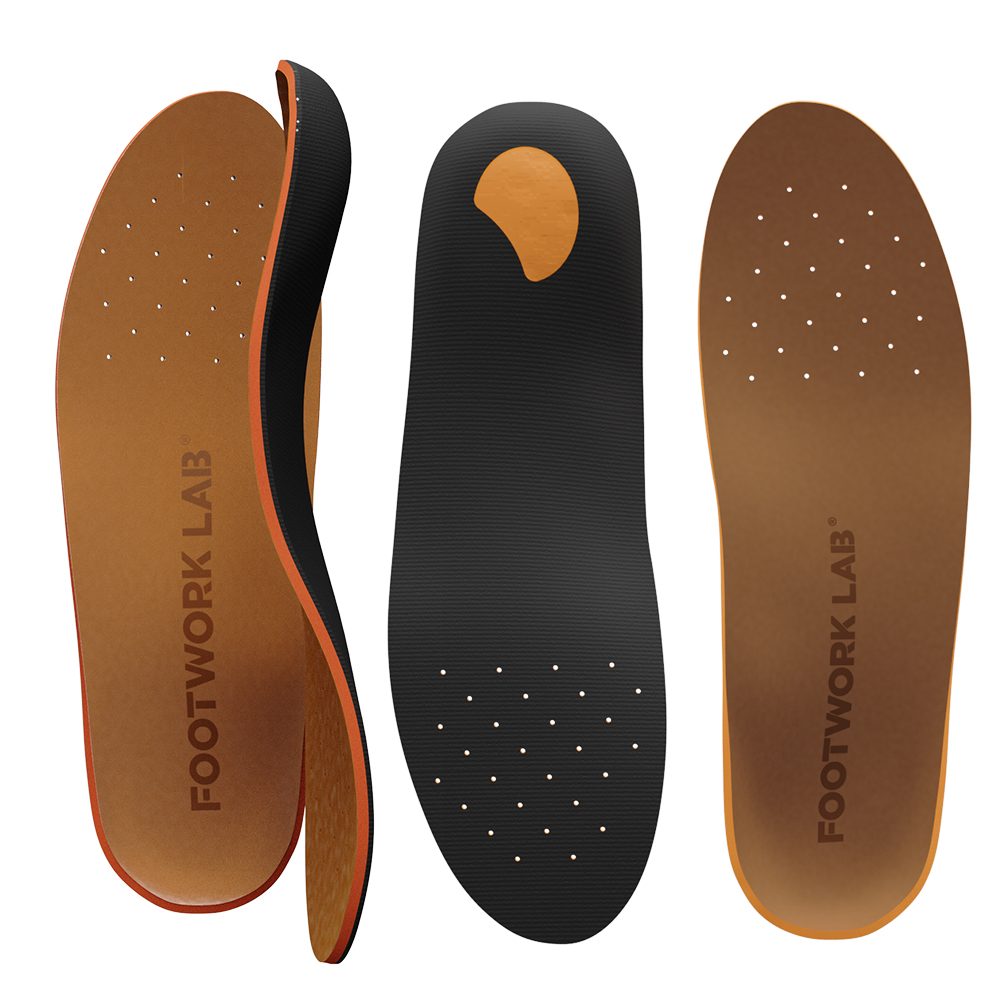
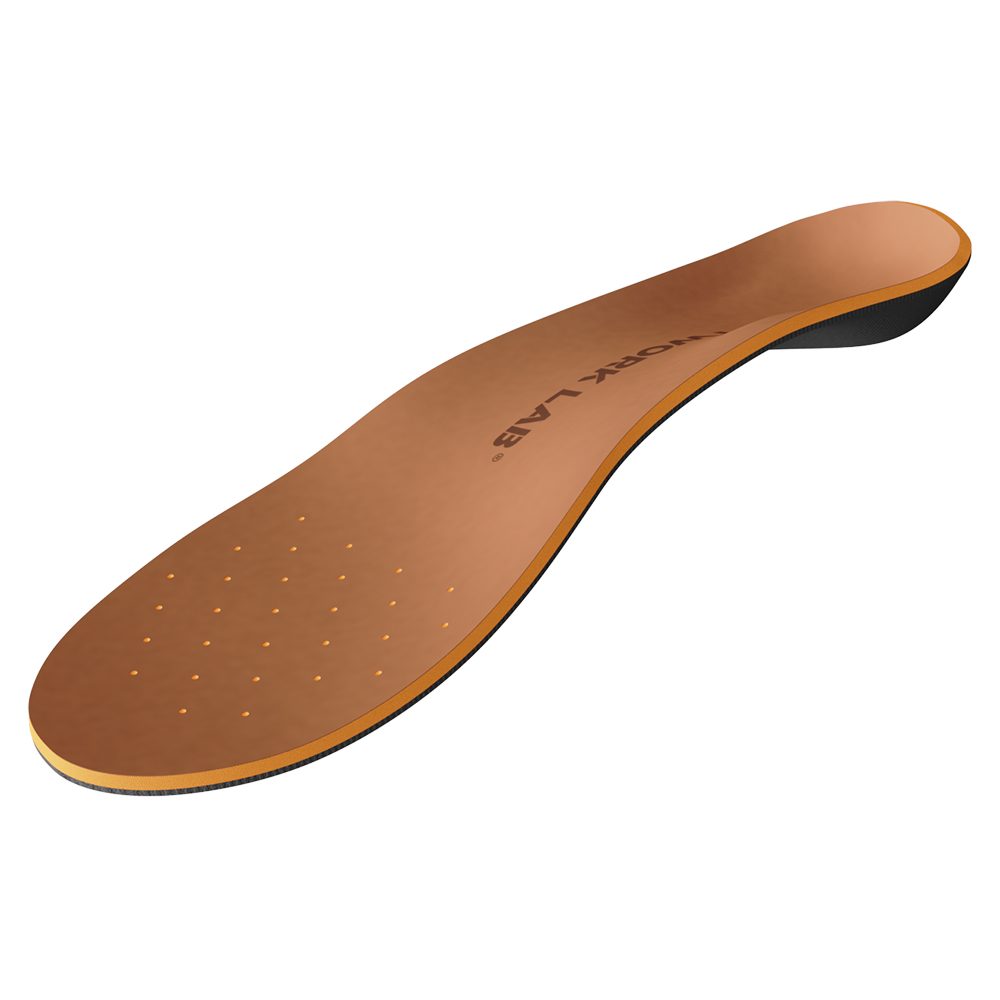
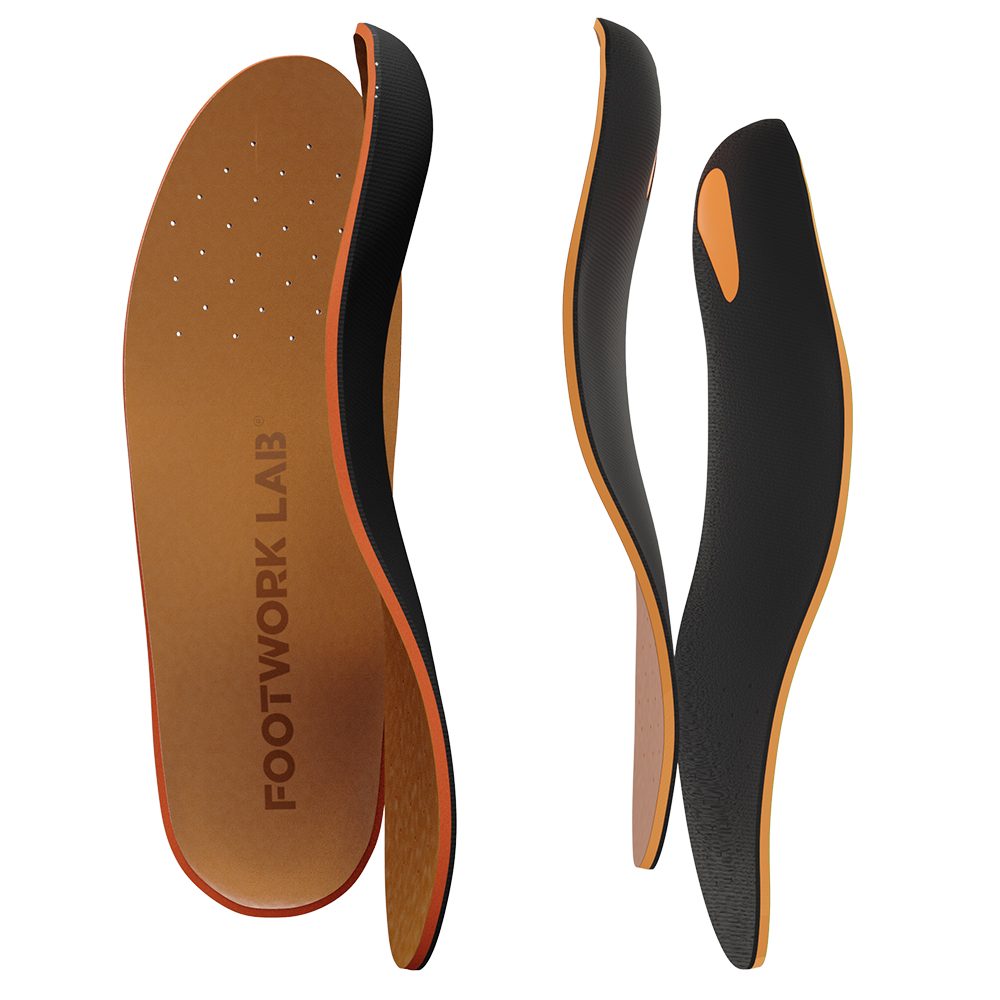
What usually follows a flat foot conversation on our side is a build from the rehab series: a shell carrying a support level, an anti-torsion level, a cushioning level and a starting-ability level, each chosen at the bench against the shoe the person will wear. Those four gradings are the vocabulary a fitter uses to translate a record into a build order, and they are chosen rather than derived. A record does not name a grade. It narrows the conversation to two or three plausible ones, and the fitter closes it.
Supply is the unglamorous half. Insole orders start at two hundred pairs with styles and sizes mixed in the same run, samples leave within three days, and the plant produces somewhere between five hundred and a thousand pairs on a working day. A clinic ordering its first batch rarely needs any of that at scale, and it is worth saying that many clinics run for years on a factory supply and a fitting bench, with no forming equipment of their own. That is a legitimate model, not a halfway house.
What to plan before the equipment arrives is a short list and a boring one: who operates it, who has been trained on the routine, where the printed report lives, how it reaches the person it describes, and how a copy is kept for the next visit. None of these is a feature on a specification sheet, and all of them decide whether the machine is still in use at the end of its first year. Buyers who plan the room rather than the purchase tend to be the ones who keep using it.
The retest is what earns the equipment its place
One record is a snapshot; two records make a series, and the series is where the equipment starts to be worth its footprint. The second visit is the moment a clinic can say something it could not say on the first: this is different from last time, or this is the same, or this changed in one place and not another. None of those sentences requires the equipment to interpret anything. They require the two records to have been taken the same way, which is a discipline rather than a feature.
Comparability is built from small consistencies. The same stance instruction, the same number of crossings, the same starting foot, the plate in the same position in the room, the same point in the visit — before or after the examination, not sometimes one and sometimes the other. A clinic that writes its routine on a card and pins it beside the plate gets comparable records without thinking about it. A clinic that improvises gets two documents that look alike and cannot be set against each other.
There is an institutional value here that outlives individual staff. Therapists move, locums cover, a practice changes hands. A folder of records taken to a consistent routine is the memory of the place, and it lets a new colleague pick up a case without starting from nothing. That is a quieter benefit than any feature list, and in our experience it is the one clinics mention when they explain why the machine stayed in the room after the novelty wore off.
What we will not do is dress that up as an outcome. We cannot say that a series of records improves anything, because improvement is a clinical question with a clinical answer, measured over months and belonging to the professional who set the plan. We can say what the equipment records, how a session is run so that records compare, and what arrives in the box. Buyers who want the rest of the sentence are entitled to hear it from a clinician rather than from a supplier.
Frequently asked questions
Is a flat foot machine a diagnostic device?
No. It records how a foot presents and behaves: contact area, load distribution, foot axis angle, phase timing, centre-of-pressure travel and alignment images. The interpretation of those findings belongs to a qualified professional, and every report we produce carries a line saying the data is for reference.
What does the static record show?
Footprint length and width, the contact area under each sole, the distribution of load, the arch presentation at rest and the comparison between the two sides. It is the quickest pass in a session and the one most conversations open with.
What does the dynamic pass add?
The walk. Each crossing records how contact begins, how load travels forward, where it peaks, the foot axis angle, the split between contact and flat phases, and how fast the centre of pressure moves. Feet that look similar standing often behave differently in motion.
Can the equipment tell a parent whether a child needs insoles?
No, and a supplier who says otherwise is selling past the equipment’s role. The record shows how the foot loads on the day; whether that warrants anything belongs to a clinician who has the history, the examination and the child in front of them. Our job is to make the evidence readable.
Where do insoles sit in a rehabilitation programme?
Usually after a decision rather than before it, and always inside a plan that someone else is running. The build is specified against the record and the shoe, fitted, worn for a period, then reviewed. The insole is one item in that sequence, not the sequence itself.
What are the order terms and lead times?
Machines start at one unit and accept ODM, with every unit tested at the plant for seven days before dispatch and a twelve-month warranty against non-human damage. Insoles start at two hundred pairs, mixed styles and sizes, with samples shipped within three days. Express runs six to seven working days, air freight ten to twelve days, sea freight thirty to thirty-five days.
Can a clinic see a sample report before ordering?
Yes. Ask through the contact page and we will send a report produced by the system, so the items discussed here can be read in their actual layout before any decision. It is a better basis for a purchase than a demonstration, because it is the thing the clinic will actually hand over.
What we would do next
Write the sentence from the first section on a single page and send it to every vendor you are considering, including us: what has to be recorded, how often, who reads it, and what the room can spare in time. The replies will tell you within a day which suppliers have thought about a clinic and which have thought about a listing. Ours comes back with a routine attached. Start it through the contact page.
The insole range page sets out the rehab series and the four gradings a build can be specified against, which is the vocabulary the fitting bench uses after a record exists. For the reading boundary from another angle, foot type is a record, not a verdict makes the same argument in shorter form, and a flat foot gait reads differently explains why the walking pass is rarely the one to skip.
Two more pieces sit either side of this one. Flat foot care in an insole programme follows the build stage, and an orthotic insole for flat feet describes what a specification looks like once a clinician has decided one is warranted. Neither is a substitute for the assessment; both are what happens after it.
This article is intended for professional and educational reference. It is not medical advice. Foot assessment equipment produces measurements and images; clinical interpretation and any decision about care remain the responsibility of a qualified professional. Certification scope is limited to the documentation we hold: European Union certification and ISO quality system certification.