
The pair is wrapped, the appointment is paid, and the patient is halfway to the door with no idea what the first week will feel like. In the fitting room the build was discussed carefully: the record, the layers, the intent. But the conversation that decides how the pair is ultimately judged happens in the last three minutes, at the handover, and most of what will be remembered about the pair was learned there — or was never said at all. A patient who leaves without a wear-in schedule improvises one, usually wrongly. A patient who was not told what a normal first week contains reports normal adaptation as a fault. A patient who was not told what the clinic does not promise fills that silence with an expectation borrowed from advertising. This article sets out the five sentences that belong at handover, how the wear-in schedule should be arranged, what the first week actually contains, when the patient should return and when sooner, how the pair is cleaned and kept between reviews, and the limits that are worth saying out loud rather than leaving in a leaflet nobody reads.
Why the handover decides how the pair is judged
A pair of custom builds is judged twice: once in the room, by the professional, against the record; and once over the following weeks, by the patient, against an expectation. The first judgement is controlled and the second is not, and the handover is the only opportunity to shape the second. Everything the patient believes the pair was supposed to do was formed somewhere — a website, a friend, a half-remembered sentence from the appointment itself — and if the handover does not overwrite it with something accurate, the borrowed version stands. When a patient returns disappointed, the disappointment is very often not with the workmanship but with the gap between what they expected and what they were told, and the gap was created, or failed to be closed, in those last three minutes.
There is a second reason the handover carries weight that has nothing to do with expectation. Adaptation to a shaped build is real and it has a shape of its own: new contact under the arch, a heel seated differently, muscles doing slightly different work. A patient who knows this in advance reads those sensations as evidence that the pair is doing something. The same patient, uninformed, reads them as a fault and stops wearing the pair — which guarantees the pair fails, since an unused build adapts nobody to anything. The information is not a courtesy; it is part of the functional outcome, as much as the shaping layer is.
The five sentences
The whole handover can be carried by five sentences, and clinics that script them deliver them consistently even on a full afternoon. The first: here is what was recorded — the named values, the date, in plain words, handed to the patient rather than summarised at them. The second: this is what the pair is intended to do — support the arch, seat the heel, spread the load more widely; nothing more, said without apology. The third: this is how the first fortnight runs — short stints first, building up, and what that will feel like. The fourth: this is what a normal first week contains, so that normal is not mistaken for a fault. The fifth: this is what we are not promising, and who to see if what you need is outside our room. Five sentences, maybe ninety seconds at a calm pace, and they carry the entire architecture of the exchange.
The sentences work as a set because each one closes a specific gap. The first closes the gap between what was measured and what the patient thinks was measured. The second closes the gap between intent and promise. The third and fourth close the gap between adaptation and fault, which is where most early returns are born. The fifth closes the widest gap of all, the one between a workshop that makes a pair and a clinical service that treats a person. Clinics that write their own wording for the five — in their own register, for their own patients — keep the structure and lose the stiffness, which is exactly what we would suggest. The structure is the standard; the wording belongs to the room.

Scheduling the wear-in
The wear-in schedule has one principle and three rules. The principle: one new variable at a time. The pair is the new variable; the shoes should not be. The patient wears the pair in shoes they already know, so that any sensation reported can be attributed honestly. The first rule: short stints. The first wearing is brief — long enough to feel the pair, short enough that nothing tires — and each following stint adds time. The second rule: no big days early. A patient who takes a new build on a long walk or a full shift in the first week is testing the pair under conditions nobody fitted for, and the soreness that follows will be reported as the pair’s fault regardless of whose arithmetic it was.
The third rule is the one most often skipped: the old footbed stays within reach. For the first week the patient alternates between the new pair and whatever they were wearing before, which does two things at once — it gives the tissues a graded introduction instead of a step change, and it gives the professional a comparison at review. A patient who reports the new pair feels different from the old one has said something useful; a patient who wore nothing but the new pair from day one has lost the comparison and can only describe the endpoint. The schedule should be written down — stint length, which shoes, which days — because a schedule in memory bends to whatever the second day feels like.
What the first week actually contains
Describe the first week accurately and most of the early telephone calls never happen. The common report is awareness in new places: contact under the arch that was not there before, a heel held more firmly than the old flat footbed held it, and a general sense that the foot is being asked to sit in a particular position. Some patients notice their calf muscles working differently over the first days. All of this is the ordinary experience of a foot meeting a shaped surface, and it should be described before it is felt, in the same calm register as everything else at handover.
What separates the ordinary from the reportable is worth stating as plainly to the patient as to the reader here. Ordinary adaptation eases as the stints lengthen. The reports that should end the wear-in and bring the patient back — or send them to their clinician rather than back to the fitting room — are the ones that sharpen rather than ease: a specific point that worsens with every wearing, any numbness or pins and needles, any skin marking where the pair contacts it, anything that is present the following morning before the pair is even picked up. The clinic should give the patient the sentence for this out loud: if it eases across the fortnight, keep going; if it sharpens, stop and call. A patient with a sentence is a partner in the adaptation; a patient without one is a liability census.
The telephone test is a useful way to check whether the first week was described well. A patient who calls in the first days should be calling to report, not to ask whether what they feel is allowed. The difference is entirely in the handover: a patient who was told what a normal first week contains says things like the arch contact is still noticeable on longer stints, which is information the review can use; a patient who was not says nothing works and I think the pair is wrong, which is an accusation the review has to dismantle before it can use anything. Same pair, same feet, same fortnight — the only difference was ninety seconds of description at the door, and it changes what the review appointment is able to accomplish.

When to come back, and when to come back sooner
The review is where the record completes its first circuit, and it should be booked before the patient leaves — a date in the diary, not an instruction to ring if necessary. The interval is the clinic’s call; what matters is that it is soon enough for the adaptation notes to still be fresh and far enough for the wear-in to have actually happened. At the review the professional asks three things and compares two records: how the stints went, what the week contained, and whether the pair is living in the shoes it was fitted for; then the patient stands on the plate again, conditions matched to the first record, and the two maps are read side by side.
Between reviews, a short list of signals brings the patient back sooner, and it should be handed over in writing as well as spoken. A specific point that sharpens rather than eases. Numbness, pins and needles, or colour change in the toes. Skin that marks where the pair touches it. A change in how the shoes fit — crowding at the toe, heel lift that was not there before — which usually means the pair is riding on something, most commonly a factory footbed that should have come out. None of these is a diagnosis; they are return triggers, and their whole value is that the patient does not have to judge them, only notice them. A clinic that separates noticing from judging has handed the patient the correct instrument, which is the same principle the equipment follows.
Cleaning and care between reviews
The care instructions are short and they should be spoken as well as printed. The pair comes out of the shoes at the end of the day and airs separately from the shoes, because a footbed left inside a closed shoe keeps the day’s moisture against itself. Drying is air only: never on a radiator, never in front of a heater, never in direct sun on a sill, because driven heat is what ages the compounds fastest and it ages them invisibly, from the inside. A damp cloth cleans the cover; no soaking, no washing machine, nothing that leaves the pair wet through. The old footbeds, once removed, stay in a drawer until the review — not thrown away, because the review may want to see how flat they had become.
Two habits extend the working life of any pair more than any product choice. The first is rotation between two pairs where the wearer’s routine allows it, so each dries fully between wearings; moisture hours, not calendar days, are what a build actually wears down by. The second is the shoes themselves: a pair fitted for a particular shoe belongs in that shoe, and the patient who moves it between three different shoes is asking one shape to fit three interiors. If the patient’s routine genuinely spans several shoes, the honest answer is a second pair fitted to the second shoe, ordered from the same record — which is a smaller sale than pretending one pair fits all, and a far smaller disappointment.
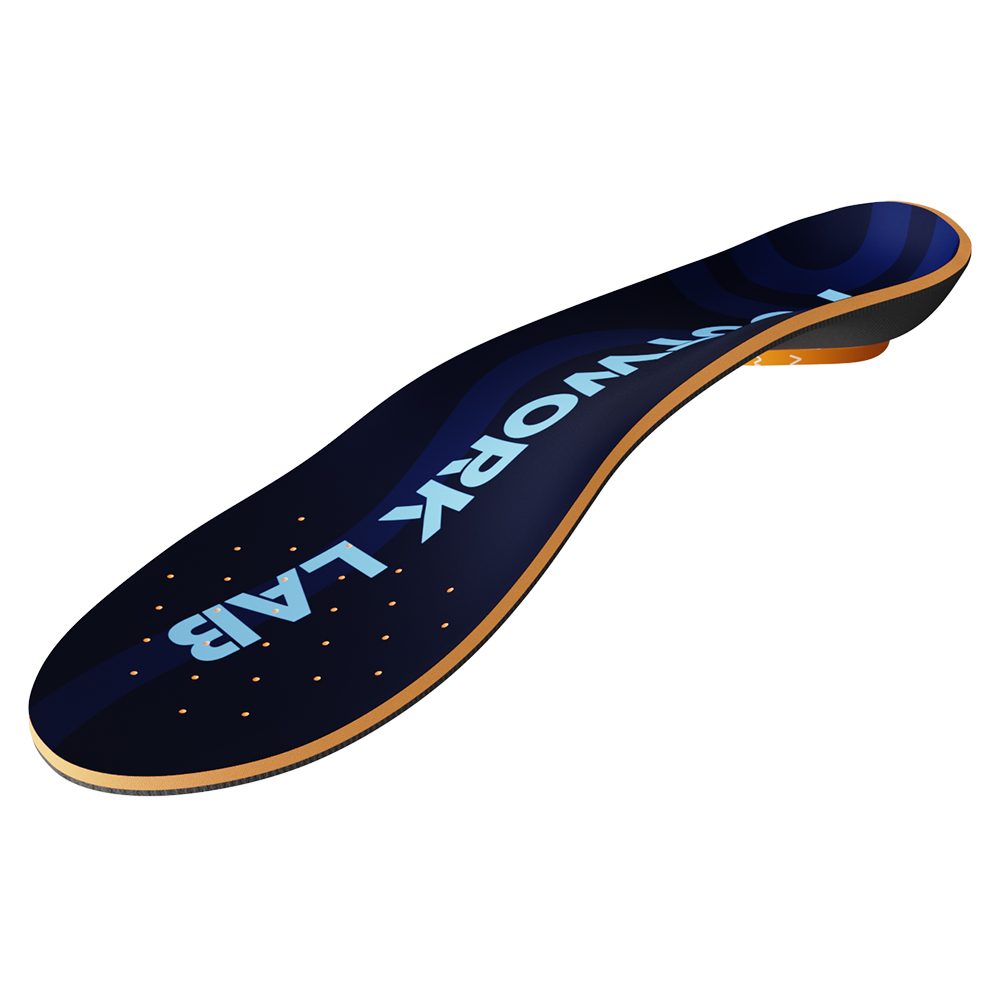
What the clinic does not promise, said out loud
The fifth sentence deserves its own section because it is the one most often mumbled. What the clinic does not promise: the pair is not a treatment, and it does not cure, heal or correct anything; it is a shaped surface intended to support, seat and spread, and the reading of what that means for this particular patient belongs to the clinician who ordered it. It does not change the shoes into different shoes, and it does not change what any boot or shoe was built to do. If what the patient needs is a course of care, that is a different room with different people, and the clinic that says this clearly is not losing authority but lending its own to the referral.
Saying the limits out loud is also, in our observation of the clinics that resell our work, the most commercial thing a handover can do. A patient who heard the boundary at handover attributes later plateau to the boundary rather than to the clinic, and returns anyway, because the clinic was the one party in the transaction that did not oversell. A patient who was allowed to believe in more will attribute the plateau to the clinic and tell the story for years. The pair, the record and the five sentences all share one property: they are honest about what they are. That consistency is what a patient is actually buying, and it is the only thing in the whole transaction that a competitor cannot copy by lunchtime.
Frequently asked questions
How long should the wear-in take?
It runs as short stints that lengthen across the first fortnight, in shoes the patient already knows, alternating with the old footbed. The principle is one new variable at a time, and the schedule should be written down rather than remembered.
Is it normal to feel new pressure under the arch in the first week?
Yes. Awareness in new places — arch contact, a firmer heel seat, calves working differently — is the ordinary experience of a foot meeting a shaped surface, and it eases as the stints lengthen. What sharpens rather than eases is not ordinary and should be reported.
When should the patient come back sooner than the review?
On the return triggers given in writing at handover: a specific point that worsens with each wearing, numbness or pins and needles, skin marking where the pair touches, or a change in shoe fit such as new heel lift. The patient only has to notice them, not judge them.
How should the pair be cleaned?
A damp cloth on the cover, air drying only. Never a radiator, heater or sunny sill, because driven heat ages the compounds from the inside. No soaking, and the pair airs out of the shoes at the end of the day, not left inside them.
Can one pair move between several shoes?
A pair fitted for a particular shoe belongs in that shoe, because interiors differ. If the routine genuinely spans two shoes, the honest answer is a second pair fitted to the second shoe, ordered from the same record.
What does the clinic not promise at handover?
That the pair treats, cures or corrects anything, or that it changes what the shoe was built to do. The stated intent is to support, seat and spread. Reading what that means for the person, and any decision about care, belongs to a qualified clinician.
What happens at the review appointment?
Three questions and two records: how the stints went, what the week contained, which shoes the pair lived in; then a fresh capture under conditions matched to the first record, and the two maps read side by side before any adjustment is discussed.
What we would do next
Write your own five sentences before the next fitting, in your room’s register, and print the return triggers on the same card as the care instructions. Then book the review before the patient stands up, with the conditions of the first record noted on the diary line so the second capture can be matched.
The insole categories page sets out the rehab family and the intents we state for it in writing. Three articles extend the handover discipline: reading a report page by page for the plain-words version of the first sentence, what to record for a repeat order for the file that makes the review and the second pair easier, and who reads the record and who places the order for the division of labour underneath the fifth sentence.
This article is intended for professional and educational reference. It is not medical advice. Foot assessment equipment produces measurements and images; clinical interpretation and any decision about care remain the responsibility of a qualified professional. Certification scope is limited to the documentation we hold: European Union certification and ISO quality system certification.