
The customer stepped onto the platform, looked down at her own feet as if meeting them for the first time, and began shifting her weight from side to side before the first frame had settled. The operator said nothing after the first attempt. After the second she said, once more, and this time rest your fingertips on the rail and look at the mark on the far wall. The third pass was quiet, and that is the one that went into the folder. Rooms deal with this several times a week: the customer who cannot stand still, who rocks from heel to toe, who apologises twice, whose first two passes carry movement and whose third is perfectly usable. A foot pressure record taken from an unsteady customer is not a failed session. It is a session with more raw material and one extra decision: which pass to keep, whether to file a single frame or an average, at what point a seated, partially loaded capture becomes the honest option, and what to write down so the record is never read as something it is not. This article works through that decision the way experienced operators handle it, with the phrases they actually use in the room.
Why some customers cannot hold still
Standing still is an instruction that sounds simple and is anything but. Human stance is never truly motionless; the body corrects its balance continuously, a quiet sway most people never notice until they are asked to stop it. On an ordinary day nobody asks. In the assessment room, the customer is asked to stand on an unfamiliar surface, in a particular spot, while someone watches, and the effort of complying shows immediately. The sway that was invisible at the bus stop becomes obvious under observation, and the customer, noticing it too, tries harder, which makes it worse.
The restless customer is not one type. There is the first-timer who rehearsed the visit in the car park and still cannot settle; the talkative customer who keeps turning towards whoever spoke last; the customer who arrived in a hurry and keeps glancing at the door; the older customer for whom holding one position genuinely takes effort; the child for whom standing still is a lost cause on any surface. Each of them produces a first pass that carries movement, and each of them can produce a third pass that is perfectly usable. The difference between the two is usually the operator’s approach, not the customer’s character.
It helps to say plainly that movement during a first capture is expected, not exceptional. Rooms that treat it as an anomaly start apologising, rushing, or quietly filing the first pass anyway, and each of those reactions costs more than it saves. The room that plans for several passes from the beginning spends the same ten minutes and ends with a record worth keeping. The equipment does not need the customer to be a statue. It needs enough quiet, somewhere in the session, to describe the foot honestly, and the rest of this article is about finding that quiet on purpose.
Take the session as several passes
The working answer is repetition with selection. Rather than perfecting one instruction, the operator takes the session as several short captures: two or three standing passes, then the walking passes, each announced the same way. Between passes the customer steps off, moves, resets. The repetition is not wasted time; it is the method. A session sheet that shows three standing attempts and one filed record tells the truth about the room, and the truth is what the next reader of the folder needs.
What the operator says between passes matters more than anything said before the first one. Pre-capture instructions overflow; customers remember none of them once they are standing on the machine. Between passes, one short sentence works: once more, exactly the same, you can hold the rail lightly, and just breathe normally. Or: do not try to stand still, let your feet settle, and look at that mark on the far wall. The phrases are small, but they move the customer’s attention off her own feet, which is where the wobble lives.
Choosing the filed pass is a deliberate act, not a default. A settled pass announces itself: the load line between left and right sits quiet, there are no half-steps or corrections inside the frame, the shoulders have dropped, and the image edges are clean rather than smeared. The operator reviews the passes on screen, picks one, and says so out loud, because the customer deserves to know that the wobbly attempts were not the result. What is set aside stays on the machine; nothing is deleted, and nothing is filed by accident.
There is a related point worth knowing: the same foot measured at three points in a working day does not produce three identical records, as our article on the same foot at three points in a working day sets out. A customer’s third pass, taken after two attempts and a reset, is a different event from the first, and that is acceptable as long as the filed pass and its place in the sequence are written down. The record describes one quiet moment, chosen on purpose, under conditions that are stated.
One frame or an average
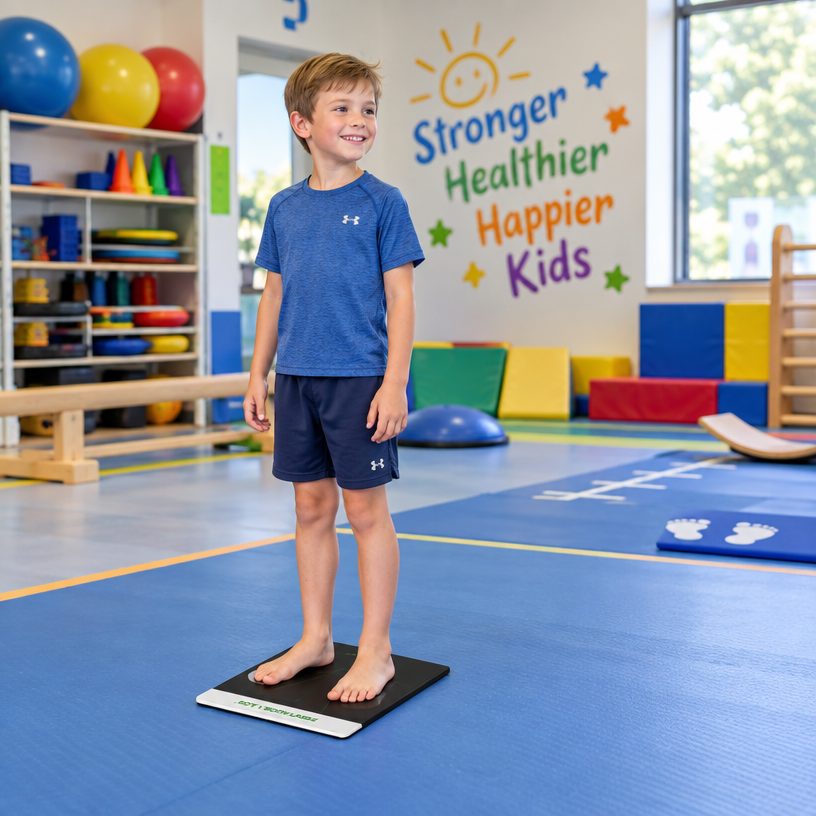
Standing records can be presented two ways: as a single frame, one instant of stance captured at its quietest, or as an average built across the seconds the pass covers. Both appear in reports everywhere, and both are legitimate. They are not interchangeable, and the difference becomes important exactly when the customer moves.
A single frame states its moment plainly: this is how contact presented while the customer was settled. It keeps edges sharp and preserves the shape the foot makes at rest. An average spreads everything that happened during the pass into one picture. When the customer stood quietly, that spread is small and the average reads close to any single frame. When the customer shifted, the average quietly blends the shifts in: peaks read lower, contact spreads wider, and nothing on the image says why. The average of a moving pass is not a better record. It is a blurrier one, and it looks ordinary enough on a desk to be mistaken for a clean measurement.
The honest sequence is review, choose, note. The operator looks at what the passes captured, decides whether a single settled frame or a short average serves the question the room is asking, and writes down which was used. Filing whatever the software produced last, without a decision, is how a folder ends up describing a wobble rather than a foot. Neither presentation is more correct in the abstract. What is wrong is not deciding, and letting the default make the choice instead of the operator.
When to move to seated, partially loaded capture
Some sessions reach a point where standing cannot be sustained at all. The customer cannot hold the stance for the time the protocol needs, or finds standing on the surface uncomfortable in a way that will not settle by a third attempt, or is simply unsteady enough that standing without firm support for more than a moment is not sensible. Pressing on with a fourth and fifth standing pass in those circumstances produces five blurred records, not one good one. The practical alternative already exists, and it changes the condition honestly rather than pretending the condition did not change.
In a seated, partially loaded capture, the customer sits, the foot rests on the sensing surface, and part of the body’s weight is applied through that leg while the operator records. The record then describes the foot’s contact and shape under reduced load. It answers shape questions: the outline, the contact pattern, how the arch presents when the foot is not carrying a full stance. It does not answer stance-phase questions: how load distributes at full body weight, how the step moves from heel through to forefoot. Those need standing, and if standing cannot be captured today, they wait for another visit rather than being approximated.
The condition change must be labelled, every time. A seated record filed silently beside standing records from other customers is a mislabelled page, and whoever reads it later has no way of knowing. The session sheet says seated capture, partial load, and the reason in a few words. Comparability with standing records stops at that line, deliberately; a seated record and a standing record of the same foot are two different measurements, and only the label keeps them from being read as one.
Writing the conditions into the report
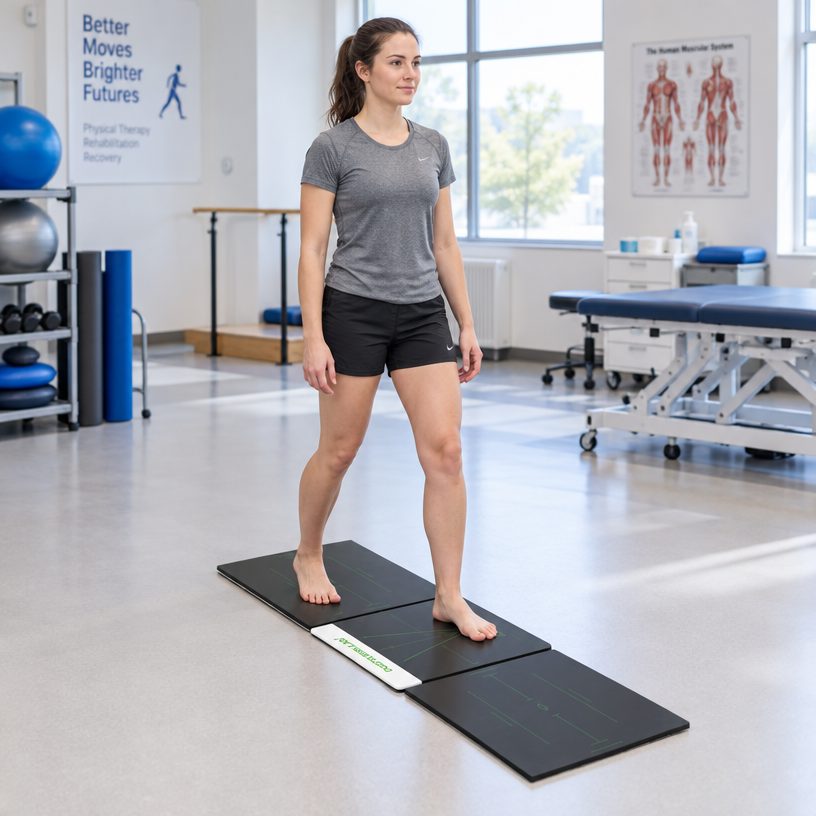
None of the decisions above survive if they are not written down. The session sheet carries one line, and the line does more work than its length suggests: how many standing passes were taken, which one was filed, single frame or average, whether the customer steadied on the rail, and whether any part of the session was captured seated. If a seated capture was taken, it says so in the same place, with the reason beside it.
The printed report carries a version of the same line. Records travel; they go to a second professional, back to the customer, into a folder that gets reopened next season by someone who was not in the room. A record that arrives without its conditions asks the reader to guess, and the reader will guess that everything was ordinary. One sentence at the top of the page, several passes taken, the third filed, the customer steadied lightly, a seated support capture taken additionally, replaces the guess with fact. Our walkthrough of a foot assessment report, page by page, shows where such a line sits among the other headings.
The habit costs seconds and it is the cheapest insurance the room owns. Rooms that write conditions keep folders that can be compared honestly across visits. Rooms that rely on memory discover the gap the first time a customer returns and the new record does not match the old one, with nothing on either page to explain the difference. At that point the missing line cannot be reconstructed, the conversation starts from doubt, and doubt is more expensive to undo than to prevent.
What this record cannot be read as
There is one misreading to guard against, and it appears wherever a restless customer has been recorded: the temptation to read sway as a stability finding. The customer moved a lot, the report shows it, and a sentence about the customer’s poor balance follows within a minute. It should not follow at all. Movement during a single capture session is as much about the room, the day and the unfamiliarity of the task as it is about the person, and a pressure platform in this configuration is not a balance assessment instrument.
The equipment records how load arrives and distributes at the ground under stated conditions. It does not assess the customer’s stability, and a record taken from someone who could not stand still cannot be turned into a statement about how steadily they stand in their own life. Where a room genuinely needs to talk about balance and sway, that is a separate conversation with a different protocol and a qualified professional. Our article on what a standing balance record shows, and what it does not, draws that line in detail.
The honest framing, which we also give buyers during demonstrations: the equipment produces measurements and images; interpretation belongs to a qualified professional, and interpretation needs the conditions in front of it. The restless first session is not evidence of anything about the customer. Often the second record, taken a visit later in a room the customer now knows, is the quiet one, which is its own argument for scheduling the repeat rather than concluding from the first attempt.
The words that work in the room
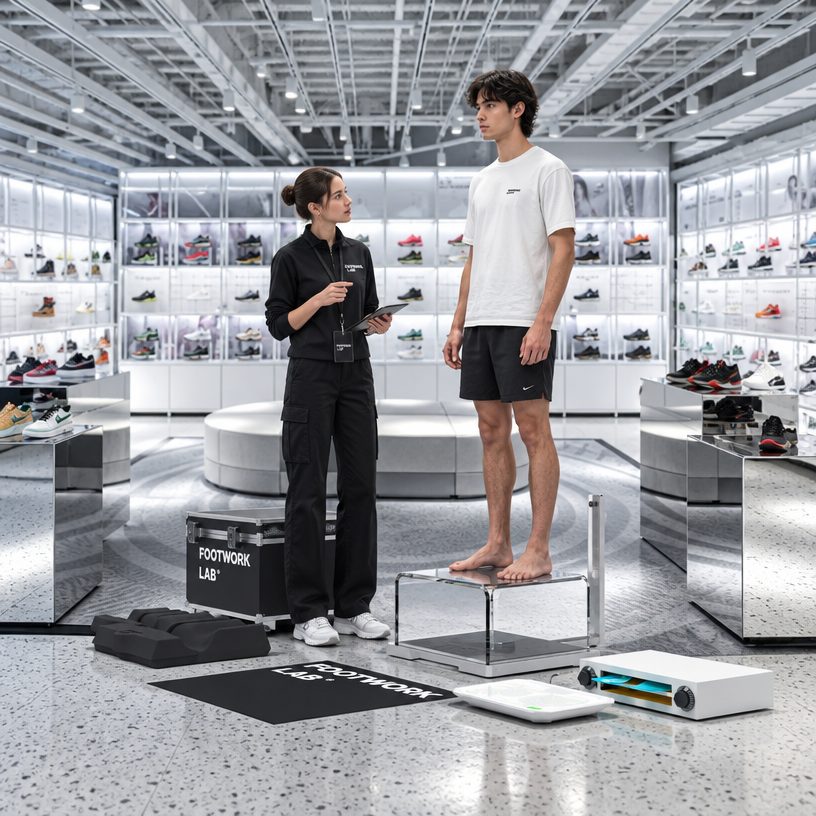
The instruction that fails is stand still. Customers hear it, try harder, stiffen, sway more, and apologise. The instruction that works gives the customer something to do instead of something not to do: look at a fixed point across the room, rest fingertips on the rail without leaning, keep breathing, keep talking about something ordinary. Attention moved off the feet is the most effective tool in the room, and it costs nothing to deploy.
Tone carries the rest. The unhurried operator gets the quiet pass; the rushed operator gets five blurred ones. The customer who is told that this happens to nearly everyone and that the room will simply take it again stops performing anxiety and starts standing naturally, usually by the second or third pass. None of this is charm or personality. It is script, and scripts can be trained. Who runs the scan, and how staff are trained on the machine, decides more about record quality than any setting behind the software, as our piece on training staff on a foot scanner argues at length.
The working phrases belong on the wall, next to the session sheet, in the same handwriting as the protocol. New staff inherit them, busy days do not erode them, and the room’s records stay consistent through staff changes. A room that treats operator phrasing as part of the protocol rather than as individual style keeps its folders comparable even as people come and go, and that is the whole point of writing anything down in the first place.
Frequently asked questions
What should an operator do when the customer keeps shifting on the platform?
Take the session as several short passes rather than one, reset between them, and file the pass that reads settled on screen. Nothing is deleted; the raw attempts stay on the machine. The session sheet notes how many passes were taken and which one was filed, so the conditions survive in the folder.
Does an averaged record hide customer movement?
It blends it in rather than hiding it. When the customer stood quietly, an average reads close to a single frame. When the customer shifted, the average softens peaks and widens contact, and nothing on the image explains why. With a restless customer, a chosen single frame states its moment more honestly.
When is a seated capture the better choice?
When standing cannot be sustained for the time the protocol needs, or is uncomfortable or unsafe for that customer on that day. Seated, partially loaded capture answers shape and contact questions under reduced load; it does not describe full-weight stance behaviour, and it must be labelled as a different condition on the sheet and the report.
Can a seated record be compared with a standing record of the same foot?
Not directly. Load distribution under partial load differs from full-weight stance, so the two records describe different conditions. Only records taken the same way form a baseline a later visit can be read against. The label on the page is what keeps the two from being read as one measurement.
What exactly should be written about the capture conditions?
One line covering the number of passes, which was filed, single frame or average, any support used, and whether any capture was seated. The same line, in shorter form, belongs on the printed report, because records travel to readers who were not in the room and cannot reconstruct the day.
Does movement during capture mean the equipment is at fault?
Usually not. Movement during a first session is expected: the surface is unfamiliar, standing still is an unnatural task under observation, and most customers settle by the second or third pass. If every customer on every visit needs five passes, the protocol or the room layout deserves a look, not the machine.
Can the record be used to comment on the customer’s balance?
No. A pressure record taken from a restless customer describes load distribution under stated conditions; it is not a stability assessment, and one moving session says as much about the room and the day as about the person. Interpretation belongs to a qualified professional, and it needs the conditions written down in front of it.
What we would do next
Put the multi-pass habit and the condition line into the room’s routine this week: the between-pass phrase, the number of attempts, and the sentence that goes on the session sheet and the printout. Then pull the last ten folders and check whether the capture conditions are recoverable; where they are not, note the gap honestly rather than compare across it. Our piece on a clean record on a crowded shop floor covers the room-side distractions that produce the same movement problem, and the second record explains how a repeat-visit habit turns first-session noise into something the folder outgrows. The F2 system page describes the standing and walking capture modes in the equipment’s own terms, and the FAQ page carries the operational answers we give most often by message.
This article is intended for professional and educational reference. It is not medical advice. Foot assessment equipment produces measurements and images; clinical interpretation and any decision about care remain the responsibility of a qualified professional. Certification scope is limited to the documentation we hold: European Union certification and ISO quality system certification.