
She sets a shopping bag on the floor of your room before she sits down, and inside it are four pairs of shoes in no particular order. The running pair with the heel worn through to the midsole. The office pair she calls comfortable, which nobody has worn in months. The old everyday pair with the lining crushed flat on the left side only. And the pair she actually came in about — new, stiff, bought a size up on somebody’s advice, worn twice and abandoned. She apologises for the mess. She should not, because she has just brought the most complete case file she could have carried in.
Most rooms are set up to receive bare feet. Far fewer are set up to receive the shoes those feet live in, even though the shoes arrive with their own testimony: where the load has been going, where the foot slides, where the pair disagrees with itself. This piece is written for the clinics, physio rooms and orthotic workshops that meet customers like her — how to read the footwear on the bench, how to put the shoes into the record instead of leaving them in the bag, and what to do when the shoes and the feet tell two different stories.
The bag is a case file, not clutter
The first reframe is the cheapest one: treat every bag of shoes as evidence, not as something to move out of the way. A customer cannot tell you precisely how her weight lands, how far her heel slides on every step, or how much her forefoot spreads by the end of the day. Her shoes can, because they have been standing in for her feet through every step of the last several months. The wear pattern is a long-running measurement nobody had to schedule.
So before the interview starts, empty the bag onto the bench in the order she wore them, oldest and most-used first. Ask one question per pair: which one gets worn on more days than not, and which one was she wearing when the complaint got loud enough to book an appointment. The answers matter more than the number of pairs. A customer whose daily pair is worn through at the outer heel has been telling you something for months; a customer whose complaint started with a new, stiff pair is presenting a footwear problem wearing a foot-problem costume.
Two actions belong here, and both can be done tomorrow with no equipment at all. First, add a line to the booking confirmation asking customers to bring every pair they have worn in the last month, not just the relevant pair. Second, put a strip of plain paper on the bench and stand each pair on it: the lean of each shoe, the collapse of the heel counter, the side the toe box has crushed toward — all of it becomes visible and photographable the moment the shoe is upright on a flat line instead of jumbled in a bag.
What the pair on the bench is actually saying
Reading footwear is a discipline with an order, and doing it the same way every time is what makes it useful. Start with the soles, because they carry the clearest load history. A rearfoot worn at the outer edge, a forefoot polished under the ball, one shoe marked heavily and its partner barely touched — each pattern describes where the foot has been spending its load. Compare the two shoes of each pair against each other before you compare anything else; the difference between the left and the right is usually more informative than either shoe alone.
Move upward. The heel counter says whether the heel has been held or has been skating: a counter leaned hard in one direction has been losing that argument for months. The lining says where the foot slides and where it presses. The toe box says whether the foot lengthens and spreads into it on every step or sits quietly with room to spare. A toe box crushed at the top, for instance, belongs to a foot that grips or drags; a toe box crushed sideways belongs to a foot that spreads wider than the shoe ever allowed.
Then flex the shoes. Where the shoe bends easily is where the shoe has already decided the foot will bend, whether or not the foot agrees. A shank that still will not flex after months of wear has been forcing the foot to work around it. None of these observations is a diagnosis, and none should be presented as one — they are measurements made of wear, to be laid beside the fresh record and interpreted together by the qualified professional reading the file.
Putting the shoes into the record
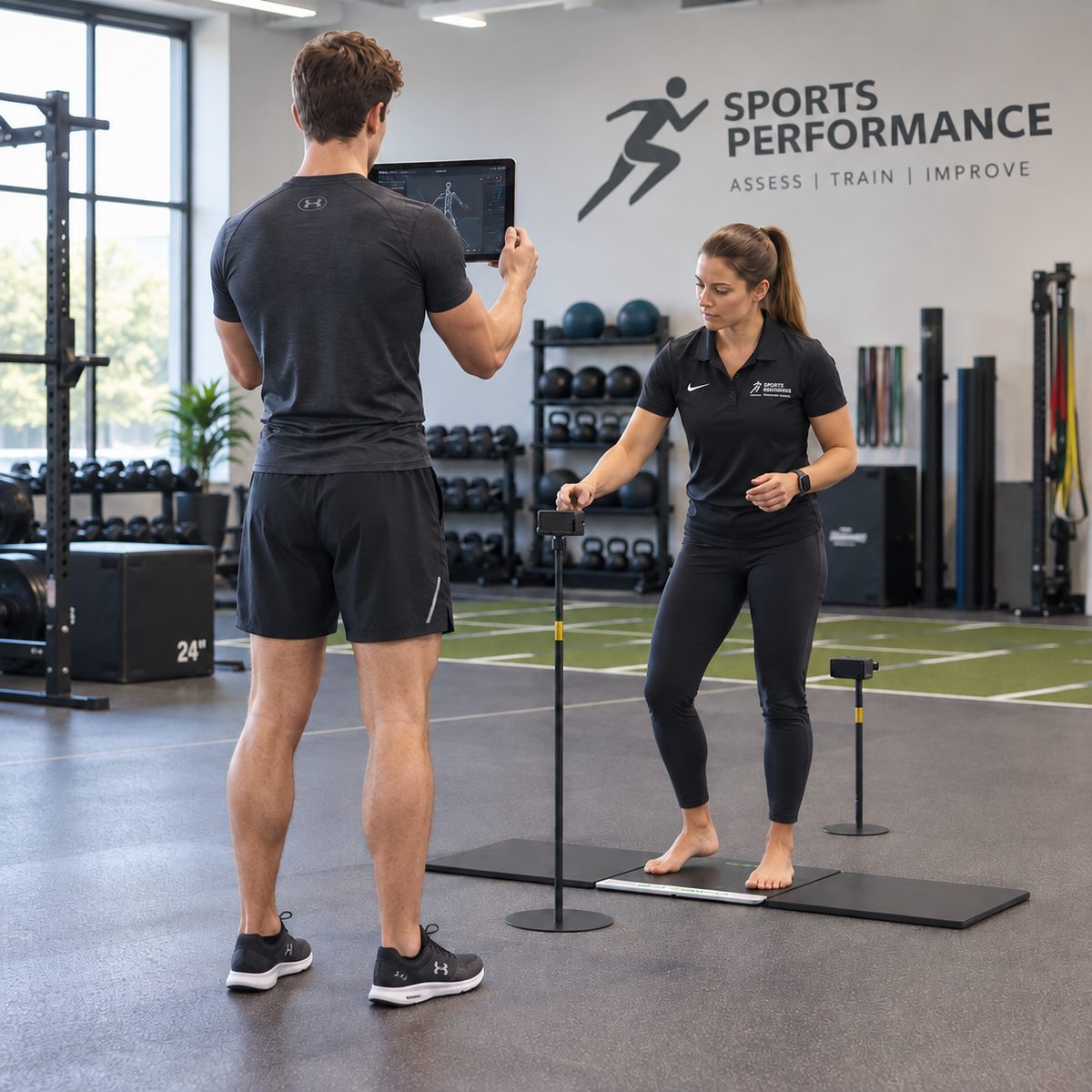
A pressure record taken barefoot describes the foot as it arrives. A record taken in the customer’s own shoes describes the system the foot actually lives in, and the difference between the two is where most of the interesting work happens. The comparison costs a few extra passes and answers questions neither capture can answer alone.
The order that works: one set of barefoot passes first, at the customer’s own pace, so the baseline is clean. Then a set in the daily pair, the one worn on more days than not. Then, if the bag includes the pair that started the complaint, a short set in that pair as well. Keep the instructions identical across sets — same room, same distance, same wording — because the only variable you want changing between sets is the shoe.
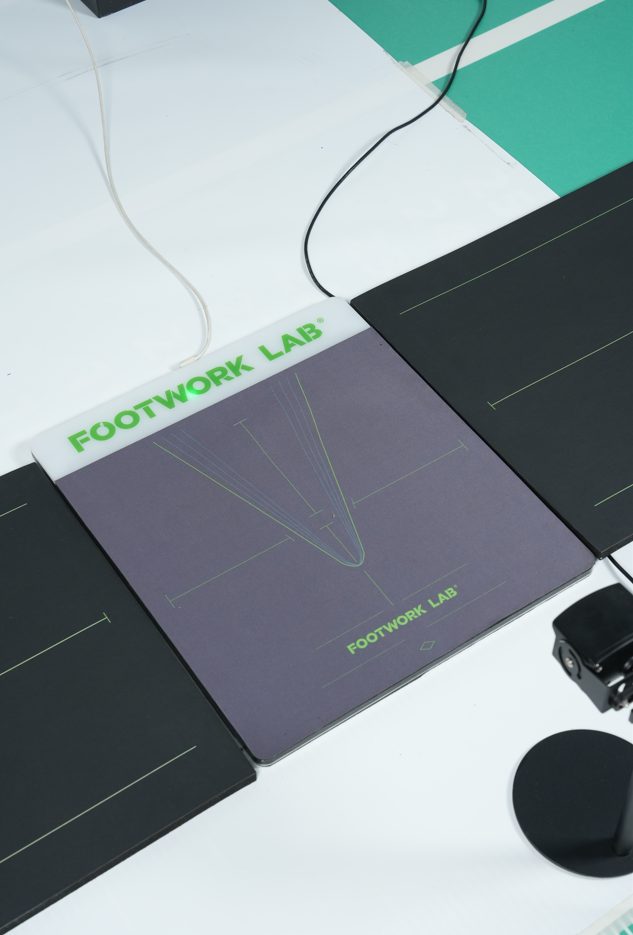
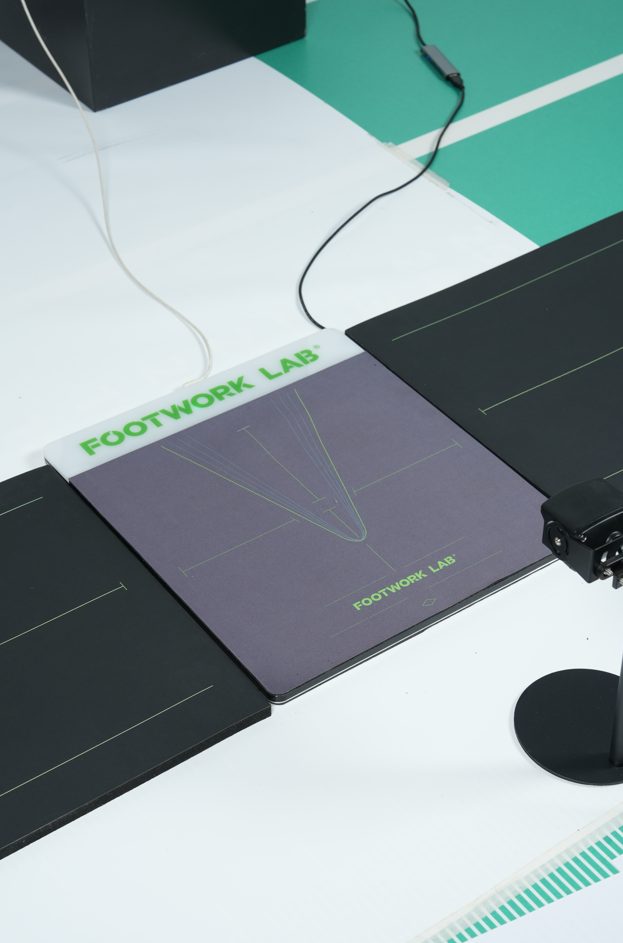
What the comparison can show, in the hands of the professional reading it: how the shoe shifts load toward or away from the areas the barefoot record flagged, whether the worn-through outer heel gets worse or gets cushioned inside the shoe, and whether the stiff new pair is asking the foot to bend where the shoe will not. A pressure platform that captures both barefoot and shod passes makes this comparison a routine part of the session rather than a special exercise — the tool records what happens; what it means stays with the qualified professional holding the file.
When the shoes and the record disagree
Sooner or later you will meet a file where the shoes and the fresh record tell incompatible stories. The barefoot record shows load spread reasonably across both feet; the daily pair is destroyed at the outer heel on one side only. Or the record flags the forefoot, and the shoes are worn flat at the heel. Resist the urge to average the disagreement away. The disagreement is the finding, and it usually points at something neither source could say on its own.
Three disagreements come up often enough to have names. First, the habit the customer does not mention: the shoe wear describes the pavement outside, the record describes the room, and the difference is a walking habit that only shows up under real conditions. Second, the shoe that has already failed: the lining compressed flat months ago, so the record taken barefoot looks calm while every step outside is landing on a surface that gave up long ago. Third, the two halves that do not match: one foot has been managed by a worn shoe, the other by a newer one, and the asymmetry between them is the story of two different support histories.
When this happens, write the disagreement on the sheet in the customer’s own words and the wear pattern’s own terms, side by side, and let the reading professional resolve it deliberately. The worst outcome is not the disagreement itself; it is a tidy single summary that silently picked a winner. We have written about this collision before in The Pair That Is Not a Pair: When Each Foot Needs Its Own Build, and the principle holds whether the mismatch is between feet or between feet and shoes.
Four lines on the sheet for the footwear
Whatever the room’s template looks like, the footwear deserves its own four lines, written the same way for every customer so the team starts comparing like with like. Line one: the daily pair, by description — how old, how worn, which days it gets worn. Line two: where the wear sits, on each shoe of the pair, described not interpreted — outer heel, inner heel, ball of the foot, even, uneven left against right. Line three: the interior — heel counter lean, lining compression, toe box crush, depth actually remaining. Line four: the shoe the customer blames, and what she was wearing when the complaint began.
Line four does more work than it looks like it should. Customers arrive with a story already assembled, and the story usually stars the newest, most suspicious-looking pair. The bench evidence frequently reassigns the role: the complaint began the month the old daily pair finally died, and the new pair is being blamed for a vacancy, not a crime. Distinguishing those two situations changes everything downstream — one needs a conversation about replacing worn footwear, the other needs a conversation about why the new pair was chosen at all.
Keep the four lines descriptive on purpose. “Outer heel worn through, left worse than right” is a fact a colleague can pick up next month and use. “She overpronates” is a conclusion that does nobody any good in the file, and one that belongs to the professional doing the interpreting, in the words that professional chooses.
What to say to the customer about the shoes
Customers expect two conversations about footwear and neither of them is useful. The first is the lecture: the shoes are wrong, replace them. The second is the shrug: the shoes are fine, ignore them. The useful conversation is the third one, and it starts from the bench: “Walk me through this pair — when did you buy it, and when did the heel start looking like that.” Letting the customer narrate her own wear pattern does two things at once: it gets you the timeline the shoes cannot date themselves, and it makes the customer a witness to her own load history instead of a defendant.
From there, the honest framing stays mechanical. Support, alignment, load distribution — words that describe what a build or a footwear change actually does, without promising how anything will feel by Friday. If the bench says the shoes themselves are the bigger half of the problem, say that first, before anything is built, because a build dropped into a shoe that has already failed is a build wearing the blame for somebody else’s collapse. If the shoes are sound and the load pattern is the issue, the professional reading the record decides what, if anything, goes under the foot — and the shoes stay in their role as footwear rather than being quietly upgraded into treatment they were never designed to deliver.
One sentence worth keeping in the drawer: “The shoes brought more information today than the appointment booked, so I want to start from what they say and read the record beside it.” Customers hear that as respect for their evidence, which is exactly what it is, and it sets up the review conversation where the real outcomes get discussed.
Making the bag part of the routine
The last step is administrative, and it is the difference between a good habit and a story one clinician tells. Put the footwear ask into the booking flow — a single line in the confirmation message asking for every pair worn in the last month — and put the four footwear lines onto the standard sheet, so a locum or a new hire picks them up without being told. Keep a strip of plain paper on the bench at all times. Photograph the wear patterns into the file before anything gets cleaned, repaired or discarded, because shoes have a way of going home and coming back resoled.
The habit pays for itself in rooms far beyond the orthotic workshop. Shoe shops doing quick screens at the rack face the same evidence problem in fast forward, and any room that fits a build has met the customer whose shoe was never made for her foot in the first place. The bag on the floor is the same case file everywhere; the only difference is how much time the room gives it.
Which brings the question back to the readers who run these rooms: when the shoes and the fresh record flatly contradict each other, which one gets the benefit of the doubt on your sheet — and has that call ever gone the wrong way?
Frequently asked questions
How many pairs should I ask a customer to bring?
Every pair worn in the last month, not just the pair she blames. The daily pair carries the load history, and the pair the complaint began in often turns out to be innocent — the timing usually points at the month the old daily pair finally gave out. Four or five pairs is common; the story is in the comparison, not the count.
What should I look at first when reading a worn shoe?
The soles, and each shoe of the pair against its partner before anything else. The left-right difference is usually more informative than either shoe alone. Then the heel counter, the lining and the toe box, then the flex: where the shoe bends easily is where it has already decided the foot will bend.
Should I record the customer walking in her shoes or barefoot?
Both, in that order. A barefoot set gives the clean baseline, then a set in the daily pair shows how the shoe redistributes load. Keep instructions identical across sets so the shoe is the only variable. The comparison between the two is where most of the useful reading happens.
What if the shoe wear and the pressure record disagree?
Write the disagreement down rather than averaging it away. Common causes are a walking habit that only shows up outdoors, a shoe whose support collapsed months ago, or one foot managed by a worn pair and the other by a newer one. The interpretation belongs to the qualified professional reading the whole file.
Do I need to tell the customer to replace her shoes before any build?
Say what the bench shows, first, before anything is built. A build dropped into a shoe whose lining has already failed inherits the blame for that failure. If the shoes are sound, the professional reading the record decides what, if anything, belongs under the foot.
How do I record footwear findings on the sheet?
Four descriptive lines: the daily pair and how worn it is; where the wear sits on each shoe, left against right; the interior state — heel counter, lining, toe box, remaining depth; and the pair the customer blames versus the pair she wore when the complaint began. Description only, no conclusions, so the file stays usable.
Can shoe wear alone justify a build?
No. Wear patterns are measurements of history, not diagnoses, and they are always read beside a fresh record and the intake conversation. The decision belongs to the qualified professional interpreting all three together — which is also what protects the customer from a build answering the wrong half of the problem.
What we would do next
Two changes this week, neither costing anything. Add the footwear line to your booking confirmation — every pair worn in the last month, not just the relevant pair — and stand each pair upright on a strip of paper on the bench before the interview starts. The upright pair photographs well, leans visibly, and changes the customer’s posture toward her own evidence: she arrives thinking she brought clutter and discovers she brought documentation.
The comparison habit stretches further than this one article. Any room comparing records across visits has the same need for identical instructions (Walk In, Walk Across: How Many Passes Make a Fair Record), and every left-versus-right question the shoe bench raises follows the customer out of the room. The principle is one and the same: more honest sources, read beside each other, beat any single tidy answer.
One question back to the readers: when the bag on your floor contains a pair that flatly contradicts the fresh record, what gets written first — and who in your room is allowed to make that call?
This article is intended for professional and educational reference. It is not medical advice. Foot assessment equipment produces measurements and images; clinical interpretation and any decision about care remain the responsibility of a qualified professional. Certification scope is limited to the documentation we hold: European Union certification and ISO quality system certification.