
Advertisement. This is a promotional product article.
X5 vs F5-LAB: Two Full-Body Posture Assessment Approaches, Compared on Precision, Efficiency and Use Scenarios
FOOTWORKlab’s product manual describes a family of detection and customization systems, and two of them take clearly different routes to posture assessment. The X5 is presented as one integrated setup: foot data detection, lower-limb biomechanical force line detection and full-body posture detection are combined with analysis, evaluation and on-site orthotic customization in a single intelligent scene solution. The F5-LAB takes a motion-based route: it measures pressure distribution and posture while you walk or run on its treadmill, identifies each step automatically and outputs clinical gait parameters.
Who actually meets these systems? According to the manual’s scenario list, they sit in places such as rehabilitation hospitals, podiatry clinics, foot therapy centers, gyms, sports training venues, children’s fitness centers and shoe stores. The typical reader is someone offered an assessment at one of those venues, or an operator deciding which route fits a space.
This article compares the two technology routes on precision, efficiency and use scenarios, using the FOOTWORKlab product manual as its source. Where the manual is silent — on accuracy numbers, for example — the article says so plainly instead of filling the gap.
What happens during an assessment with each system?
With the X5, the manual describes one connected workflow inside a single intelligent scene solution. The steps it names are foot data detection, lower-limb biomechanical force line detection, full-body posture detection, then analysis and evaluation. The capture is handled by AI vision detection instruments, and a dedicated analysis system produces the corresponding detection, analysis and evaluation results. On the strength of that individual data, the venue can customize an orthotic on site. What the manual does not say is equally worth noting: it gives no session duration, no number of capture positions and no description of the report you receive at the end.
The F5-LAB route is built around movement. Its component list includes the main unit and a treadmill, two cameras and two camera brackets, plus a hub and USB data cable. During an assessment you walk or run while the system measures pressure distribution and posture, identifies steps automatically and provides clinical gait parameters. Four core functions are listed: gait cycle detection and evaluation, movement posture assessment, dynamic pressure evaluation and analysis, and a dynamic dual-foot analysis the manual calls the butterfly line evaluation. The named technologies behind it are Bodyft AI machine vision recognition, Sinmec Fabric fabric sensing and AI generative tools.
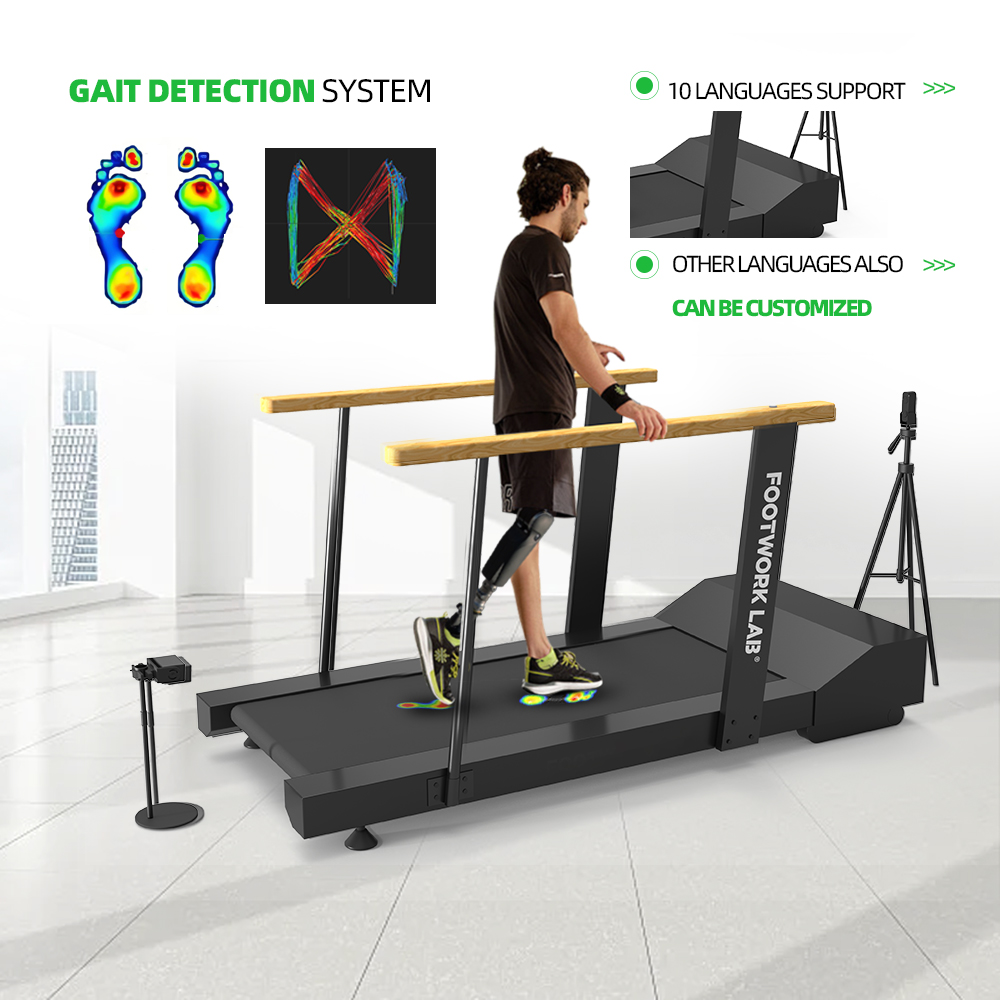
A few operating conditions appear in the entries themselves. The F5-LAB entry lists service support: pre-sale consultation, a dedicated after-sales technical team, software customization available for an additional fee, after-sales marketing and service guidance, and online OTA updates — so the software you experience may vary by venue. Its dynamic assessment assumes you can walk and run on a treadmill, and the manual describes no alternative mode for this system. On customization, the X5 entry describes on-site orthotic customization based on individual data; the F5-LAB entry in these materials lists detection and analysis functions without detailing a customization module of its own. If a finished custom product on the same visit matters to you, that difference in the described workflows is the first thing to confirm with the venue.
What do the technical terms in the manual actually mean?
The X5’s route is vision-led. AI vision detection instruments means capture relies on camera-based image analysis; the manual pairs them with a dedicated analysis system that produces the detection, analysis and evaluation results. Lower-limb biomechanical force line detection refers to checking the alignment between the feet and the legs that the manual describes. Full-body posture detection extends the list beyond feet and legs to the whole body — in these materials, that is the main technical separation between the two systems.
The F5-LAB’s route is motion- and pressure-led. Clinical gait parameters are the values the system outputs about how you walk and run; the manual describes them as widely used in medical rehabilitation, sports science research and footwear manufacturing. Dynamic pressure evaluation means pressure is recorded while the body is moving rather than holding still. The dynamic dual-foot butterfly line analysis is the manual’s name for one analysis output; the document does not explain the method behind it, so it is safest to treat it as a named report rather than a defined metric. Bodyft AI machine vision recognition and Sinmec Fabric fabric sensing are the named capture technologies on this system.
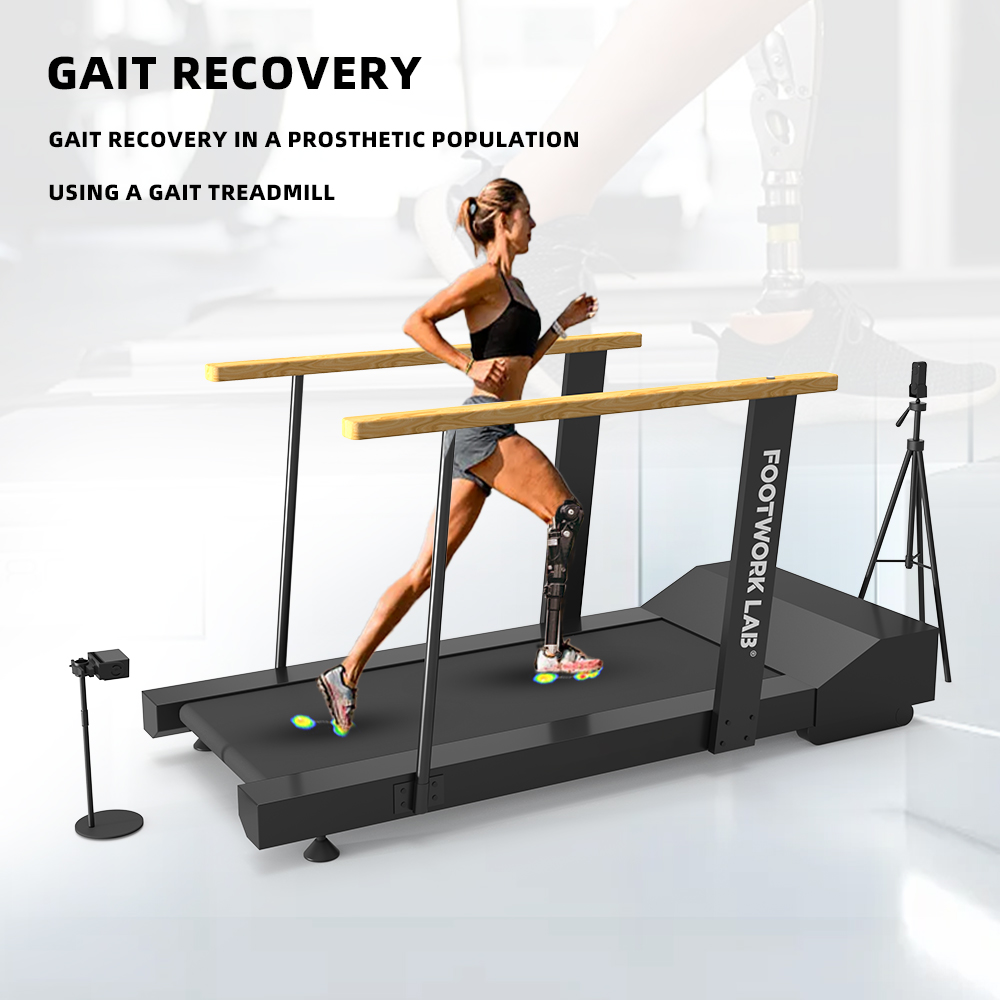
On precision, the honest reading is narrow: the manual describes what each system measures but states no numeric accuracy figures for either. What can legitimately be compared is data coverage. The X5’s list spans feet, lower-limb alignment and full-body posture in one pass; the F5-LAB’s list goes deep on movement over time — gait cycle, step-by-step pressure, posture in motion. On efficiency, the manual’s own framing differs as well: the X5 is presented as one integrated scene solution that ends in on-site orthotic customization, while the F5-LAB entry centers on treadmill-based measurement and its analysis outputs. Neither entry states processing time or how long a visit takes.
Which setup matches your situation?
The manual’s own wording suggests a plain mapping. If the question you want answered is how your body lines up as a whole — feet, lower-limb alignment and overall posture captured in one session, with an orthotic customized from that same data on site — the X5 is the system described for that path. If the question is what your feet do while you are actually moving — where pressure falls, how the gait cycle runs, how each step repeats — the F5-LAB is the system described for that path.
Setting matters too. The manual places the F5-LAB in medical rehabilitation, sports science research and footwear manufacturing, and it lists rehabilitation hospitals, podiatry clinics, foot therapy centers, gyms, sports training institutions, children’s fitness centers and shoe stores as usage scenarios for its systems. The brand’s FAQ records also include an inquiry about running a consumer foot-analysis and footwear-fitting service on the X5, which matches the retail setting in that list.
A few situations call for caution rather than commitment. First, both are described as venue-based installations; nothing in the manual describes home use, so if you want a device for personal daily use, these materials do not support that expectation. Second, if you cannot walk or run on a treadmill, ask the venue how the F5-LAB assessment adapts, since the manual offers no alternative mode for that system, and the X5’s description does not say whether standing alone is enough for its capture. Third, the outputs are described as detection, analysis and evaluation, and the manual does not present them as medical diagnosis; its orthotic section maps individual products to rehabilitation and orthopedics departments.
Where does this information come from, and what does it leave out?
Every factual statement here traces back to one document: the FOOTWORKlab product manual, which describes the brand’s detection and customization systems, including the X5 and F5-LAB entries summarized above. The materials supply no version number or publication date for that manual, so the descriptions reflect the document as provided rather than a dated release. A separate record in the brand’s FAQ notes — a business inquiry about using the X5 for a consumer foot-analysis and footwear-fitting service — is the source for the retail context mentioned earlier.
The manual leaves real gaps, and it is fair to name them. It publishes no accuracy or precision figures for either system, no session durations or throughput numbers, no prices, and no certification, patent or laboratory test data. It contains no side-by-side study of the two technology routes, no guidance on interpreting results outside the venue, and no description of how assessment data is stored afterwards.
That is why the comparisons in this article are structural rather than performance-based. They compare what each system is described to measure and how each workflow is described to run; they cannot tell you which system yields more accurate readings, because the source does not say. If a venue quotes claims beyond this manual — specific accuracy numbers, session speeds, health outcomes — ask for that evidence separately.
Frequently asked questions
Do the X5 and the F5-LAB come from the same brand?
Yes. Both are described in the same FOOTWORKlab product manual, in the section covering its detection and customization systems. They read as two entries in one product line, not as rival devices.
Which system includes full-body posture detection?
The X5’s description lists full-body posture detection together with foot data detection and lower-limb biomechanical force line detection. The F5-LAB’s listed functions cover posture, gait cycles and pressure during walking and running; the phrase full-body posture is not used for that system in the manual.
Will I walk away with a custom orthotic the same day?
On-site orthotic customization based on individual data is part of the X5’s described workflow. The F5-LAB entry in these materials lists detection and analysis functions and does not detail a customization module, so confirm with the venue before your visit.
Is running on a treadmill required for the F5-LAB?
The system’s component list includes a treadmill, and its core functions measure pressure, posture and gait while walking and running. The manual describes no standing-only mode for this system.
Do the materials publish accuracy figures for either system?
No. The manual describes functions and technologies in words and provides no numeric accuracy specifications, test results or certifications for either the X5 or the F5-LAB.
Where might I encounter these systems?
The manual’s scenario list covers rehabilitation hospitals, podiatry clinics, foot therapy centers, sports venues, gyms and sports training institutions, children’s fitness centers and shoe stores, and it places the F5-LAB specifically in medical rehabilitation, sports science research and footwear manufacturing.