
Most of the disappointment in a custom orthotic is decided before production starts. A clinic sends a file, writes “support both arches” on the order, and waits. What comes back is a pair of insoles that fits the shape it was given but does not do what the practitioner had in mind, and the conversation that follows is about the product when it should have been about the instruction. The gap is not workmanship. It is that a measurement describes a foot, and an order has to describe an intention, and the two are not the same document.
This article follows the whole sequence from the clinic’s side and ours: what the assessment should produce, how a prescription is written so a factory can act on it, what happens to the file on the production floor, how material choices change the result, what a first fit review is for, and how a practice keeps a reorder consistent two years later. It is written for practitioners who order insoles and for distributors who support them, and it assumes no particular brand of equipment.
We make insoles at our own plant, so we have an interest in the answer. The honest version is that a good order costs the clinic an extra ten minutes and saves a pair, and most of the failures we see trace back to an order that was too short rather than to a machine that was not good enough.
Starting point: the assessment that produces a file
The file is the input to everything that follows, and its quality is set by how the capture was taken rather than by how large it is. At minimum it should record the shape of the sole under load, the distribution of load across the sole, and the alignment of the lower limb as the client stands. Where the system supports it, a walking capture adds the order and duration of loading, which is often what distinguishes one low arch from another in the practitioner’s mind.
Two conditions make a file usable. The first is that the client was in a defined position: barefoot or in the socks they will wear, standing with weight even, feet placed the same way as at the previous visit. The second is that the conditions were written down. A file without a note about footwear, time of day and what the client reported is a shape without a context, and the factory will make exactly the shape it was sent, whether or not that shape represents the client’s ordinary standing posture.
The file should also carry the negative information, which is the part most often left out. Where the practitioner does not want load, what the client could not tolerate in a previous pair, which shoe the insole is intended for, and what the client does all day. A factory cannot see the shoe, and a pair built for a roomy walking boot behaves differently in a narrow dress shoe even when the shape is identical.
For practices using our equipment, the capture and the order sit in the same software, so the file travels with the client record rather than in a separate email. That is a convenience, not a requirement. We accept files from other systems, and we accept a plaster impression or a foam box where that is what the clinic uses, because the production question is whether the shape is clear, not which instrument produced it.
The prescription: what the clinician actually specifies
A prescription is a set of decisions, and each one should be written in language a production team can act on. The first is where the support sits: under the medial arch, across the whole foot, under the forefoot, or concentrated at a named region. The second is how far it extends, because a support that runs to the toes behaves differently from one that stops at the metatarsal heads. The third is how firm the shell is, which is a separate decision from how much cushioning sits on top of it.
The fourth is the cover. A cover changes friction, moisture behaviour and the feel under the sole, and it also changes how much room the insole takes up inside the shoe. The fifth is the volume: whether the pair has to fit a shoe with a removable liner, whether that liner stays in or comes out, and whether the client needs the insole to occupy less space than the original footbed. Volume is the most common reason a technically sound pair gets rejected at first fit, and it is the cheapest thing to specify in advance.
Then there is the intended use, which shapes everything else. A pair for a work boot that is worn ten hours a day on a hard floor is a different object from a pair for a sports shoe used twice a week, even for the same foot. The shell stiffness that feels supportive in one context can feel unforgiving in the other, and the cover that lasts in a boot can wear through in a running shoe within a season.
What a prescription should not be is a clinical opinion in disguise. The factory does not need to know what the practitioner concluded about the client’s condition; it needs to know what shape to build and how firm. That distinction protects the clinic as much as the client. Instructions about support and load distribution are within a manufacturer’s competence. Decisions about care are not, and we do not ask for them.
From file to pair: what happens on the production floor
The file arrives and is checked against the order before anything is made. This is a short step and an important one: the shape is compared with the prescription for obvious conflicts, such as a support specified in a region where the file shows very little contact, or a volume request that cannot be met with the shell and cover specified. When something does not line up, we ask before cutting rather than after.
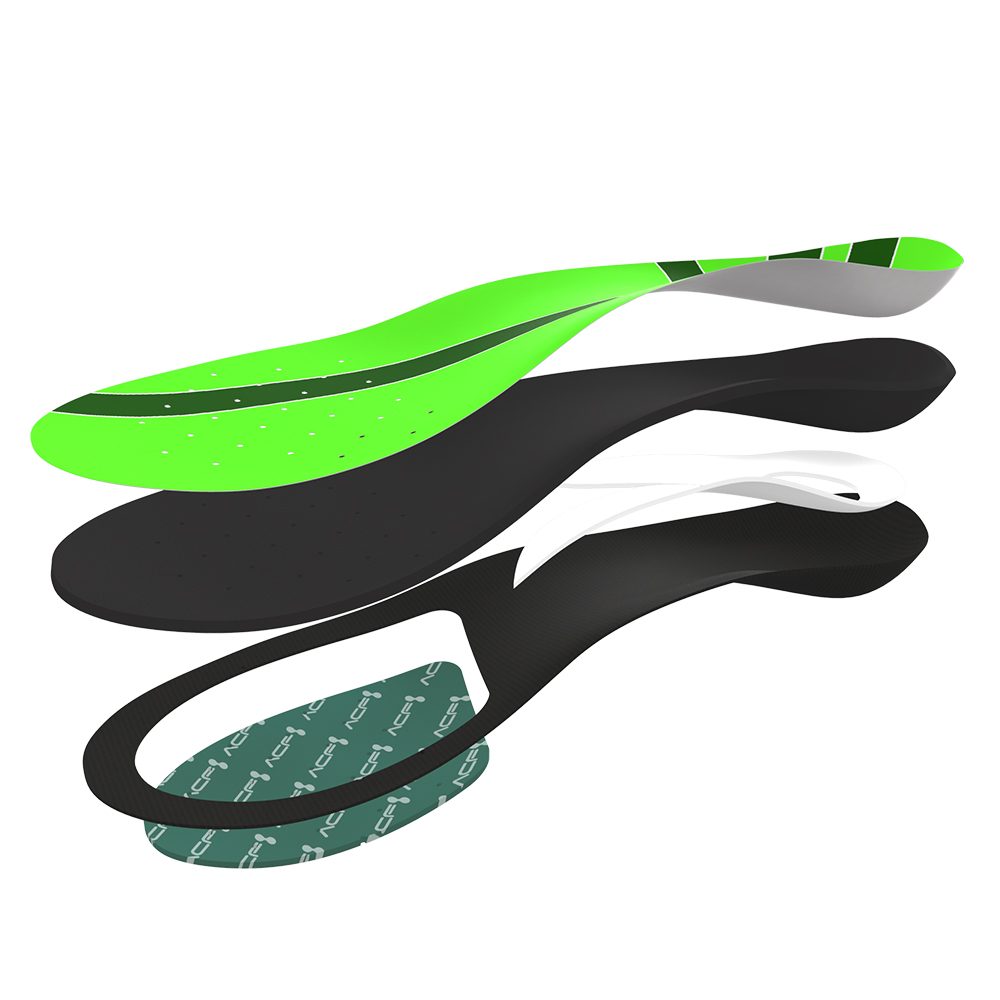
The shape is then translated into a production specification, which is a description of the form the insole will be built on. A positive model is produced from that specification, and the shell is formed over the model so that the underside matches the intended shape of the foot. The top surface is then built up: cushioning where the prescription asks for it, a neutral layer where it does not, and posting or wedging where the order specifies an angle. Covers are bonded, edges are finished, and the pair is trimmed to the intended shoe size.
Every pair is checked against the order before packing: the size, the side marking, the shell stiffness, the cover, and the shape at the regions the prescription named. A pair that fails the check is remade rather than shipped with a note, because a clinic that has to send a pair back has already lost the appointment slot it was ordered for.
One point is worth explaining to clients who ask why a custom pair takes longer than an off-the-shelf product. The time is not in the forming, which is quick; it is in the checking and the finishing.
Materials, covers and stiffness: what each choice changes
Shell material sets the character of the pair. Firmer materials hold a shape under load and suit a prescription that asks for control of position; softer ones flex with the foot and suit a prescription that asks for accommodation and cushioning. Neither is better in the abstract. The choice should follow from what the practitioner wants the insole to do in the shoe, and from how much space the shoe offers.
Thickness interacts with stiffness, and the interaction is not intuitive. A thin firm shell can feel harsher under the foot than a thicker one of the same material, and a thick soft shell can take up so much volume that the client’s heel lifts out of the shoe. The prescription should state the volume constraint in the terms the clinic actually knows: whether the original footbed comes out, how much room is left at the heel, and whether the client wears the same pair in more than one shoe.
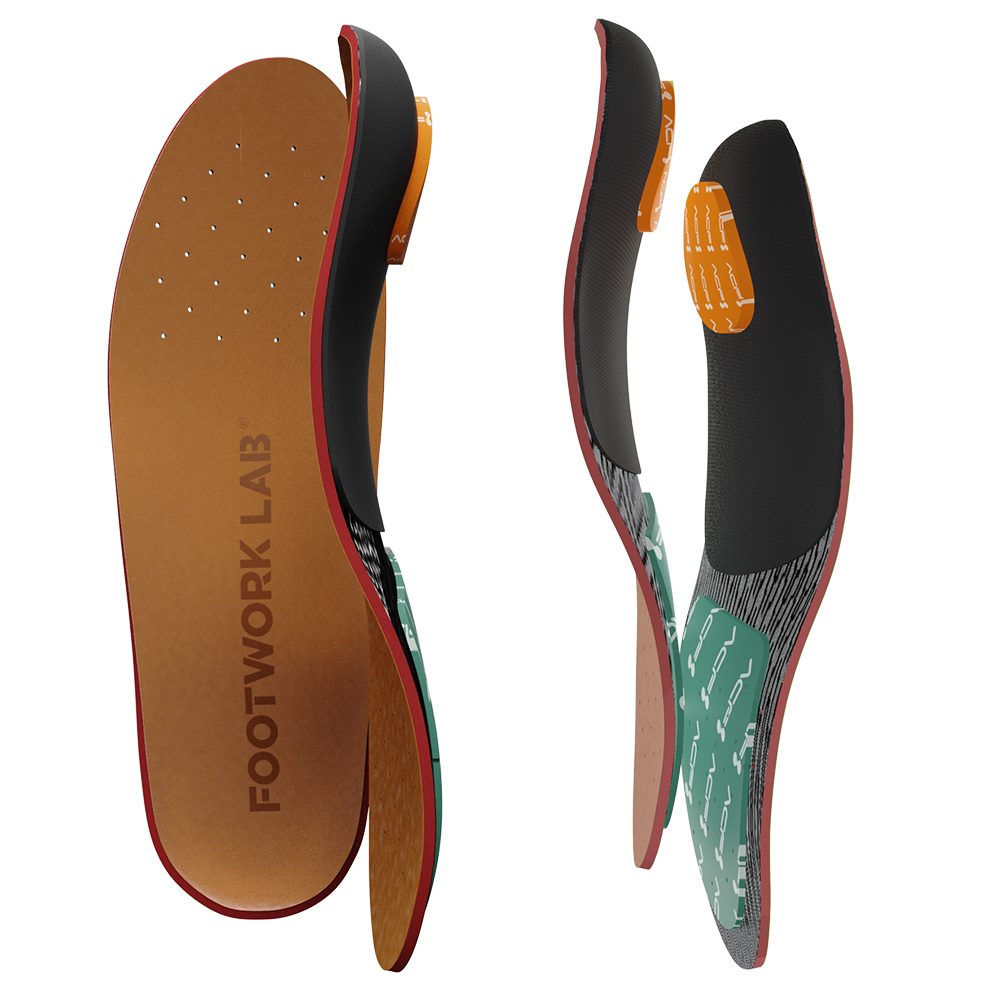
Covers are chosen for three properties: friction, moisture and durability. A low-friction cover helps a foot move into the shoe without dragging; a higher-friction cover holds the foot in place. Moisture behaviour matters for anyone in the insole for a full working day, and durability matters most where the cover meets the toes and the heel. The cover is also the part the client sees, which is not a trivial consideration when the practice is selling a premium service.
Posting and wedging are the last variable, and the one most often over-specified. An angled element changes how load is distributed through the middle of stance, and it should be asked for when the assessment supports it, not by default. A pair with a posting the client does not need is not neutral; it is an intervention with a cost in comfort and in shoe fit. Where the file does not clearly support an angle, leaving it out is a decision, not an omission.
First fit, review and the adjustment loop
The first fit is a measurement opportunity that most practices underuse. The client puts the pair in the shoe, stands, walks, and the practitioner watches. Where the clinic has a pressure system, the same plate that produced the baseline can record the foot with the insole in place, which turns “how does it feel” into a comparison of two maps. The difference between those two recordings is the most useful piece of information in the whole episode, because it shows what the pair is actually doing rather than what it was designed to do.
The review conversation should cover four things: pressure under the parts of the foot the prescription named, movement inside the shoe, any contact the client reports at the edges, and whether the shoe still fits properly with the insole in it. Each of those maps to a specific adjustment. Edge contact is usually a trim or a bevel. Movement is usually a cover or a volume issue. A shoe that no longer fits is a volume problem that no amount of adjustment to the shell will solve, and the honest answer is often a different shoe or a thinner pair.
The adjustment loop should be short and documented. One round of adjustment is normal; two is a sign that something in the prescription was unclear; three means the case needs a new assessment rather than another modification. Writing down what was changed and why is what makes the next pair better, and it is also the record that protects the clinic if the client returns with the same complaint a year later.
There is a limit worth stating to clients at the first fit. An insole supports the foot and spreads load. It does not change the shape of the arch, and it will not make a shoe fit differently from the way the shoe fits. Setting that expectation at the start prevents the review conversation from becoming a negotiation about something the product was never going to do.
Repeatability, volume and reordering
A practice that orders one pair a month and a practice that orders two hundred at a time are asking for the same product, and the production answer has to be consistent between them. Our insole minimum order is two hundred pairs, with mixed styles and sizes allowed, which means a clinic can order a batch that covers its patient mix rather than a single size run. Samples ship within three days, and capacity runs at roughly five hundred to a thousand pairs a day, so a repeat order does not have to be planned a season ahead.
The file is the reason a reorder can be consistent. Once a pair has been made and fitted, the file plus the prescription plus the record of any adjustment is a complete description of what worked. A reorder from that record should produce the same pair, and where it does not, the difference is usually traceable to a changed material, a changed cover, or a changed trim. Keeping the specification with the file, rather than only the file, is what makes that trace possible.
Volume changes the economics without changing the process. A larger order lets a clinic hold a small stock of common configurations and reserve the made-to-file work for the cases that need it, and it lets a distributor serve several clinics from one production run. What it should not do is encourage a clinic to order a shape it has not fitted. A hundred pairs of an unproven prescription is a hundred pairs of the same mistake.
For partners, the same logic applies to branding. We accept ODM and OEM on insoles, so a distributor can order under its own label with its own packaging and documentation. The parts of the process that stay constant are the ones that determine whether the pair matches the file: the shape, the stiffness, the cover and the trim. Branding changes what the client sees, not what the foot feels.
The last part of repeatability is the least glamorous and the most valuable: the record. A practice that keeps the assessment, the prescription, the production specification and the fit notes together can answer questions years later that would otherwise be guesswork, including what was ordered, what was changed, and whether the client’s foot has moved since. Without that record, a reorder is a new order with a familiar name on it.
Storage is a policy question rather than a technical one. Files that live only on one practitioner’s laptop disappear when that practitioner leaves; files exported to a practice archive survive. We would rather a clinic sent us a file from an old system than reconstructed a shape from memory, and we would rather a clinic kept the specification we return with each order than filed it as packing paperwork. None of this makes the manufacturing step complicated. It makes the ordering step deliberate, which is the part the clinic controls and the part that decides whether the pair that arrives is the pair that was intended.
Frequently asked questions
What do you need from my clinic to start an order?
A file that describes the shape of the sole under load, a written prescription covering support location, extent, stiffness, cover and volume, and the intended shoe. If you have a previous pair and notes on what was adjusted, include those as well.
Can you work from our prescription instead of a scan file?
Yes. We can produce to a prescription supplied by the clinic, and we can also work from a plaster impression or a foam box. The requirement is a clear shape and a clear instruction, not a particular instrument.
What is the minimum order for custom insoles?
Two hundred pairs, with mixed styles and sizes allowed in the same order. Samples ship within three days, and production capacity runs at roughly five hundred to a thousand pairs a day.
How long does a pair take to produce?
Production time depends on the specification and the queue, and shipping adds either six to seven working days by express, ten to twelve by air, or thirty to thirty-five by sea. We confirm the schedule when the order is accepted rather than quoting a figure in advance.
Do you keep our files for reorders?
Yes, and we return the production specification with each order so the clinic holds the same record. A reorder from that specification should produce the same pair, and any difference in material or cover is visible on the paperwork.
Can the insoles carry our own brand?
Yes. We accept ODM and OEM on insoles, including packaging and documentation under the partner’s label. The shape, stiffness, cover and trim stay defined by the file and the prescription.
Will a custom insole change the shape of the foot?
No. A custom insole supports the foot inside a shoe and spreads load across the sole. It does not alter the shape of the arch, and we do not describe it as doing so.
What we would do next
If you are setting up an ordering routine, write the prescription template first and test it on three cases before you scale. Send it to us and we will tell you where a factory would have to guess, which is the same list of gaps your own staff would have to fill later. The insole category page shows the constructions we produce, the product overview covers the assessment systems that generate the file, and our article on clinical biomechanics in practice is a useful companion on where the measurement stops and the prescription begins. For order terms, samples and lead times, the FAQ page has the short answers.
This article is intended for professional and educational reference. It is not medical advice. Foot assessment equipment produces measurements and images; clinical interpretation and any decision about care remain the responsibility of a qualified professional. Certification scope is limited to the documentation we hold: European Union certification and ISO quality system certification.