
Pedorthics and the insole trade share a customer and split a job. Pedorthic footwear is built — last, upper, sole — to accommodate a foot’s measured shape; orthotic insoles are formed — shell, cover, geometry — to work inside a shoe the customer already owns. The two trades meet at the measurement and diverge at the factory, and dealers who explain the divergence clearly are the ones customers stop second-guessing.
The confusion is commercially expensive. A retailer who positions a comfort shoe as a substitute for a fitted insole sells the wrong product to the customer who needed the insole; an insole workshop that dismisses footwear as irrelevant sells insoles that lose to a narrow toe box every afternoon. Neither trade wins by claiming the other’s ground.
We sit on the insole side of the split — a production line running in the hundreds of pairs per day — and supply the assessment equipment both trades use at the measurement point. This article maps the two categories for dealers deciding how their range should divide, and describes the cooperation model that makes them sell each other instead of competing.
Two products, two factories
The pedorthic shoe is designed around volumes: a last that mirrors the foot’s width and depth requirements, an upper that accommodates prominence, a sole geometry chosen for the foot’s loading pattern. Production is footwear production — lasts, cutting, stitching, lasting — and the factory that does it well is a shoe factory with a specialisation.
The orthotic insole is designed around load: how the foot distributes pressure, which regions should share work, how much thickness the target shoe allows. Production is insole production — design entry, forming, finishing, quality check against a specification — and the factory that does it well is, in our case, a line running hundreds of pairs a day against written briefs.
The division is not a hierarchy. A foot that needs accommodation all day in all shoes may be best served by the shoe; a foot whose complaint lives in specific loading is often best served by the insole in ordinary footwear. The dealer’s job is matching the case to the category, and the matching starts with knowing what each factory actually controls.
The vocabulary of the two trades also differs inside the measurement itself. Footwear staff speak in fittings — width marks, last references, size runs; insole staff speak in load — regions, families, budgets. A store’s shared record should therefore carry both vocabularies on one page, which is how our report is laid out: the map for the load conversation, the shape summary for the fitting conversation, neither translating the other.
Where the measurement point is shared
Both categories begin with the same record: the foot’s shape and behaviour. A pressure map shows distribution; posture capture shows alignment; the walking timeline shows sequence. A pedorthic fitter reads the same record an insole brief is written from — which is why the assessment corner is the natural cooperation point between the trades.
For a retailer carrying both lines, the record resolves the category question in front of the customer: if the map shows a loading pattern the insole range addresses, the conversation moves to insoles; if the issue is volume that no insole can defeat inside the customer’s shoes, the conversation moves to footwear. The customer watches the decision happen from their own data rather than from a salesperson’s hunch.
Our assessment equipment exists at exactly this junction, and we supply it to both trades. The pedorthic fitter and the insole workshop read the same report; the difference begins when one orders shoes and the other writes a specification. The shared front end is also why the two categories often end up in the same store — the measurement earns its keep twice.
The shared measurement point also has a scheduling consequence: the assessment corner should be bookable by both trades’ staff, with the capture protocol written for either reader. A pedorthic fitter and an insole fitter capture the same record for different next steps; the protocol that serves both keeps the corner busy and the file consistent — and the file, not the corner, is the store’s actual asset.
The combined protocol should also carry a version note: which capture instructions apply to which reader’s next step. A record captured for a footwear fitting and one captured for an insole brief may need the same stance but different annotations, and the protocol’s version line keeps the file honest about what the capture was for — the detail that saves the cross-trade conversation when the customer returns.
The shoe sets the insole’s ceiling — and the reverse
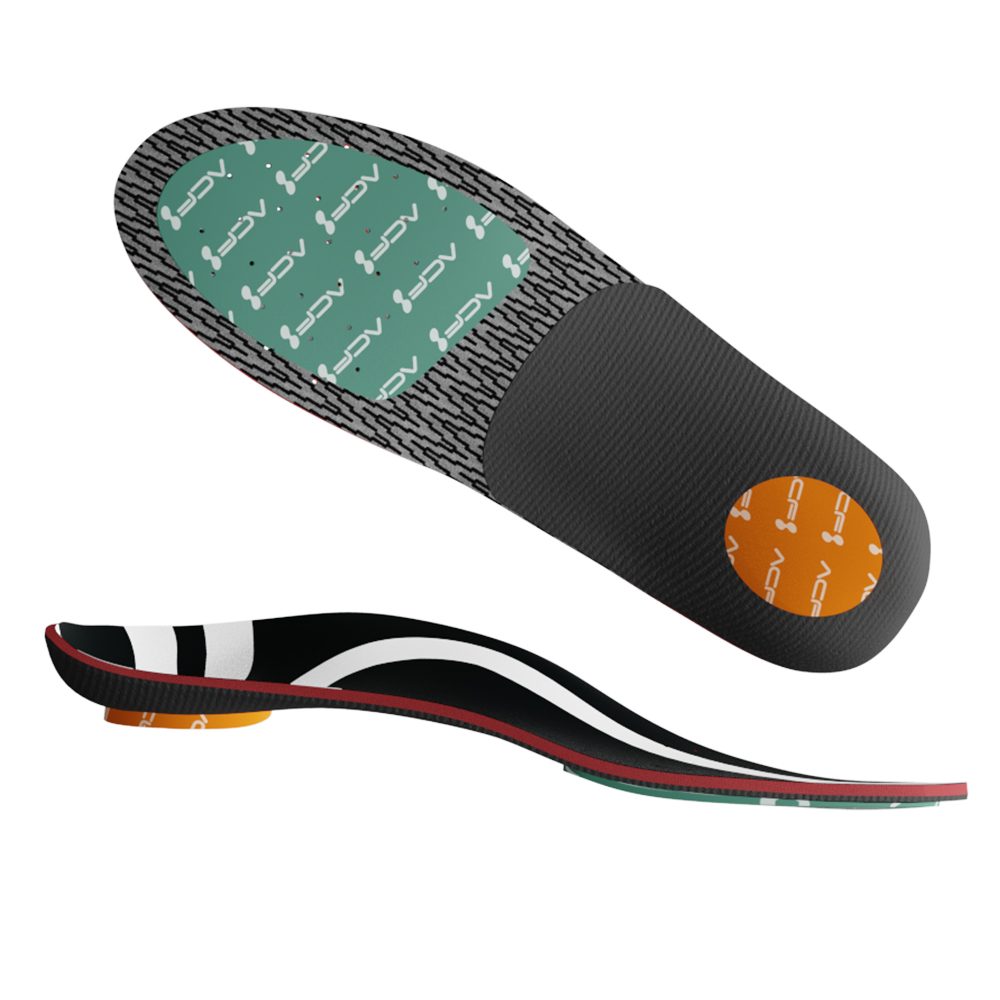
The insole trade’s oldest lesson is that the shoe caps the design: thickness budget, forefoot width, heel counter all constrain what a formed pair can do. A dealer who sells insoles without the shoe conversation books the remake; a dealer who asks to see the footwear sells the design that fits it.
The reverse holds too, and pedorthic dealers know it: a shoe that accommodates beautifully still leaves the loading question open, because the last shapes the volume, not the pressure pattern. The two products answer different halves of the customer’s day, and the store that says so sells the second product on the honest strength of the first.
Practically, the ranges reinforce each other. The customer who buys the accommodating shoe returns for the insole for the days they wear ordinary footwear; the insole customer returns for the shoe when a new pair of work boots defeats the current design. Cross-selling built on that honesty is durable — the kind the returns report never punishes.
The ceiling metaphor also has a customer-facing version that staff can use verbatim: the shoe decides the room, the insole decides the work. Customers who hear the two-sentence version stop asking one product to do the other’s job, and the store stops selling against physics. The sentence is short because the physics is short.
Positioning the two categories on one floor
Floor logic follows the division of labour. The pedorthic wall sells fit — width fittings, depth options, the shapes that accommodate. The insole counter sells response — ranges keyed to daily, sport and recovery jobs, with the assessment corner between them as the referee. Staff training should follow the same split: footwear staff learn volume language, insole staff learn load language, and both learn the referral sentence that hands the customer across.
The referral sentence is the whole cooperation in one line: what the record shows, which category answers it, and why the other category is not the failure. A staff that delivers that sentence consistently converts without pressure, because the customer experiences the recommendation as their own data speaking.
Ranges should also share the sizing story. Our insole ranges size to the shoe, which makes them legible to footwear staff; the pedorthic wall’s width fittings are legible to insole staff who understand the thickness budget. The store that trains both directions covers for each other’s absences — a small operational point that decides whether the dual range survives its first staff turnover.
Floor logic has a signage dimension worth an afternoon: the wall and the counter should name their jobs in customer language — fit lives here, load answers here — so the referral begins before the staff speaks it. Stores that signpost the division report fewer crossed conversations, because the customer arrives at each station already holding the right question.
Sourcing each side, and the terms to check
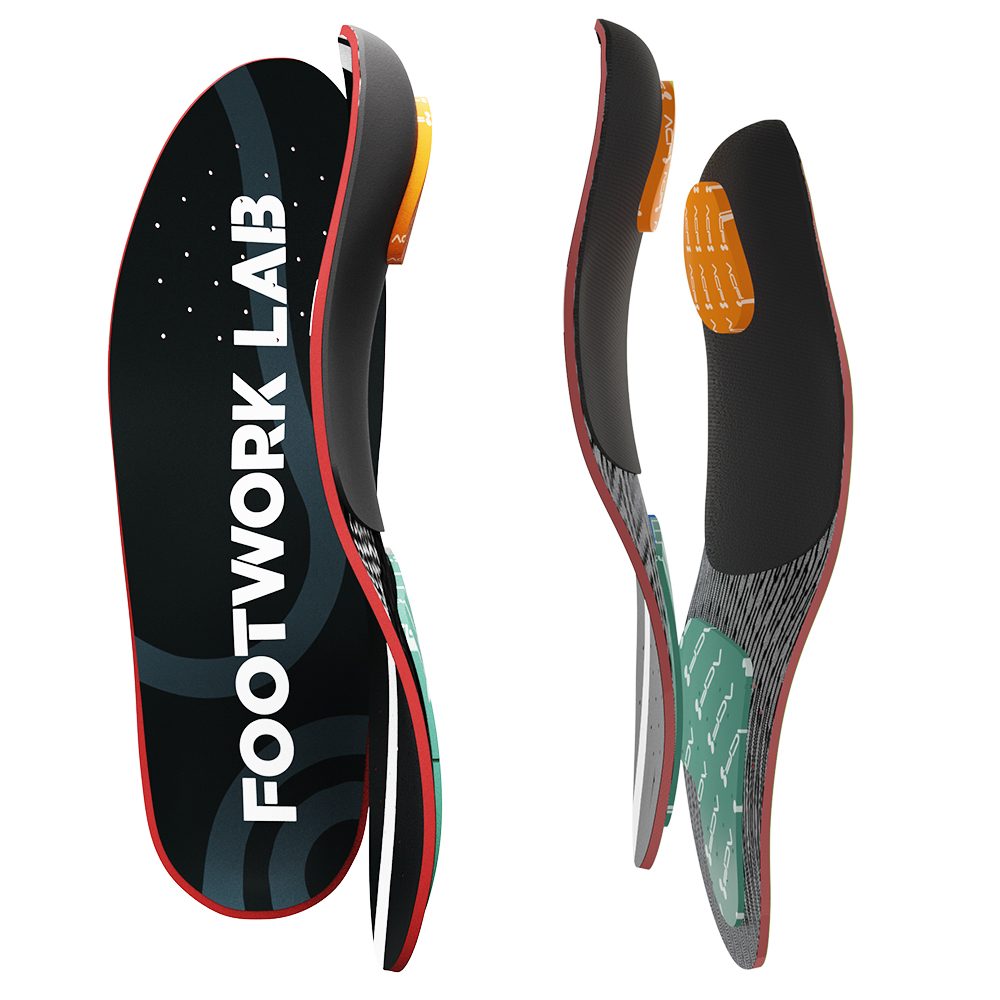
The pedorthic side is sourced from specialised footwear factories, and the dealer’s checklist is footwear’s own: last range, fittings available, order minimums per size and width, and the remake or adjustment policy for fit issues. None of that is our side of the trade, and a supplier who pretends otherwise is worth doubting on both sides.
The insole side’s checklist is the one this series repeats: named specification families, mixable minimums, sample speed, capacity, and the accountability documents. Ours: two hundred pairs mixed across models and sizes, samples within three days, capacity in the hundreds of pairs daily, OEM and ODM terms in writing, and a remake clause measured against the specification.
For dealers building both lines, the useful question to each supplier is where your competence stops. Factories that answer plainly can be placed in a range plan; factories that answer expansively cannot. Our own answer — insoles and assessment equipment, not footwear — is stated in the catalogue because range plans need edges to be useful.
The sourcing checklists also have a shared line worth adding to both columns: the sample policy. Footwear samples for fit, insole samples for feel — both should be orderable in single units before the range commits, and both suppliers’ willingness to ship singles describes their confidence. A supplier who will not sell one sample is asking the dealer to underwrite the supplier’s uncertainty.
The sample policy also has a range-plan use beyond confidence: samples are how the two columns calibrate to each other. The store’s fitters fit the footwear samples while the insole samples ride the same order, and the fit notes from both feed the mapping sheet. A dual range planned on its own samples fits its own customers; one planned on suppliers’ enthusiasm fits nobody in particular.
The cooperation model between the trades
Beyond the shared floor, the trades cooperate formally: pedorthic fitters refer loading cases to insole workshops; insole workshops refer volume cases to pedorthic fitters; and both refer the assessment — the record both need — to whoever owns the corner. In markets where the cooperation is formalised, the referral runs on documents: the record, the specification, the fitting note.
Our production line sits at the receiving end of such referrals. A clinic or fitter writes the brief; the record travels as reference; the factory confirms and forms. The two hundred pair minimum mixes across designs, so a referral network of small practices can consolidate orders that none of them could place alone — a structure that has kept the custom trade alive in markets too small for dedicated laboratories.
Dealers planning a regional network should design the referral documents first and the commercial terms second: who captures, who reads, who writes the brief, who holds the customer. The paperwork is short. The networks that skip it relearn the same lesson monthly — shared customers without shared documents become disputed customers.
The referral network’s documents also deserve a retention rule: every referral’s record and brief are kept by both parties, filed under the customer. Networks that file separately discover, at the first dispute, that each side holds half the story; networks that file doubly resolve the same disputes in one phone call. The duplication is trivial; the asymmetry is expensive.
A range plan that respects the split
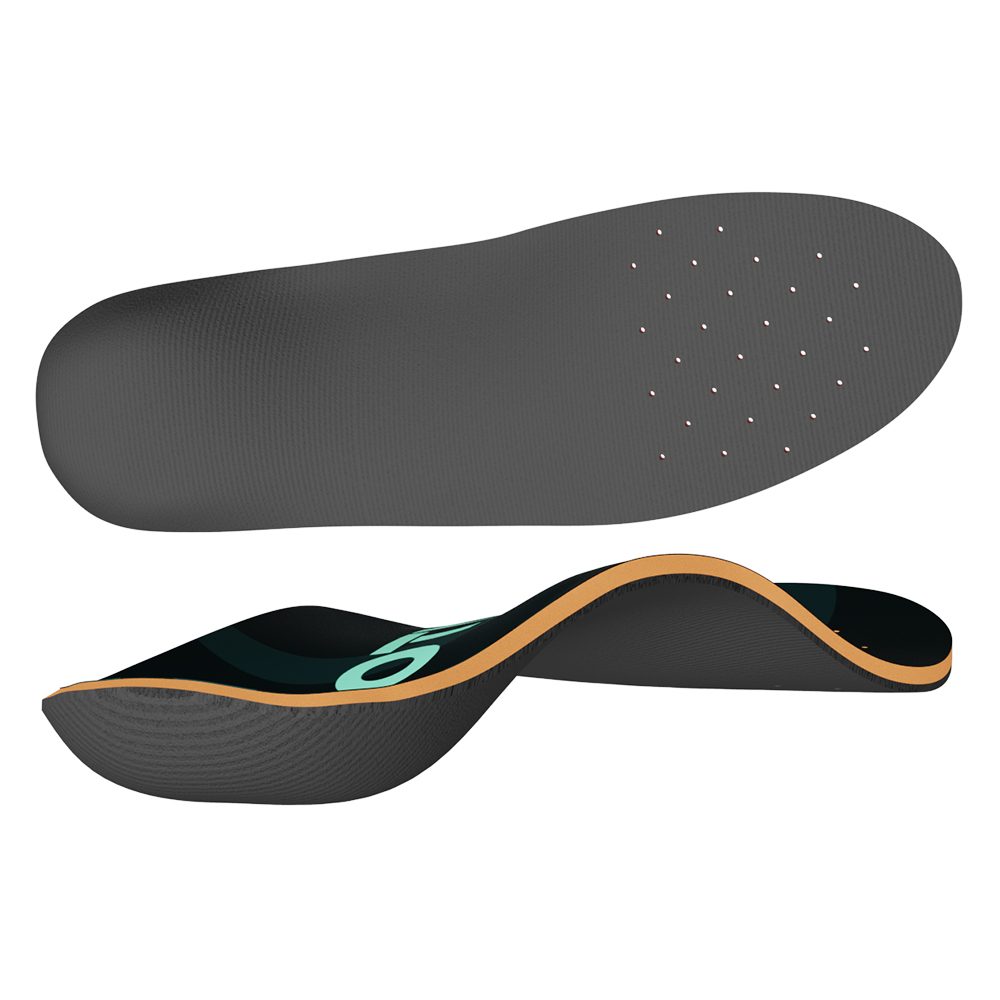
The closing artefact is the range plan, written as two columns. The footwear column: fittings, sizes, the jobs the shoes perform. The insole column: ranges, stiffness families, the jobs the insoles perform. Between them, one row: the assessment corner, serving both, owned by whoever’s floor it sits on.
Under the plan, the sourcing terms for each column, each with its supplier’s stated edge. And beneath that, the training plan: two vocabularies, one referral sentence, a quarterly review of returns against the mapping. A plan this short survives contact with a real trading year, which is the test every longer plan fails.
Pedorthic footwear and custom insoles will keep sharing customers, searches and shop floors. The trade works when the split stays honest — each category claiming its own job, the measurement referee neutral, and the customer walking out with the product their record actually asked for. That is the whole position, and it is sellable in one sentence to anyone who asks what the two categories are for.
A closing sentence on the range plan’s annual review. The two columns will not stay balanced — seasons, staff and local demand tilt them — and the plan’s yearly rewrite is where the tilt is corrected on purpose rather than by drift. Dealers who rewrite the plan annually keep both trades earning; dealers who let the plan fossilise discover that one column quietly became the store.
Frequently asked questions
What is the difference between pedorthic footwear and orthotic insoles?
Pedorthic footwear accommodates the foot through the shoe’s construction — last, upper and sole geometry. Orthotic insoles work on load distribution inside a shoe the customer already owns. Different factories, different jobs, shared measurement.
Can an insole make an ordinary shoe work like a pedorthic shoe?
Not entirely. An insole changes what happens under the foot; it cannot widen the toe box or rebuild the upper. The shoe sets the ceiling for any insole design.
Can both categories be sold in one store?
Yes, and the assessment record is what makes it work: the customer’s own map and timeline point to the category that answers their case, and the referral between departments runs on the record.
Do you manufacture pedorthic footwear?
No. We manufacture custom orthotic insoles and foot assessment equipment. The edge is stated plainly because range plans need it.
What is your insole minimum order?
Two hundred pairs, mixed across models and sizes — a structure that lets a dual-range dealer or a referral network consolidate orders across designs.
How do referrals between the trades work in practice?
On documents: the shared assessment record, the written specification for insole cases, the fitting note for footwear cases. Shared customers without shared documents become disputed customers.
Can insoles be branded for a pedorthic dealer's own range?
Yes — OEM covers branding and packaging, and ODM covers designs developed to the dealer’s brief. Both are agreed in writing before production.
What we would do next
Planning a dual range or a referral network? Send us the plan and we will fill in the insole column: range sheets, specification template, minimums and OEM terms in one reply.
For the shared measurement corner, our assessment systems serve both trades — pressure, camera and report designed for a fitter of either category to read.
This article is intended for professional and educational reference. It is not medical advice. Foot assessment equipment produces measurements and images; clinical interpretation and any decision about care remain the responsibility of a qualified professional. Certification scope is limited to the documentation we hold: European Union certification and ISO quality system certification.