
A customer sits down on the fitting stool, pulls off one shoe and asks the question that opens half the sessions we watch: so what foot type am I? Behind that single question sit at least five separate classifications — the toe-length pattern customers label Egyptian, Greek or square; the arch grade; the transverse arch; the way the heel bone sits; the way the shin turns. A store that answers with one word has answered none of them. The X1 portable foot and lower limb detection system was built for exactly this moment: a temperature-sensing footprint board, a short session, and a report that names each classification as a record with a date rather than a verdict on the person. This guide is for shoe-store owners, coaches and programme managers who want to know what those names actually mean, why the shoe recommendation depends on the catalogue they enter themselves, and how to explain at the counter why two different measurements rarely hand back the same label.
The manual names the X1 a Portable Foot And Lower Limb Detection System. Its core functions are listed as foot arch detection, lower limb biomechanical alignment detection, and AI analysis with intelligent recommendation, and the rooms it was drawn for are sports training institutions, sports venues, foot therapy centres, shoe stores, gyms and children’s physical fitness institutions. That list reads less like a feature sheet than a boundary: the X1 is the lightest member of our assessment range, it answers foot type questions in a short session, and it hands the deeper questions to larger systems or to a professional. The sections below take the scene apart — what the customer is really asking, how the capture works and what it does not do, what the report names line by line, and why recommendations track the shoe catalogue.
What a foot type question bundles together
Foot type, as customers use the phrase, is not one measurement. In our pre-sales calls with shoe-store buyers we keep hearing the same bundled question arrive: a customer stands up, announces they have a high arch or a flat foot, then adds that their toes make shoe buying difficult — and the retailer is expected to reconcile all of it in one answer. In practice at least five classifications sit inside the phrase. The toe-length pattern, which customers know as Egyptian, Greek or square, describes the forefoot outline and matters mostly for toe-box shape. The arch grade describes the height of the medial arch at the moment of standing. The transverse arch describes the cross-foot curve under the forefoot. The heel bone state describes whether the calcaneus sits neutral or rolls outward. And tibial rotation describes the twist of the shin below the knee.
None of the five is a character trait. Each is a reading taken on a day, in a stance, by a method — which means each can legitimately change with fatigue, footwear or simply with the next measurement. A retailer who treats the bundle as one verdict will end up defending a label the customer will later hear contradicted somewhere else, usually by another honest measurement. The work is not to pick the winning label but to keep the classifications separate, record them, and date them. That reframing — from identity to record — is the thread that runs through everything the X1 produces, and it is the difference between a fitting conversation that builds trust and one that quietly sets up a return visit nobody wants.
A warm print, not a load map: how the X1 captures
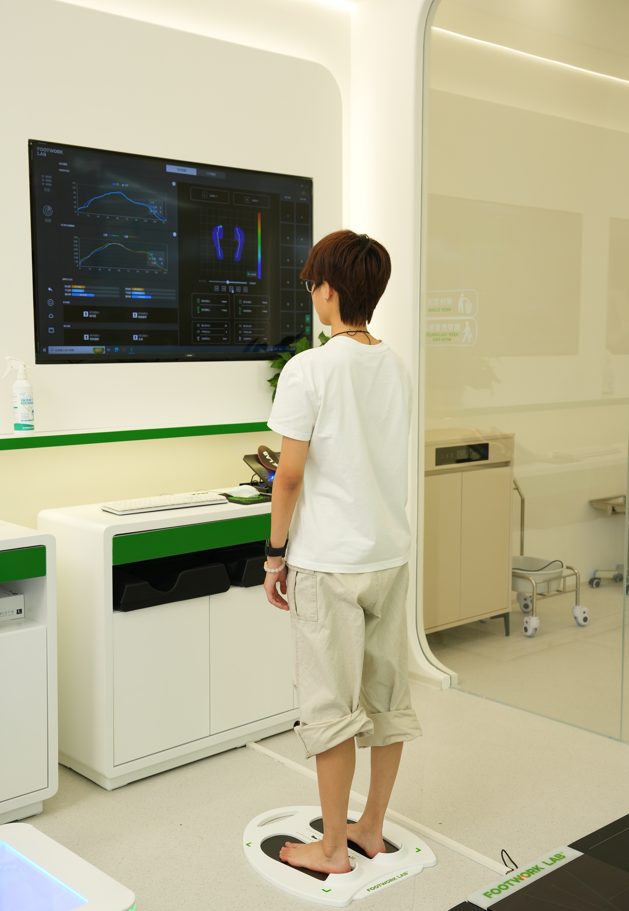
The X1 captures through a temperature-sensing footprint board. A resting foot is warmer than the board surface, and the contact it leaves is a footprint the software extracts into a plantar image — the outline of what touched, carried by the warmth of that contact, in the moment of standing. Beside the print, the system takes lower-limb alignment images, which is how the report can speak about tibial rotation and heel position rather than the print alone. Analysis is AI-assisted and report generation runs in a web interface, so nothing has to be installed on a shop computer and the board can move between rooms with a laptop.
It helps to be precise about what this is not. A pressure plate records load — how much force lands where, and how it travels through a step. A temperature footprint records the contact shape of a standing foot. Buyers searching the market often type a 3D foot scan phrase into the search bar, and that term describes yet another capture category, one that records surface shape. The three methods sit side by side, not above one another: shape, load and contact each answer a different question, and the X1 takes the contact-and-alignment question and answers it in a form light enough to carry between venues.
At one overseas trade show we ran the board for a retailer who kept waiting for the sensors to react — the print was already complete before he had finished asking how the hardware worked. That small confusion is the demonstration that matters, because it resets what the buyer expects the device to be: a record of standing contact, not a competitor to a force plate.
The same logic explains why two honest records can disagree. A print taken on a gym mat, an assessment at a clinic and the board in your shop each answer their own question, and a tired foot at the end of a shift prints differently from a rested one on a Saturday morning. When a customer comes back with a label from elsewhere that does not match yours, the sentence we suggest is plain: each measurement answers a different question, so the labels sit beside each other rather than against each other. If the practical question is which shoe to buy, the contact record and the catalogue do the work; if the question drifts toward why walking feels different on one side, that is a load question, and it belongs on pressure equipment or with a professional. Our article comparing a foot scanner and a pressure plate walks through that split, and our piece on what a quick foot type screening can and cannot settle gives counter staff a script for where the record stops.
What the report names, one line at a time
The report returns a list of classifications, and each line deserves to be read as a record rather than a grade on a person. Arch status comes back on a four-step scale — normal, mild, moderate or severe — which describes where the standing contact sat relative to the reference range on that day. Transverse arch status is recorded the same way. Tibial rotation is noted as neutral or with an external twist; heel bone state is noted as neutral or sitting in eversion. Foot length and foot width come back as measurements, and the shoe size recommendation is returned as a range rather than a single number, because lasts differ between brands and a foot does not become a size.
Reading the list as a record changes how staff present it. A moderately lowered arch recorded in November is not the customer’s identity; it is one data point that can be placed beside a later record to show direction. This is the same point we made in our article on arch shape as a range rather than three boxes: the scale exists so two records can be compared, not so a person can be filed under a word. The report closes with an AI analysis conclusion together with a risk note and improvement suggestions, and the framing we suggest for staff is that these are prompts for a conversation — the record supports a discussion about support, alignment and load distribution, and it does not close a case. A professional decides what a series of records means; the board’s job is to make sure the series exists and can be read again.
Why the recommendation follows the catalogue you enter
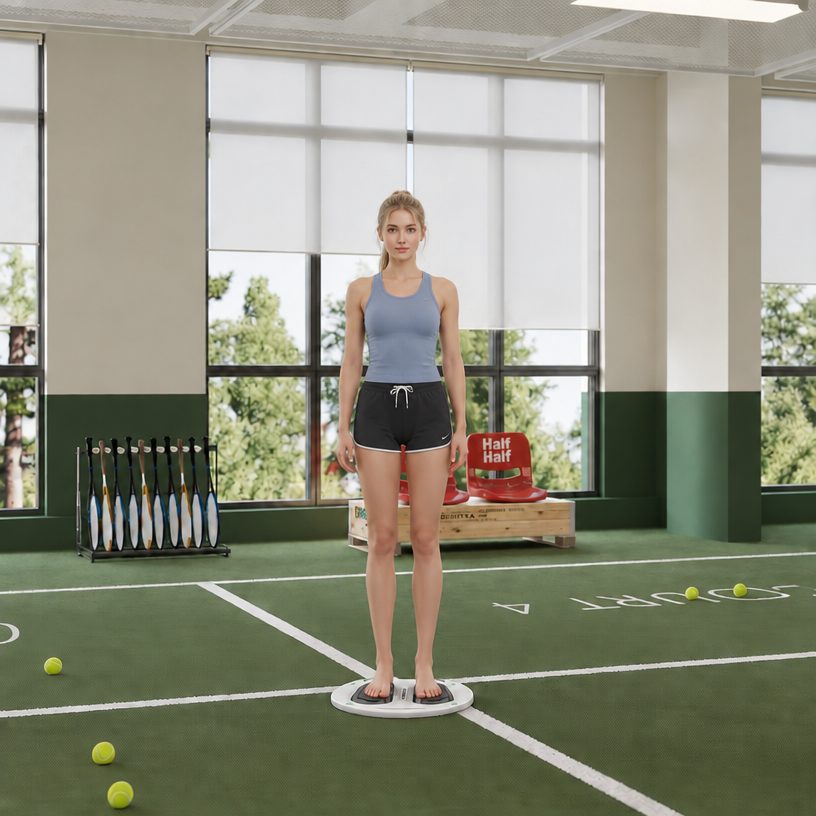
The recommendation engine does not know shoes by intuition. The manual states the mechanism plainly: the system analyses the user’s data against the shoe product information entered into it, and the AI recommendation follows that catalogue. A store that enters its actual stock — model by model, with the properties each model is built around — gets recommendations that point at shoes on its own shelves. A store that skips the catalogue gets a size range and little else, which is the most frequent reason a buyer concludes the recommendation function is thinner than it was described in the demo.
This is setup work, and it belongs to the buyer. In our onboarding calls, the stores that get the most from the X1 treat catalogue entry as a weekly routine rather than a launch task: new arrivals go in, discontinued models come out, and the recommendation stays anchored to what is actually on the floor. The hardware creates the measurement, but the retailer’s own catalogue decides whether the recommendation arrives as a generic answer or as a specific pair a customer can try on five minutes later.
The portable format is the reason this record gets taken at all. The X1 moves between a training venue and a store, sets up quickly on a web interface, and does not demand a dedicated room the way an installed platform does. A sports training institution can screen an intake group across a week; a children’s fitness programme can repeat the record each term and watch direction instead of trusting memory. Because the device doubles as a screening instrument — the manual lists gait-health screening, including flat-foot-risk screening, among its uses — the same session that serves a fitting can serve a programme’s baseline file.
That is also the honest limit of the record. The X1 names classifications and recommends within a catalogue; it does not diagnose, and it does not replace the professional who reads a series of records over time. Buyers who need the walking sequence, the load map or a full posture picture should size the room for a fixed system rather than expect the portable board to stretch. For the device itself, the X1 product page carries the full configuration and the accessories that ship in the box.
Frequently asked questions
What does the X1 actually record about foot type?
The report names arch status on a four-step scale — normal, mild, moderate or severe — alongside transverse arch status, tibial rotation, heel bone state, foot length and foot width, and a recommended shoe size range. It closes with an AI analysis conclusion plus a risk note and improvement suggestions, with the left and right foot shown together. Each item is a classification record taken on the day of the session, read by a professional rather than treated as a conclusion.
How does a temperature-sensing footprint board differ from a pressure plate?
The board reads the contact a standing foot leaves through warmth, which produces the footprint outline and, with the alignment images, the rotational and heel classifications. A pressure plate reads load — how much force lands where and how it moves through a step. The two are different instruments answering different questions; neither replaces the other, and buyers comparing them should start from the question they need answered.
Why does the X1 return a shoe size range instead of a single size?
Foot length and foot width map to a range because lasts differ between brands and models — the same foot wears different sizes across a shelf. The range is the honest output of the measurement; a single number would be a guess dressed up as precision. Which model within the range fits best is decided by the catalogue and by trying shoes on.
Why are the shoe recommendations generic until the catalogue is filled in?
The AI recommendation runs against the shoe product information entered into the system, as the manual states. Without catalogue entries the system can only return the size range. Stores that maintain the catalogue as a routine — adding new arrivals, retiring sold-out models — get recommendations that point at their own shelves, which is where the function earns its place.
Can the X1 be used for flat-foot-risk screening in a training programme?
Yes. The manual lists gait-health screening, including flat-foot-risk screening, among the system’s uses, alongside its fitting role in shoe stores. A programme typically records each participant at intake, keeps the report against the named user, and repeats the record on a schedule so that direction over time — not a single label — drives the conversation with parents, coaches or a professional.
Can one X1 serve both a store and an off-site venue?
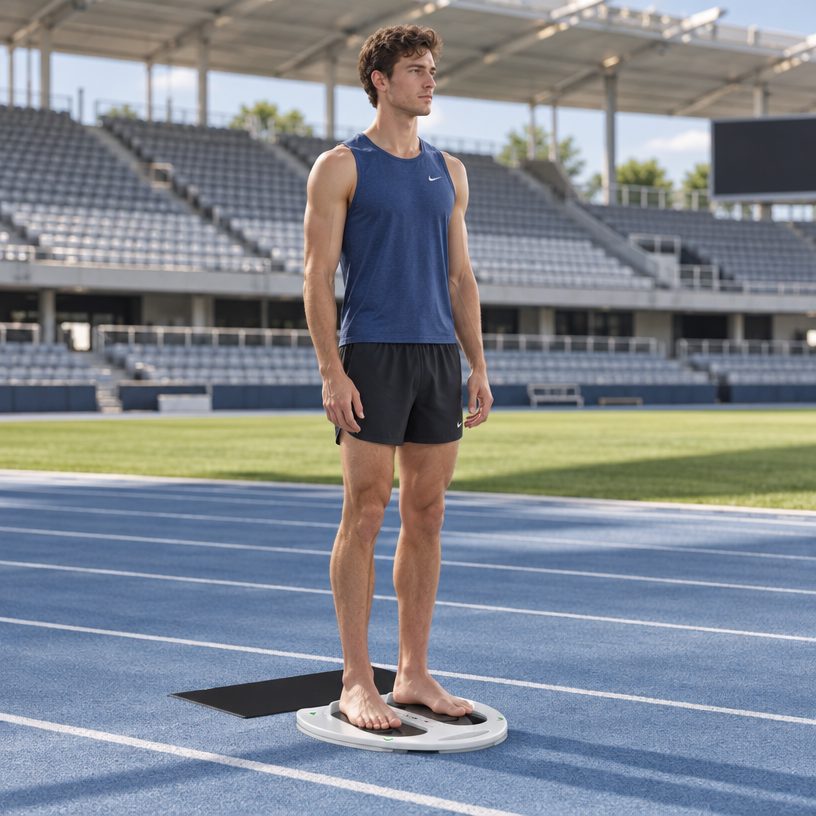
That is the intent of the portable design. The board is light, runs through a web interface on ordinary computing hardware, and sets up in a new room quickly, so the same unit can work a shop floor during the week and a training venue or event at the weekend. What travels with it is the discipline: the same capture routine in both places keeps the records comparable.
What we would do next
Before ordering, write down the question the record has to serve — fitting at the counter, screening across a programme, or both — because that decision decides the capture routine and the catalogue work that follows it. Send us the list of shoe models you intend to enter and the rooms the board will move between, and we will walk through what the report can settle in your setting and where you would still want a pressure or posture system. Our FAQ page carries the order, warranty and transit terms in full.
If you already screen feet and the labels keep drifting between visits, the fix is usually a written capture routine — same stance instruction, same conditions, same catalogue — rather than new hardware. We are glad to review your current routine and show where two operators would produce two different prints. To scope a configuration or ask a technical question, contact our team and we will answer with the manual open.
This article is intended for professional and educational reference. It is not medical advice. Foot assessment equipment produces measurements and images; clinical interpretation and any decision about care remain the responsibility of a qualified professional. Certification scope is limited to the documentation we hold: European Union certification and ISO quality system certification.