
A rehabilitation clinic shortlists two suppliers and asks each the same question: what exactly do you provide for our podiatry rehabilitation programme? The first supplier answers with a schedule — weeks of exercises, milestones, review dates — and the clinic’s director quietly drops them from the list, because a schedule is the one thing her own team already owns. The second answers with something narrower and more useful: equipment that produces a baseline record and comparable retests, and an insole range that slots in where the clinical plan calls for one. That second answer is the correct division of labour, and it is the one this article sets out from the factory side: what a supplier of podiatry rehabilitation equipment actually supplies, what stays with the clinic, why the capture conditions have to stay fixed for a retest to mean anything, and why we do not restate clinical protocols we are not qualified to write.
The confusion is understandable, because the word programme covers both the care plan and the tooling. A buyer searching for support for a rehabilitation service may want either, and a supplier with a marketing department is tempted to promise both. The boundary matters commercially as well as professionally: a clinic that buys a machine expecting a protocol will discover the gap at the first staff meeting, and a supplier who writes protocols is practising without a licence.
The two supplier types from the opening scene show how the boundary gets blurred in practice. The one offering the schedule usually sells confidence to a buyer who has not staffed the programme yet, and the schedule is seductive precisely because staffing is the expensive part. The honest position costs more words to explain: the clinic hires or trains the people who run the plan, and the factory supplies the instruments those people measure with. Buyers who understand that split early spend less, because they stop shopping for a protocol and start choosing a record they can work with.
Where the programme belongs, and where the record begins
A rehabilitation programme is a plan: goals, stages, progression rules, review points, and someone qualified to adjust them when the patient in front of the plan does not match the average patient the plan was written for. None of that is manufacturable. It comes from the professional team, informed by their training and their judgement of each case, and a factory that offers to supply it is either guessing or role-playing a clinician. We do neither, and we say so early, because the clinics that value the boundary are the ones worth supplying.
What a programme needs from outside is evidence, and evidence is what equipment makes. A foot record at intake — a baseline — turns the opening conversation from impressions into quantities, and a retest at the review point turns the follow-up into a comparison. The record does not decide anything; it gives the qualified person something stable to decide against. That division holds in every rehabilitation setting we supply: the plan belongs to the clinic, the record belongs to the session, and the session is what we build machines for.
The commercial form of this boundary is easy to state. We are asked, at least monthly, whether we can supply the programme itself — the written protocol, the exercise sheets, the progression template. The answer is no, and the reason is not modesty but qualification: we are an equipment and insole manufacturer, and writing clinical protocols is not a manufacturing activity. What we can supply is the instrument the programme measures with, and the consumable line it sometimes prescribes.
What the factory actually supplies: the record
Our systems capture foot pressure and alignment in one session. A static pass records the foot at rest — contact area, footprint length and width, the distribution of load across the sole, the presentation of the arch. A dynamic pass adds behaviour: foot axis angle, the proportions of contact and flat phase, peak and mean pressure, and the speed at which the centre of pressure travels forward. A balance trial records how load shifts when the body is asked to hold still. Cameras extend the record up the leg, so lower-limb alignment sits beside the foot data in the same document rather than in a second one nobody reconciles.
Each item in that report is a recording, not a conclusion. The report itself carries a line stating that the data is for reference and that interpretation belongs to a qualified professional — and in a rehabilitation setting that sentence is not a legal formality but the operating rule. The clinician reads the baseline, sets the plan, and books the retest; the machine’s job is to make sure the retest measures the same things the same way, so the comparison the clinician makes is a comparison worth making.
The equipment choice follows the setting. A gait platform that captures walking and running cycles suits a rehabilitation department that works on movement; a combined pressure and alignment system with an on-site forming module suits a clinic that also specifies insoles in the same visit. What both share is the baseline-plus-retest pattern, and a buyer should evaluate any candidate machine by running the same person through it twice, minutes apart, and reading the two reports side by side. If the second record cannot be set honestly beside the first, the machine will not serve a programme at all.
Export matters more in rehabilitation than in retail, and for an unglamorous reason. Records here live for years and get revisited by people who were not in the room when they were taken: a locum covering a leave, a new clinician inheriting a caseload, a review meeting with the baseline projected on a wall. Ask each vendor how the report travels — whether it leaves the machine, in what form, whether a colleague can open it without the unit, whether two sessions display side by side. A system that treats export as an afterthought will cost the programme its history, and the history is the programme’s evidence.
Why fixed capture conditions decide everything
Comparability is not a software feature; it is a discipline. Two records can only be compared if the sessions that produced them were run the same way: the same stance instruction, the same number of crossings, the same starting foot, the same footwear or lack of it, the same position of the equipment in the room. Change any of those and the differences between the two reports mix real change with procedural noise, and the review conversation quietly becomes an argument about the method instead of the patient.
This is why we press buyers on routine rather than on features. A supplier who has thought about rehabilitation will describe the session routine unprompted, because the routine is what makes the retest meaningful; a supplier who lists specifications is selling the capture and leaving the comparability problem for the clinic to discover. When we commission an installation we walk the routine with the staff who will run it, and we would rather lose an hour at installation than have a season of retests that cannot be compared.
Room discipline matters more than most buyers expect. A plate moved across the floor between sessions, a camera shifted a few degrees, a corridor session replacing the quiet room because the diary was full — each introduces a difference that lands in the report. Clinics that keep a fixed corner for the session, and treat the routine as part of the appointment rather than an option, are the ones whose baselines still make sense a year later. The equipment makes the record possible; the room makes it comparable.
Where the insole sits in a rehabilitation programme
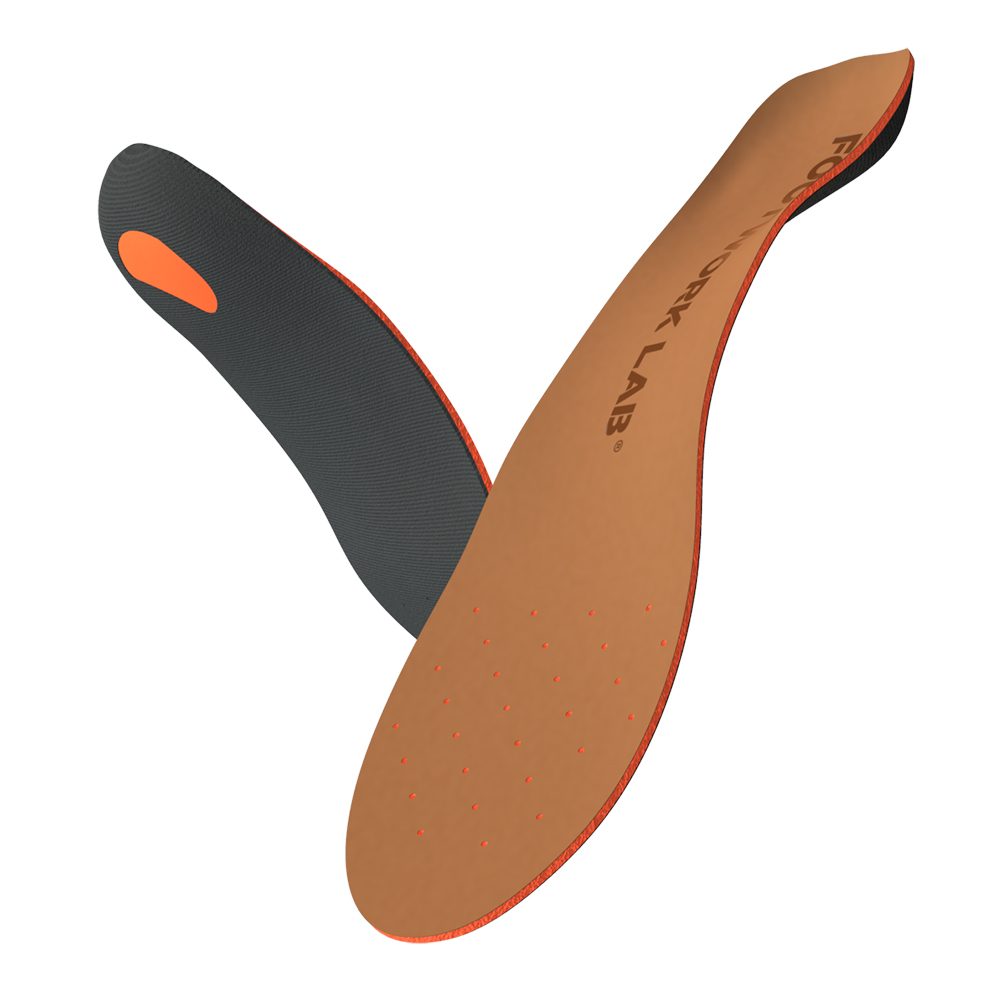
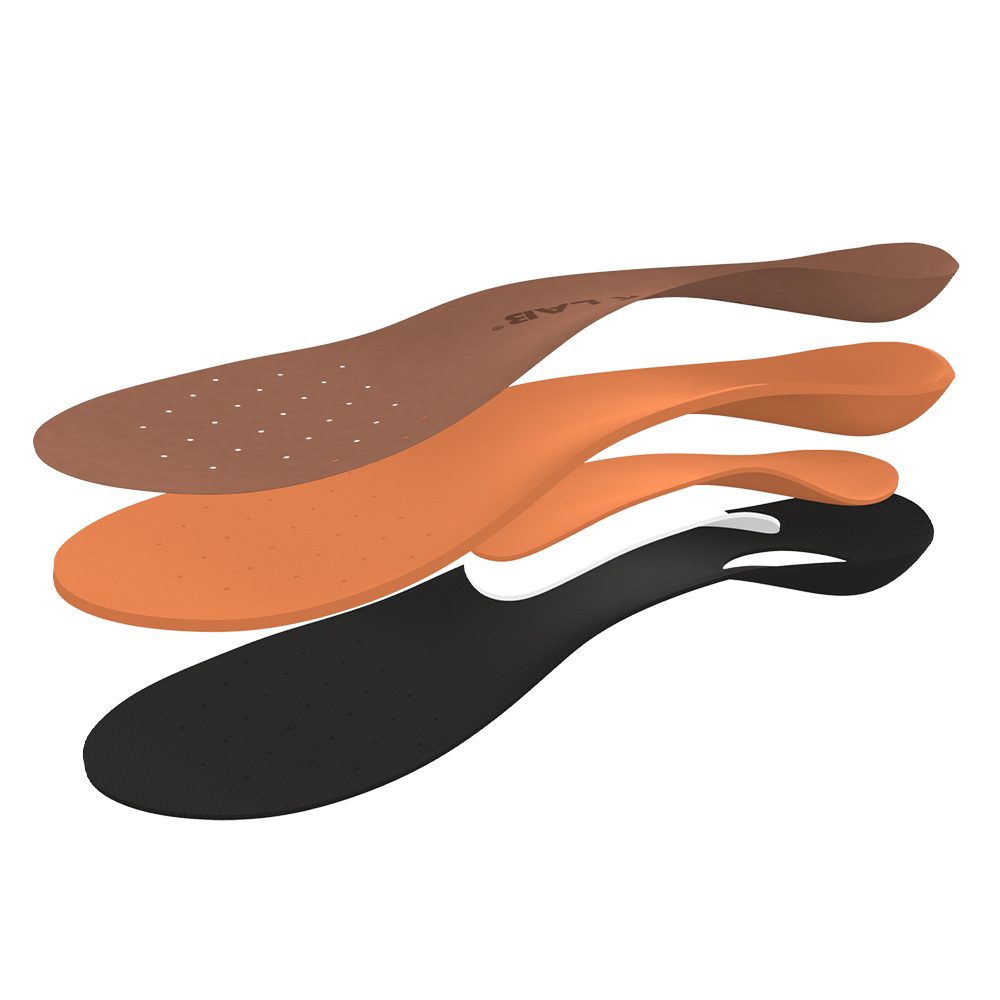
In a rehabilitation setting the custom insole is a late-stage item, not the opening move. The record is taken, the clinician reads it, and where the clinical plan calls for one, an insole is specified against the record — contour family, support grade, the areas that need offloading. What the insole is not is a prescription written by the equipment: the report supplies evidence, the professional supplies the specification, and the factory supplies the pair built to it. We repeat this order because the reverse order is the commonest misunderstanding we meet at exhibitions.
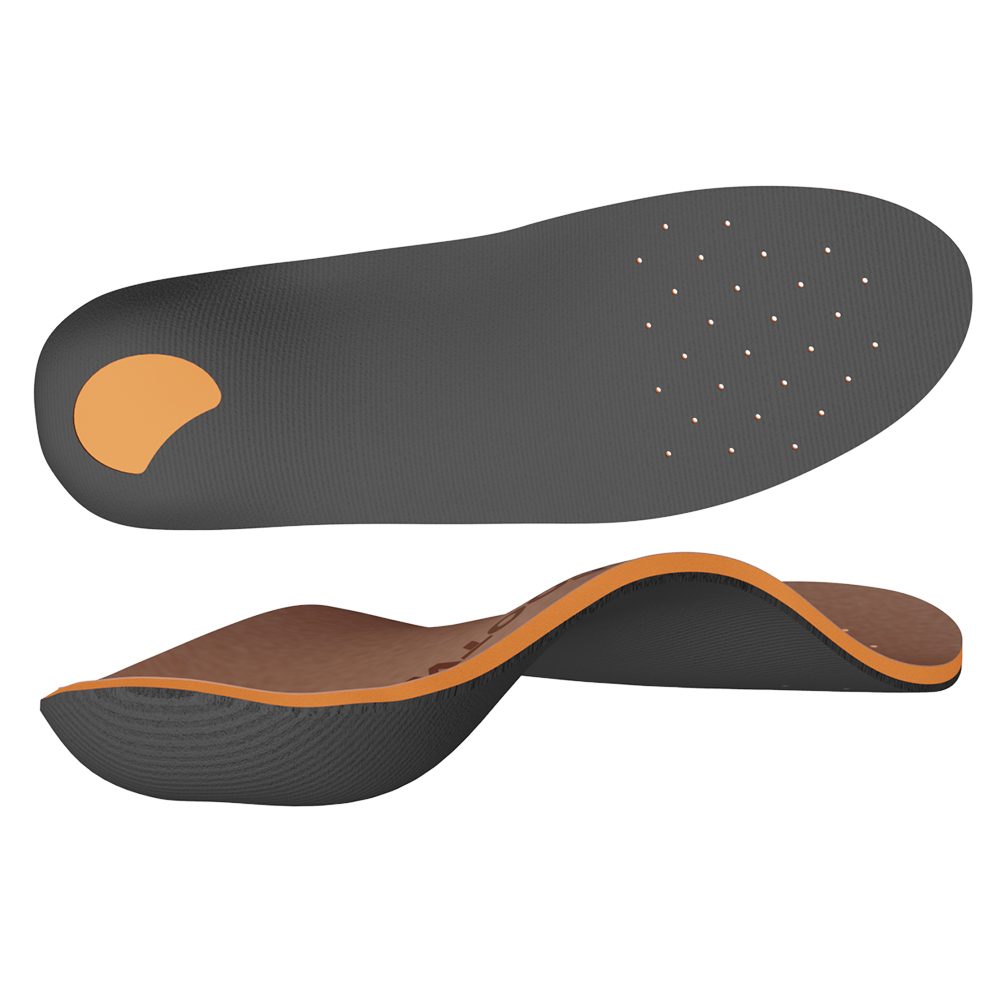
Our rehabilitation care range exists for exactly this slot: builds intended for flat feet and for reducing pressure and discomfort, specified from a record and fitted under professional supervision. Orders start at two hundred pairs, mixed across styles and sizes, which lets a clinic hold the common specifications in stock and order the specific ones against a record. Samples ship within three days, so a trial pair reaches the clinician inside the same week the plan is set rather than a month later, when the review point has passed.
The insole also gives the programme something to review against. At the retest, the clinician can set the baseline beside the new record and discuss what changed with the build in place — which is a clinical conversation we do not participate in beyond supplying the documents. We do not claim the pair improves anything; that claim belongs to the professional who specified it, made on their own evidence. What we claim is narrower: a pair built to the specification, from the record, in the agreed time.
Stocking deserves a word, because a clinic that under-plans it discovers the cost at the worst moment. The commonest specifications should sit in a drawer, ordered in the two-hundred-pair batch mixed across styles and sizes; the specific builds go out against individual records and arrive on the sample schedule. A clinic that orders every pair against every record, including the common ones, waits for deliveries it could have had on the shelf; a clinic that shelves only the common ones keeps the bespoke channel honest. We ask new accounts which specifications their records produce most often, and the answer sets the first order.
What the supplier must not do
We do not write protocols. No exercise progressions, no week-by-week templates, no treatment schedules — not as marketing documents, not as appendices to the manual, not as slides in the pre-sale meeting. A clinic that receives a protocol from its equipment supplier inherits somebody else’s assumptions about its patients, and the supplier who wrote it has stepped outside what a manufacturer knows. The clinics we supply longest are the ones that took the equipment and kept the programme for themselves.
We do not interpret records. When a clinic sends a report back asking what a pressure value means for the patient, the answer goes back the same way every time: that reading belongs to the qualified professional managing the case. The report states the data is for reference on its face, and we hold to it, including when saying so costs us the appearance of being more helpful than the competitor who answered freely. An interpretation from the factory is worth exactly what it costs, which is nothing, and it contaminates the record’s role in the programme.
We do not put the machine between the clinician and the patient, either commercially or rhetorically. Marketing that implies the equipment guides care is marketing we do not write; the equipment produces measurements and images, and the care decisions happen in the team. This is also why our training covers operation, routine and maintenance rather than clinical judgement — the first three are ours to teach, and the last is not.
What we can supply, and how the relationship actually runs
Concretely, the factory supply is four things. First, the capture system, commissioned on site with the session routine walked through with staff. Second, the insole range specified against records, from two hundred pairs per order, mixed styles and sizes, samples within three days. Third, the commercial envelope around both: machines ordered from a single unit, tested at the plant for seven days before dispatch, covered by a twelve-month warranty against non-human damage with free parts, supported through a dedicated WhatsApp group with engineers reachable directly and remote assistance when a session goes wrong. Fourth, honesty about pace: we do not promise regional exclusivity, and we do not publish prices, because a quotation depends on configuration and destination.
The relationship runs best when the clinic treats us as the instrument-maker and treats the programme as its own property. The retests stay comparable because the routine stayed fixed; the insoles arrive specified against records rather than guesses; and when the clinical team changes protocol, nothing we sold them becomes obsolete, because none of our contribution ever depended on a particular plan. A supplier who sold the programme would have to sell the next one too.
Frequently asked questions
Does the factory supply the rehabilitation programme itself?
No. The programme — goals, progression, review decisions — belongs to the clinic’s qualified team. What we supply is the equipment that produces the baseline record and the comparable retest, and the insole range where the clinical plan calls for one.
What does a baseline record contain?
Named quantities from a single session: contact area, footprint length and width, foot axis angle, contact and flat phase proportions, peak and mean pressure, centre-of-pressure speed, and lower-limb alignment images. Each is a recording; interpretation belongs to a qualified professional.
Why do capture conditions have to stay fixed?
Because a retest only means something if it measures the same things the same way. Same instruction, same crossings, same room setup. Change the routine and the differences between records mix real change with procedural noise.
Where does the custom insole fit in the programme?
As a late-stage item. The record is taken and read first; where the plan calls for one, an insole is specified against the record and built to that specification. The equipment does not prescribe the pair.
What are the insole order terms?
Orders start at two hundred pairs, mixed across styles and sizes, with samples shipped within three days. The rehabilitation care range covers builds intended for flat feet and for reducing pressure and discomfort, fitted under professional supervision.
What are the machine order terms?
Machines start at one unit, are tested at the plant for seven days before dispatch, and carry a twelve-month warranty against non-human damage with free parts. Support runs through a dedicated WhatsApp group with direct engineer access and remote assistance.
Can the supplier help read a report?
No. Every report states that the data is for reference, and interpretation belongs to the qualified professional managing the case. The factory supplies the record and the documents, not the reading.
What we would do next
Put the boundary on one page: on the left, everything your team owns — the plan, the judgement, the reviews; on the right, what you need supplied — the record, the retest, the insoles. Send it through the contact page and we will quote only the right-hand column, and say plainly where something on the left is being asked of the wrong party.
The insole range page sets out the three series and four gradings the specification is drawn from. Foot rehabilitation programs need a baseline argues the baseline case in detail, and gait physical therapy starts with a record shows the same pattern from the therapy side.
Three more follow the record through a programme. Flat foot care in an insole programme describes the range in its intended slot, a podiatry assessment runs on records covers the session structure, and after a sprained ankle shows what a follow-up record adds at the review point.
This article is intended for professional and educational reference. It is not medical advice. Foot assessment equipment produces measurements and images; clinical interpretation and any decision about care remain the responsibility of a qualified professional. Certification scope is limited to the documentation we hold: European Union certification and ISO quality system certification.