
A customer slides a printed pressure record across the counter and points at one region under the forefoot: this is where the load sits, and they want it moved. The request sounds simple, and the wording usually decides whether it can be met honestly. Almost everyone asks for cushioning first, because cushioning is the word the market has taught them, but moving load and softening impact are two different jobs, done by different layers of a build, and judged by different parts of a record. A build can be good at one and poor at the other, and a buyer who cannot tell the two apart will keep receiving pairs that feel pleasant under the thumb and change nothing on the map. This article sets the two jobs side by side, walks through what each layer of a redistribution build is actually doing, states plainly which sentences we are willing to put in writing and which we are not, shows how a before-and-after record reveals whether load has genuinely moved, and finishes where every honest conversation on this subject finishes: with the cases that belong to a qualified clinician and not to a workshop.
Spreading and softening are two different jobs
Cushioning reduces the peak of an impact by giving way when the foot lands. Spreading reduces the share of load carried by any one region by asking the regions beside it to take part. The two are constantly confused because a soft material does both a little: it yields, and in yielding it moves a small amount of load sideways. But the confusion is expensive. A buyer who judges a build by pressing it with a thumb is measuring softness, and softness is the cheaper half of the job. A build can feel generous in the hand and still concentrate load in exactly the region the record flagged, because what decides the map is geometry and structure far more than the yield of the foam.
The distinction matters in the other direction too. A build that is engineered purely to spread load, with a firm base and a shaped arch, can feel strange to a customer who expected a pillow. We have watched that misunderstanding end a sale that should have happened, and we have watched the opposite misunderstanding produce a pair that the customer liked immediately and stopped wearing within a fortnight because nothing in their daily pattern had changed. Neither outcome is anyone’s fault in particular; both come from a conversation that used one word where two were needed. Our habit now is to say the word spreading out loud, define it once, and ask the customer whether spreading or softening is the job they are hiring the pair to do.
What the layers of a build are actually doing
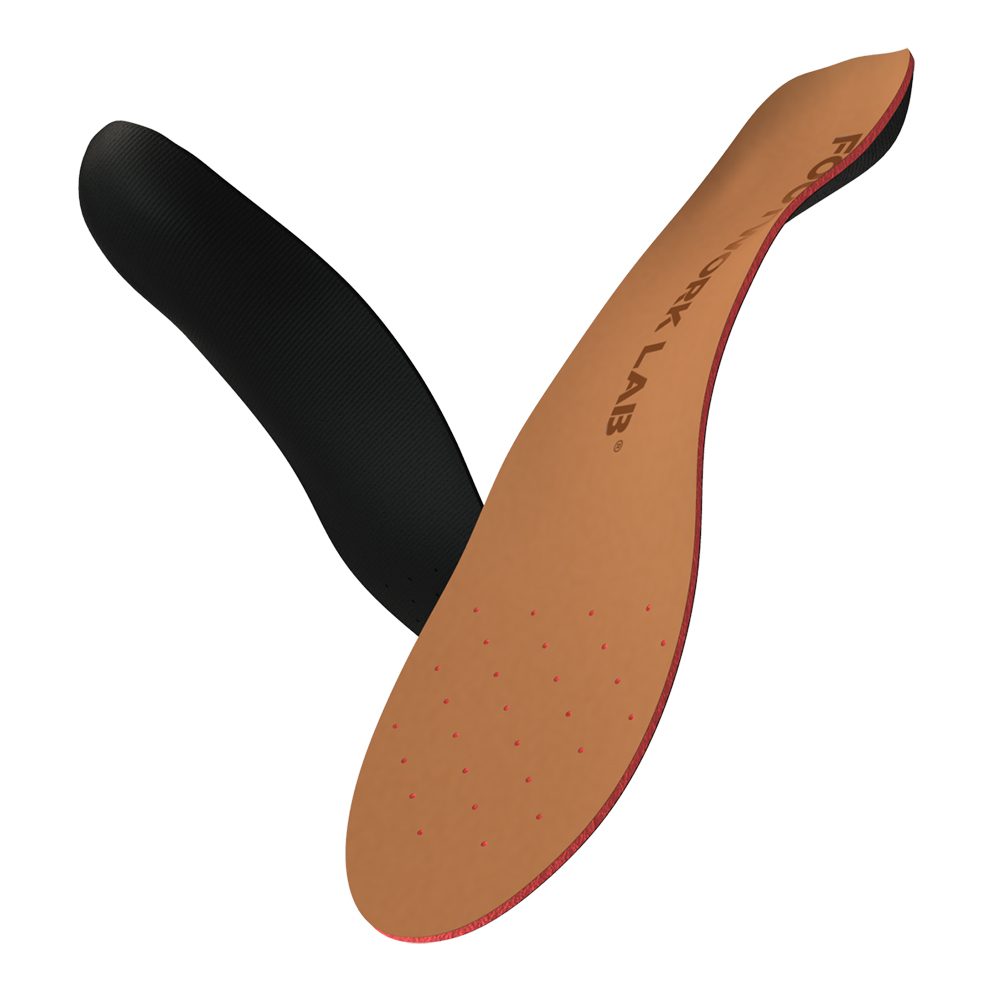
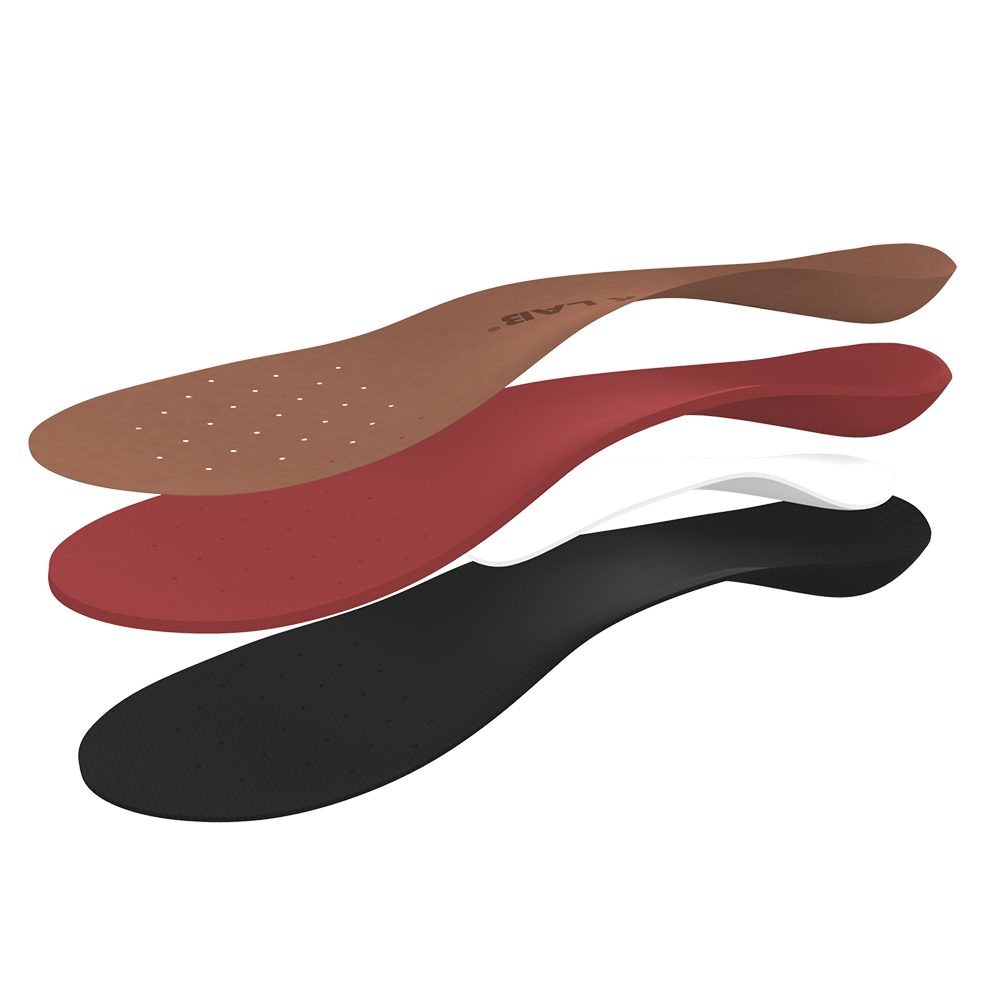
A pair that earns the description redistributing is built in three working layers, and each has one job it does well. The cover is the thinnest layer and it manages friction and moisture; it decides how the skin experiences the pair and almost nothing about where load goes. Under it sits the middle layer, which is the one that does the spreading: its density and its structure decide how readily load applied at one region is shared with the regions around it. Under that sits the shaping layer, the part formed to the record, which sets the geometry — how the arch is supported, how the heel is seated, where the forefoot is asked to widen its contribution.
Two things follow from this division of labour, and both surprise buyers. The first is that thickness is not the lever people assume it to be. A thicker middle layer is not automatically a better spreader; past a point it simply compresses more and lets the foot sink into its own concentrated pattern again. We describe builds as thin, medium or substantial and we refuse to pretend that the thickest option is the serious one. The second is that the shaping layer, which customers often read as the comfort feature, is actually the load-routing component. The shape decides which regions are invited onto the ground and which are given a rest, and no quantity of soft material above it can override that decision.
What the material decides, and what it cannot
Within any one layer, the material is a set of trade-offs rather than a list of virtues. The property that spreads load well — a willingness to deform sideways under pressure — is not the same property as rebound, which is the liveliness a runner notices at toe-off. A material that is generous in sharing load often feels flat and quiet underfoot; a material that returns energy crisply tends to localise pressure back into the regions that were carrying too much in the first place. When a buyer asks for both at maximum, the honest answer is that the pair will lean one way, and the record should decide which way.
Materials also change their behaviour across a working day, and this is where we are more cautious than the brochures in this category tend to be. Warmth softens some compounds and stiffens others; moisture changes friction at the cover; a material that performs identically on the hundredth step and the ten-thousandth is rarer than the marketing implies. We test compounds at our own plant before they enter a build, and we still will not promise how a given material behaves under one particular person’s shift, weight distribution and footwear. What we can do is choose the compound after hearing the use: a person on their feet in intermittent bursts needs a different middle layer from someone who walks steadily for hours, and the difference is a materials decision, not a thickness decision.
The sentences we write, and the ones we will not
There is a short list of claims we will put in writing about a redistribution build, and it is worth seeing in full because it is shorter than most buyers expect. We will state that the pair was shaped from a named record with a date on it. We will state that its intent is to support the arch, seat the heel and share load across a broader area of the sole than the unaided foot used. We will state which layers carry which job. That is the whole list of intentions, and every verb in it is neutral: support, seat, share. Nothing in it promises an outcome for a symptom, because an outcome is not ours to promise.
The sentences we decline are just as consistent. We will not write that a pair relieves any named condition, corrects the position of any joint, or lets a person walk further before tiredness arrives. We do not use the language of treatment about an insole, because treatment is a course of decisions made by someone qualified, and a workshop that makes a pair to a record is not running a course of care. And no line in our documentation is a finding: each line is a recorded value with a name and a date, and the reading of it belongs to the professional who ordered the pair. Clinics that resell our work understand this quickly. Retail counters sometimes need the boundary repeated, and we would rather repeat it before the order than defend it after.
How a record shows that load has moved
The useful test of a redistribution build is not how it feels in the first ten minutes but what a second record shows, taken under the same conditions as the first. Same operator, same instructions, same stance routine, same footwear removed, and ideally a comparable hour of the day. Set the two maps side by side and read them region by region. If the build is doing its job, the region that carried the largest share should read lower, the regions beside it should read higher, and the whole should add up to roughly the same total, because load is moved rather than deleted. A build that claims to have removed load entirely from a region is claiming something the physics does not offer.
The discipline lies in distrusting a map that has changed shape completely. When every region reads differently from the first visit, the likeliest explanation is not that the pair worked miracles but that the conditions were not held: a different stance instruction, a warmer room, a foot tested after a long day instead of before one. We teach operators to file the conditions alongside the record for exactly this reason. A comparison that cannot say how the two sessions were matched is not a comparison; it is two photographs of two different days. Our own reports carry the routine on them for this purpose, and we would rather a clinic repeated a session than quoted one that cannot be defended.
A worked example makes the reading concrete. Suppose the first record shows one forefoot region carrying visibly more than its counterpart, with the heel and the midfoot reading unremarkably. The pair is made, worn in as advised, and a second record is taken a month later under matched conditions. The useful result looks unglamorous: the flagged forefoot region reads lower but not empty, its neighbour and the arch read slightly higher, and the heel has barely moved. That is load shared, and it is all the physics offers. The disappointing results are the two mirror images of this: the flagged region unchanged, which means the shaping did not reach the region and the build geometry needs revisiting; and the whole map rearranged, which as above means the conditions were not matched and the comparison should be run again before anyone celebrates or despairs.
When the build is the wrong answer
Some conversations should end before an order is discussed, and the pattern that triggers it is consistent enough to describe. A customer whose description of the problem changes between visits, in location or in character, has something that a load map cannot hold still. A customer whose discomfort is not connected to loading at all — present at rest, present at night, present regardless of footwear — is describing something outside the reach of any footbed. A customer with skin that marks, breaks or discolours needs a clinician’s eyes before anyone puts a shaped surface under it. None of these is a judgement about the person; they are all simply cases where the record we work from is the wrong instrument for the question.
We also decline the customer whose expectation, said plainly, is a cure. It is a harder conversation than it sounds, because the polite fiction in this market is that everyone understands the limits and nobody says them. We say them. A pair made to spread load is a mechanical arrangement with a mechanical intent, and a customer who needs more than that from it will be disappointed no matter how well the pair is made. The referral sentence costs the sale in the short term and buys the clinic’s credibility in the long one, and the clinics that use our equipment best have all learned to say it in the same calm register they use for everything else.
Ordering the pair, and the pair after it
The commercial mechanics are straightforward and worth stating once. The minimum order for insoles is two hundred pairs, and the pairs can be mixed across models and sizes, which is how most clinics and workshops actually buy: a spread of daily builds, a narrower spread of rehab and sport builds, and a few pairs for the cases that recur. Samples can be dispatched within three days of a confirmed request, so a workshop can put the build on real feet before it commits to volume. Machines are a separate conversation with their own terms; the pair and the instrument that informs it are ordered differently, and buyers who conflate the two tend to mis-budget both.
The second pair is where the record earns its keep. A clinic that files the first order with its record, the build choices and the wearing notes can reorder in one message, and the new pair inherits the geometry decisions rather than rediscovering them. A clinic that orders from memory rebuilds the pair from scratch and usually pays for the discovery twice. We ask for the wearing notes to be honest rather than tidy: which shoe the pair lived in, what the customer reported in the first week, what was adjusted at review. Those four lines are the difference between a supplier relationship and a series of transactions, and from our side of the plant they are also how the next build gets better.
Frequently asked questions
Is a redistribution build the same thing as a cushioned insole?
No. Cushioning softens the peak of an impact by giving way; redistribution shares the load of one region with the regions beside it. They are different jobs done by different layers, and a build can be good at one and poor at the other.
Can the pair promise relief from a specific condition?
No, and we will not write such a sentence. What we state in writing is the intent: shaped from a named record, to support the arch, seat the heel and share load across a wider area. Reading what that means for a person belongs to a qualified professional.
Which layer actually moves the load?
The shaping layer routes it, by deciding which regions are invited onto the ground, and the middle layer shares it sideways. The cover manages friction and moisture and has almost no effect on the map. Thickness alone is not the lever buyers assume.
How do you verify that load has moved?
With a second record taken under the same conditions as the first: same instructions, same routine, comparable time of day. The flagged region should read lower, its neighbours higher, and the total roughly unchanged, because load is shared rather than removed.
What if the whole pressure map looks different after the pair?
Suspect the conditions before celebrating the build. A completely reshaped map usually means the two sessions were not matched — different stance wording, a different hour, a tired foot. Repeat the session before drawing any conclusion.
When should a customer be referred instead of fitted?
When the description changes between visits, when discomfort is present at rest or at night, when skin marks or breaks, or when the customer expects a cure. These are clinical questions, and the pair is a mechanical arrangement with a mechanical intent.
What are the ordering terms for the pairs?
The minimum order is two hundred pairs, mixed across models and sizes, and samples are dispatched within three days of a confirmed request. Each unit in our equipment line is tested at the plant for seven days before dispatch, with a twelve-month warranty against non-human damage.
What we would do next
If you buy builds against records, write your two-sentence policy before the next order: what you state about a pair, and what you hand to the clinician. Then check that your last three orders came with a record, a date and a set of wearing notes, because the second pair is only as good as the file behind the first.
The insole categories page sets out the build families and the intents we are willing to state for each, and two articles go deeper on the same ground: choosing insole materials takes the trade-offs layer by layer, and what a pressure measurement can report sets the boundary between a record and a reading. For the discipline of ordering against a documented need rather than a description, records before plans is the shorter argument.
This article is intended for professional and educational reference. It is not medical advice. Foot assessment equipment produces measurements and images; clinical interpretation and any decision about care remain the responsibility of a qualified professional. Certification scope is limited to the documentation we hold: European Union certification and ISO quality system certification.