
The player came off court, stood on the plate, and the pressure image looked nothing like the walking examples pinned beside it. The load sat wide across the forefoot, heavy toward the outside edge, and the recording of a single sideways cut showed weight arriving from an angle no straight runway produces. Court sports — tennis, basketball, badminton and the rest — ask a different question of footwear than running does. The loads arrive laterally, they arrive suddenly, and they arrive at the edge of the shoe where there is the least material to meet them. Most of the holding is done by the shoe’s wrap and the surface under it; what an insole contributes is quieter and narrower, and understanding that boundary is the difference between a useful build and a disappointed player. This article works through where the load goes in a cut and a stop, why the shoe’s lateral structure leads, what the edge of a build can and cannot hold, how torsion control and cushioning trade against each other, what hard courts and indoor floors change, and why the season, not the pre-season scan, should set the retesting rhythm.
A different question from straight-line running
Running is mostly a forward event. Load arrives at the heel or midfoot, travels to the forefoot, leaves through the toes, and repeats — with the foot’s rotation modest and mostly in one plane. Court movement is not that. A player covers the court in short bursts: side steps, cuts, hard stops, pushes off from angles the ankle was not pointing at when the movement began. The load reaches the sole from the side, through the edge of the shoe, and it arrives all at once.
The pressure image makes the difference visible immediately. In a walking or running record the load path runs heel to forefoot in a legible band. In a cut, recorded on a platform that catches it, the load flashes across the forefoot toward its edge, and the figures that matter sit at the margins of the foot rather than along its centre line. Operators used to gait records need a moment to adjust, and players need the adjustment explained, because their first reaction is to read the unfamiliar pattern as a fault.
This is also why a court player’s record should be taken with court movement in the protocol where the room allows it. A standing pass and straight walking describe the foot at rest and in transit; they do not describe the event the player’s season consists of. What the protocol cannot safely include is improvised sharp movement on unfamiliar equipment — the risk of that belongs in the decision of whoever supervises the session, not in this page.
Where the load goes in a cut and a stop
A side cut loads the outer edge of the forefoot first. The player plants, the shoe bites, and the body’s momentum drives across the foot toward its lateral border before the push returns the load toward the centre. A hard stop loads the forefoot broadly and suddenly, then holds it. Both events concentrate force at parts of the sole that straight walking barely visits, and both last a fraction of a second.
The heel is less central than runners assume. Court players spend their time on the forefoot, and their recorded heel loads are usually lighter and briefer than a walking record would suggest. The wear on a court shoe’s outsole confirms the same story from outside: the edge of the forefoot and the pivot point under it age first, while the heel rubber lasts longest.
Repeats are what distinguish court load from everything else. A single cut is survivable by almost any foot in almost any shoe; a season of cuts, hundreds per session, twice a week, is what turns a load pattern into a wear pattern — on the outsole, on the shoe’s upper, and on whatever sits inside the shoe. Any conversation about a build for court sports is therefore a conversation about repetition, not about one dramatic step.
Repetition also explains why players describe their shoes wearing out so quickly compared with street shoes. The same small patches of the sole take every session’s work, and the materials inside the shoe age at the same points. When a player arrives with a worn pair and a worn build, the pattern on both objects should match; where it does not, the movement inside the shoe — rather than the movement on court — is usually the thing to look at next.
The shoe does most of the lateral work
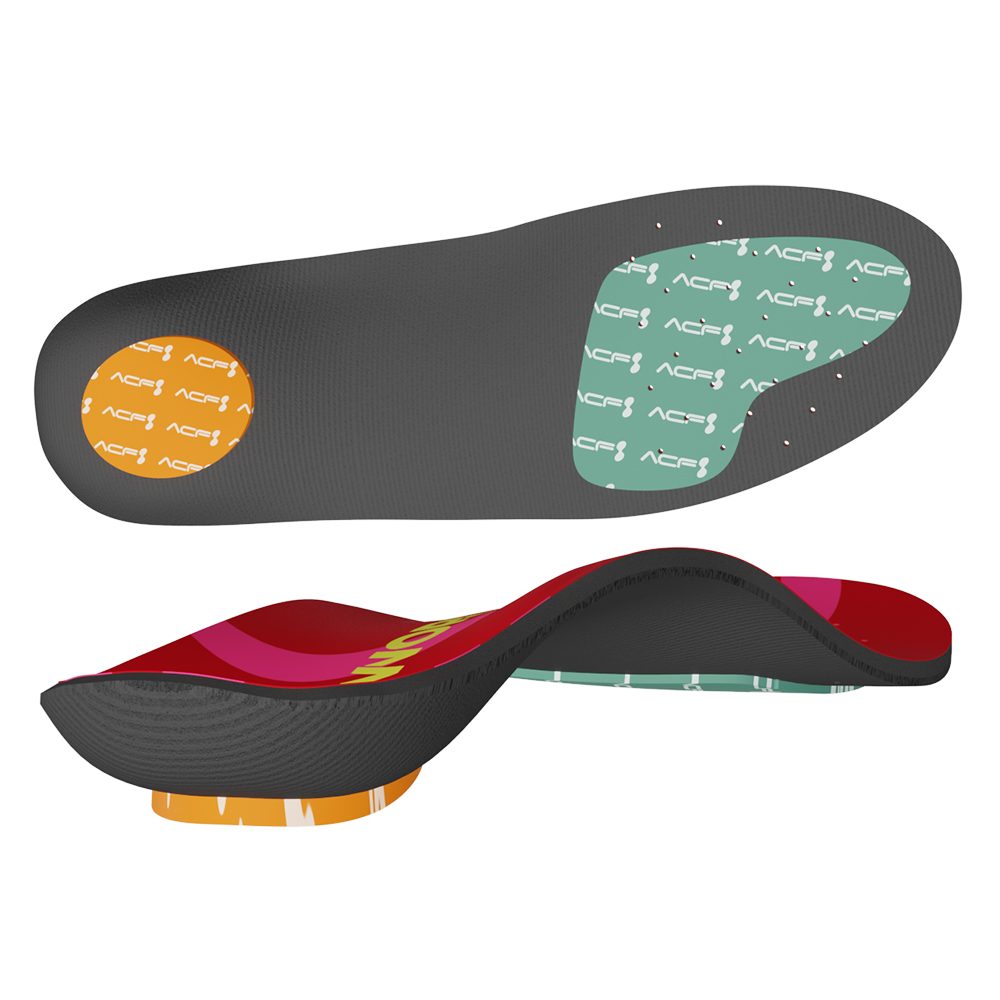
Lateral holding is a job for structure outside the foot, and the shoe carries it. The upper’s wrap, the width of the sole’s platform, the outsole’s grip pattern and the stiffness built into the sidewall decide whether the foot stays over the platform when the load arrives from the side. A court shoe is built for this from the ground up; a running shoe is not, and no insert inside either shoe changes which one is which.
This ordering matters for expectations. Players arrive wanting the inside of the shoe to fix what the outside of the shoe is for. The honest position is that a build works inside a cavity the shoe defines: it can shape how load spreads across the sole within that cavity, and it cannot add structure the shoe’s sidewalls do not have. A lateral shoe with a considered build is a system; a neutral running shoe with the same build is still a running shoe.
In practice the first question in a court fitting is the shoe, not the insole. Is the shoe a court model, does it fit the foot’s width, does the heel hold, is the outsole appropriate for the surface? The answers decide more of the player’s experience than anything fitted afterward. A fitter who resolves the shoe first, then builds to the foot inside it, spends the player’s money where the loads actually are; one who starts inside spends it where the loads are not.
Shoe condition belongs in the same first pass. A court shoe with softened sidewalls or a rounded outer edge has lost part of the lateral holding it was bought for, and no build inside will restore it. Players often stretch a court shoe’s life well past the point where its structure has quietly retired, which is why the wear on the outsole — read at the same time as the pressure record — is one of the most useful checks in the whole fitting.
What the edge of an insole can and cannot hold
Within the shoe’s cavity, a build has real but bounded work. The contour can spread load across the forefoot instead of letting it concentrate on one band, which matters when the same patches take every cut of a season. It can present the sole to the shoe’s cavity evenly, so the foot sits deeper and moves less inside the shoe between points. These are load-distribution contributions, and they are worth having.
What the edge cannot do is grip the shoe. An insole has no purchase on the upper; if the foot slides inside the shoe, the fix lives in lacing, in the shoe’s width, or in the shoe choice itself. A build whose edge is simply made wider does not lock a foot in place — if it exceeds the cavity it bunches, if it fits the cavity it moves with the foot exactly as the shoe allows. Players who report sliding need the shoe conversation, not a thicker rim.
The edge also cannot reach outside the shoe. The loads of a cut travel through the shoe’s platform to the floor; whatever happens between shoe and floor belongs to the outsole and the surface. An insert that claims to hold a player upright during a cut is claiming the shoe’s job and the shoe’s geometry, and the claim should be treated as marketing until proven otherwise. We would not make it about ours, and we would ask it of anyone else’s.
What edge support should mean, in our usage, is modest: a contour that meets the shoe’s cavity without gap, a forefoot shape that respects where the cuts actually load, and a rim that does not itself become the thing that rubs during a long session. Modest, checkable, and honest — the same three tests any fitting claim should pass before the player pays for it.
Torsion and cushioning pull against each other
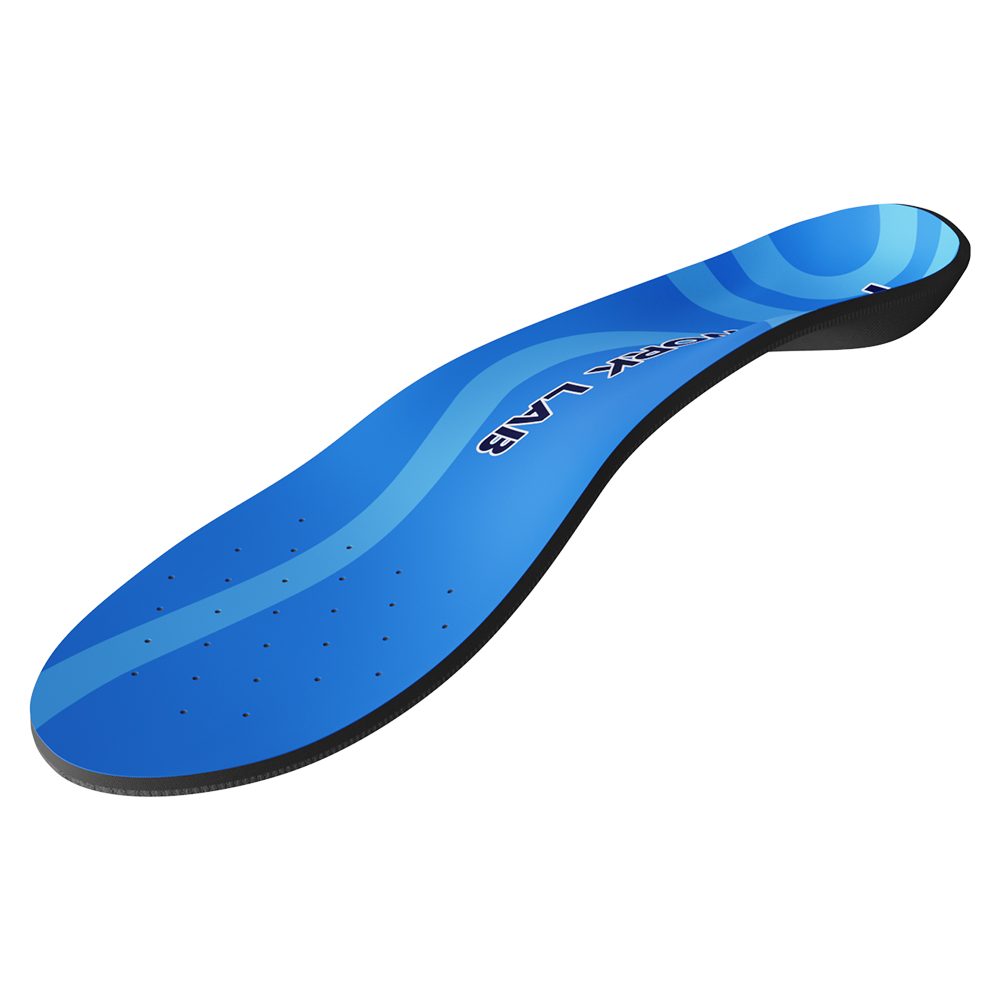
A court build negotiates a real conflict. Firmness through the body of the build helps the sole stay coherent when a cut loads it from the side; softness under the heel and forefoot buys comfort across a long session on an unforgiving floor. More of one generally means less of the other, and the balance is the design decision, not an afterthought.
Where the balance sits depends on the player and the surface. A heavier player on a hard court asks more of cushioning; a lighter player who lives on quick cuts asks more of shape-holding; most players sit between, and the honest build says where it sits rather than pretending to be both. What the build should never do is solve the conflict by being vague — firm enough to be called supportive and soft enough to be called comfortable, and useful for neither question.
The shoe participates in the same trade, which is why the two are chosen together. A stiff-soled court shoe already carries part of the firmness; piling maximum firmness into the build on top of it produces a pair that transmits everything and cushions nothing. A shoe on the softer end leaves the build room to contribute shape. The fitter who knows the shoe’s character builds into the space the shoe leaves.
The trade also explains why players sometimes report that a build felt right at fitting and heavy by mid-season. Firmness that matched a fresh shoe reads differently once the shoe’s own structure has softened with use, and the balance that was correct in the first weeks drifts. This is one more reason the season needs a checkpoint in the middle rather than a single decision at the start.
Hard courts, indoor floors and everything under them
The surface under the shoe changes the load story more than players expect. Hard outdoor courts return every step’s energy through the shoe and the sole, and a season on them is a cushioning conversation. Indoor floors give a little, grip differently, and shift the question toward movement inside the shoe and the edge loads of sudden changes of direction on a dustier surface.
Grip changes behaviour too. A shoe that grips hard converts the player’s momentum into load at the plant point; a shoe that slides a fraction bleeds some of that load into movement instead. Players on the same surface in different shoes show different patterns for this reason alone, which is why the shoe and the surface belong in the record’s notes alongside everything else.
For a fitter, the practical consequence is that a court build is not one product description. The same foot on two surfaces, in two shoes, is two conversations, and the record from a session that notes which surface the player spends most of the season on is worth more than one that does not. When the player splits time between surfaces, the conversation is about which surface dominates, and the answer goes into the build’s brief.
Session length belongs here as well. Two hours on a hard floor is not the same question as three short sets, and a player who trains long on hard courts is asking the cushioning side of the trade for more than a match-day player ever will. The diary of a typical week — how often, how long, on what — is the cheapest information in the fitting and the most often skipped.
Retesting in season, not only before it
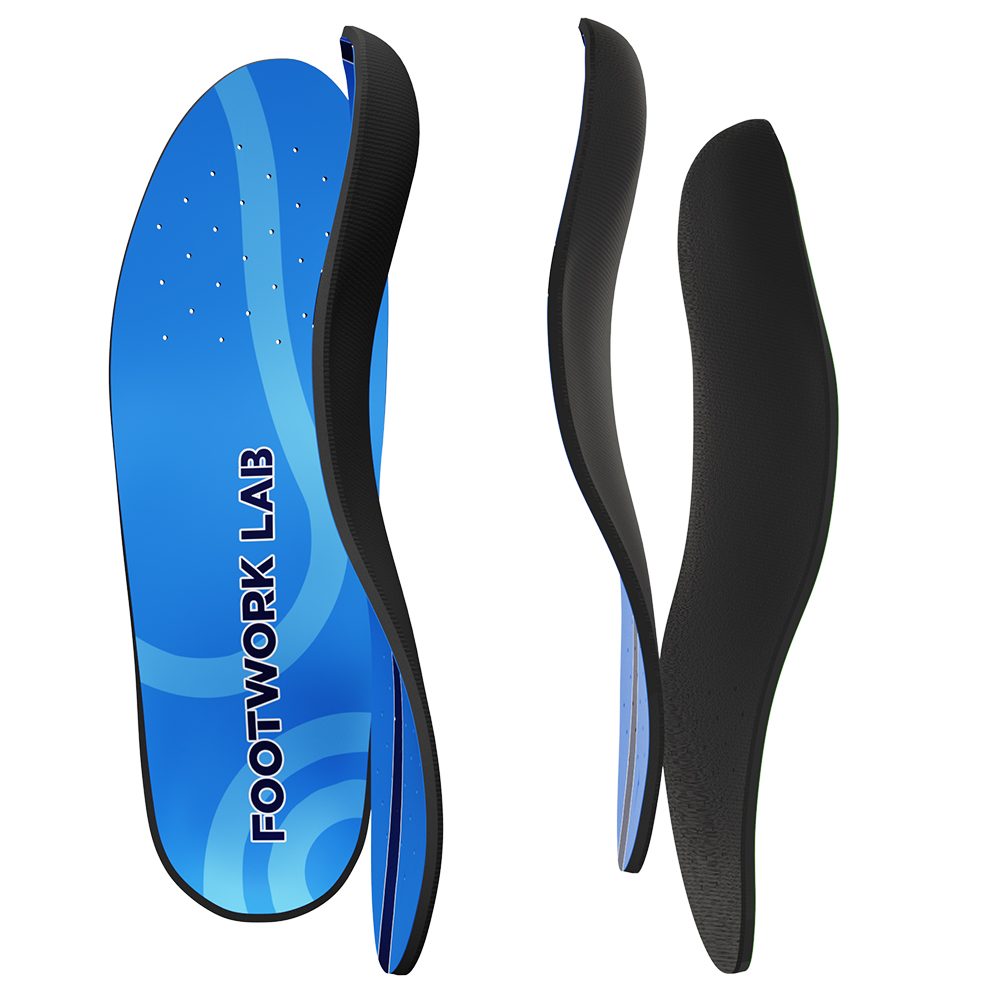
The usual rhythm is a scan before the season and silence after, and the silence is where the record loses its value. A court season changes feet: load repeats at patches that stood quietly in the pre-season walk, shoes wear at their edges, and the player’s own movement adapts to the sessions behind them. A record taken mid-season shows a different foot from the one scanned in the quiet before it, and both records are true.
A mid-season re-recording answers the questions that matter then: where the season’s load has concentrated, whether the build is still meeting the shoe’s cavity as it did at fitting, whether the wear the player reports matches what the plate shows. It does not answer whether the player should keep playing — that judgement belongs to the player and whoever supervises their training — but it gives that judgement something firmer than anecdote to stand on.
The rhythm we suggest to partners is simple: record before the season with the build in the shoe, record at the season’s middle under the same conditions, and compare within the player. The comparison is only as good as the matching — same time of day where possible, same protocol, same shoe — and the session sheet carries the notes. Two matched records a season apart are worth more to a player than a shelf of unmatched ones.
What comes out of the comparison decides the next step honestly. If the mid-season record matches the pre-season one, the build and the shoe are doing what they were chosen to do, and the season continues on its own clock. If the load has shifted to patches the build was not shaped for, the conversation is about the build, the shoe, or the season’s schedule — in that order, with the evidence on the desk rather than in anyone’s memory.
Frequently asked questions
Does the insole stop the foot sliding inside the shoe?
Not by itself. Purchase on the shoe comes from the upper, the lacing and the shoe’s width; a build that exceeds the cavity bunches instead of gripping. If a player reports sliding, the shoe conversation comes first, and the build is shaped to the cavity that remains.
Why does the outer edge of my insole wear so fast?
Because that is where court loads land. A cut drives the forefoot load toward its lateral border, repeat after repeat across a season. The wear is the record of the movement, and it usually matches the outsole’s wear on the same shoe.
Should a court build be firm or cushioned?
It negotiates both, and the balance depends on the player and the surface. Heavier players on hard floors ask more of cushioning; quick-cut players ask more of shape-holding. A build vague enough to claim both usually serves neither, so we would rather say where the balance sits.
Can an insole keep the ankle from rolling?
No. Lateral holding is the shoe’s structure and the surface’s job; nothing inside the cavity adds sidewall the shoe does not have. A build shapes how load spreads across the sole inside the shoe, and that is the honest size of its contribution.
Do hard courts and indoor floors change the build?
They change the conversation. Hard outdoor courts put cushioning at the front of the brief; indoor floors shift it toward edge loads and movement inside the shoe. The same foot on two surfaces is two conversations, and the season’s dominant surface should be in the notes.
When should a court player re-record?
Before the season with the build in the shoe, and again at the season’s middle under matched conditions. The mid-season record shows where the load has concentrated and whether the build is still meeting the shoe as it did at fitting.
Can one pair move between two court shoes?
Usually not cleanly. Different court shoes have different cavities, and a build shaped to one will sit differently in another. If the player alternates shoes, either the shoes need to share a cavity closely or the conversation needs two builds.
What we would do next
Start the next court fitting with the shoe, the surface and the season’s schedule, and build to what is left of the question. The insole categories page shows where the sport builds sit in the range, and choosing a sport insole by load, not by name is the companion piece to everything above. For the comparison habit a season depends on, how a re-recording habit is built sets out the matching rules, and when a pair counts as used up answers the wear question that arrives with every season’s end. If the training load is structured rather than casual, a training cycle built around the platform shows how records and sessions can be planned together.
This article is intended for professional and educational reference. It is not medical advice. Foot assessment equipment produces measurements and images; clinical interpretation and any decision about care remain the responsibility of a qualified professional. Certification scope is limited to the documentation we hold: European Union certification and ISO quality system certification.