
Every assessment session ends up with a choice on the table: record the foot standing still, or record it walking through. The two captures use the same platform and the same sensors, and they produce records that look superficially similar — two footprints, some numbers, a picture of load. They answer different questions, and a room that treats them as interchangeable ends up defending conclusions the records were never built to support. A static versus dynamic foot record comparison is not about one being better; it is about which question is being asked. A standing record describes how load settles when the foot is asked to do almost nothing. A walking record describes how load moves when the foot does its ordinary job, in motion, one brief contact at a time. This article works through what each capture actually answers, the order that works in a real session, how to read the two side by side without letting one argue with the other, what neither record can be used for, and how to label the pair so they stay comparable months later. The aim is that the next time a customer asks which one she needs, the room’s answer starts from the question itself.
Two records, two different questions
The cleanest way to hold the distinction is to write the question first and choose the capture second. A standing record answers: how does load distribute through this foot at rest, when it is asked only to hold the body upright? A walking record answers: how does load distribute through this foot while it is doing the job it does thousands of times a day — receiving the body, transferring weight forward, handing off to the other foot? One is a portrait of a posture; the other is a portrait of a process.
Rooms that skip the question and capture everything by default usually end up fine — both records get made — but their reports go wrong in a specific way: the static map gets read as a verdict on the foot in motion, or the dynamic map gets read as if it described the foot at rest. Neither reading survives contact with a customer who walks differently from the way she stands, which is nearly all customers. The separation is not pedantry; it is the difference between a report that describes what was measured and a report that quietly claims more.
There is also a customer-facing version of the distinction, and it works in plain language: the standing record shows where your weight rests when you are simply standing; the walking record shows where it goes when you move. Customers who hear that sentence understand immediately why the room wants both.
What a standing record actually answers
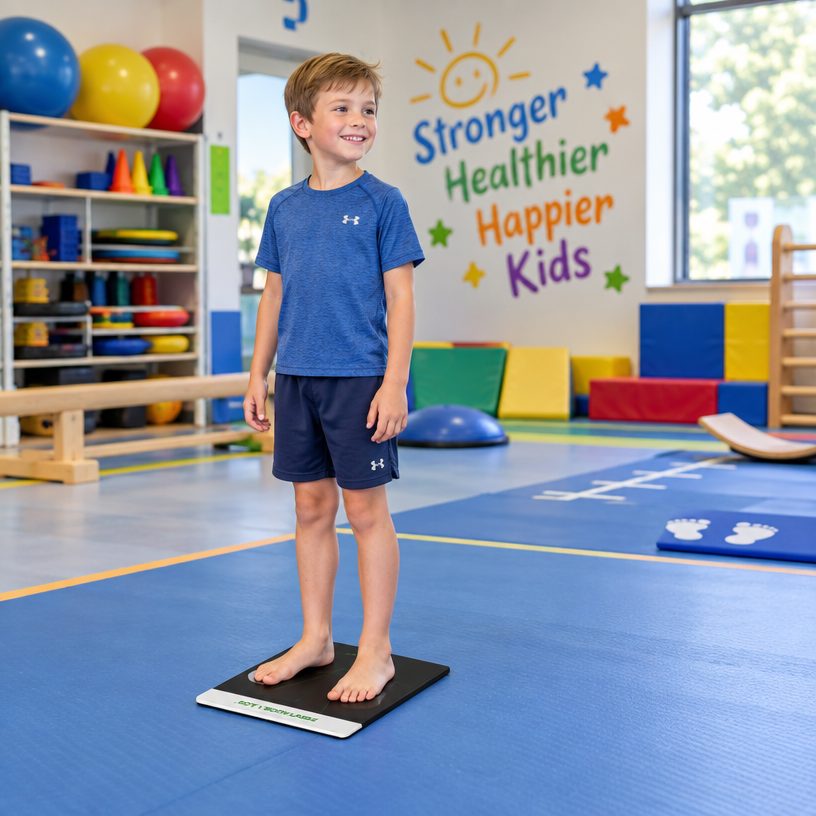
A quiet-standing capture gives the foot its least demanding job: hold the body upright and stay still. What comes back is the resting pattern of load — how weight settles between rearfoot and forefoot, how it sits between the two feet, and which regions of the sole carry contact when nothing is happening. It is the easiest capture to take and the easiest for a customer to understand, which is why most sessions open with it and why the printed footprint remains the single most shared image in assessment rooms.
The limits are just as real. A standing record says nothing about how the foot behaves in motion, because motion is precisely what it excludes. It is also sensitive to the person being still in an honest way: balance corrections, attention on the feet, a customer gripping the platform with her toes — all of these reshape the map without the foot itself having changed. Our article on capturing a record when the customer cannot stand still covers those failure modes pass by pass. And a capture taken in thick socks on a cold floor can read small and uneven for reasons that belong to the room, as our piece on footprints that read small describes.
What the standing record is genuinely good for, beyond the resting pattern itself, is comparison between the two feet under identical conditions. Both feet are on the platform at once, the demand is symmetric by definition, and any left-to-right difference in the map is worth reading — with the caveat that some asymmetry at rest is ordinary and unremarkable. It is also the capture most useful for showing customers something concrete about their own contact pattern, which is why the glass plate and the printed footprint survive in rooms full of screens: the static image is the one customers argue with, remember and take home.
What a walking record adds and what it blurs
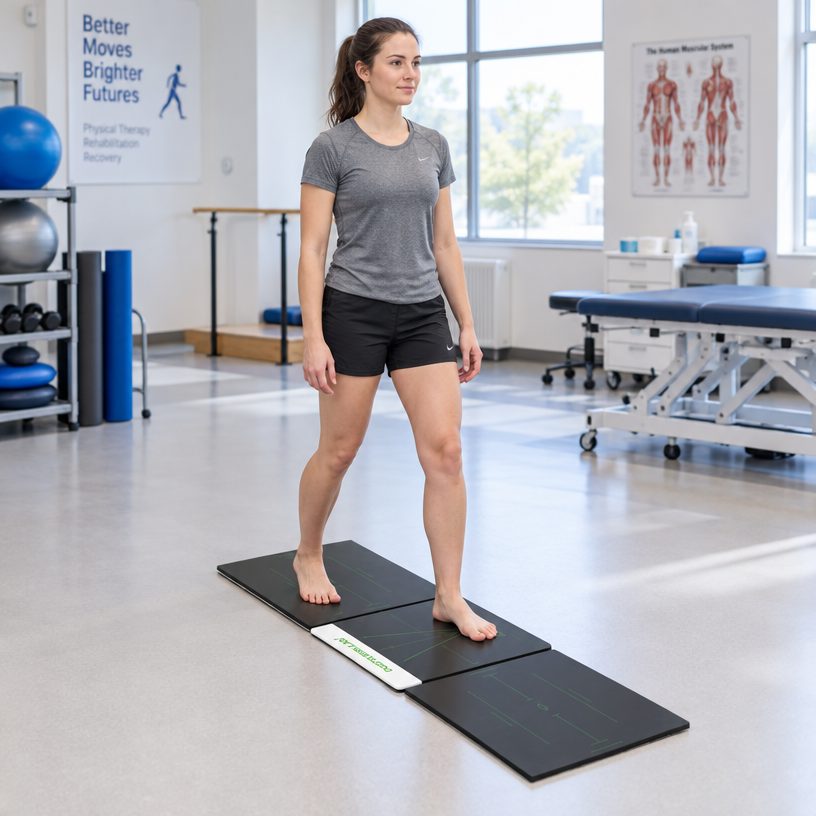
The walking capture changes the demand from holding to moving, and the record changes character accordingly. Each contact is brief; each region of the foot loads in a sequence; the centre of pressure traces a path from heel to forefoot that can be read as a line rather than a patch. This is where the gait cycle becomes visible as data — when the heel takes the body, when weight passes over the forefoot, when the toes hand off — and where differences between the two feet show up as differences in timing and sequence, not just in area.
What the walking record blurs is equally worth stating. Because each contact is brief, the map averages across whatever the strides contained; a dynamic capture is usually built from several steps, and the record is a summary of them. A customer who hesitates on one step, or whose fourth stride differed from her first three, has added noise the static capture never has. The operator’s eye on the stride, and a decision about which passes represent the customer’s ordinary walking, matter more here than in any standing capture.
Walking also introduces speed, and speed is a condition, not a background detail. A customer asked to walk naturally in a corridor walks at one pace; a customer conscious of a camera and a platform walks at another. Our article on belt speed as a protocol decision makes the point for platform work in general, and it applies with full force here: two walking records taken at clearly different paces are not comparable; match the condition or label the difference.
The order that works in a real session
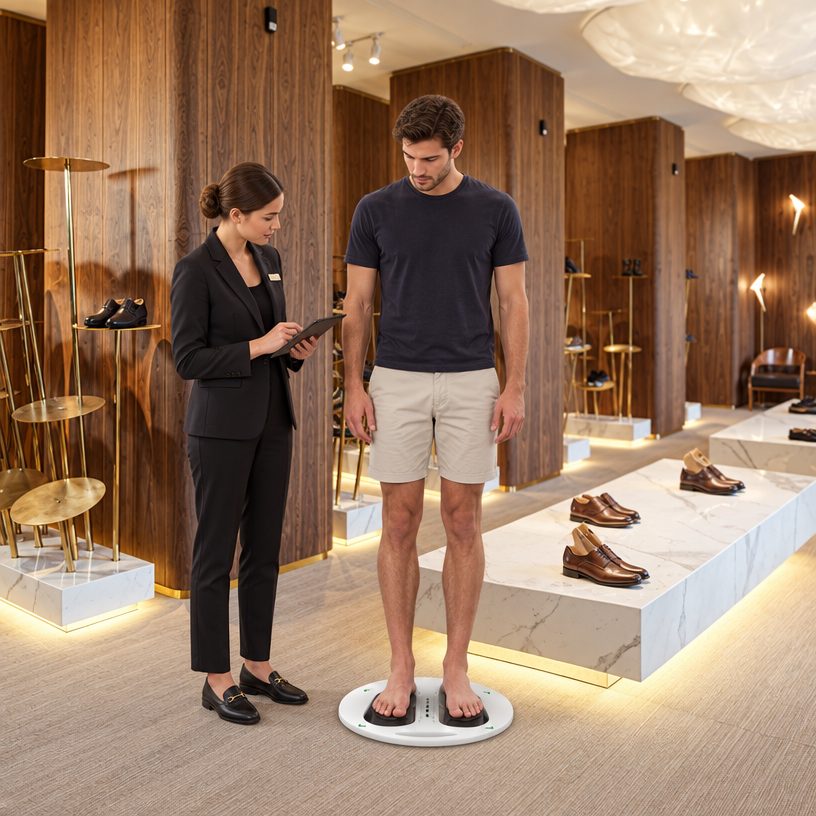
In practice, most experienced rooms run the static capture first, and the reasons are procedural as much as scientific. The customer arrives, takes off her footwear, and the standing capture asks the least of her: step on, stand comfortably, done in a few seconds. It settles the customer onto the equipment, produces the image she will understand fastest, and gives the operator an early read on anything that needs handling — a customer who cannot settle, toes that grip, weight that leans to one side — before the walking passes begin.
The walking capture follows once the customer has stopped performing. The instruction matters more than most rooms expect, and the working versions are plain: walk to the end of the room and back, the way you walk on the pavement, not the way you walk down a hospital corridor. The operator watches the early passes, discards the guarded ones, and keeps the ones where the customer has forgotten the equipment. Some rooms capture several passes and choose afterwards; some capture a fixed number and note any that looked unrepresentative. Either way, the selection is written down: a dynamic record without a note about its passes is only half a record.
What the room says between the two captures also deserves a script of its own, because the customer is usually watching the static map appear and drawing conclusions in real time. The safe sentence is short: this shows where you rest your weight standing; in a moment we will see what changes when you walk. It gives the customer the image and defers the meaning for the side-by-side reading that follows. Rooms that let the customer reach conclusions from the static map alone spend the rest of the session unwinding them.
Reading the two side by side
The informative moment in most sessions is not either record alone but the pair on one screen, and reading them together takes a small amount of discipline. The first rule: differences between the static and dynamic records are expected, and most of them are ordinary. A foot that shows a particular contact pattern at rest may load differently in motion because that is what feet do in motion — the arch engages, the forefoot takes the transfer, the toes participate in a way quiet standing never asks of them. A difference is not a contradiction; it is the foot answering a different demand.
The second rule follows from the first: when the two records disagree in a way that matters to the question the room is actually asking, the walking record usually carries more weight for questions about motion, and the standing record carries more weight for questions about rest and footwear fit at rest. Neither record outranks the other in general. What outranks both is the question written at the top of the session sheet, which is why rooms that write the question down first defend their reports better than rooms that capture everything and interpret later.
Paired comparisons deserve their own care, and our article on building a left-and-right comparison you can defend sets out the method in detail: same session, same conditions, both feet in the same frame where possible, differences described rather than scored. The same logic extends across time: a pair from today is comparable with a pair from three months ago only if the conditions match — same capture order, same instruction wording, same footwear state.
What neither record can be used for
The standing division of the work needs restating wherever records get shared between rooms: the platform produces measurements and images of load distribution under stated conditions. It does not decide what those measurements mean for the person. Whether a pattern in a static map or a sequence in a dynamic record calls for any action at all is a judgement for a qualified professional, working from the full record, the stated conditions and the person in front of them. A report that keeps that line visible can be carried between professionals without embarrassing itself; a report that blurs it becomes a liability the moment someone reads further into it than the equipment went.
Two specific over-readings deserve guarding. The first is reading a static map as a structural verdict — as if the shape of a resting footprint settled what the foot is, rather than describing one posture at one moment under one set of instructions. The second is reading a dynamic record as a prediction — as if the load pattern from a corridor walk forecasts what the foot will do in a working day, on a slope, or in footwear the session never saw. Both claims exceed the measurement. The honest phrasing in any report is what was recorded, under what conditions.
Rooms sometimes ask whether capturing both records changes this. It does not, and that is the point: two well-labelled records give the professional more to work with than one, but the equipment’s contribution stops at measurement either way. The value of the pair is that it narrows the space of wrong readings — a pattern that appears only at rest, or only in motion, is much harder to over-interpret once both are on the screen.
Labelling the pair so it stays comparable
The session sheet does the last of the work. For a static-dynamic pair, the lines worth writing are few but unforgiving: which capture came first, what instruction wording was used for each, what the customer wore on her feet, how many passes the dynamic record was built from, and anything that happened in the room — a hesitation, a reposition, a customer who mentions that her feet are cold. None of these lines takes a minute to write, and together they make the pair readable by anyone else, including the same operator on a busier day.
Consistency across operators is the extension of the same discipline. Two operators who phrase the walking instruction differently are running two different protocols, and their dynamic records are not quietly interchangeable; our article on two operators and one protocol covers how rooms agree on scripts so that captures taken by different staff can still be compared. The same applies to capture order: if one operator starts with standing and another with walking, the records differ by more than the customers do.
The pay-off for all this writing arrives at the follow-up visit. A customer returns after changes in footwear or workload, and the room wants to know what moved in her records. With the labels in place, the comparison is honest: same conditions, same order, same instructions, so the differences on screen belong to the foot and the months in between. Without them, every difference is ambiguous, and the room ends up saying the least useful sentence in assessment work: it looks different, but we cannot say why.
Frequently asked questions
Do I need both a static and a dynamic capture in the same session?
Most rooms take both, because they answer different questions and each guards against over-reading the other. If time or the customer only allows one, choose by the question: rest and fit-at-rest belong to the standing record, anything about motion belongs to the walking record. Write the question down before choosing.
Which record should come first?
Most experienced rooms take the standing capture first: it asks the least of the customer, settles her onto the equipment, and gives the operator an early read on anything that needs handling before the walking passes. Whatever order your room uses, keep it consistent so records stay comparable across visits.
Why do the two maps look so different for the same foot?
Because they describe different demands. Standing shows where load rests when the foot only holds the body upright; walking shows how load moves through the foot in sequence during each contact. Differences between the two are expected and ordinary, not a contradiction that needs explaining away.
Can I compare a walking record from today with one from an earlier visit?
Only if the conditions match: the same instruction wording, a comparable pace, the same footwear state and the same capture method. Where conditions changed, say so on the comparison, because the difference belongs partly to the conditions. Labels from the session sheet are what make the comparison defensible.
How many walking passes does a dynamic record need?
Enough representative passes that the record summarises the customer’s ordinary walking rather than one step. The operator discards guarded or unrepresentative passes and notes what was kept. The exact number is a protocol decision for the room; the discipline is writing down which passes the record came from.
Can a static footprint tell me what the customer’s foot is like?
No. A standing record describes one posture at one moment under one set of instructions — it is a measurement of resting load, not a verdict on the foot’s structure. Reading it as more than that is the most common over-interpretation in assessment rooms, and the walking record is the cheapest guard against it.
What do I tell a customer who is worried by her static map?
Give her the plain-language version: the standing image shows where weight rests when you simply stand; the walking capture will show what changes when you move. Defer interpretation to the full pair and to the qualified professional reading it. Customers settle quickly once they see the two records together.
What we would do next
Pick one habit this week: write the question at the top of the session sheet before the first capture, and let it decide how much of the session the standing record deserves. The F2 plantar pressure system page shows how static and dynamic captures sit in one workflow, and our articles on building a left-and-right comparison you can defend and what a printed footprint on glass still shows extend today’s reading discipline to paired feet and to the offline cross-check. For rooms training new staff, two operators and one protocol covers the scripting that keeps records comparable across people. Answers to the questions new buyers send most often are collected on the FAQ page, and anything specific to a room layout or a customer goes fastest through the contact page.
This article is intended for professional and educational reference. It is not medical advice. Foot assessment equipment produces measurements and images; clinical interpretation and any decision about care remain the responsibility of a qualified professional. Certification scope is limited to the documentation we hold: European Union certification and ISO quality system certification.