
The customer sees the forefoot light up and asks what it means before the second trial has even finished. Every clinic that runs a pressure system knows this moment. The map is vivid, the lit-up region looks decisive, and the question lands while the record is still being taken. It is a good question asked at a bad time, and how the room handles it sets the tone for everything that follows: what the customer expects, what gets written in the file, and what happens on the next visit.
Forefoot and rearfoot loading are the two easiest things on any pressure map to point at, and the two easiest to over-read. Front-heavy, back-heavy: the labels sound like findings, but they are descriptions, and descriptions need context before they can mean anything. This piece is about that middle step — what the front-versus-back distribution can honestly tell you, what it cannot, and the reading order that keeps a clinic inside the second category.
What front-versus-back actually describes
During a normal stance phase the centre of pressure travels from the heel toward the toes, so every walking record contains both a rearfoot phase and a forefoot phase. When practitioners talk about forefoot or rearfoot loading, they are usually describing where the load concentrates within that travel: an earlier, longer or heavier loading under one region than the other, or a pattern that repeats across trials. That is all the map asserts. It is a description of distribution, in a particular foot, at a particular speed, on a particular day.
The description is genuinely useful. It tells you which region of the sole is doing the delivery work, whether the pattern repeats on both sides or appears on one, and whether it survives a second trial. Those are facts about the record. What the description is not — on its own — is an explanation. A forefoot-heavy pattern can reflect the way a person walks, the shoes they are standing in, the speed they were asked to walk, the slope of their day so far, or a hundred ordinary reasons that never reach a diagnosis.
So the honest sentence at the capture point is simple: the record shows where the load sat, and the meaning is built later, from the record plus the history plus the professional’s judgement. Every clinic that keeps that sentence in play finds the customer conversation easier, not harder, because the map stops being asked to answer questions it was never designed to answer.
There is a second sentence worth keeping nearby, for the moments when the customer pushes: the front-versus-back question is one of the first things anyone notices on a map, which is exactly why it is the last thing that should be concluded. Order of attention is not order of confidence. The regions that catch the eye fastest are the ones with the longest list of mundane explanations, and the professional’s job on the day of the capture is to hold that list open until the history, the trials and the comparison between feet have had their say.
Why forefoot loading tempts over-reading
The forefoot is where the eye goes first, for three reasons. It lights up strongly in most dynamic records, because push-off is real work. It maps onto a vocabulary customers already carry from running shops and magazine articles about striking patterns. And it sits at the end of a visible chain — heel, midfoot, toes — so a heavy forefoot looks like a story with a direction. None of these reasons is evidence, but together they create a strong pull to say more than the record supports.
Resist it with two ordinary checks before any interpretation is voiced. The first is repetition: does the pattern appear on a second trial, and a third, or only once? A single heavy trial is a moment, not a pattern. The second is comparison: does the same regional concentration appear on the other foot, and does it match the customer’s own account of their day? A forefoot-heavy record in someone who has just finished a shift on their feet reads differently from the same record in someone who rested first.
Neither check requires anything beyond patience and a notes field. Together they catch the majority of premature conclusions, which in practice are conclusions drawn from one trial, on one foot, without the history. A pressure platform records what happened under the sole with admirable honesty; the restraint has to come from the person standing next to it.
Rearfoot loading: the same discipline, quieter pressure
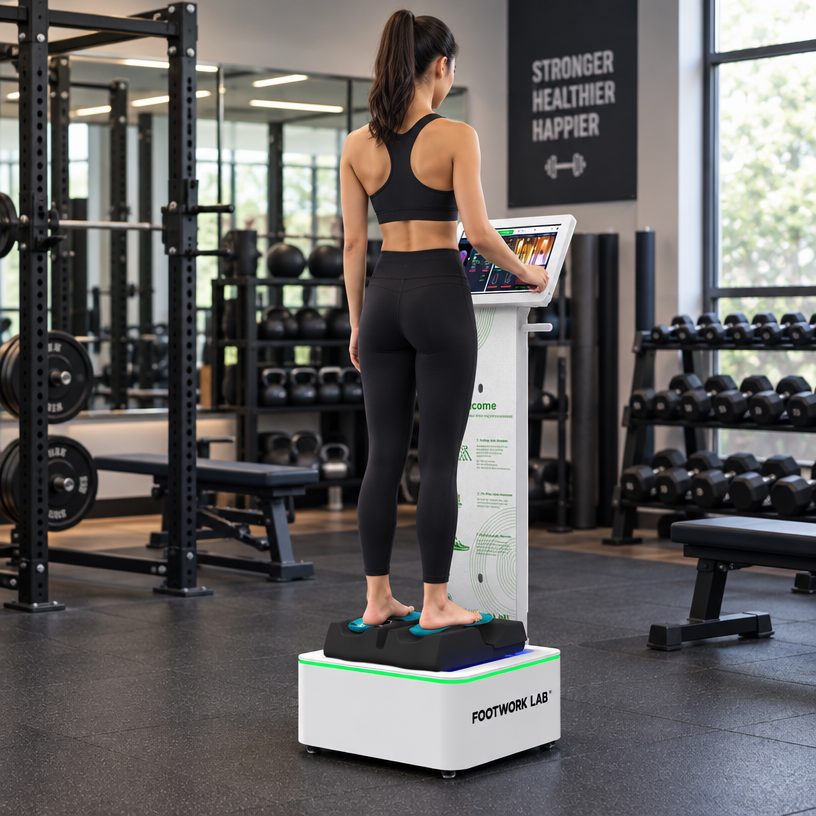
The rearfoot version of the temptation is quieter but just as real. Heel-heavy records invite comments about hard landings, and hard landings invite commentary about everything that might follow from them. But a heel-weighted stance is one of the most common and least alarming things a record can show. People land where their anatomy, their footwear and their speed put them, and a heavy heel on a Tuesday afternoon is a description, not a forecast.
What the rearfoot region genuinely offers is a stable reference point. The heel is the most repeatable region across trials in most records, which makes it a good anchor for comparing left and right, and for comparing this visit with the last one. When a practitioner wants to know whether something has changed since the previous capture, the rearfoot pattern is often the most trustworthy part of the comparison precisely because it varies least between ordinary trials.
The reading order that falls out of this: treat the rearfoot as the baseline, the forefoot as the variable, and the midfoot as the connection that shows how load traveled between them. None of the three regions diagnoses anything by itself. Together, described carefully and compared across trials, they give a professional something solid to reason from — which is the entire purpose of the measurement.
An order of reading that survives a busy day
Under clinic load, discipline has to be procedural, not heroic. A reading order that works at speed: whole record first, feet second, regions third, single trials never. Whole record first means deciding whether the capture is usable at all — did the customer walk naturally, at their own pace, in the agreed footwear state? A stiff, hurried or shoe-altered capture is a bad input regardless of what it shows. Feet second means left against right before any single region is discussed, because the comparison between the two feet is more stable than any one region.
Regions third means only after the first two checks does it make sense to talk about front-versus-back concentration at all — and by then, the repetition and history checks from earlier have usually already happened. Single trials never is the rule that does the most quiet work: nothing said to the customer about one trial, nothing written from one trial, and a re-capture rather than a comment whenever a trial looks odd.
Write the order on the wall of the capture room if the team needs it. It is not a clinical protocol and it does not tell anyone what to conclude; it sequences the looking so that the busiest afternoon still produces records that mean the same thing on Thursday that they meant on Monday. Consistency of reading is a process property, and processes can be written down.

When a regional reading deserves a second look
Restraint is not the same as passivity. Some findings genuinely warrant a second capture, and a clinic that never re-tests is not being careful, it is being flat. The conditions for a second look are conditions about the record, not about the customer: the pattern failed to repeat across trials; it appears on one side only and contradicts the history; the footwear state was not what the protocol asked for; or the customer reports that the capture did not feel like their normal walking. Each of these is a reason to re-capture, and none of them is a reason to interpret harder.
When re-capturing, change one thing at a time and say what you changed. Same protocol, different trial: tests repeatability. Different footwear state: tests how much of the pattern belongs to the shoes. A rest before the capture, where the day allowed a long walk in beforehand: tests how much belongs to fatigue. The differences between these captures are informative precisely because each change was deliberate and written down. Change three things at once and the comparison is worthless.
Then apply the hardest rule of the five: a finding that survives good re-testing still describes the foot, it does not diagnose it. The next step from a robust regional finding is a professional conversation — history, hands-on examination where appropriate, and the customer’s own goals — not a purchase, a device or a dramatic conclusion. Clinics that keep this sequence report that customers trust the process more, not less, because the process visibly refuses to jump to conclusions.
Saying it out loud: wording that stays inside the measurement
The last discipline is verbal, and it is where records succeed or fail in front of the customer. Phrases that stay inside the measurement: the record shows, across these trials, the load concentrated under; the pattern repeated on both feet; it did not repeat, so we captured again; this is where the work happened this morning. Every one of these is verifiable by looking at the record again, which is exactly what makes them safe to say.
Phrases that leave the measurement: your foot strikes wrongly, this is causing, this will lead to, the front of your foot is the problem. Each converts a description into a verdict, and each verdict then has to be defended, softened or walked back later. The most common origin of customer disputes about assessment is not the equipment at all; it is a sentence spoken at the capture point that the record could not actually support.
A useful habit for teams: before speaking, ask whether the sentence would still be true if the customer asked you to point at it on the record. If yes, say it. If the honest answer is an interpretation, hand it the respect interpretation deserves — this is where I would look next, this is what the history adds, and the decision about what it means belongs to the clinical side of the room. The equipment documents; the professional interprets; the customer hears the difference between those two jobs.
Building the habit into the file, not just the room
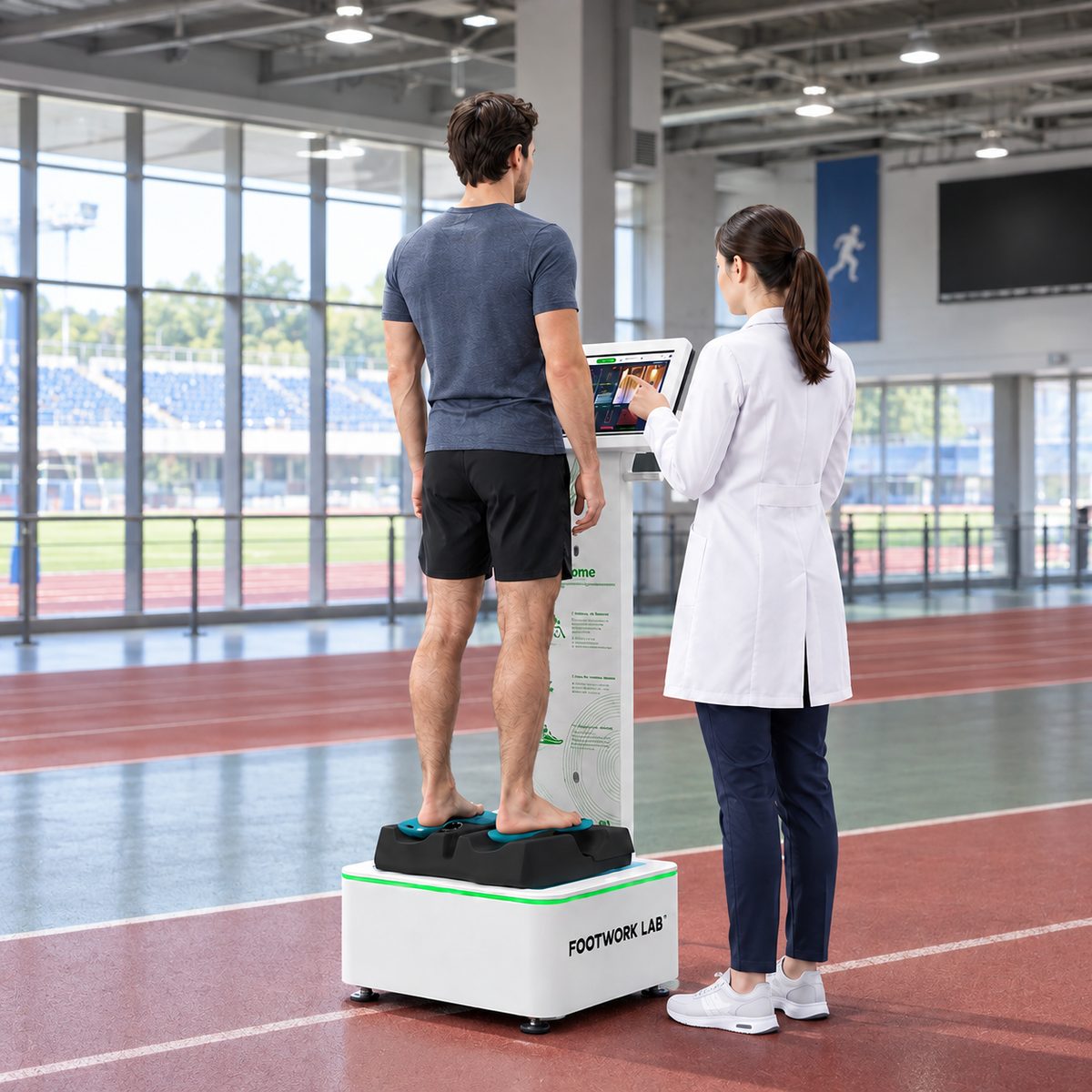
Verbal discipline decays unless the file enforces it. The record sheet for a dynamic capture needs four lines that cost nothing and preserve everything: footwear state, trial count and which trials were kept, what felt different to the customer, and any deliberate change between trials. With those four lines, a colleague reading the file a month later can tell a repeatable pattern from a one-off, and a returning customer can be captured under the same conditions as last time — which is what makes the comparison between visits mean anything at all.
Teams training a second operator find the same four lines do double duty, because they teach the order of reading without a lecture: the new operator learns that footwear state is asked before the capture, trials are repeated before they are trusted, and the customer’s own report is recorded rather than overruled. Consistency between operators, and between visits, is where the long-term value of any pressure record actually sits. A single beautiful capture is a nice afternoon; a comparable series is a clinical asset.
None of this requires new equipment. It requires the clinic to decide that the description will stay a description until the professional has had their hands on the whole picture. The measurement discipline and the verbal discipline are the same discipline, and both are cheap to install and hard to argue with once installed.
It also travels well. Clinics that send records to partner clinics abroad, or that hand files to a referring colleague, find that a file which separates description from interpretation is understood the first time it is read, without a phone call. The four file lines and the careful wording are not internal politeness; they are what makes a record usable by anyone who was not standing in the room when it was taken.
Frequently asked questions
Does forefoot loading mean something is wrong?
Not by itself. The centre of pressure normally travels from heel to forefoot during stance, so regional concentration is a description of distribution, not a finding of damage. Its meaning comes from repetition across trials, comparison between feet and the customer’s history, read together by a qualified professional.
Is a heel-heavy record a concern?
A rearfoot-weighted pattern is one of the most common records there is and is often the most repeatable region across trials. That repeatability makes the heel a good baseline for left-right comparison and for comparing visits. It is a description, not a forecast.
How many trials before a pattern can be trusted?
Enough for the pattern to repeat, and no conclusion from a single trial under any circumstances. If a trial looks odd, capture again rather than commenting. The trial count and which trials were kept should be written on the record sheet.
When should we re-capture instead of interpreting?
When the pattern failed to repeat, appears on one side only against the history, was captured in the wrong footwear state, or the customer says the capture did not feel like their normal walking. Change one condition at a time and record what you changed.
What should we say to the customer at the capture point?
Wording that stays inside the measurement: what the record shows, whether the pattern repeated, and what was re-captured. Interpretation belongs to the clinical conversation, not the capture point. If a sentence cannot be pointed at on the record, save it for the professional.
Do the shoes affect the front-versus-back pattern?
They can, which is why the footwear state belongs in the protocol and on the sheet. Capturing in different footwear states, one change at a time, shows how much of the pattern belongs to the shoe rather than to the foot.
Does the equipment itself interpret the record?
No. It produces measurements, maps and images. The interpretation, the diagnosis and any decision about care remain with the qualified professional. We build the measurement side of that workflow and are careful not to claim the other side.
What we would do next
Two actions worth taking this week, neither of which costs anything. First, add the four file lines — footwear state, kept trials, customer report, deliberate changes — to your dynamic capture sheet, and see whether last month’s records would have been readable with them in place. Second, pick one phrase your team currently says at the capture point and check whether it can be pointed at on the record. If you want the fuller sequencing question covered, our piece on static first, then moving covers how to order the two parts of an assessment, and when the record surprises you covers the re-check list in more detail. The X5 product page describes the measurement system we build for this workflow.
One question for the practitioners reading: what is the sentence you hear customers say at the capture point that you most wish had waited for the full record? Ours, after years of demonstration days, is some version of the forefoot-is-the-problem line — but the rearfoot version is catching up as more people read about landing patterns. We would like to hear what your rooms say.
This article is intended for professional and educational reference. It is not medical advice. Foot assessment equipment produces measurements and images; clinical interpretation and any decision about care remain the responsibility of a qualified professional. Certification scope is limited to the documentation we hold: European Union certification and ISO quality system certification.