
“Laser foot measurement device” is one of those search terms that
survives because buyers want a shortcut, not because it describes a product. Type it in
and you will find machines that never touch a laser beside machines that genuinely project one,
all under the same label. For a buyer allocating budget this year, the phrase is a starting point
and a trap at the same time. This article explains where the term comes from, why it persists in
listings, and what a disciplined buyer compares instead — a sequence that works with any
supplier, including ours.
We write from the production side. FOOTWORK LAB has built foot assessment equipment since 2014
and operates its own plant in Ruichang, Jiangxi Province since 2018, making both the measurement
hardware and the custom insoles that many of our customers’ services deliver. Because we answer
enquiries directly rather than through distributors, we see exactly how buyers use this
vocabulary — and where it leads them astray.
The muddle is not malicious, and it helps to understand how it arose. The category grew
through consumer marketing before it grew through professional vocabulary: early products were
sold on impressions — speed, screens, printed reports — and the words that sold impressions
drifted loose from the words that describe engineering. By the time professional buyers
arrived, the vocabulary had already set. Nobody today can unilaterally clean it up, which is why
the burden of precision falls on the buyer’s questions rather than the seller’s labels.
Where the term comes from, and what it promised
Laser measurement is a legitimate and well-understood engineering method: project a beam,
capture the return, compute a distance, repeat across a surface until a map of shape emerges.
In industrial metrology it is respected for good reasons — non-contact, fast, dense data. When
foot scanning emerged as a consumer-visible category, the word arrived with it, carrying that
industrial credibility. Buyers assumed that a foot measurement device described with the word
laser would inherit the precision of the lab instruments they had read about.
Some products in this category do perform optical surface capture, and for shape-dependent
applications — last making, shoe fitting, dimensional records — that data is exactly right. The
difficulty is that the label spread far beyond those products. It became a category word in the
marketing sense: a phrase that signals “modern measurement device” regardless of what the device
senses.
A buyer who filters listings by the word will therefore gather a shortlist containing surface
scanners, pressure plates and posture systems — instruments that cannot substitute for one
another — and will then wonder why the quotations feel incomparable. They are incomparable,
because the label never described a measurement principle in the first place.
What buyers usually mean when they use the phrase
Behind the search term there are usually three distinct intentions, and it is worth naming
which one is yours. The first is shape: the buyer needs the geometry of the foot — length,
width, contour, volume — typically for footwear fitting or for fabricating something that must
correspond to the foot’s surface. The second is load: the buyer needs to know how force
distributes under the sole in stance and in movement, which is the data behind custom insole
work and most clinic assessments. The third is alignment: how the leg lines up over the foot,
how posture presents — a visual question that pressure plates and contour scanners answer only
partially.
None of these three intentions is better than another. But each points to a different
instrument, and the phrase “laser foot measurement device” does not distinguish between them.
Naming your intention first is the single highest-value minute in the whole procurement.
It is worth spending a paragraph on the second intention, load, because it is the one buyers
most often reach this category without naming. Load is the plantar pressure question: how force
distributes under the sole, in stance and in movement. It is the data behind custom insole
programmes, behind many retail assessment services, and behind a large share of the enquiries
that reach our factory. Buyers who arrive through shape-flavoured vocabulary — laser, scanning,
three-dimensional — are frequently load buyers once the conversation settles. Naming it early
saves everyone a round of quotations for the wrong instrument.
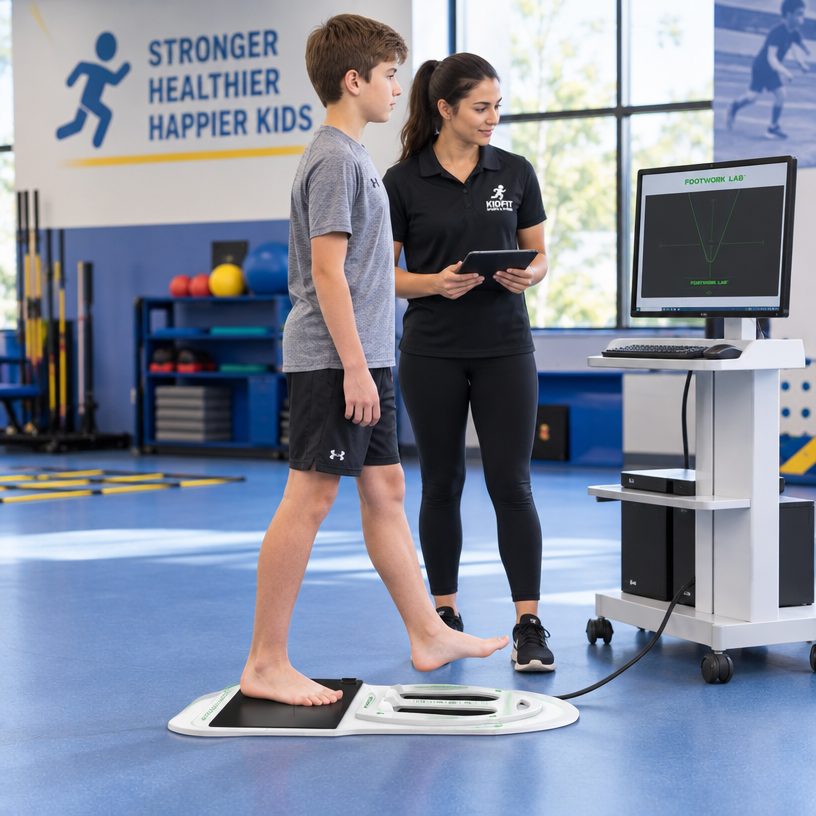
What actually determines measurement quality in this category
If the label does not tell you what a device does, what does? In our experience the answer
sits in four places, and none of them is the marketing vocabulary.
Sensing principle: what physical quantity is recorded — surface geometry, plantar pressure,
timing across a walkway, or body position from a camera module. Data completeness: a single
static stance is a snapshot; assessment work usually needs stance plus movement, and sometimes
posture alongside both. Software ownership: whether the manufacturer writes its own analysis
software determines whether reports, workflows and exports can adapt to your service — or never
change at all. And the production and service chain behind the instrument: who builds it, who
tests it, who answers when something needs attention a year later.
A buyer who scores shortlisted machines on those four axes will make a better decision than
one who compares laser claims, screenshots and price. The exercise also exposes resellers
quickly: a company that cannot describe its own sensing principle in one precise sentence is
usually not the company that engineered it.
A word about screenshots, which deserve their own suspicion. Screenshots are the marketing
surface of this category because they are cheap to produce and hard to interpret: every analysis
screen looks authoritative, and none of them shows what the machine recorded to get there. Two
suppliers can show similar dashboards built on completely different data quality. The honest
artifact is not the screenshot but the full report from a real session — conditions, sequence,
figures — and asking for one costs nothing. Suppliers confident in their data will send it;
suppliers selling vocabulary will send another screenshot.
A caution while you collect those answers: precision can be performed as well as practised.
Some suppliers will answer the sensing-principle question with a paragraph of confident
vocabulary and no content — nouns without mechanisms. The test is whether the answer could be
wrong; a description that could not be wrong describes nothing. Genuine engineering answers are
specific enough to be checked, which is what makes them valuable. Ask the follow-up that forces
specificity: where in the unit does that measurement happen, and what does the raw signal look
like before the software shapes it?
How we describe our own equipment — plainly
Because the vocabulary is muddled, we hold ourselves to a plain description. Our devices are
plantar pressure assessment systems: a pressure-sensing plate records how load distributes under
the foot while a person stands and moves, and a camera module captures posture and lower-limb
alignment so that the plantar data can be read in context. The analysis software, written
in-house, turns the recording into reports a clinician, retailer or technician can work from.
We do not claim laser surface reconstruction on our hardware, and when a buyer asks for a
“3D laser scanner” we ask the more useful question first: which measurement job is behind the
wording? In a large share of those conversations, the buyer’s actual requirement — load
distribution for insole work, posture capture for assessment services — lands on pressure and
posture data, not on surface geometry. When the requirement genuinely is surface shape, we say
so plainly, because selling the wrong instrument helps nobody, least of all the referral it
would eventually become.
A comparison framework to run against any shortlist
Write the measurement job at the top of a single page: the deliverable your service sells and
the data it requires. Under it, list your two or three candidate machines. For each, record:
the sensing principle in one sentence; whether it covers static stance, dynamic movement, or
both; whether posture capture is included; whether the analysis software is the manufacturer’s
own; what the pre-delivery testing regime is; and what the post-delivery support package
contains.
Only when that table is filled should price enter — and it will often explain itself. Two
machines priced differently are usually two different instruments, and the table shows which one
matches the job at the top of the page. The buyer who runs this framework typically shortens the
shortlist by half before the first demonstration call, which saves weeks.
The framework also has a side benefit that buyers report back to us: it disciplines internal
conversations. Procurement in a clinic or a retail group involves several voices — the
clinician who will use the data, the manager who owns the budget, the technician who will
maintain the machine. When the comparison runs on a shared table rather than on competing
demonstrations, those voices argue about the same rows instead of past each other, and the
decision that emerges is one the whole team can operate. Instruments are easier to buy than
alignment; the table produces both at once.
Questions worth asking any supplier, worded to get real answers
Generic questions get generic answers. These get specific ones. “Walk me through what the
machine records in a single session, from the first step onto the plate to the exported report.”
“Who wrote the analysis software, and can report layouts be changed for our workflow?” “Show me
your production floor and your testing process.” “What happens in month fourteen, after the
warranty year — who answers, how fast, and through which channel?”
A factory answers these from direct experience, often with video rather than adjectives. Our
own standing answers: a seven-day in-house test before every unit ships; production running at
roughly three to five machines per day so testing is never rushed; a twelve-month machine
warranty with free spare parts for non-human damage; a dedicated WhatsApp group with direct
engineer access after delivery, remote assistance where the setting allows, and over-the-air
updates for connected units.
The questions buyers ask us second are usually about the relationship rather than the
instrument: what happens when something needs attention, how long answers take, whether the
software improves over time. Our structure is unglamorous on purpose — a dedicated group with
our engineers in it, remote access where the setting allows, updates delivered over the air for
connected units, and spare parts handled under warranty for non-human damage. Unglamorous is
the point: a service process you can describe in one sentence is a process that runs. Buyers
should press every supplier for the same one-sentence description.
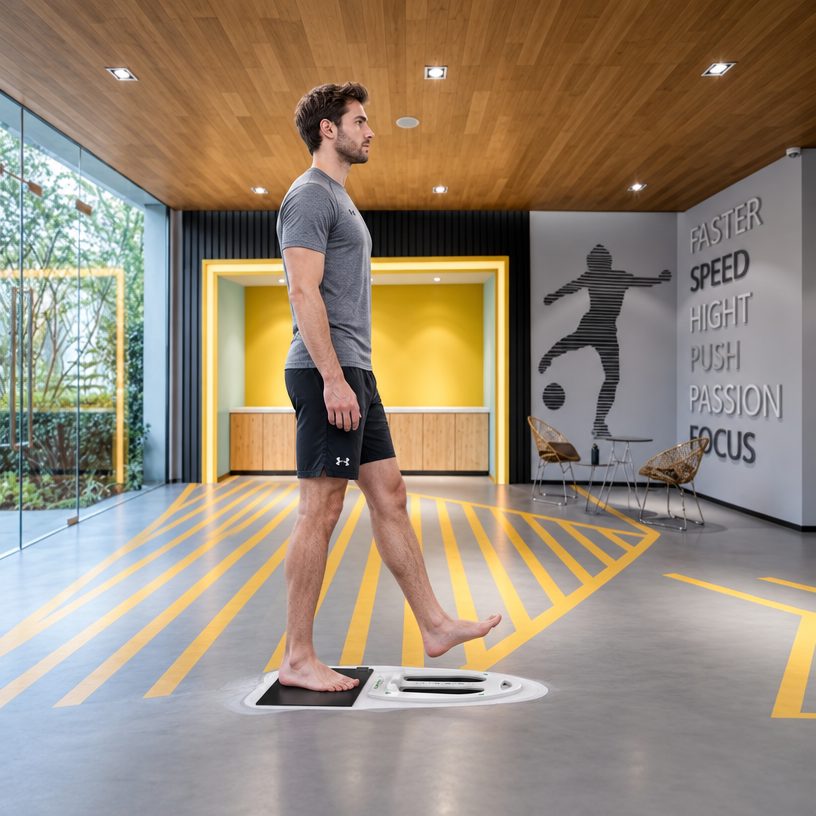
Where the phrase still belongs — and how we use it honestly
None of this makes the search term useless. Buyers search the way the market taught them, and
“laser foot measurement device” will keep sending procurement teams toward this category for
years. The phrase belongs in searches, in category pages, and in the first sentence of a
conversation. What it does not belong to is the specification — the technical definition of what
a purchased instrument records.
So we use the vocabulary as an entrance and replace it with precision as the conversation
deepens. If you arrived here through that phrase, welcome: you are now one question past it.
Name the job — shape, load, or alignment — and the rest of the procurement becomes an ordinary
engineering comparison instead of a vocabulary exercise.
And a closing observation from the order book: the buyers who move fastest through this
category are rarely the ones with the most technical vocabulary. They are the ones who wrote
down the job first. A one-line deliverable statement — the report we will hand our customers,
the data it requires — outperforms any amount of product research done in the abstract. If you
take one thing from this article, take that exercise: one sentence, written before the next
supplier conversation, naming what your service sells and what data it consumes. Everything
else in the procurement organises itself around it.
Frequently asked questions
Is a laser-based device the only way to measure feet accurately?
No. Accuracy depends on whether the instrument records the quantity your service needs. Laser
methods capture surface geometry; plantar pressure systems record load distribution; camera
modules record posture and alignment. Each is accurate for its own question.
What does your equipment actually record?
Our devices are plantar pressure assessment systems: a pressure-sensing plate records load
distribution in stance and movement, and a camera module captures posture and lower-limb
alignment. The analysis software is written in-house.
I searched for a laser device but my service is custom insoles. What data do I need?
Insole specification runs on plantar pressure data with posture capture in support. Surface
geometry is not the primary input, which is why many buyers who start from the laser phrase end
up comparing pressure systems instead.
Can I order one machine first to validate the workflow?
Yes. Our machine minimum order quantity is one unit, because validating a single machine in
your own setting beats committing to volume on the strength of a demonstration.
How is each unit checked before dispatch?
Every unit is tested in-house for seven days before shipping. Production runs at roughly
three to five machines per day, a rate that keeps testing honest rather than nominal.
What does after-sales support look like?
A twelve-month machine warranty covers non-human damage with free spare parts. Support runs
through a dedicated WhatsApp group with direct engineer access, remote assistance where
possible, and over-the-air updates for connected units.
Which certifications apply?
Our documentation covers European Union certification and ISO quality system certification,
and we keep our claims within exactly that scope.
What we would do next
Replace the label with the job. If load distribution is the requirement, look at our F2 and FMP platform and the core
technology overview that explains how pressure sensing and camera capture fit together; if
the requirement centres on movement, the F5-LAB
platform covers walkway assessment. The clinic buyer’s guide and
the price guide cover the questions that follow, and the contact page puts a factory engineer — not a call script — on your
enquiry.
This article is intended for professional and educational reference.
It is not medical advice. Foot assessment equipment produces measurements and images; clinical
interpretation and any decision about care remain the responsibility of a qualified professional.
Certification scope is limited to the documentation we hold: European Union certification and ISO
quality system certification.