
A flat foot is easy to see and hard to describe. Two practitioners looking at the same barefoot client will agree that the arch is low and disagree about how low, where the load sits, and whether the picture has changed since last year. That gap is where measurement earns its place. A pressure-sensing plate turns a verbal impression into contact area, load distribution and a stored record, and a camera adds the alignment of the lower limb above the foot. What the numbers do not do is decide anything. They describe a shape and a loading pattern, and they leave the questions of symptoms, history and cause exactly where they were.
This article is about that boundary. It covers what a flat foot measurement produces, how the readings have to be taken for them to mean something, and which questions the file cannot answer however good the equipment is. It is written for clinics and distributors specifying a system, and for practitioners who already own one and want more from the recordings they take.
We build plantar pressure measurement systems and custom orthotic insoles, so we have a commercial interest in the answer. The honest version of that interest is short: measurement is worth buying when you intend to compare, and close to worthless when it produces a single picture that nobody opens again.
What the term describes before any instrument is involved
In measurement language, a flat foot is a statement about contact. It says that when weight is on the sole, a large part of the medial arch region meets the ground rather than clearing it. That is all it says at the outset. It is not a disease name, not a severity grade, and not a single shape. The arch is a structure held by bone, ligament and muscle, and under load it lowers; how far it lowers, and whether it returns when the load comes off, is what separates one flat foot from another.
Most low arches lower further under weight and recover when the client sits down or stands on tiptoe. A smaller group stays low in both conditions. The distinction is worth making before any screen is switched on, because the two behave differently in a shoe and differently on a plate. A practitioner can form a first view by watching the medial arch while the client rises onto the toes, and by comparing the seated and standing outline. That is observation, not measurement, and it is a useful preface to one.
The reason observation is not enough is that language drifts. “Moderately flat” means one thing in one clinic and something else two streets away, and the same practitioner will use it differently on a tired Friday afternoon than on a Monday morning. Contact area, the location of peak load and the left-right difference are at least reproducible, provided the protocol is written down and repeated.
What the label never carries is experience. A client with a very low arch may have no complaints at all, and a client with a high arch may have plenty. The description is geometric. Discomfort is separate, and it belongs in the notes rather than in the reading.
Three readings a pressure plate produces
The first reading is contact area and how it is distributed. The plate reports where the sole touches and how the contact spreads across the sole. Software divides the footprint into regions and reports the share each one carries, which is more useful than a total. In a low arch the contact band from heel to forefoot tends to run wider and more continuous on the medial side, and the gap that a higher arch leaves under the midfoot narrows or closes. Looking at the shape of that band tells you more than looking at any single figure.
The second reading is peak pressure and its location. Every plate reports a highest value somewhere, and the position of that value matters more than its size. In a low arch the peak often shifts toward the medial column, and the midfoot carries load that a higher arch would pass to the heel and forefoot. Magnitude on its own is not a verdict: the same peak under a lighter and a heavier client describes two different situations, and a peak that sits where the tissue is thin is not the same finding as a peak on a padded area.
The third reading is the path of the centre of pressure, the point where the total force acts. In standing it is a single point, and its position relative to the middle of the foot is a compact summary of how the client stands. Over a walk it becomes a line, running from the lateral heel toward the medial forefoot, and the shape of that line shows how the foot rolls through stance. A low arch often produces a more medial path through the middle of stance, and a shorter or longer path depending on how the client walks. Where the system includes a camera, the same session records rearfoot alignment against the lower leg, and the level of the pelvis and shoulders, so the foot data arrives with the body attached to it.
The three readings describe the same foot from different angles, and they do not always agree. Contact can look flat while pressure looks evenly spread; that is not a contradiction, it is a foot that shares load across a wide area instead of concentrating it. The disagreement is often the most interesting part of the report, and it is the reason a single index number is a poor substitute for the set.
Standing and walking are different measurements
A static capture is one frame with the weight evenly distributed, and its virtue is that it can be standardised. The client stands in a defined position, the capture is taken after a defined pause, and the same routine is repeated at the next visit. That makes it the better basis for comparison across months, and the better image for explaining a finding to a client who has never seen a pressure map before.
Standardising a static capture takes more care than most operators expect. Foot position on the plate changes the reading, so does stance width, and so does whether the client is looking at the screen or at a point on the wall. Arm position shifts load, and so does the habit of standing with the weight on one foot. Shoes and socks come off, the client stands long enough for the posture to settle, and the operator says the same sentence every time. None of this is difficult, but all of it has to be written into the routine, because a baseline taken with a different instruction is not a baseline.
A dynamic capture adds time. Instead of one frame it records a sequence, so the report can show the order in which regions of the sole take load, how long each one keeps it, and how the foot leaves the ground. This is where a low arch becomes more than a shape. One foot may stay low throughout stance and load evenly; another may stay low and then shift load medially at a particular moment. Standing still, the two can look almost identical.
The practical rule is to take both where the system supports it, and always at the same point in the appointment, before any footwear trial or exercise. Fatigue changes a walking pattern within a single session, which is useful if you are studying fatigue and unhelpful if you are building a baseline.
What the numbers leave open
The first thing they leave open is comfort. A plate measures load, not sensation, and two clients with near-identical maps can describe completely different experiences of standing, walking or working. The answer belongs in the record, in the client’s own words, and it should be kept visibly separate from the map so that nobody later mistakes a measurement for a complaint.
The second is tissue. A load map says where force goes; it says very little about what the tissue under that force can tolerate. Age, body mass, activity level, footwear history and the surface someone stands on for a living all change the meaning of the same reading. Some of that is in the intake form and some of it is in the conversation, and none of it is in the file unless someone puts it there.
The third is cause. A low arch can follow from ligamentous laxity, from a shape the client has had since childhood, from a change in body mass, from years in footwear that offered little support, or from a combination. A pressure recording cannot separate those. History does, and history is a conversation rather than a capture.
The fourth is meaning. Whether a loading pattern is worth acting on is a clinical judgement, and it depends on the first three items as much as on the map. That is not a shortcoming of the equipment; it is the division of labour the equipment assumes. The system reports what it measured. The professional decides what it means, and the report is designed to leave room for that decision rather than to pre-empt it.
Where an insole sits in this picture
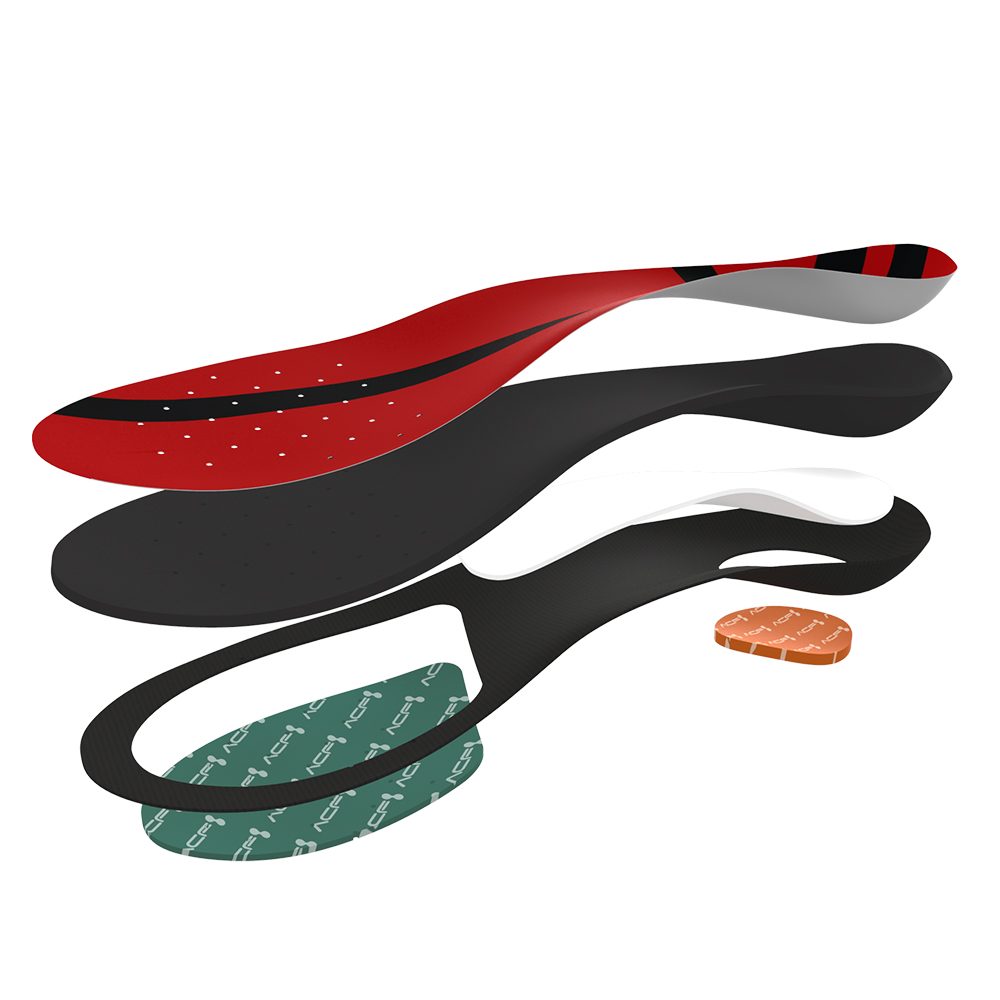
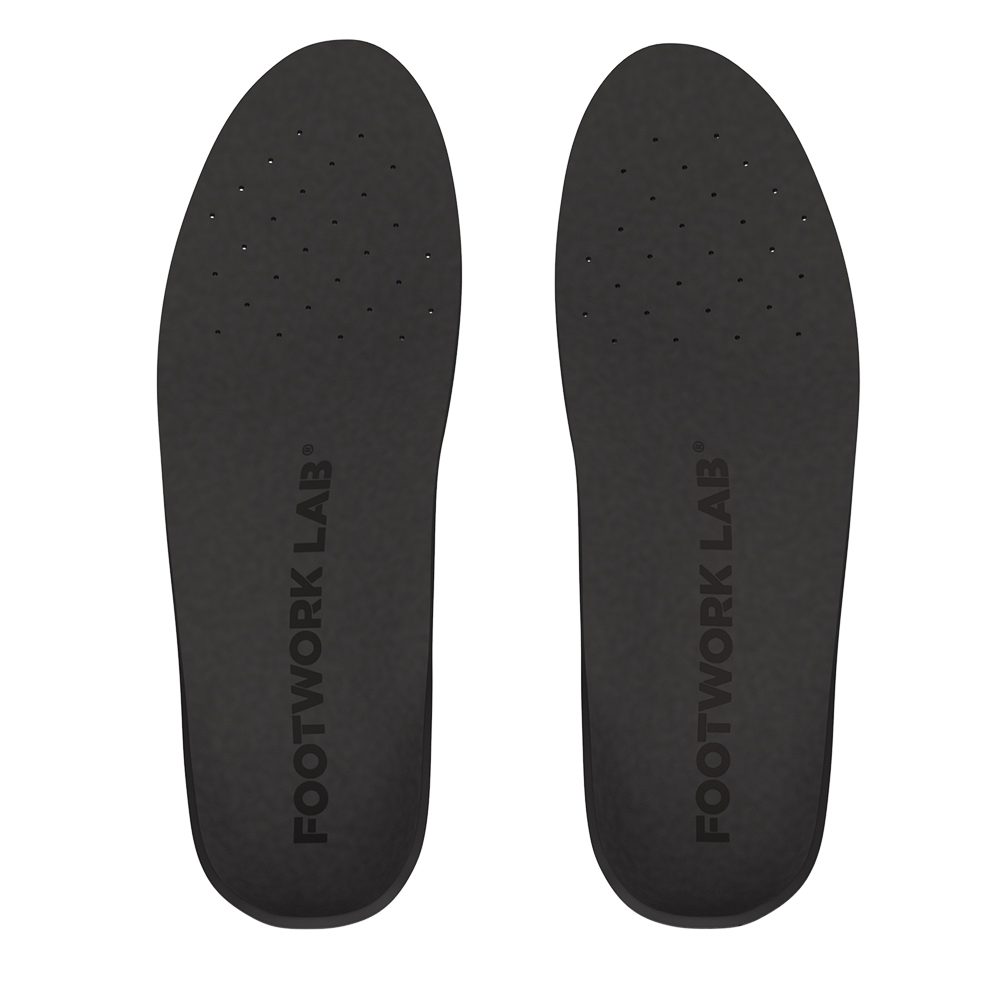
An insole changes two things inside a shoe: how load is spread across the sole, and where the foot is supported. It is a mechanical intervention in a closed space, and it is measurable. The same plate that produced the baseline can be used with and without the insole to see what moved, which is a more useful review than asking the client whether it feels different, although that question should be asked as well.
What an insole does not do is change the shape of the arch. It does not move bones, lengthen tissue or rebuild a structure, and any supplier who says otherwise is selling a promise that no device can keep. The honest vocabulary is support and load distribution: the insole supports the foot in a position the clinician has chosen, and it spreads load across a wider area than the shoe alone provides. The arch shape is described by the measurement. It is not altered by the product.
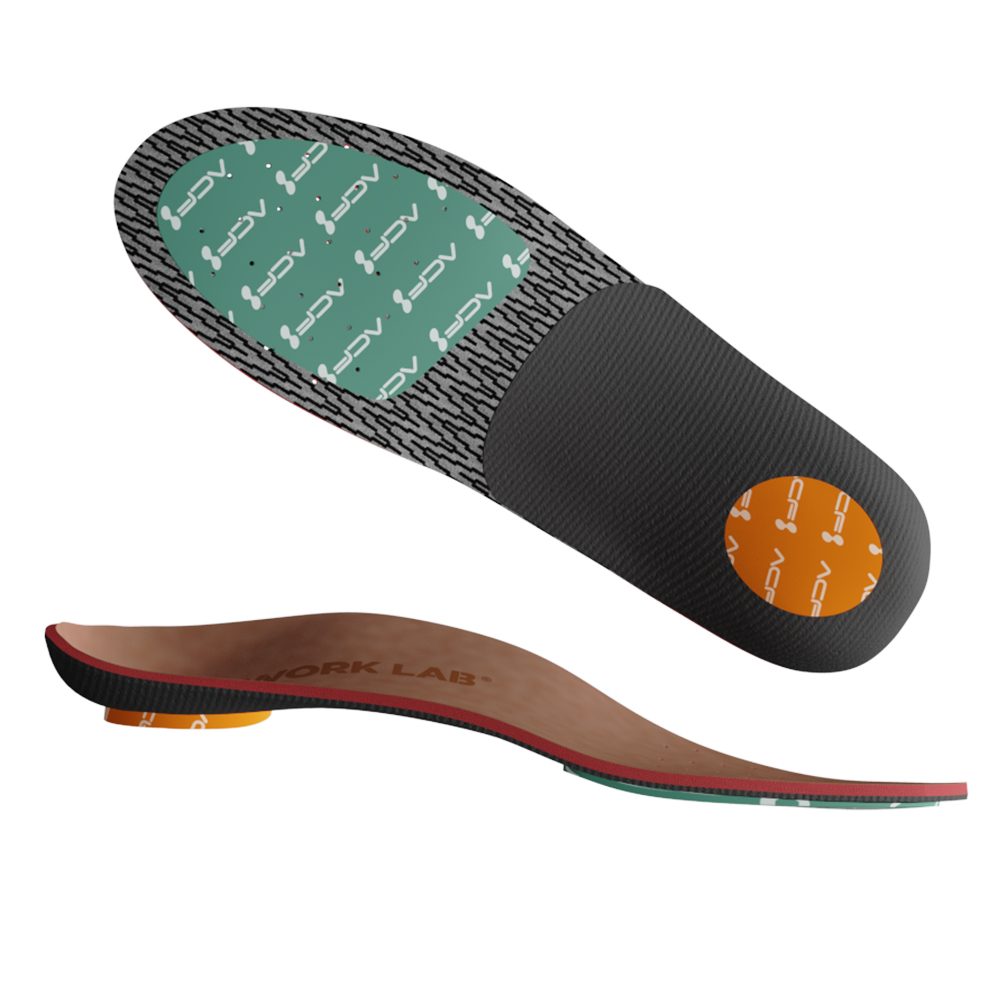
A prescription is more specific than the word “orthotic” suggests. It specifies where the support sits, how far it extends, how firm the shell is, how much cushioning goes under the cover, and what the cover is made of. Each of those choices changes the load map, which is why a pair made to a generic shape and a pair made to a file are not the same product even when they look alike on a bench.
Our own FX line is made to a file supplied by the clinic, at the insole category page. We can work to your prescription, and we can say what a file appears to suggest, but the clinical decision stays with the practitioner who knows the client. That boundary is the same one the equipment observes, and it is worth stating plainly to anyone who asks whether the insole will “sort out” a flat foot. It will not. It will support the foot and redistribute load, and the measurement will show what changed.
Building a baseline that survives the year
Repeatability comes from protocol, not from the invoice. The same plate, the same stance instruction, the same pause before capture, the same footwear condition, and where possible the same operator. If the routine changes between visits, the difference in the two reports may be a difference in the routine, and there is no way to tell afterwards which it was.
Record the conditions alongside the numbers. What the client was wearing, how long they had been on their feet before the appointment, whether they walked in or arrived by car, and anything they mentioned about discomfort that day. Six months later, that paragraph is what makes the numbers comparable, and it takes less time to write than the capture takes to run.
Compare the set rather than a single figure. The regional shares, the peak locations, the shape of the contact band and the path of the centre of pressure, read together, are a description of a foot. Read alone, any one of them is noisy. Small differences between visits should count as noise unless they appear in more than one reading and match something the client reports; a change that shows up in three places is worth a sentence in the file.
Re-measure on a schedule rather than on impulse: a planned review, a change in what the client reports, a new pair of insoles, a change in work or activity. Keep the old files. The archive is the part of the system that gains value with time, and it is the part that a practice notices when it changes software.
Frequently asked questions
Does a flat foot measurement tell you whether someone needs an insole?
No. It describes contact area and how load is distributed, and it stores that description for comparison. Whether support is appropriate depends on what the client reports, the history, and the clinical examination, none of which the plate can supply.
Is a flat foot the same thing as a low arch?
In everyday use the two are close, but neither is a medical category. The measurement describes how much of the medial arch region meets the ground under load, and how the load is spread. Two feet with similar contact can behave quite differently in motion.
Can you assess a flat foot without a machine?
Yes, and most consultations start that way: watching the arch under load, comparing seated and standing views, and asking what the client notices. A pressure system adds quantification, a posture view and a record that can be compared at the next visit.
Should the capture be taken standing or walking?
Both, where the system supports it. A standing capture is easier to standardise and better for comparison across months. A walking capture shows the order and duration of loading, which a single standing frame cannot show.
Can an insole change the shape of a flat foot?
No. An insole supports the foot inside a shoe and spreads load across a wider area. It does not alter the shape of the arch, and we do not describe our products as doing so.
What is actually in the report?
Contact images, regional load readings, the location of peak load, a left-right comparison, and where a camera is included, posture and alignment views. The practitioner adds the interpretation and the notes, and that section is what makes the file useful later.
Can a single clinic buy one system?
Yes. Machine orders start from one unit, and we accept ODM on equipment. Every unit is tested for seven days before it leaves the factory, and the warranty runs twelve months on non-human damage with free replacement parts.
What we would do next
If you are specifying a system, start with the protocol rather than the hardware: decide where the plate will sit, who will run the capture, and which three readings you will actually look at in a consultation. Then compare machines against that routine. The product overview lists our range, the X3 foot pressure scanner page covers a configuration used for standing and walking captures, and our guide to reading a plantar pressure map explains the readings described above in more detail. For the commercial questions, including minimum order and shipping times, the FAQ page is the shortest route.
This article is intended for professional and educational reference. It is not medical advice. Foot assessment equipment produces measurements and images; clinical interpretation and any decision about care remain the responsibility of a qualified professional. Certification scope is limited to the documentation we hold: European Union certification and ISO quality system certification.