
Pedorthics is the discipline that sits between a measurement and a shoe, and most buyers meet it without knowing its name. It covers the design, fitting and modification of footwear and in-shoe devices for people whose feet need support beyond what ordinary shoes provide, and it is practised by people with distinct training rather than by anyone who sells insoles.
The word matters commercially because it explains where a factory’s role ends. A pedorthist examines, decides and fits; a factory produces to a specification. Confusing the two produces bad orders and worse expectations, and clarifying them makes a supply relationship straightforward.
This article describes what the discipline covers, how it differs from adjacent professions, what a factory needs from a pedorthist, and how the vocabulary shows up in a range plan. It is written from the supply side of that relationship, with the limits of our own role stated plainly.
What the discipline covers
Pedorthics concerns footwear and in-shoe devices: the design of an insole or a modified shoe, the fitting of both, and the adjustments that follow. It draws on anatomy and biomechanics, but its output is a product and a fit rather than a course of care.
The scope usually includes assessment of the foot and the footwear, selection or design of an in-shoe device, modification of footwear where necessary, and follow-up when the fit changes. In many markets the title is protected and in others it is not, which is why buyers should ask what training a practitioner holds rather than assume from a business card.
What the discipline does not cover is medical treatment. A pedorthist works alongside clinicians; the clinical decision about care belongs elsewhere. That division is what keeps the vocabulary honest and the responsibilities separable.
For a supplier, the distinction is practical: the specification comes from someone trained to write it, and the factory’s job is to produce against it consistently.
It is worth adding what the discipline produces as an artefact: a specification and a fit. The specification can be written, checked and reproduced; the fit is evaluated in the room. A practice that can do both is practising the discipline; one that does only the second is fitting by feel.
How it differs from adjacent roles
A podiatrist or podologist examines and manages foot health; a pedorthist designs and fits footwear and in-shoe devices; an orthotist works with braces and supports that often cross joints. The three overlap in assessment and diverge in output.
A retailer sells products and may also fit them. That is legitimate work, and it is not the same as pedorthic practice, because the fitting decision in retail is usually bounded by the products on the shelf rather than by a design brief.
A factory produces. It does not examine, does not decide, and does not interpret. When a factory starts describing itself in clinical language, the description is usually marketing and the boundary has usually moved in a way that will cost someone later.
Buyers benefit from knowing which role they are talking to at each stage. An order that travels from a clinician to a pedorthist to a factory has three handovers, and each one needs the information the next will use.
The overlap also explains why titles vary so much between markets. Where a title is protected, the boundary is legal; where it is not, the boundary is reputational, and reputations are built by refusing work that belongs to someone else.
There is a commercial reason to know the difference as well. A practice that understands the boundary refers work rather than absorbing it, and referrals build a network that a single practice cannot build alone. The boundary is not a limitation; it is a route.
What a factory needs from a pedorthist
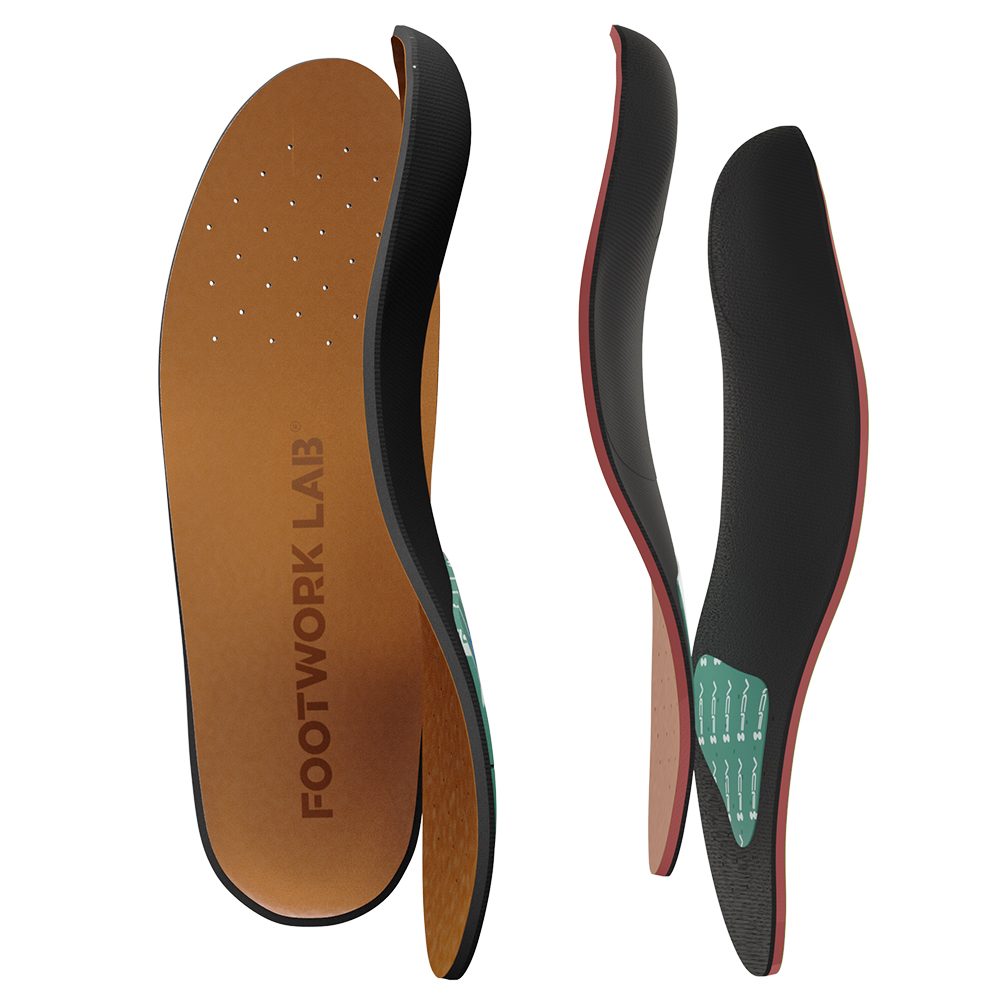
A specification, in fields: arch geometry, heel cup, shell stiffness family, cover material, thickness budget, footwear context. Not a diagnosis, not a condition name, and not an adjective. Fields are buildable; conditions are not.
A measurement or a design file, in a format the factory can open and check. Where a measurement is supplied, the conditions of capture belong with it — position, footwear, protocol — because a record without context cannot be reproduced.
An approved sample, with the date of approval and the method used. Every later batch is compared with that sample, and the comparison is only meaningful if the sample is documented rather than remembered.
A remake clause, agreed in advance. What counts as out of specification, who decides, who pays, and how a replacement is initiated. Pedorthists who work with factories regularly tend to have this clause already written, which is a useful signal of experience.
A fourth item worth supplying is the intended footwear. Pedorthic work often includes shoe modification, and a factory producing an insert for a modified shoe needs to know what changed. A heel raise, a sole stiffening or a stretched upper all alter the volume the insert sits in.
It also helps to supply the timeline the practice is working to. A pair needed before a follow-up appointment sets a production and transit window, and a factory that knows the date can say honestly whether it is achievable instead of accepting the order and missing it quietly.
What the factory owes back
Consistency: the same specification producing the same pair, batch after batch, with checks that make the consistency visible. That is the whole promise, and it is worth more than any additional feature a factory might advertise.
Documentation: the field list, the approved sample record, and the batch notes that travel with the shipment. Documentation is what allows a pedorthist to defend the product to their own customer without re-measuring.
Honesty about limits: which geometries the chosen method can hold, which materials suit which wear context, and what the factory does not do. A factory that states limits is easier to plan with than one that accepts everything.
Support with a time attached. Ours is a WhatsApp group with an engineer on the other end, remote assistance for workflow questions, and software updates delivered over the air to connected assessment units. For a pedorthic practice, the useful version of that promise is an answer during a fitting day rather than within a week.
It also owes a realistic lead time. A practice scheduling a fitting needs to know when the pair will arrive, and a factory that quotes optimistically damages the relationship more than one that quotes conservatively and delivers early.
It also owes an honest answer about capacity. A practice planning a programme needs to know how many pairs a month a factory can absorb without a change of lead time, and a factory that answers that question accurately is easier to plan around than one that says yes to everything.
It is worth asking a supplier how it handles a specification it considers unbuildable. A factory that says so before production is a factory that has a review step; one that accepts and then substitutes is a factory that will explain the substitution after delivery, when the explanation is worth much less.
Where the vocabulary shows up in a range plan
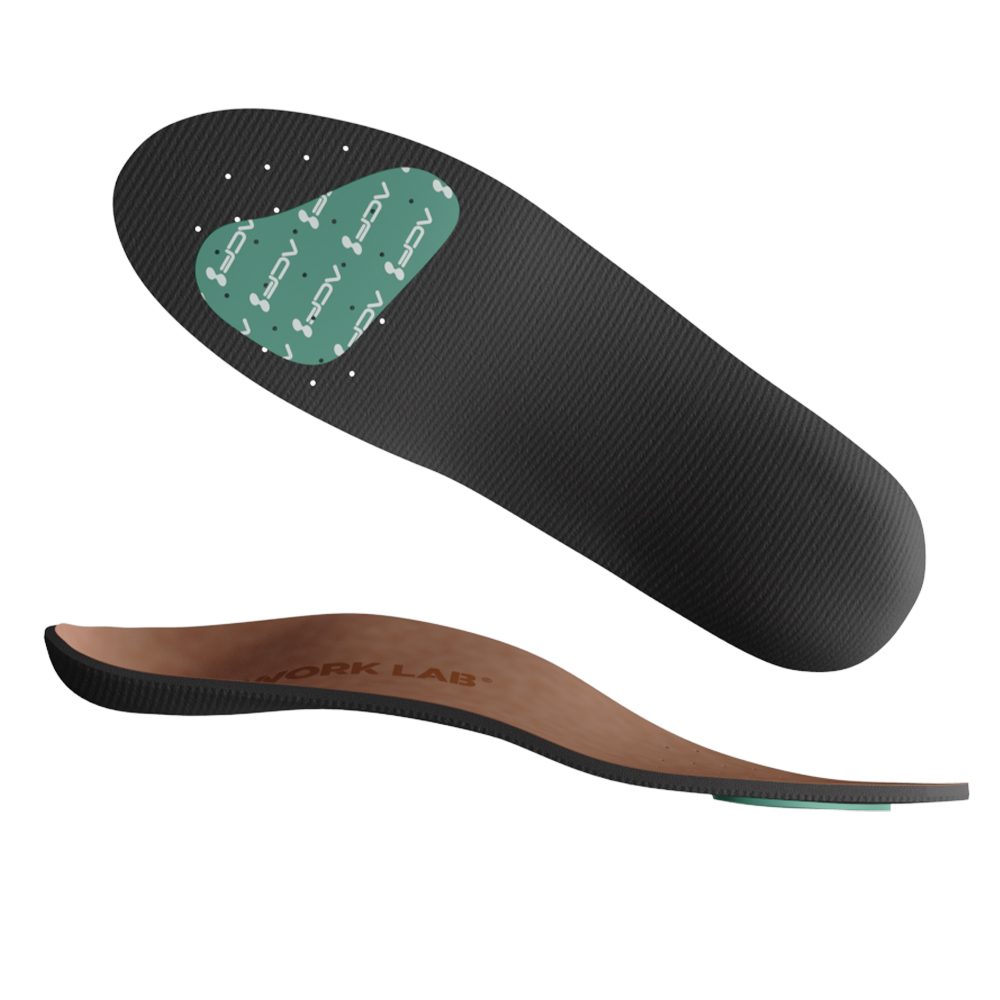
Range planning uses pedorthic vocabulary when it distinguishes stock, adjusted and made-to-measure products. Those three words come from the discipline, and they are more useful than support levels because they describe work rather than marketing.
They also predict cost and time. Stock is immediate and cheap; adjusted takes minutes and moderate cost; made-to-measure takes days and a specification. A range that carries all three, clearly labelled, serves a wider customer base than one that carries a single level under three names.
Our own production sits at the made-to-measure end, with a two-hundred pair minimum that can be mixed across models and sizes, samples shipping within three days, and capacity of roughly five hundred to a thousand pairs a day. Those numbers are useful to a pedorthic practice because they set the reorder rhythm.
The plan should also name who does the fitting. A distributor selling made-to-measure products without a fitting capability is selling production to people who cannot specify it, which is a reliable way to generate remakes.
The vocabulary also helps with training. A distributor who teaches stock, adjusted and made-to-measure gives staff a ladder to climb, and staff who understand the ladder sell the middle and top rungs more often because they can explain what the extra work buys.
It is worth adding a planning note: the vocabulary should appear on the website and in the catalogue, not only in internal training. Customers who arrive already familiar with the three levels ask better questions, and better questions shorten the fitting.
Training the people who sell it
Staff who sell in-shoe products need three pieces of vocabulary: the difference between stock, adjusted and made-to-measure; the fields that make a specification; and the boundary between describing a product and promising an outcome.
That is an afternoon of training, not a certification. It is enough for a retail floor to route customers correctly and enough for a clinic reception to collect the right information before an appointment.
Beyond that, the discipline belongs to trained practitioners. Shops that blur the line to sound authoritative eventually meet a customer who asks a question only a clinician can answer, and the answer they improvise is the one that causes trouble.
The commercial argument for training is straightforward: staff who can explain the three levels sell the higher level more often, because the customer understands what they are paying for. Understanding is the cheapest upsell there is.
It also helps to say what the training is not. An afternoon of vocabulary does not make a pedorthist, and staff who understand that are less likely to answer questions that belong to a clinician. Knowing the limit of your training is part of the training.
The training should also cover what to record. A staff member who writes down the shoe, the level and the complaint in three fields has produced something a practitioner can use; one who writes a sentence in the margin has produced a note.
It is also worth writing the three levels into the price list, not only into the training. A customer who sees the ladder can choose a rung, and a choice made by the customer is the one that does not come back as a complaint.
A short glossary worth keeping
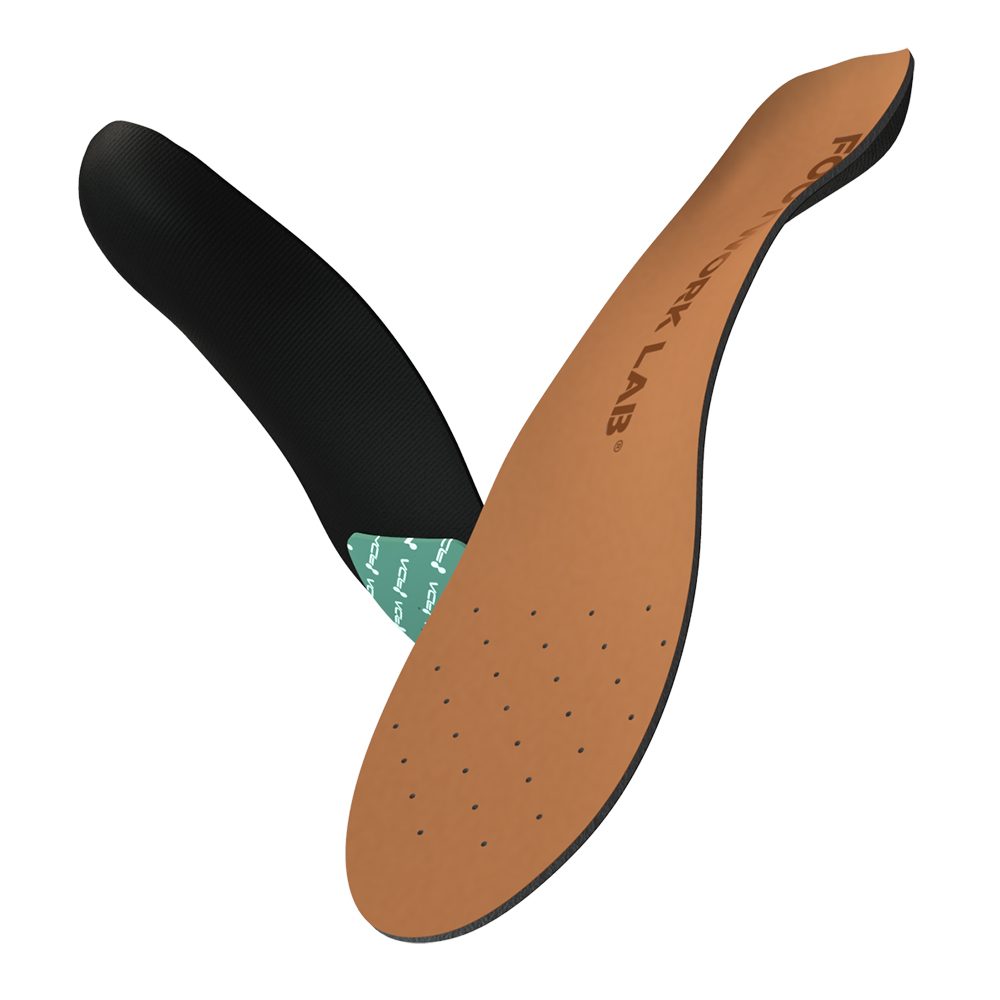
In-shoe device: the general term for what sits inside a shoe. Orthosis: a device that modifies load or position, sometimes crossing a joint. Insole: the in-shoe device most commonly produced at volume. Insert: often used for a stock or semi-custom product.
Stock, adjusted, made-to-measure: the three production levels. Specification: the written fields a factory builds from. Approved sample: the reference object for a batch. Remake clause: the agreed route when output differs from the sample.
Eight terms. They cover most of the conversations between a practice, a distributor and a factory, and they reduce the number of times a word does work that a field should be doing.
Keeping the glossary on one page is itself a discipline: vocabulary that fits on a page tends to be used consistently, and vocabulary that fills a manual tends to be used creatively.
The glossary is also a translation tool between markets. Spanish, Portuguese and German trade vocabularies map onto these eight terms imperfectly, and a distributor working across languages benefits from a page that fixes the meaning before the local word is chosen.
It is also worth adding a note on translation: the eight terms should be fixed in the language of the market before the catalogue is written, because a term that drifts between the page and the counter creates exactly the confusion the glossary was meant to remove.
Frequently asked questions
What is pedorthics in simple terms?
It is the discipline of designing, fitting and modifying footwear and in-shoe devices for people who need more support than ordinary shoes provide. It produces a product and a fit, not a course of medical care.
Is a pedorthist the same as a podiatrist?
No. A podiatrist examines and manages foot health; a pedorthist designs and fits footwear and in-shoe devices. The two work together, and the clinical decision belongs to the clinician.
Do you provide pedorthic services?
No. We manufacture insoles and assessment equipment to a specification. The assessment and the specification come from a trained practitioner or a trained technician working to a protocol.
What do you need from a practice to produce a pair?
The specification fields, a measurement or design file with its capture conditions, an approved sample and a remake clause. Fields rather than condition names are what a production team can build from.
What is your minimum order?
Two hundred pairs for insoles, mixable across models and sizes, with samples shipping within three days.
How do you support a practice after an order?
A dedicated WhatsApp group with an engineer, remote assistance for workflow questions, and software updates delivered over the air to connected assessment units. Machines carry a twelve-month warranty against non-human damage.
Can insoles be branded for a practice?
Yes, as ODM or OEM, with the design following the agreed specification and the branding applied to your requirement.
What we would do next
Keep the vocabulary to one page: in-shoe device, orthosis, insole, insert, and the three production levels. The Insole Categories page shows what we produce, and Our Factory describes the production route from specification to batch.
The article on custom foot orthoses draws the boundary between the two words in more detail, which is where most order confusion begins.
This article is intended for professional and educational reference. It is not medical advice. Foot assessment equipment produces measurements and images; clinical interpretation and any decision about care remain the responsibility of a qualified professional. Certification scope is limited to the documentation we hold: European Union certification and ISO quality system certification.