
3D foot scanning is the phrase buyers type. It is also the phrase the market uses loosely: some listings under it describe point-cloud imaging, others label rendered pressure maps with the same words, and a buyer comparing quotations sees three products that share a search term and little else. This article is written for the buyer side of that search — what to verify behind the term before an order is placed, and which questions separate one category of device from another.
What the term hides is the physics. A device can record pressure under the sole, capture posture with a camera, scan surface geometry, or simply render a pressure map in colours that resemble imaging. Each produces a different kind of record, answers a different set of questions, and costs differently to support over years. A quotation that names the category honestly tells a buyer more than any specification table, which is why this article keeps asking what the machine actually measures.
Our own position is stated plainly: we manufacture plantar pressure assessment systems — pressure sensing under the sole, camera capture for posture and alignment, and analysis software that assembles both into a record a professional reads. We do not make laser scanners, and no surface-model imaging happens on our equipment; our quotations say exactly that. This article explains why we draw the line in writing, and why buyers should ask every supplier on their list to do the same.
Why the phrase took over the category
Search behaviour shapes market language more than engineering does. Buyers who decide a clinic needs foot assessment rarely search for pressure sensing; they search for the phrase that promises the most complete picture, and over the past decade that phrase has become 3D foot scanning. The result is a category named by its most ambitious search term rather than by its physics, and every supplier now competes inside a label that means different things on different product pages. The mismatch is not always intentional. Some suppliers inherited the label from distributors, some from keyword tools, and some from the simple observation that the term converts.
Look across the listings that carry the phrase and at least three product types appear. There are devices that produce point-cloud or structured-light surface scans — genuine imaging instruments with geometry as their output. There are pressure platforms whose maps are rendered with depth-like shading, so a flat image reads as dimensional. And there are hybrid assessment systems that combine pressure sensing with camera capture, which describe what they measure and let the market apply whatever label it likes. All three can be useful; they are not interchangeable. The buyer’s task is knowing which one a quotation describes.
The confusion matters commercially because the wrong category fails quietly. A clinic that buys a surface scanner expecting pressure timelines discovers the gap at the first consultation; a retailer that buys a pressure platform expecting geometric measurements redoes its workflow around what the record actually holds. Neither device was defective; the label was. Written category statements in quotations cost suppliers nothing and save buyers a season of frustration, which is the practice this article tries to make normal. It is also, we find, good business: buyers remember who was precise. Precision travels by word of mouth between buyers.
Question one: what does the report actually record?
The first question for any supplier is direct: may we see a complete sample report, not a marketing page? The report is where the device’s honesty lives. A pressure record shows maps and timelines; a posture record shows frames and alignment lines; a surface scan shows geometry. Some systems produce all of these, some produce one, and some produce a summary page that hides which of them exist underneath. Ten minutes with a real report answers more than a week of brochure comparison. Ask for one captured this year, not a curated one. Fresh records show the software as customers see it.
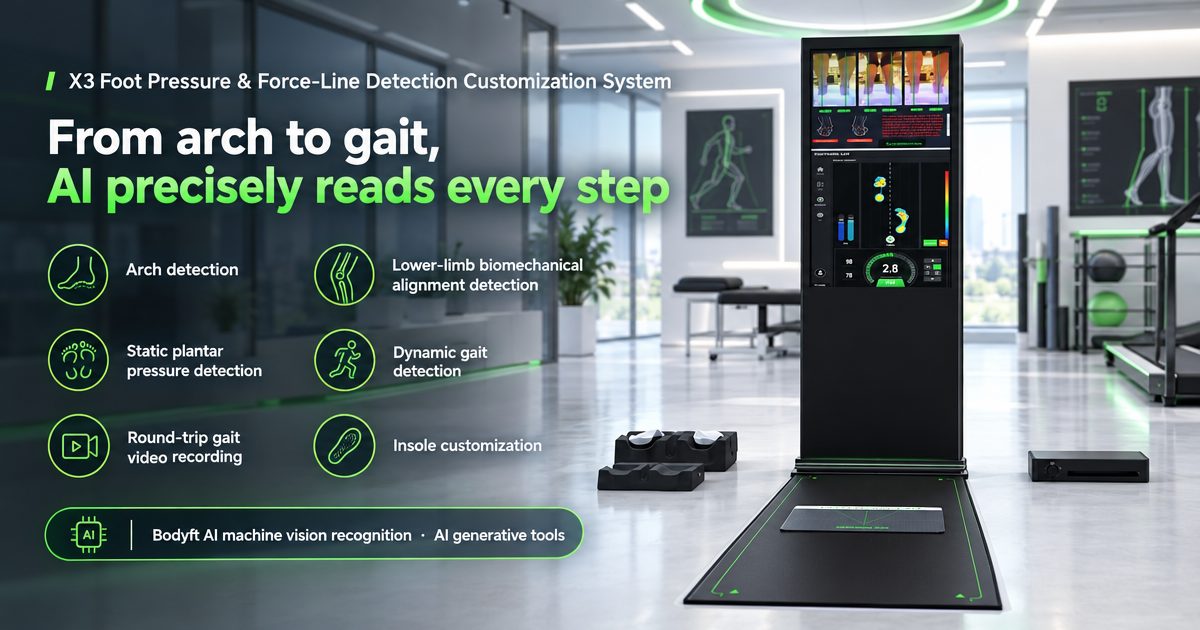
Know what each record type supports in a workflow. A pressure map shows where load concentrated during a standing or walking task — the input most insole briefs consume. Posture frames show how ankles, knees and pelvis lined up during the same session, which the sole alone cannot show. Timelines show how load moved through each step. A system that captures pressure and posture together in one synchronised record supports consultations that neither stream supports alone, and the sample report will show whether the pairing is real or assembled afterwards. Synchronisation is a fair question to ask any supplier directly.
One vocabulary check belongs in the same conversation: does the supplier describe the output as records or as conclusions? Records — maps, frames, timelines — can be read, compared across visits and annotated by a professional. Conclusions generated by software about a person’s condition belong to a different and regulated territory that measurement companies should not enter. Our reports produce records and leave interpretation to the professional, and we consider that sentence a feature of the product rather than a limitation of it. Buyers should expect the same sentence from every supplier. It protects the clinic’s authority as much as the supplier’s.
Question two: can the raw record be exported?
The second question is about the record’s afterlife: can the underlying data leave the system? A summary page suits the consultation happening now, but follow-up visits, second opinions and comparisons across a year all need the original record. Systems that export the full record keep a clinic independent — the clinic owns its data and can move it, print it or hand it to any workshop that accepts written specifications. Systems that lock records into a proprietary summary make the clinic loyal by accident, and the loyalty lasts exactly as long as the hardware. That is a quiet lock-in worth asking about before purchase.
The check takes five minutes in any demonstration. Ask the demonstrator to export a record, then open it on another machine without the supplier’s software. If the file opens and reads, the claim is real. If the answer is that export requires a service visit, a paid module or a special viewer that only the supplier can run, regard the record as locked and price the lock-in into the comparison. Honest systems pass this test without preparation, and a demonstrator who hesitates has answered anyway. No supplier should mind being tested; ours does not. Prepared demos are the ones to be wary of.
Export also decides how the record connects to production. Our insole line accepts specifications built from assessment records, and the fields that travel are the ones a professional selects — pressure regions, observations, shoe context. That handover works cleanly when the record leaves the system intact and is read by people who were not in the room. A buyer planning to connect assessment with insole supply should regard export capability as a production requirement, not a nice-to-have feature on a long list. It is the difference between a note and a specification. Specifications survive the trip to any factory.
Question three: what does the sensing layer actually measure?
Under every claim sits a sensing layer, and the honest question is what physical quantity it measures. Our platforms use a grid of pressure sensors, each reporting the load landing on it many times per second; the software turns that stream into maps and timelines. Other instruments measure geometry with light, or force in a laboratory mount, or nothing at all if the image is a rendering. The specification sheet that names the physical quantity — pressure, geometry, force — is the one a buyer can hold a supplier to later. Vague sheets are where vague products hide.
Buyers often arrive asking how many sensors a platform has, because listings train them to. The number matters less than three quieter properties: how evenly the sensors cover the walking area, how consistently they report the same load on the same spot, and how the calibration holds over a season of shoes stepping on it. A platform with many well-placed sensors and honest calibration outperforms a denser grid that drifts. Ask how calibration is performed and how often — the answer reveals more about the instrument than any count. Calibration routines are written into our manuals.
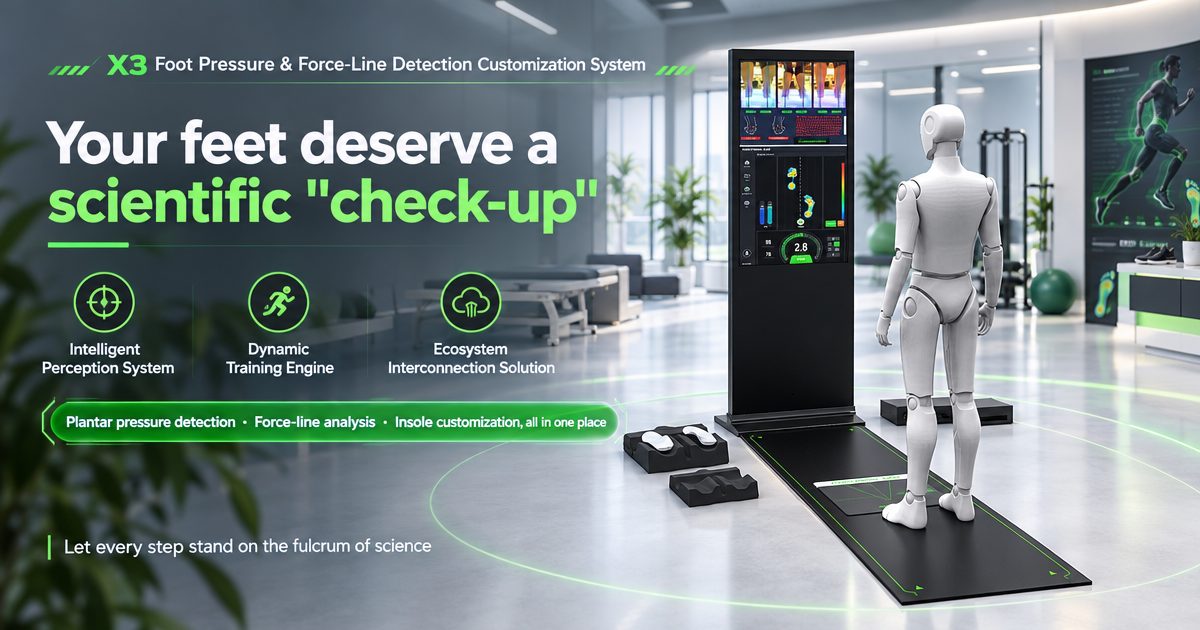
The camera layer deserves the same physics question. Our systems pair pressure sensing with camera posture capture: the camera records alignment frames during the same session, and the software presents both streams side by side. Ask any supplier how the two streams stay synchronised — captured together, they can be compared; captured separately, they are two records wearing the same report. This is also the natural moment to ask what the camera does not do: it does not scan surfaces, and a supplier who says so plainly is one worth shortlisting. Boundaries stated early are boundaries kept later.
Question four: what does the software conclude — and who concludes it?
Software is where products with similar hardware diverge most. The useful outputs are concrete: a pressure map per task, a timeline per step, descriptors such as how long each foot carried load and how the left-right split moved, and comparison views that place a follow-up record beside the baseline. Ask to see each one in the demonstration, and ask which outputs the system refuses to produce. A measurement company that can name what it does not calculate is usually precise about what it does. Refusals, in software, are a form of honesty. Watch for them during the demo.
The boundary to verify is interpretation. Software should report what was recorded; the professional decides what it means for the person in the room. Systems that print condition-level conclusions cross from measurement into judgement, and the buyer inherits the consequences — staff trained to read a screen instead of a person, and a device that effectively practises outside its competence. Our reports are laid out to hand interpretation over cleanly: records on the page, annotation space for the professional, and nothing that presumes the conclusion before the professional writes it. That layout is deliberate, and we defend it in quotations.
Training and workflow decide whether software capability gets used. A room whose staff can capture, read and annotate a record in a few minutes will use every output a system offers; a room whose workflow stalls at the login screen will use the export button and nothing else. Ask the supplier how staff training happens after installation, who fields the questions in week three, and how software updates arrive. Those answers predict the second year of ownership better than any feature list. Our answers: a WhatsApp group with an engineer, and over-the-air updates. Both are stated in writing before shipment.
What our equipment is, in manual language
Having taught the questions, we owe the reader our own answers. Our equipment is a plantar pressure assessment system. It measures pressure under the sole through a grid of sensors, captures posture and alignment with a camera during the same session, and its analysis software assembles both streams into records a professional can read, annotate, compare and export. That is the manual language, and it is the language our quotations use, because the category statement is the first thing a careful buyer needs and the last thing loose marketing provides. Everything else in this section follows from it.
What it is not matters equally. It is not a laser scanner, and it is not a 3D scanner in the imaging sense — it does not produce point clouds or surface geometry, and we do not describe it with those words. The phrase 3D foot scanning is how buyers search and how the market labels the category; our own descriptions stay with what the instrument measures. Buyers who need surface geometry should buy from suppliers who produce it, and we say so rather than stretching a definition to keep an enquiry. That honesty costs us enquiries and earns us the rest.
The company behind the equipment: established in 2014, with our own manufacturing plant in Ruichang, Jiangxi in production since 2018, building both the assessment systems and the custom orthotic insole line they feed. We exhibit at Canton Fair and at shows in Dubai, Vietnam, Brazil and Hong Kong, where buyers can see live captures rather than rendered images. Our certifications are the ones we can evidence — European Union certification and ISO quality system certification — and we list no others, because a certification list is a claim and claims should be checkable. Ask for the documents; we send them with the quotation.
A pre-order checklist and the terms behind a connected unit
The article’s questions compress into a checklist a buyer can send to any supplier. One: which category is the device — pressure assessment, surface scanning, or a rendering — stated in the quotation? Two: what does the sample report record, and may we see a full one? Three: does the raw record export and open elsewhere? Four: what physical quantity does the sensing layer measure, and how is calibration maintained? Five: what does the software conclude, and who is meant to conclude it? Suppliers who answer all five in writing are comparable; the rest are selling a label.
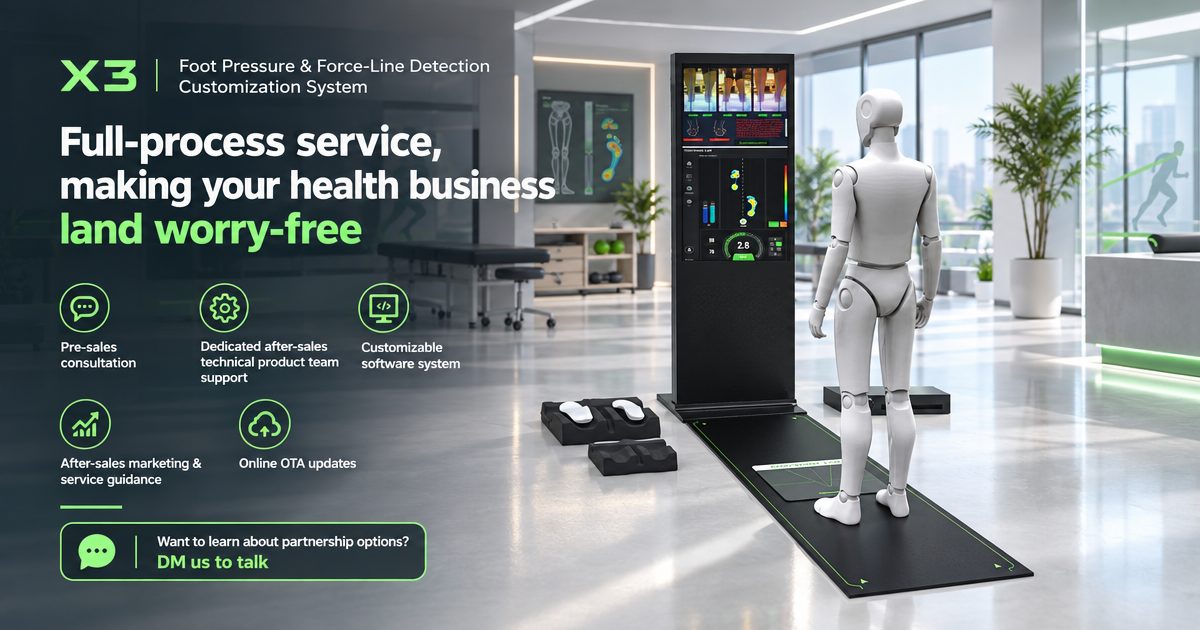
Behind the checklist sit the production terms that decide the ownership experience. Our equipment ships after seven days of factory testing, carries a twelve-month warranty, and connects to a dedicated WhatsApp support group with an engineer on the other end; remote assistance covers software questions and over-the-air updates keep connected units current. Machine minimums start at a single unit for buyers testing a market, and production capacity runs at several units per day. These terms are stated in quotations because support, not hardware, is what keeps assessment rooms busy. Capacity figures are published on our FAQ page.
The closing argument is for the market, not only for us. When buyers demand that every supplier name its category in writing, listings stop competing on borrowed vocabulary and start competing on records, support and honest physics. The phrase 3D foot scanning will keep bringing buyers to search bars; the phrase does not have to leave quotations vague. Ask the five questions, demand the sample report, test the export, and let every supplier on your list — including this one — be measured by what the machine actually does. That is the standard this article was written to set.
Frequently asked questions
Is your device a 3D foot scanner?
No. Our equipment is a plantar pressure assessment system: pressure sensing under the sole, camera capture for posture and alignment, and analysis software that assembles both into a record. We state this in every quotation. We do not manufacture laser or surface scanners, and buyers who need imaging geometry should source it from suppliers who produce it.
Why does the phrase 3D foot scanning appear in your article?
Because it is the phrase buyers type when they search for foot assessment equipment, and the market uses it loosely. We use it only to describe search behaviour and market naming. Descriptions of our own equipment stay with the manual language: plantar pressure assessment system.
What does the report record?
Pressure maps for standing and walking tasks, timelines of how load moved through each step, and posture frames captured by camera in the same session. The software presents pressure and posture side by side, and the professional annotates and interprets the record. A full sample report is available on request.
Can records be exported?
Yes. Our reports export the underlying record as well as the summary page, so follow-up visits and second opinions compare against the original session. We are happy to demonstrate the export in a live session and have the file opened outside our software.
What is the machine minimum order?
One unit. Machine orders suit buyers testing a market with a single assessment room, and our production capacity runs at several units per day. Machines are supplied as ODM; custom insoles are available as ODM and OEM from two hundred pairs, mixed across models and sizes.
What support and warranty come with the equipment?
Seven days of factory testing before shipment, a twelve-month warranty, a dedicated WhatsApp group with an engineer, remote assistance for software questions, and over-the-air updates for connected units. Support terms appear in writing in every quotation, before the order rather than after it.
How long does shipping take?
Courier delivery runs six to seven working days, air freight ten to twelve days, and sea freight thirty to thirty-five days, depending on destination. Transit times are listed on our FAQ page, and our team confirms the current schedule for your market when the order is placed.
What we would do next
Ask us the five checklist questions and we will answer them in the quotation itself, category statement included. Our foot assessment systems ship after seven days of factory testing with a twelve-month warranty, and a WhatsApp support group with an engineer follows every connected unit.
Sample reports, export examples and certification documents are available on request through our contact page, and our FAQ page covers minimums, transit times and after-sales terms in plain figures. Machine orders start at a single unit; custom insoles start at two hundred pairs, mixed across models.
This article is intended for professional and educational reference. It is not medical advice. Foot assessment equipment produces measurements and images; clinical interpretation and any decision about care remain the responsibility of a qualified professional. Certification scope is limited to the documentation we hold: European Union certification and ISO quality system certification.