
At a trade fair last year a distributor put a printed box mock-up on the table, turned it towards me and asked the only question that mattered: what goes inside, and what am I allowed to print on the outside? The mock-up had a photograph of a foot on it and a word in the middle of the panel that would have moved the product into a category his paperwork could not support. He had spent three months on the artwork and no time on the contents list. That order of work is backwards, and it is common: the box is the part everyone can see, so it gets designed first.
This article is about the other order. A kit for retail is a shelf object before it is anything else. It has to survive a two-minute decision by someone who is not a clinician, in a shop where nobody is going to measure anything, and it has to do that without making a promise the retailer cannot keep. What follows covers the contents, the packaging and barcode questions, the instruction card, and the sentences that should stay off the box entirely. The FX Rehab series is the build we normally put in these kits; the structure applies to any cushioning insole programme.
A kit is a retail object before it is a clinical one
The person who picks a kit off a shelf is usually not the person who needs it most. Sometimes it is a parent buying for a teenager who has started complaining after football. Sometimes it is someone standing all day who has decided, on a Saturday afternoon, to try something before booking an appointment. Sometimes it is a gift. In all three cases the decision happens in the shop, without a consultation, and the box has roughly the length of a browse to answer three questions: what is this, who is it for, and what do I do with it when I get home.
That constraint shapes everything else. A kit cannot rely on a sales assistant’s explanation, because the assistant may be busy or new. It cannot rely on the customer reading a leaflet, because the leaflet is inside the box. The front panel and the back panel carry the whole load, and the contents have to match what those panels imply — which is why the contents list should be written before the artwork, not after.
It also helps to be clear about what the kit is not. It is not an assessment, it is not a fitting, and it is not a course of care. It is a pair of insoles, a set of instructions and a small amount of packaging that has to get both of them home in good condition. Everything that happens after the customer opens it — whether the insole suits their shoe, whether their situation needs a professional look — sits outside the box. A kit that pretends otherwise creates returns and, worse, creates customers who waited too long.
Retailers who get this right tend to describe the kit internally as a “first step product” rather than a solution. That single phrase changes the contents list, the copy and the staff script at the same time. It also makes the kit easier to sell, because a first step is a low-commitment purchase and a low-commitment purchase is what an unplanned Saturday decision actually is.
The contents list, item by item
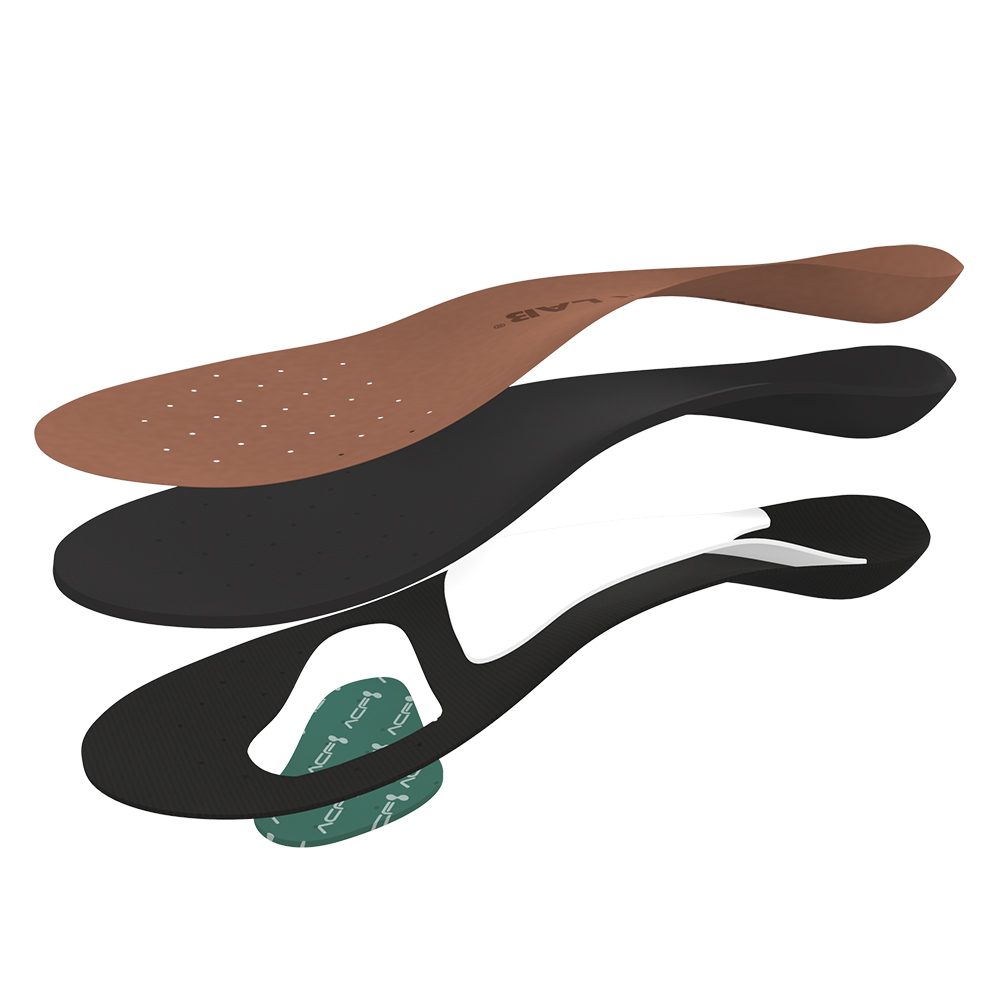
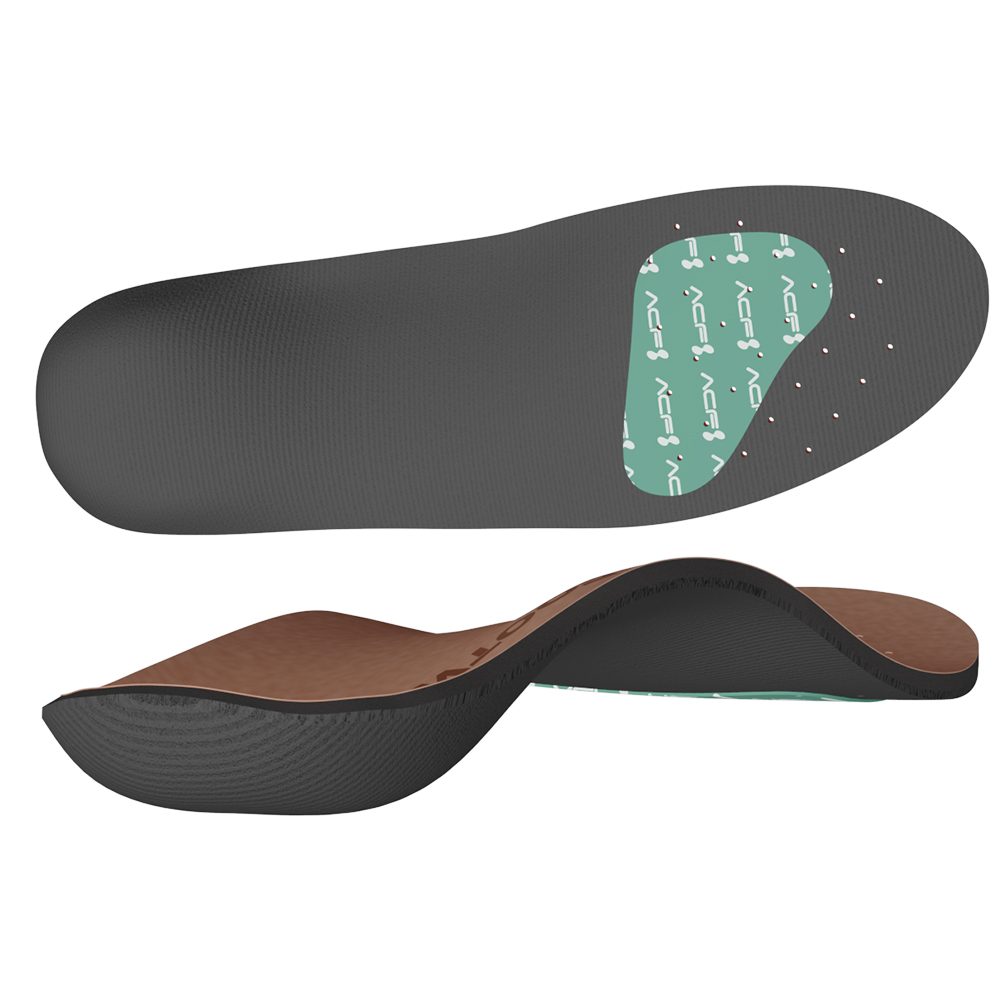
Four items is the practical ceiling. Beyond that the box either grows or the items get thin, and a thin item reads as filler. The first is the pair of insoles themselves: a cushioning build from the rehab care series, with a mesh top cloth, a foam layer for shock absorption and a polymer shaping board underneath for structure. In the FX range that build is described by four grading levels — support, torsion resistance, cushioning and starting ability — and a rehab kit should sit high on cushioning without pretending to be a sports build.
The second item is the instruction card, folded once, with wear guidance on one side and the “when to stop and ask” guidance on the other. It should be the same size as the box footprint so it cannot slide around, and it should be printed on stock that survives a pocket, because that is where it will live for the first week.
The third is a replacement card, and it is the item most kits leave out. Not a date, not a countdown — a description of wear. The top cloth going shiny or thin. The foam flattening where the heel sits. The board creasing across the forefoot. A customer who knows what wear looks like will replace the pair at the right time; a customer who was given a date will either replace too early or ignore it because the date was arbitrary.
The fourth item is optional and should only be included when the retailer can honour it: a scannable code that leads to a foot assessment at the shop, or to a booking page. If the shop has a system in the back room and a member of staff trained to run it, the code turns the kit into an entry point for a second, better sale. If the shop has neither, the code leads to a page that promises something the shop cannot deliver, and the customer finds that out at the counter.
Packaging, barcode and the shelf
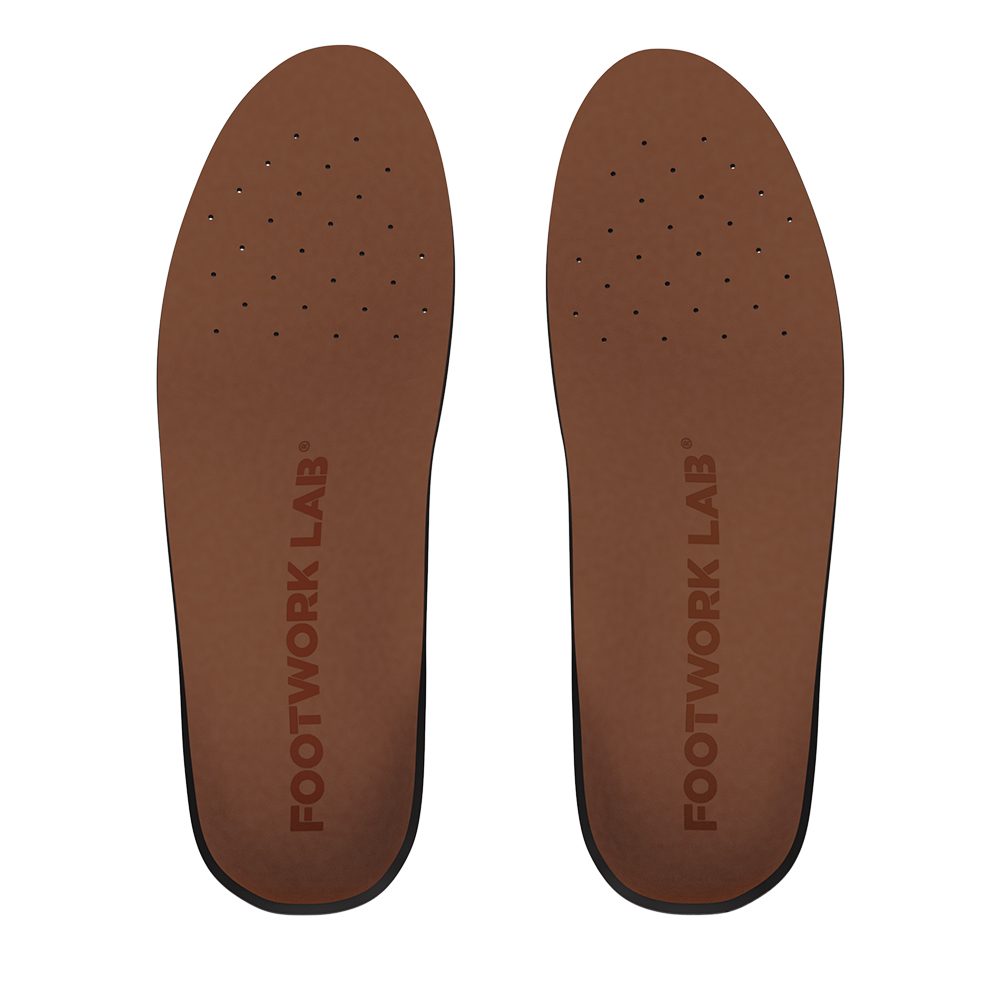
The box should be sized to the insole with a small allowance, not to a round number that looks neat in a catalogue. Extra volume costs freight on every carton and makes the pair rattle, which customers read as cheap. A printed photograph of the insole on the front panel is usually better than a window: a window shows the object but not the size, and a printed panel can carry the size marking, the model name and the three-line description that the window cannot.
The barcode needs a flat panel that does not cross a fold or a curve, positioned so a handheld scanner reaches it while the box stands on a shelf. If the kit will hang, put the barcode low on the back; if it will sit, keep it clear of the base where shelf edges scuff. Retail-ready cartons and bulk cartons are different specifications — one goes straight onto a shelf, the other goes into a stockroom — and mixing them up is the most common packaging complaint we see after a first shipment.
Order mechanics are simple and worth putting in the first email rather than the fifth. Insole minimum order is two hundred pairs, and the run can mix models and sizes inside that number, which matters for a kit because a shop needs a spread of sizes rather than a depth of one. Samples ship within three days, so a buyer can hold the build before committing to artwork. Production runs at roughly five hundred to a thousand pairs a day, and we accept both ODM and OEM work on insoles.
Leave room on the back panel for the boring text: manufacturer name and address, material content, care instructions, the size range, and the country of origin. Buyers often design the front panel first and discover there is no clean space for the legal block, which then lands across the barcode or wraps around an edge. Sketch the back panel with the legal block in place before anyone opens a design file.
Writing the instruction card so it protects the retailer
The card carries the retailer’s name, which means it carries the retailer’s exposure. The wording that protects them is dull and specific. Wear the insoles for short periods at first and build up over the first week or two. Expect the shoe to feel different rather than better immediately. Trim only along the marked line, and trim a little at a time, because a pair trimmed too far cannot be trimmed back.
The second side is the part most cards get wrong. It should say what to do when the experience is not what the customer expected: take the insoles out, stop using them, and speak to a pharmacist, a podiatrist or another qualified professional. It should say this without alarm and without implying that the kit has failed. A customer who is told where the boundary is will come back to the shop; a customer who was told the kit would work and found that it did not will not.
What the card should not do is promise a schedule. No “you will notice a difference in three days”, no “most people adapt within a week”. Those sentences are written to sell and they are read, later, as a commitment. The honest version describes the object and the process — this is a cushioning insole, it changes how load is spread under the foot, your shoe will feel different while you get used to it — and leaves the outcome where it belongs.
One practical note on trimming: if the kit is sold in whole sizes, mark the trim line clearly and print the shoe-size correspondence on the card rather than on the box, because the card stays with the customer and the box does not. If the kit is sold in half sizes, say so on the front panel, since half-size availability is a reason to choose one kit over another on a shelf.
Claims to leave off the box
Four kinds of sentence should never appear. The first is a claim that the kit resolves a named condition. The second is a claim that it is intended for a medical purpose, or that it substitutes for one. The third is a timeline — any statement about how long a change should take. The fourth is a number with a percentage attached to an outcome, because a percentage implies a study and a study implies a population the retailer has never seen.
There is a fifth, less obvious one: the before-and-after photograph. A picture of a foot beside a picture of the same foot after weeks of wear implies an outcome even when no words claim one, and it invites the customer to judge their own result against a staged image. If the box needs imagery, use the product, the construction layers or the shoe, not a body part with a story attached.
What can be printed is more than buyers expect. Material and construction. The size range and the trim allowance. The four grading levels, described as properties of the build rather than benefits to the wearer. Care instructions. The replacement guidance. A plain description of what the insole does mechanically — spreads load, cushions impact, supports the arch region — stated as a description of the object, which is what it is.
We do not write or approve the claims on a buyer’s packaging, and buyers sometimes find that unhelpful. The reason is straightforward: the wording has to satisfy the rules of the market the kit is sold in, and those rules are the importer’s responsibility, not a factory’s. What we can do is tell you what the product physically is, in enough detail that your copywriter does not have to guess, and refuse to print a panel we believe will cause a problem at customs or in a shop.
Where the kit ends and the clinic begins
The kit ends at the point where a person’s situation needs a look rather than a purchase. That line is easier to hold when the shop has something on the other side of it. A retailer with an assessment system in the back room can put a code in the box and a script at the counter: try the kit, and if it is not settling, book twenty minutes and we will record what is actually happening. A retailer without one should keep the kit simple and refer outward, which is a perfectly respectable retail position.
The staff script matters more than the box copy, because it is the script that decides whether the kit is sold honestly. Three sentences are enough. This is a cushioning insole for everyday shoes. Wear it for short periods first. If it does not settle, come back and we will look at it properly. A shop that can say those three sentences without improvising will have fewer returns than a shop with a beautifully printed panel and no script.
There is also a commercial argument for keeping the boundary visible. A customer who buys a kit, finds it comfortable and is told plainly that it is a first step will come back for a second pair, for a sports build, or for an assessment. A customer who was told the kit would solve the problem and found that it did not will not come back at all, and will tell other people why. The kit’s job is to be the beginning of a relationship with a shop, not the end of one.
The kit is a retail object. It contains a pair of insoles, an instruction card, a replacement card and sometimes a code. It does not contain a diagnosis, a treatment plan or a professional opinion, and no amount of packaging design changes that. Retailers who keep the object and the judgement in separate hands sell more of both.
Frequently asked questions
What is the minimum order for an insole kit?
Two hundred pairs, and the run can mix models and sizes within that number. That flexibility is what makes a kit workable for a shop, because a kit needs a spread across sizes rather than depth in one. Packaging is specified separately, and artwork should be signed off before the production slot is booked.
Can we put our own brand on the box and the card?
Yes. Insoles are available as ODM and OEM work, which covers the build, the print on the insole and the packaging. The brand on the box and the name on the instruction card are yours, which is also why the wording on that card deserves your own legal review before it goes to print.
How quickly can we see a sample?
Samples ship within three days. Ask for the build you intend to sell rather than a generic pair, and ask for it in the size range you will stock, because the trim allowance and the board stiffness read differently at the ends of the range than in the middle.
Can the box say the kit helps with plantar fasciitis?
We would not print that, and we would advise against it. A named condition on a retail panel turns a comfort product into something that reads as a medical claim, with obligations the retailer is not set up to meet. Describe the build and the materials, and let the conversation at the counter carry the rest.
Do we need a foot scanner to sell a kit?
No. A kit can be sold entirely on its own terms. A scannable code only makes sense where the shop has an assessment system and trained staff to run it; without those, the code promises a service the shop cannot deliver, and the customer discovers that at the counter rather than on the shelf.
What should the replacement card actually say?
Describe wear rather than dates: a shiny or thin top cloth, foam flattened under the heel, a board creased across the forefoot. Wear signs let the customer judge the pair in their hand, while a printed date is either ignored or treated as a deadline that has nothing to do with how the insole is actually used.
Who is responsible for the claims on the packaging?
The importer or brand owner in the market where the kit is sold. We print what you sign off and we will tell you what the product physically is, but we do not certify the wording against the rules of your market, and we will flag a panel we think will cause trouble rather than quietly print it.
What we would do next
Write the contents list before the artwork. Four items, one of them optional, and a card that tells the customer when to stop rather than what to expect. If the box still needs a claim to sell, the kit is probably aimed at the wrong shelf.
Send us the shoe the kit will be worn in, the size range you intend to stock and the market you are selling into, and we will come back with a build from the rehab care series and a packaging specification that fits a standard shelf. The insole category page sets out the three series and the four grading levels in the factory’s own terms.
For buyers who also run assessments, the same visit can connect the kit to a recording system, so the code in the box leads somewhere real. Contact the team with the shelf plan and we will tell you honestly whether a kit, a programme or a single build is the better first order.
This article is intended for professional and educational reference. It is not medical advice. Foot assessment equipment produces measurements and images; clinical interpretation and any decision about care remain the responsibility of a qualified professional. Certification scope is limited to the documentation we hold: European Union certification and ISO quality system certification.