
An enquiry lands in the inbox with seven words in it: do you have a foot care machine? No venue, no volumes, no mention of who the customers will be — just a phrase that sounds like one product and almost never is. After enough fairs and enough of these emails, we can say what the sender usually means: a machine that assesses feet, a supply of products that turns the assessment into a sale, and a way of arranging both on a floor that a member of staff can run without a manual. In other words, a combination — an assessment device plus a consumable line, sold as one business rather than two purchases. This article decodes the phrase the way we decode it in a first reply: what the assessment half actually does, what the consumable half carries, how the two connect through the record, what the packaging on the shelf may and may not say, and the questions that turn a vague seven-word enquiry into a specification we can quote. It also states plainly what we do not sell, because a buyer who wants a single magic box deserves to hear early that the box does not exist — and that the combination behind the phrase is worth more than the box would have been.
The phrase arrives from retail, not from medicine. Pharmacies sell foot care in an aisle; shoe stores sell it at the counter; foot therapy centres sell it by the appointment. When someone from any of these worlds says machine, they mean the instrument at the front of the process, and when they say care, they mean everything behind it — the products the customer takes home, the repeat visits, the shelf that keeps selling between appointments. Both halves matter, and neither one sells the other by accident.
What the phrase usually means at a trade fair stand
Ask the question at a fair and the answers sort themselves into three groups within a conversation. The first group wants the assessment instrument: something that scans a foot in minutes, produces a report the customer can look at, and gives the staff something concrete to say. The second group wants the supply: a range of insoles and foot care products that the assessment leads into, with minimum orders low enough to hold a range rather than one line. The third group — usually the experienced ones — wants both, plus the merchandising logic that joins them.
The grouping matters because the two halves are bought differently. The instrument is a one-time purchase with training and a routine attached; the consumables are a reorder business with a rhythm that runs for years. A buyer who budgeted for the machine and forgot the shelf has bought a conversation starter with nothing to say afterwards. A buyer who stocked the shelf without the instrument has products that need explaining twice — and foot care, as a category, only sells easily when nothing in it needs explaining twice.
There is a fourth meaning worth naming because it arrives by email more often than in person: the buyer who wants a health device, full stop — something that measures a person and announces what is wrong with them. That product does not exist in our catalogue and does not exist in this article. What exists is an instrument that records, a report that describes, and a professional who reads. The distinction shapes everything below, and buyers who want the fourth thing are better told so in the first reply than in a delivery dispute.
The assessment half: what the instrument side of the combination does
The instrument a retail floor actually needs is one the staff can run alone in minutes. That is the thinking behind the quick-screen category: a podoscope-style unit that captures the sole, records the arch type and foot shape, notes hallux valgus and heel alignment, records tibial rotation, and turns the capture into a report that includes foot length, foot width and a suggested shoe size. On our own Q1P the conclusion page carries its own line — for reference, and to a professional institution for medical needs — because the report is a record, not a verdict, and the packaging of the sentence matters as much as the sentence.
For rooms with more space and longer appointments, the same half of the combination can be a pressure-based system: static, dynamic and balance records, alignment and posture captured alongside, and a report laid out for a professional to read. The choice between a quick-screen unit and a fuller pressure system is a floor-plan and staffing decision more than a technical one. A shoe store with a queue needs the minutes; a rehab room with a booked hour can afford the depth. The mistake is buying the depth and staffing it like a queue.
Whatever the instrument, the assessment half has one job in the combination: to start a conversation the staff can finish. The report gives the operator something to read from — the length the customer did not expect, the way the two sides compare — and the customer something to take home. It does not diagnose, and the operator is briefed accordingly, because the moment a report starts being read as a diagnosis, the business has drifted into a service it is neither staffed nor insured for.
The consumable half: the insole range as the repeat business
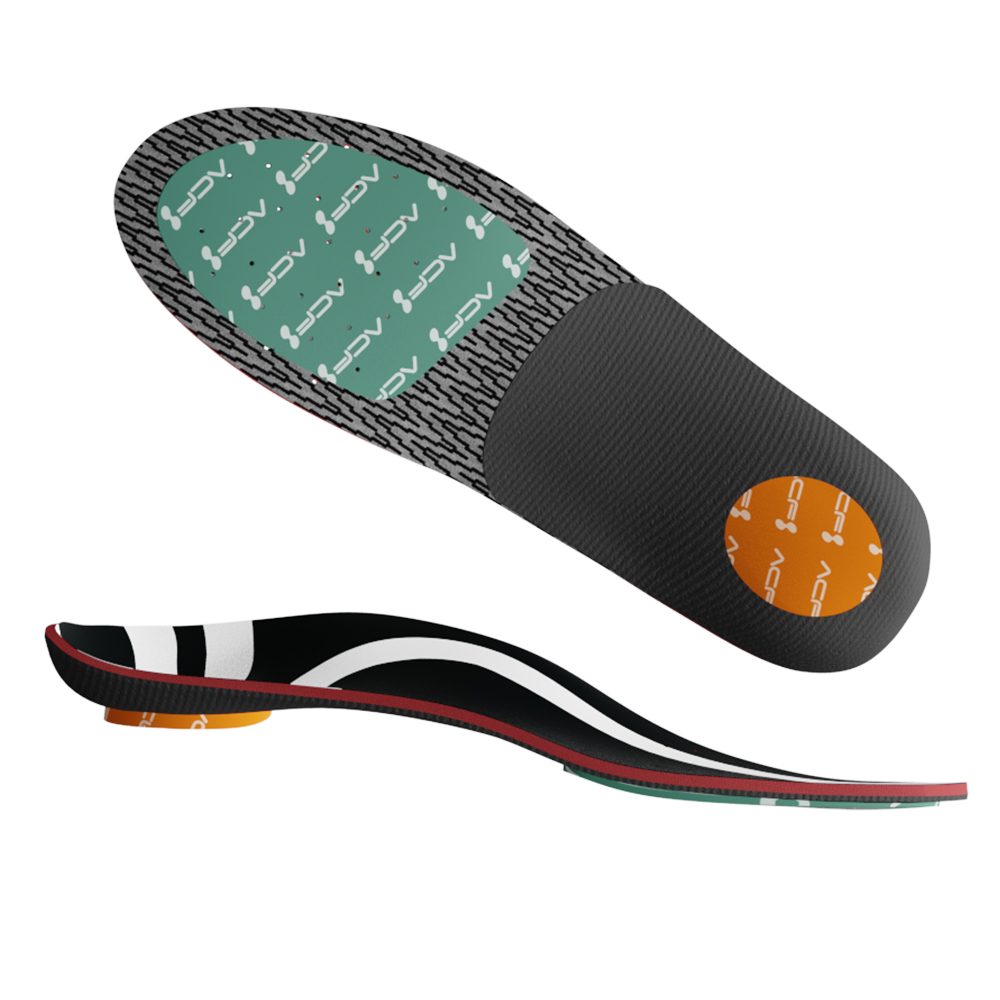
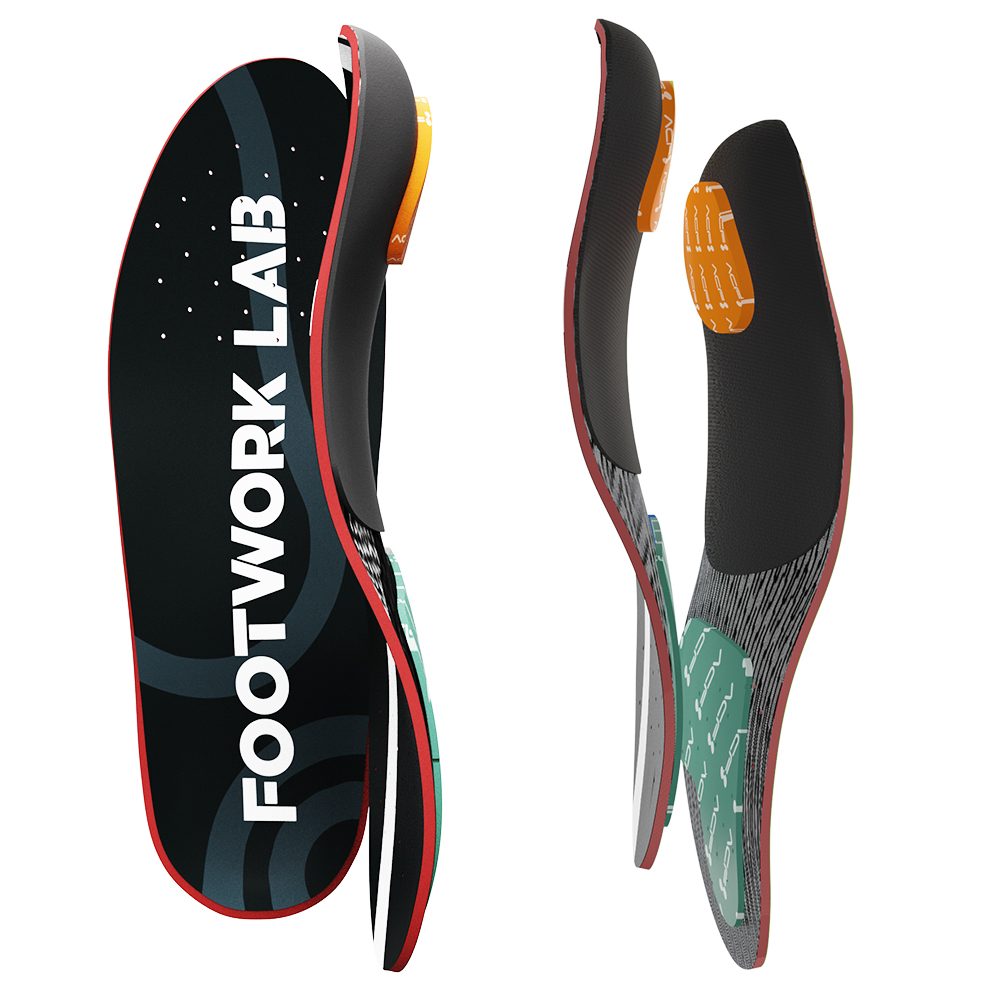
The shelf is where the assessment turns into a sale that repeats. Our own FX range is built for exactly this shelf, in three series: daily comfort for walking, dress shoes and long standing days; rehab care for the flat foot group and for builds aimed at easing load and discomfort under a hard-working sole; and sport, organised by activity — golf, outdoor, skate, ski, fitness, basketball and the racket sports. Each build is graded on four axes: support, anti-torsion, cushioning and starting ability. The grades are the vocabulary the staff uses to match a build to a customer’s shoe and working day.
The commercial shape of the consumable half matters as much as the range. The minimum order is two hundred pairs, mixed styles and sizes, which is the quantity at which a single store or a small chain can hold a proper range across the common sizes instead of committing to one line. A daily-wear pair has a working life we put at four to six months, which quietly sets the reorder rhythm: the shelf that was stocked once in spring needs feeding again before autumn. Buyers who plan that rhythm at the first order are the ones whose second order is calm.
Samples keep the shelf honest. A sample pair ships within three days, so a buyer can walk a build in a real shoe, on a real floor, before the range is stocked — and the staff can do the same with the builds they will be recommending most. ODM and OEM work on the insole side means a buyer with their own packaging and size curve does not have to start from our catalogue, which matters to chains whose shelf has a house style to keep.
How the two halves connect: the record as the conversation opener
The connection between instrument and shelf is a sentence, not a script. The record shows something describable — a lower arch under load on one side, a wider forefoot than the shoe accounts for — and the operator reads it into a recommendation: this build, this grade, in this shoe. The recommendation is the operator’s judgement, checked against how the shoe actually fits, and it works because it is anchored to something the customer can see on the page rather than to a sales pitch the customer has heard before.
This is also why the order of the two purchases matters. The instrument first, the range second, works: the report creates the reason for the recommendation, and the recommendation sells the pair. The range first, instrument later, tends to stall, because the pair on the shelf needs explaining twice — once for what it is, once for why this one. Buyers sometimes reverse the order to save on the first purchase and discover the shelf moving slowly for reasons the staff cannot name.
The retest closes the loop. A customer who was recorded in spring comes back in autumn, stands on the instrument again, and the comparison is shown rather than claimed: the record before, the record now, the conversation in between. We have watched this loop run in stores that treat it as routine, and the pattern is consistent — the retest converts the shelf from a one-time sale into a programme, and the programme is what the phrase foot care machine was reaching for all along, even if the sender did not have the words yet.
Packaging language and the lines the box cannot cross
The shelf speaks through its packaging, and the packaging has rules that are easier to state before printing than after. What the box may say: what the build is, what it is graded for, what shoe it suits, how to trim it, how long it can be expected to last in daily use. What the box may not say: that it will fix, correct or cure anything, that it is a medical treatment, or that the assessment that recommended it was a diagnosis. The for-reference language that appears on the report belongs on the box too, and buyers pushing their own OEM packaging get the same guidance we put on ours.
Symptom names are the grey area that earns its own paragraph. Names like plantar fasciitis, heel pain or flat foot can appear as descriptions of who a build group is designed for — the rehab series says flat foot, and says it honestly. What they cannot do is promise: a box that says flat foot on the front and relieved on the back has turned a design description into a treatment claim, and the distance between those two words is where returns, disputes and regulator conversations begin. The staff script follows the same rule: describe the build, describe the record, and hand anything beyond that to a professional.
The same discipline shapes what we tell buyers we do not do. We do not write packaging that promises outcomes, we do not frame the assessment instrument as a diagnostic device, and we do not supply a “health machine” — the fourth meaning from the opening, declined politely but firmly. We do not quote prices in an article of this kind, because a quotation depends on the mix, the quantity and the destination. What we do supply is the combination itself: the instrument, the range behind it, and the training material that joins them without crossing any of the lines above.
Turning the seven-word enquiry into a clear one
The shortest route from the vague question to a quotable answer runs through four details, and we ask them in every first reply. Which venue: a shoe store, a pharmacy, a foot therapy centre, a gym — because the instrument that suits a queue is not the one that suits a booked hour. Who runs it: the owner, a rotating floor team, a trained fitter — because training depth decides which instrument is honest to sell. What the shelf should carry: which series, which sizes, which price architecture the market accepts. And what the customer base looks like: daily walkers, athletes, an ageing clientele, families with growing children.
With those four answers, the combination assembles itself quickly: a quick-screen unit for a queued counter or a fuller pressure system for a booked room; a starter range from one series or a mixed shelf across all three; the two-hundred-pair minimum spread deliberately rather than evenly. Without them, any quotation is a guess wearing a price tag, and the buyer who accepts the guess usually revisits it — which is why we would rather spend one email asking than three emails revising.
Buyers arriving through search sometimes expect the phrase itself to name a product they can compare across suppliers, the way a printer or a coffee machine can be compared. The category does not work that way, and we would rather say so than compete inside a false comparison. The honest version of the answer to do you have a foot care machine is: we have the instrument, we have the range, we make both, and the combination is the product. Buyers who hear that in the first reply and keep listening are, in our experience, the ones whose orders repeat — which is the only endorsement in this trade that counts for anything.
Frequently asked questions
What does the assessment instrument actually produce?
A record and a report: arch type, foot shape, hallux valgus and heel alignment, tibial rotation, foot length and width, and on quick-screen units a suggested shoe size. On fuller pressure systems, static, dynamic and balance records with alignment and posture alongside. The report carries a for-reference line; reading it remains the professional’s job.
Can the instrument be bought without the insole range?
Yes, though the combination is where the repeat business lives. A store with its own supply arrangements can run the instrument alone; most buyers find the report needs something concrete to recommend into, and the range is what gives the recommendation a shelf to land on.
What is the minimum order for the insole range?
Two hundred pairs, mixed styles and sizes. That is low enough for a single store to hold a range across the common sizes and the three series, and it is the quantity at which the first order can still be a market test rather than a commitment.
Can packaging be our own?
Yes — OEM and ODM work are accepted on the insole side, including house packaging and size curves. The same language rules apply to customer packaging as to ours: describe the build and its grades, and keep outcome claims and treatment framing off the box.
How fast do samples arrive?
A sample pair ships within three days, so a build can be tested in a real shoe before the range is stocked. Staff walk the same samples the customers will buy, which shortens the training conversation considerably.
How often does the shelf need restocking?
A daily-wear pair lasts four to six months in ordinary use, sooner under heavy sport. That interval sets the reorder rhythm: a shelf stocked in spring needs its reorder conversation before autumn, planned at the first order rather than discovered at the till.
Is the machine a diagnostic device?
No. It produces measurements, images and a report that states the data is for reference, with medical needs directed to a professional institution. Nothing in the system names a condition or decides a care plan, and we do not market it as if it did.
What we would do next
Answer the four questions — venue, staff, shelf, customer base — in one email, and send it through the contact page. We will reply with the combination that fits rather than a quotation that guesses, and if a sample should travel first, the three-day sample terms make that a short step. The products page lists both halves of the combination in one place, and the insole range page carries the series and grades in the factory’s own wording.
For the shelf side in more depth, a foot care product line follows the range-building logic, and a footscan assessment at the counter shows the six-minute version of the assessment half that this combination usually starts from.
This article is intended for professional and educational reference. It is not medical advice. Foot assessment equipment produces measurements and images; clinical interpretation and any decision about care remain the responsibility of a qualified professional. Certification scope is limited to the documentation we hold: European Union certification and ISO quality system certification.