
Two operators ran the same platform in the same week, and the two folders read as if they described two different people. The customer was the same. The belt speed was not. The first operator let the customer set her own pace, the way most rooms do, and recorded whatever settled out. The second had been trained on a fixed setting and ran every session at the speed written on the laminated card taped beside the console. Six weeks apart, the customer’s contact times, step proportions and left-right behaviour sat in two files that no one could lay honestly side by side, and nobody had written down why. Questions about treadmill belt speed and the gait protocol around it reach our desk constantly, usually phrased as one of three practical worries: whose speed should it be, does it matter if the customer grips the handrail, and how much of the first minutes counts. All three have short answers, and all three belong in writing rather than in habit. This article separates what a self-selected pace answers from what a fixed one answers, what the handrail does to a record, why the opening minutes are warm-up rather than evidence, how nervous customers move the pace without meaning to, and how a clinic turns speed from a per-session decision into one line in a protocol that every operator follows.
Where the speed actually comes from
On a treadmill-based gait system, the belt does more than carry the customer. It sets the single condition that every other number in the record sits inside. Contact time, step length as the software estimates it, the proportions of the stride spent on each foot, the shape of the pressure path under the sole: all of these move when the belt speed moves, and they move before anything about the foot itself has changed. That is why the question of who sets the speed is not a housekeeping detail. It decides what the record is for.
In practice the speed usually comes from one of three places, and rooms rarely notice which. Either the customer picks a pace that feels natural, or the operator sets one by eye based on how the customer looks on the belt, or the room follows a written setting that every session uses. The first two feel reasonable in the moment, and both produce perfectly readable records on the day. The trouble never shows up in the session itself. It shows up weeks later, when a second record is taken and someone tries to compare the two.
We watch this happen at demonstrations more than anywhere else. A visitor steps on the belt, walks at whatever pace they like for a minute, and then asks why their contact times differ from the colleague who stepped on just before them. The answer is on the console: the two walks happened at different speeds. Nothing on the report displays the belt setting prominently enough to save the conversation, which is why the operator who wrote it on the session sheet is the one who can still answer questions at the end of a long day.
None of this means one source of speed is wrong. It means the source has to be a decision, made once, deliberately, and written down. A room that has made that decision runs the same conversation with every customer and gets folders that share a language. A room that has not made it is making the decision fresh every session, invisibly, one operator at a time.
What a self-selected speed answers
Letting the customer walk at the pace they choose is not sloppy practice; it answers a specific question. A self-selected pace shows how that person moves when nobody is directing them, which is close to how they move on the street. Customers who are new to a treadmill-based system usually need a minute to find that pace anyway, because walking on a moving belt is not identical to walking on the ground. Once they settle, the record describes their comfortable, unforced gait, and for a first conversation at the counter that is often exactly what the room wants to see.
Self-selected speed also has a practical advantage in customer management. A customer who chooses their own pace is less likely to feel pushed, less likely to shorten their stride to match a belt that feels fast, and more likely to relax enough for the later passes to look ordinary. For a retail environment, where the session has to feel pleasant enough for the customer to agree to a build, this is worth real weight. The record may not compare cleanly against another session, but it makes a good first portrait.
What the self-selected condition cannot do is carry a comparison. The pace a customer picks on a Tuesday in March and the pace they pick in October are two different choices, influenced by mood, footwear, fitness and how the day has gone. Any difference between the two records is then a mixture of the foot and the choice, and no software setting separates the two afterwards. We have had to explain this to rooms that filed two self-selected records a season apart and found the second one “better”, when the only thing that had improved was the customer’s mood on the day.
What a fixed speed answers
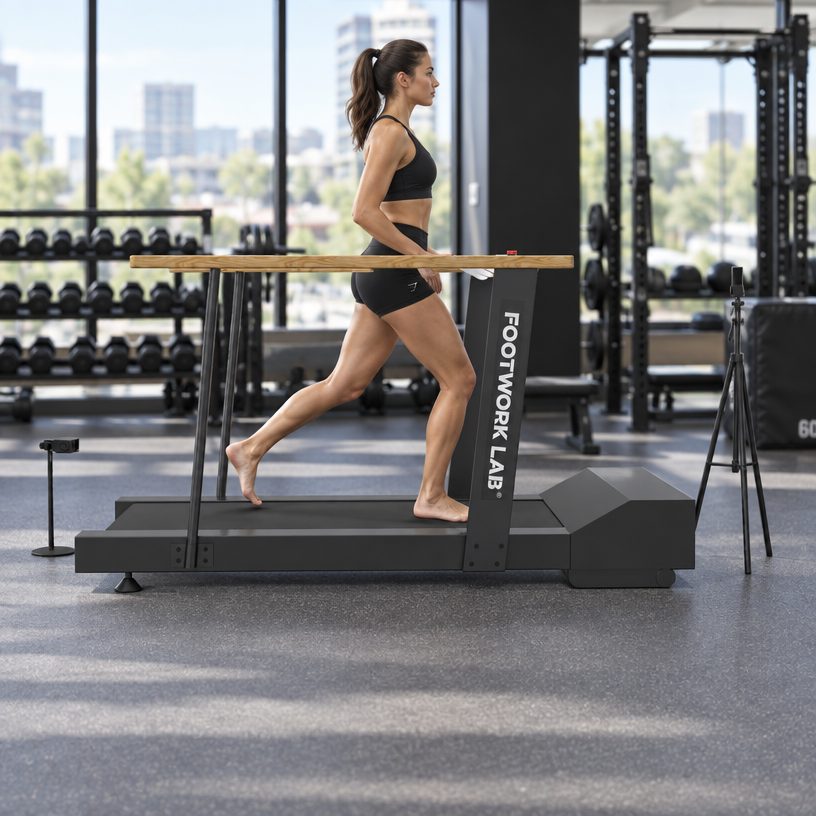
A fixed belt speed, set before the customer steps on and kept there through the recorded passes, answers a different question entirely. It holds one variable still so that everything else can be read against it. When two records are taken at the same setting, months apart, by different operators, the differences between them are much more likely to belong to the person than to the conditions. That is the entire argument for fixing the speed, and it is the reason clinics that follow patients across seasons nearly always end up there.
Fixed speed also tidies the conversation inside the room. When every operator runs the same setting, the handover between staff members stops being a source of drift. A colleague covering the desk on a busy afternoon takes a record that looks like the ones taken all week, and a new hire can be trained on one card rather than on judgement. The judgement does not disappear; it moves to the places where it belongs, such as reading the record and talking with the customer.
The cost is real and should be said plainly. A fixed pace does not suit every customer on the first pass. Someone who walks slowly in daily life can find a faster belt uncomfortable and shorten their stride unnaturally; someone brisk may find a walking pace feel like shuffling. This is why most rooms that standardise on a fixed speed still allow a short familiarisation period at that setting before the recorded passes, so the customer meets the condition before it counts. The condition is fixed; the customer’s introduction to it is not rushed.
What a fixed speed does not answer is how the customer moves when left alone, which is precisely what the self-selected record answers. The two conditions are not rivals. They are two different instruments, and the mistake to avoid is expecting one file to do both jobs. Rooms that want both views can take both, in the same session, one after the other, and write down which is which.
What the handrail quietly changes
The handrails on a treadmill-based platform exist for safety, and the protocol should say so. But a customer who grips the rail through the recorded passes has changed the measurement in ways the pressure record does not announce. Holding on transfers part of the body weight through the arms, which alters the load arriving under the feet. It also steadies the torso, which changes how naturally the person walks. A customer who would normally sway slightly, or whose balance makes them cautious on the ground, can walk quite differently with their hands fixed to a rail.
The changes are not subtle on the record. We have compared sessions where a customer gripped the rail throughout and sessions where the same customer walked hands-free, and the difference in how the load distributes is visible to anyone who reads the pages side by side. The rail grip does not appear anywhere on the report. Only the session sheet, or the operator’s memory, holds that fact, and memory is the first thing to go when two folders are being compared in front of a customer.
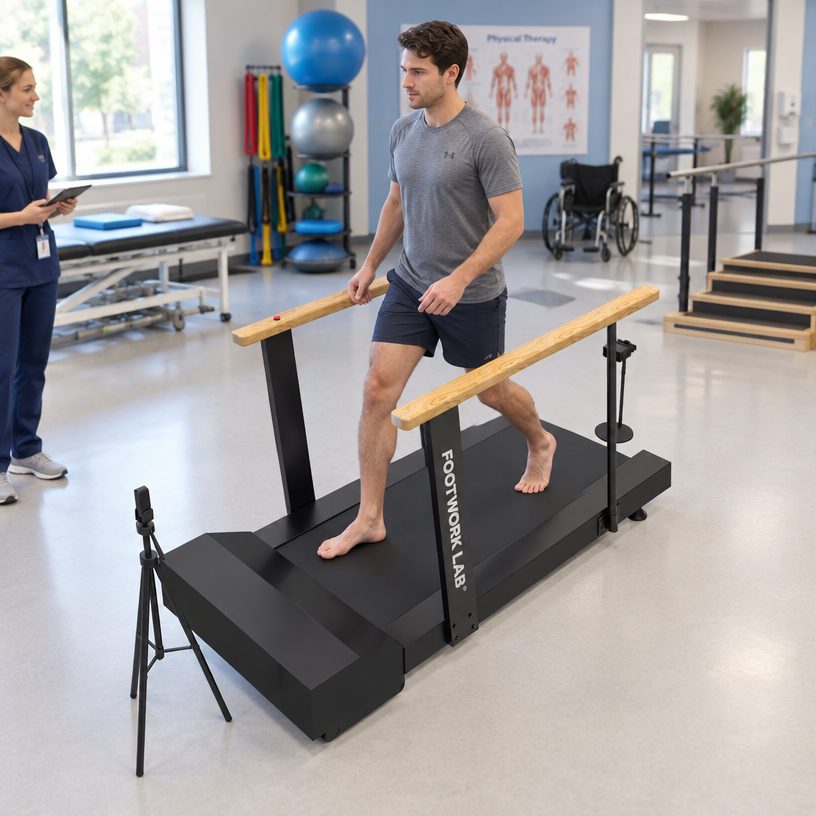
Part of the trouble is that customers do not know the rails are optional. Many arrive with a gym habit of holding on, sometimes for genuine caution, sometimes because the belt feels fast. The operator has to say the sentence out loud: hands off for the recorded passes, rails are there if you need them, and we stop the belt whenever you say. That sentence takes five seconds and rescues the record.
When a customer genuinely needs the rails, through caution, age or a day when they simply do not feel steady, the record is still worth taking. What changes is the label. A session taken with support is a valid record of a supported walk and an invalid record of unsupported gait, and the sheet has to say which one it is. The worst outcome is not the supported session; it is the supported session filed as if it were ordinary, then compared against a hands-free record next season without anyone remembering the difference.
The first minutes belong to warm-up
Almost nobody walks naturally in the first minute on a belt. The customer is learning a surface, watching their feet, correcting small slips, and often holding a conversation half-finished. The first passes carry all of that. Contact times run odd, steps shorten, and the pressure path under the sole looks hesitant in ways that have nothing to do with the foot. Every experienced operator has seen a first pass that looked alarming and a fourth pass that looked ordinary, from the same customer in the same session.
This is why the opening minutes are warm-up, and the protocol should treat them that way explicitly. Let the customer walk until the walking stops changing: usually a handful of passes at the working setting, sometimes a little longer for someone who has never been on a belt before. Then start the recorded passes. The warm-up is not wasted time; it is the part that makes the recorded passes worth keeping. A room that records from the first step saves a minute and spends it later, explaining to the customer why the printed page looks worse than they feel.
Warm-up matters even more when the speed is fixed, because the customer is adapting to a condition they did not choose. At a self-selected pace, the customer finds their own speed early and settles into it; the adaptation is mostly about the belt. At a fixed setting, the adaptation includes the pace itself, and that takes a few passes longer. The rooms with the calmest records are the ones that budget for this openly rather than hoping the first pass will be usable.
How many passes to discard is a judgement the room can set once. The principle is simpler than the number: record the walking that has stopped changing, and note on the sheet how much warm-up the session actually used. That note costs one line and settles every future question about why the first minute is missing from the file.
What nerves do to a pace
Customers arrive with the day attached. Some are anxious in a clinical setting and unconsciously walk faster, as if finishing the session sooner would end the discomfort. Others slow down, careful on a strange machine, gripping briefly and glancing at their feet. Neither behaviour is a finding about the foot; both are findings about the room. An operator who has watched enough sessions learns to see the pace shift as a sign to slow the conversation down, not to speed the belt up.
Nerves interact with the speed decision in a way worth naming. If the room lets the customer self-select, a nervous customer often picks a pace unlike their ordinary one, and the record quietly becomes a portrait of the visit rather than of the person. If the room fixes the speed, the customer does not have the extra decision to make, which some find steadying: the belt simply moves, and their only job is to walk. Neither choice removes the nerves; the protocol just decides where they land.
The practical counters are small and human. Talk the customer through the first pass. Stop the belt when they ask rather than urging them on. Give them something to look at instead of their feet, a mark on the wall at eye height, and mention it before the first pass rather than after. Take one more pass than the schedule strictly needs, so the nervous ones have room to settle. None of this appears in a specification, and all of it shows up in the record.
Writing the speed into the protocol
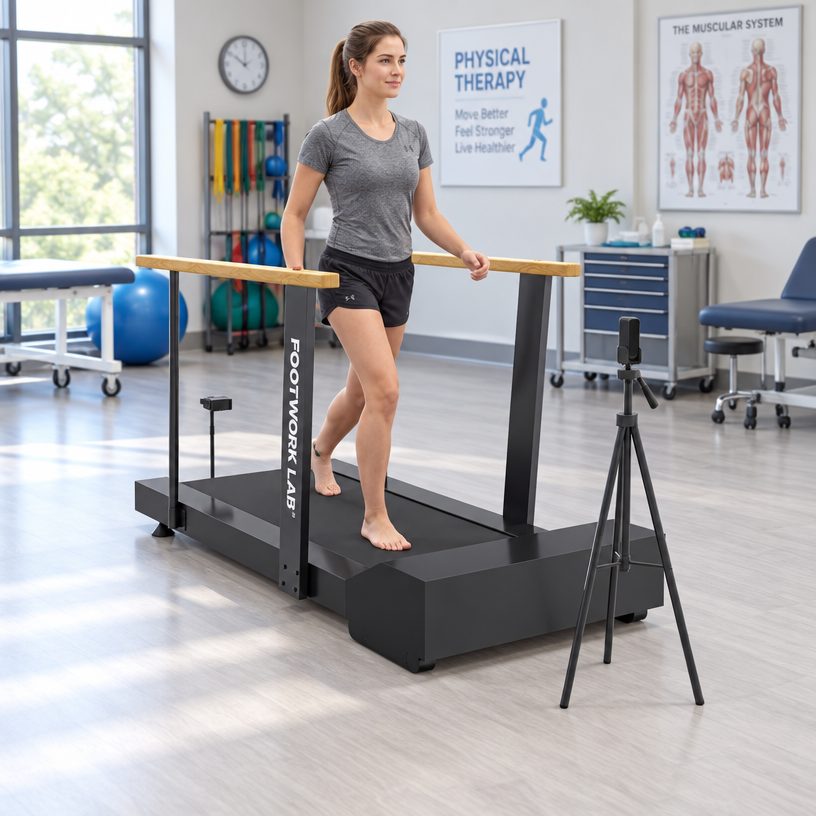
The fix for all of the above is one page. A clinic that writes its speed decision into the protocol settles the question once instead of every session. The page does not need to be long. It states the working setting the room standardises on, how long the warm-up runs before recorded passes, that the rails are for safety and hands stay off them during recording unless the customer needs them, and that whatever actually happened, the setting used, the warm-up taken and any rail contact, is written on the session sheet beside the date. Most rooms can fit that on a single laminated card beside the console, which is where it does its work.
Who decides the setting is a room-level choice, and we do not pretend there is one right answer for every business. A clinic retesting across seasons almost always wants one fixed setting, because the value of the folder is the comparison. A fitting studio that mostly wants a first portrait of how someone moves may keep the self-selected condition and simply stop calling its files comparable. A room that serves both purposes takes both records in one session and labels them. The wrong answer is not either choice; it is no choice, left to whichever operator is on shift.
Training carries the page. The speed decision belongs in the induction of every new operator, in the same breath as how to start a session and how to stop the belt safely. Rooms that fold the protocol into the daily routine stop thinking about speed as a decision at all, which is the point. The record becomes something the room produces consistently, the way a workshop produces a build consistently, because the conditions stopped being personal preferences a long time ago.
Frequently asked questions
Do we have to use one fixed belt speed for every customer?
No, but the room has to choose its convention and keep it. A fixed setting makes records comparable across visits and operators. A self-selected pace gives a natural first portrait but does not support comparison. Many rooms take both in one session and label them. What fails is deciding fresh each time and not writing down which condition was used.
Can records taken at different belt speeds be compared?
Not honestly. Contact times, step proportions and the shape of the pressure path all shift with speed, so differences between two speeds describe the conditions, not the customer. Only records taken at the same setting, with the same warm-up convention and the same rail rule, form a baseline that a later visit can be read against.
What should we do when a customer grips the handrails?
Tell them before the first pass that the rails are for safety and hands stay off during the recorded passes, then stop the belt whenever they ask. If a customer genuinely needs the rails, take the session anyway and write on the sheet that it was taken with support, so nobody compares it later against a hands-free record without knowing.
How much of the first minutes on the belt counts as record?
Treat the opening minutes as warm-up and record only once the walking has stopped changing, usually after a handful of passes at the working setting. A customer new to belts may need a little longer. Note on the session sheet how much warm-up the session used, so the convention is visible when the file is read again.
Can we let the customer choose their own speed and just note it down?
You can, and noting it is better than not noting it, but a noted speed does not make two records comparable. A self-selected pace differs between visits for reasons that have nothing to do with the foot. Self-selection answers how someone moves when left alone; it does not answer whether anything has changed since last season.
Does belt speed matter differently for running records?
It matters more. Running loads arrive faster and harder than walking loads, so the pace setting shapes the running record even more strongly than the walking one. A room that captures both should fix both settings in the protocol and warm the customer up at each one before recording, rather than letting the running pace drift between sessions.
Whose job is it to hold the speed protocol?
The room’s, not the customer’s and not the software’s. The operator states the convention before the first pass, runs the warm-up, keeps hands off the rails during recording unless support is needed, and writes the actual conditions on the sheet. Managers put the convention on a card by the console and in every new operator’s induction.
What we would do next
Pick the condition your room will standardise on, write it on one card, and put the card where the operator stands, not in a drawer. Then check the last twenty folders for the speed line, and where it is missing, mark those files as uncomparable rather than reading change into them later. Designing a retraining block around a platform shows what a fixed-condition record can support over weeks, and training staff on a foot scanner covers how conventions like these get absorbed into a team’s routine rather than living in one person’s memory. The F5-LAB system page describes the belt-based capture in the equipment’s own terms, and the FAQ page carries the operational answers we give most often by message.
This article is intended for professional and educational reference. It is not medical advice. Foot assessment equipment produces measurements and images; clinical interpretation and any decision about care remain the responsibility of a qualified professional. Certification scope is limited to the documentation we hold: European Union certification and ISO quality system certification.