
The bicycle comes into the conversation before the feet do. A customer describes the routes, the frame, the saddle debate, the new groupset, and then, almost as an afterthought: somewhere past the second hour, the balls of the feet start complaining, sometimes going numb, and it has been getting worse all season. Cyclists arrive late to their own foot complaints because the bicycle is where their attention lives.
Cycling is an unusual sport to advise on, because the feet never touch the ground and yet finish every ride with something to say. The load arrives through pedals and cleats in a narrow, repeating band, the shoes are often stiffer than any walking shoe the customer owns, and the rider sits while working, which changes which part of the body gets tired first. This article is for the clinics, studios and retailers who take these complaints seriously: what the cycling position actually does to feet, what riders report, how to assess before recommending, and what an honest insole brief for a cyclist looks like.
The complaint that arrives off the bike
Listen to how the complaint is phrased, because cycling foot complaints come with a route attached. It is rarely “my feet hurt”; it is “my right foot goes quiet after the long climb”, or “the front of my foot burns on anything past an hour”, or “I started standing on the pedals more because sitting got uncomfortable”. The complaint is tied to distance, to terrain, to a specific part of the ride, and it usually took a season to become worth mentioning. That shape of story is itself diagnostic material, though interpreting it belongs to a qualified professional, not to the shop floor.
The timing matters too. Cyclists tend to arrive after they have already spent money elsewhere: a new saddle, different shorts, a handlebar adjustment. The feet were the last stop, which means by the time you see them, the complaint has a history and one or two failed remedies. Ask directly what has been tried and what changed, because a remedy that moved the complaint even slightly is useful information; a remedy that did nothing narrows the picture from the other direction. Either answer shortens the road to a useful record, and both are worth a line in the file.
One more feature of this audience is worth naming before anything else: cyclists are measurement people. They train with power meters, they track averages, they discuss position in degrees and offsets. That instinct is an advantage for whoever advises them, because a cyclist who understands that a foot assessment produces a record will engage with it seriously. Meet that instinct with a proper measurement conversation rather than an opinion, and the whole session runs smoother. It also means the rider will read any recommendation the way they read a power file: sceptically, and looking for the numbers behind it.
Why cycling loads feet in its own way
Start with the contact. In walking, load rolls across the foot from heel strike to toe-off, spreading the work over the whole sole in sequence. On a bike, the foot sits on a pedal with a contact patch roughly the size of the shoe’s front third, and the leg simply presses that same patch, over and over, for hours. There is no rolling, no alternating of contact areas, no moments where the foot is unloaded the way it is between steps. Whatever area sits over the pedal takes the entire ride.
Then add the shoe. Cycling shoes, especially for road riding, are built stiff on purpose, so that leg power goes into the pedal rather than into flexing the sole. Stiffness helps the ride and does nothing for the foot’s comfort, because the shoe cannot conform or give where the foot wants it to. Inside that stiff shell, whatever sits under the foot decides how the load spreads, and a flat, unsupportive interior lets the load concentrate wherever the pedal contact happens to land.
Finally add the seat. A rider works while sitting, so the legs push against a resistance while the body weight rests elsewhere. That combination is unusual in sport: the feet are working hard without carrying the body, which means fatigue signals from the feet arrive later and quieter than they would on foot. A complaint that a walker would feel in twenty minutes may take two hours of riding to surface, and by then it has been repeating in the same small area for a long time. That is the mechanism behind the hour-two complaint that fills the opening of this article, and it is why cycling foot load deserves its own conversation rather than a borrowing from running or walking advice.
What cyclists report, and how to collect it
The report vocabulary clusters in three groups. Hot spots under the front of the foot, usually described as burning or pressure that builds with distance, are the most common. Numbness or that “foot going quiet” feeling in the toes comes next, typically on longer rides and often on one side more than the other. A deep ache through the arch arrives third, more often among riders who also walk or stand a lot off the bike, as though the foot has two separate jobs it cannot reconcile. None of these descriptions is a diagnosis; they are workload reports, and their interpretation is professional work.
Collect the details that map to the mechanism. Ask where on the foot the feeling sits, at what distance it starts, whether it stays after the ride or fades, and whether it differs between feet. Ask about the shoes and pedals as equipment, not as remedies: how stiff the soles are, how tight the straps or dials do up, whether the cleats are new or old. Riders answer equipment questions in remarkable detail, and those details belong in the file, because the interface between foot, insole, shoe and pedal is exactly where their complaint lives.
Write it on one page with the same four or five lines every time: location, distance at onset, feet compared left and right, equipment list, remedies tried. The page does two jobs. It turns a vague seasonal complaint into a structured report the professional can work from, and it gives any later review something to compare against, so that a second conversation is a measurement of change rather than a repetition of anecdotes. Riders who see their notes taken seriously volunteer more detail on the second visit than they did on the first, which is how the page earns its keep twice.
What an assessment adds before anything is changed
With the report on paper, a foot record gives it a second column. A static look at arch profile and standing alignment shows how the foot organises itself when it is not working. A dynamic pass across a pressure platform shows how load moves through the foot in actual walking, which is the closest a room can get to watching the foot work without the bicycle present. The equipment produces measurements and images; what they mean for this rider, and whether any support is appropriate, is a decision for the qualified professional running the session.
Two comparisons do most of the useful work for cyclists. Compare the two feet, because a complaint that lives on one side should be checked against a record that shows both sides; a mirrored difference is normal, an unexplained difference is not. And compare the arch behaviour between static and dynamic, because a foot that holds one shape standing and another shape working is the rider most likely to benefit from a defined position under the arch, and the professional will want both views to make that call. Neither view interprets itself; both simply give the file something honest to work from.
Be straightforward with the rider about what the session cannot do. It cannot see the foot on the pedal, with the shoe and cleat above it and the leg turning above that. It measures the foot’s own behaviour and provides a record, and the bicycle side of the interface is a separate craft, usually best served by a bike fitter. Saying that plainly, and being willing to hand the rider to a fitter when the shoe-and-pedal side looks like the suspect, is what separates a serious assessment conversation from a sales conversation with a measurement in it. Riders remember the rooms that told them so.
Writing the brief for a cycling insole
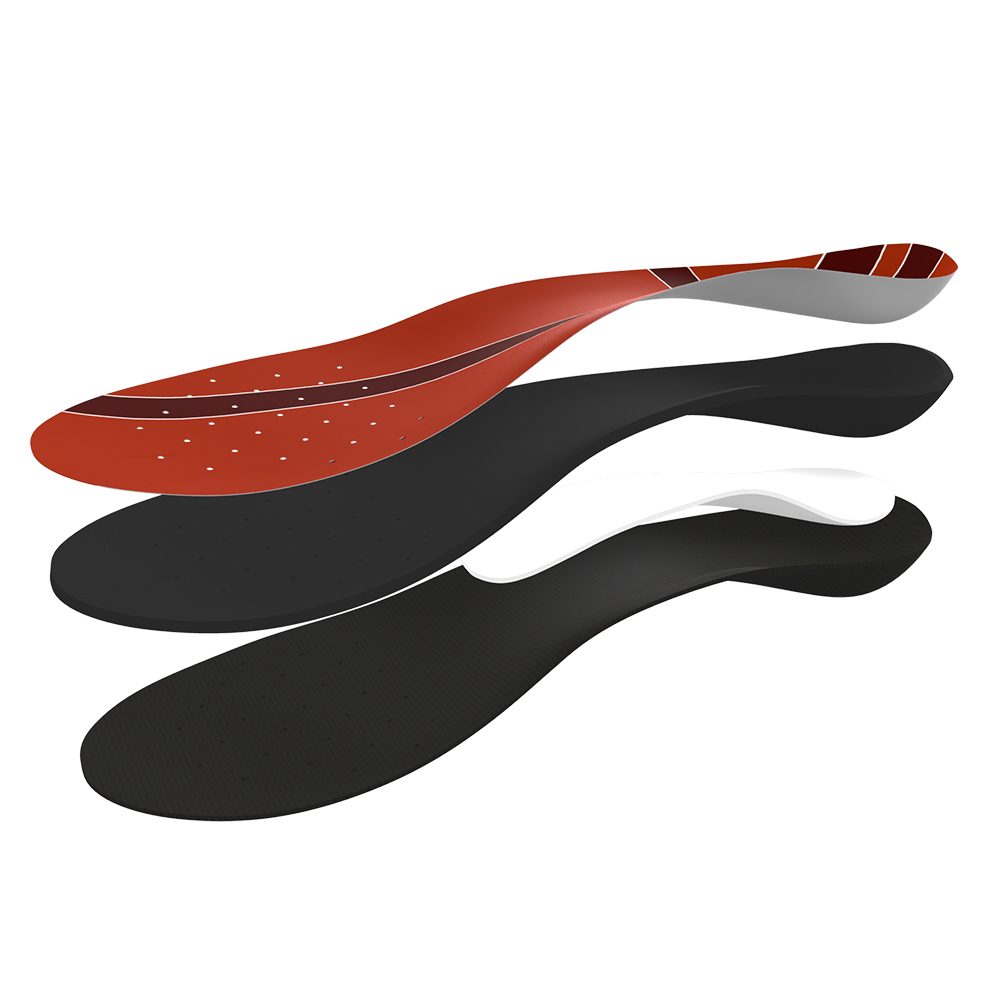
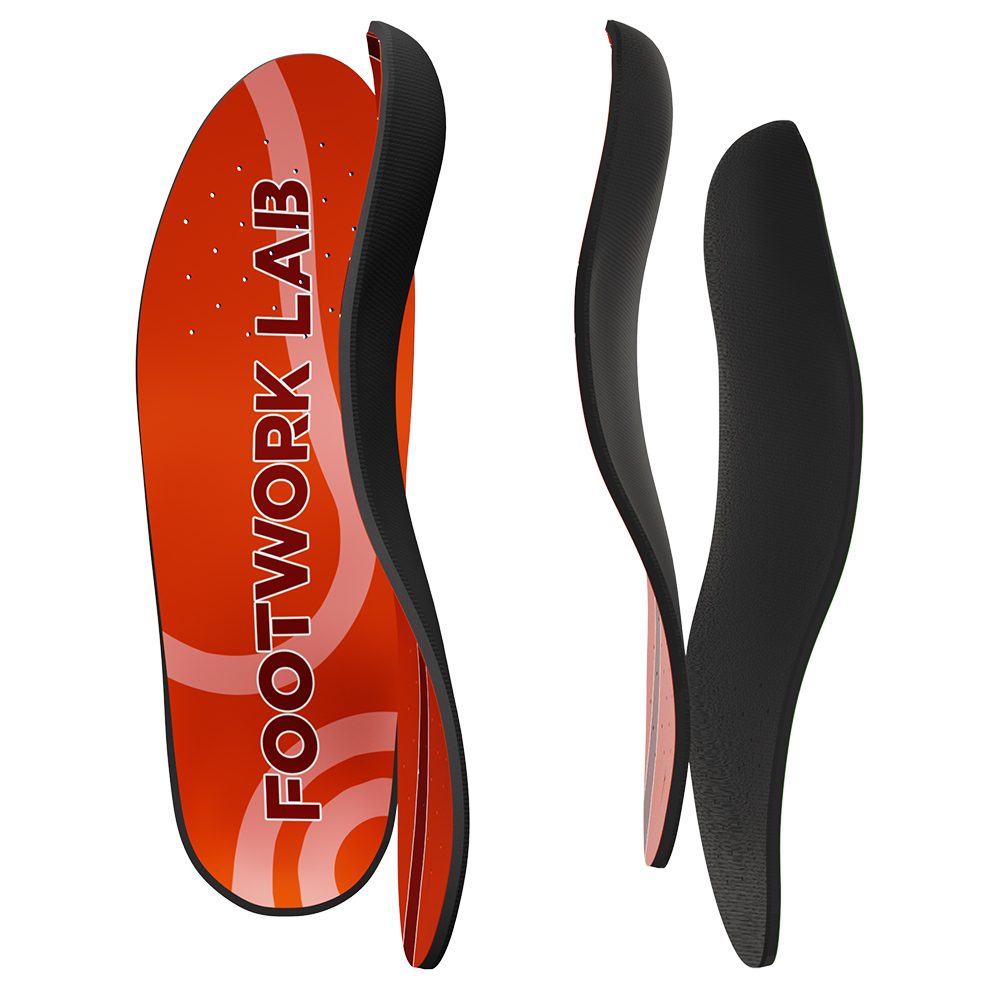
If the professional concludes that support is appropriate, the brief for a cycling insole starts with a constraint the sport imposes: interior volume. Cycling shoes fit closely, and anything that lifts the foot toward the closure system changes the fit the rider has already tuned. So the brief says slim, low-profile, shaped: enough structure under the arch to give the foot a defined position, and thin enough everywhere else that the shoe still fits the way the rider set it up. When customers ask us directly, our answer at the fair in Brazil was the same one that still holds: a cycling insole should serve the foot without renegotiating the shoe.
The second line of the brief is load distribution under the front third of the foot. The hot spot complaint is a concentration complaint: the same small area taking a narrow, repeating load for a long ride. A shaped insole spreads load across more of the forefoot, which is a support and distribution goal, and it should be described in exactly those terms. No structural promises, no claims about what the foot will feel like by a certain distance; a distribution aim, stated so it can be checked against the review ride.
The third line is heel and arch hold, and it matters more than it looks in a stiff-soled shoe. A foot that shifts inside a rigid shell changes its own contact with the pedal from stroke to stroke, which is both a comfort problem and an efficiency one the rider will feel before they can describe it. Custom orthotic insoles built to an individual record, like the ranges on our insole categories page, are one way to get that hold made to the foot rather than to a size chart. The brief, not the product, is what makes the result fit the complaint.
Cleats, shoes and everything the insole lives beside
An insole enters a system that was already tuned: shoe stiffness, closure tension, cleat position, pedal float. Changing the layer under the foot can subtly change how the rider sits over the pedal, which is why the fitting ride matters more for cyclists than for almost any other customer. After fitting, ask the rider to do an easy, short ride and report three things: whether the hot spot arrives later, whether anything new has appeared, and whether the shoe still fits as it did. A new pressure somewhere else does not mean the insole failed; it means the system shifted and deserves a look.
Know where your part of the work ends. Cleat position, float and the leg’s alignment over the pedal are a craft of their own, and a good bike fitter does it with the bike on a stand and the rider pedalling, which no assessment room can replicate. If the record shows a foot that looks well supported but the complaint persists on the bike, the next appointment belongs with the fitter, ideally with your file included. Riders respect that handoff enormously, because their instinct for measurement extends to respecting other people’s measurement.
Set the break-in expectations in cycling terms rather than in weeks: two or three easy rides before judging anything, no long event on a new setup, and a note taken after each ride so the review conversation has data. Riders keep data naturally; asking them to is more courtesy than instruction. Our article on driving instructors (/news/6579//) covers the other seated-and-pedalling job, and the comparison is instructive: two professions, one interface, the same rule that the layer under the foot serves the position rather than fighting it. The comparison also predicts which riders will adapt fastest, because drivers and cyclists alike are already used to a fixed interface under the foot.
Honest limits, and when the file moves on
The division of labour deserves stating as plainly here as anywhere. An insole supports, holds and distributes load. It does not treat anything, it does not promise what any individual ride will feel like, and it does not replace the professional judgement that decides whether support is appropriate in the first place. Where a rider’s report suggests something beyond workload and fit, persistent numbness that outlasts rides, sensations that have been worsening across a season, the file goes to a qualified clinician, and the earlier that happens the better for everyone involved.
Be equally honest about what the assessment cannot see. The room measures the foot; it does not measure the pedal interface, the leg turning above it, or the position choices the rider made over years. That gap is not a weakness to hide but a boundary to work within, and it is why the partnerships that work best in cycling are triangular: assessment room, bike fitter, and the rider who keeps notes between appointments. No single one of the three can see the whole system, and pretending otherwise serves nobody.
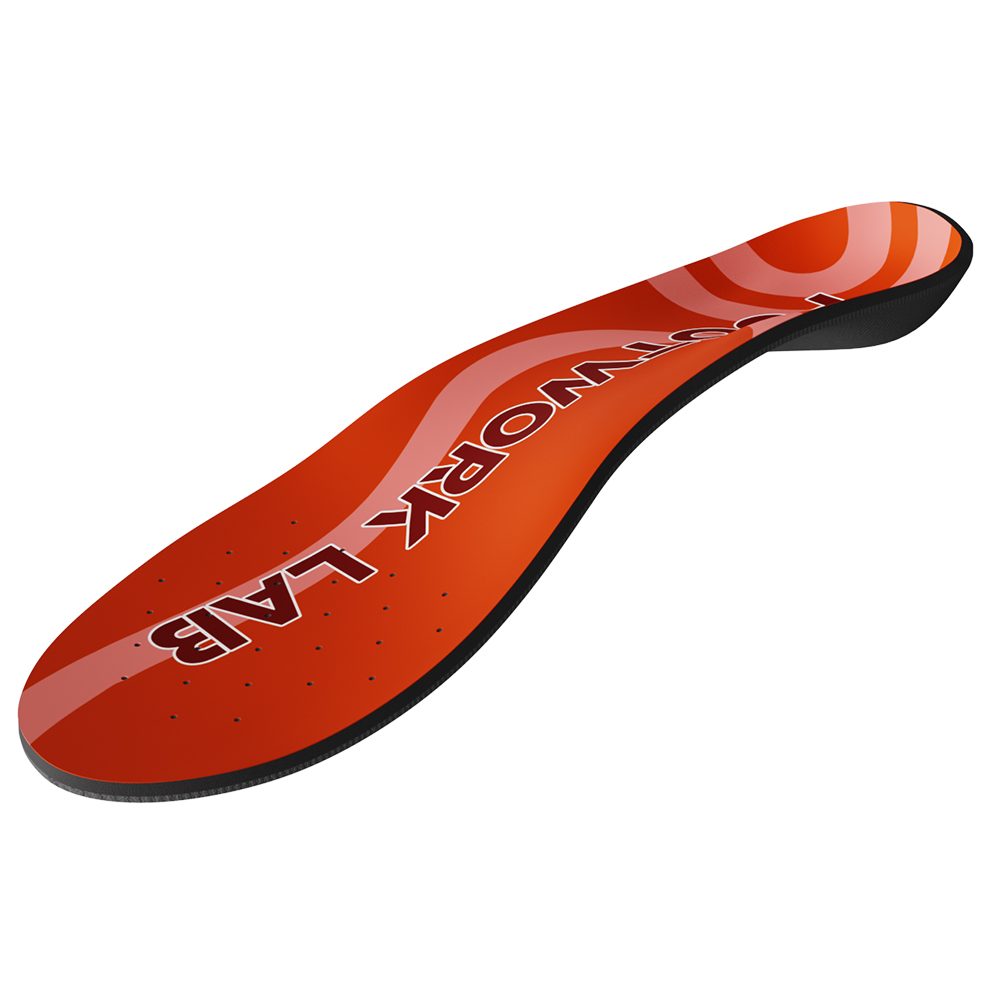
What a well-briefed insole can honestly do is narrow: give the arch a defined position to work from, hold the foot steady inside a stiff shoe, and spread the concentrated load under the forefoot across more of the sole. For a rider whose complaint is an hour-two hot spot, that is precisely the shape of help the complaint asked for. Framing the offer in those terms, with the limits stated in the same breath, is the difference between advice that survives the review ride and a pair that ends up in a drawer by spring. It is also the version of the conversation a rider with a power meter will respect, because it reads as data rather than as persuasion.
Frequently asked questions
Why do cyclists get foot complaints if the feet never touch the ground?
Because the load arrives through a narrow pedal contact instead of across the whole sole, in the same band, for hours, without the rolling gait that walking uses to spread the work. The feet work hard while seated, so fatigue signals arrive later and quieter than they would on foot, and the complaint often takes a season to surface.
Will an insole make the shoe fit differently?
A well-briefed cycling insole is built low-profile precisely so it does not renegotiate the fit the rider has already tuned. Still, any added layer changes the interior slightly, so the check is simple: fit it, lace the shoe as usual, and confirm the foot sits in its natural position with normal room at the toes before the first ride.
Should the insole be matched to the shoes or to the feet?
Both, in that order of question. The foot assessment defines what support and distribution the foot needs; the shoe defines the form that support can take inside a stiff, close-fitting shell. A brief written from the record and the shoe together is the only version that survives contact with a real ride.
Can an insole replace a bike fitting?
No, and the two are not competitors. Cleat position, float and leg alignment over the pedal are a fitter’s craft, done with the bike on a stand, which no assessment room replicates. The insole serves the foot inside the shoe; the fitter serves the rider-pedal interface. The best outcomes come from the two working as referrals rather than substitutes.
How long before a rider can judge a new insole fairly?
Two or three easy rides is a reasonable window, with a short note after each about where the feeling sits and when it arrives. No long event on a new setup, and no judgement from a single hard session. Riders who keep their usual data habits will have a better picture in a week than any description on a product page could give.
Why does the complaint often affect one foot more than the other?
Riders are not symmetric on the bike, and small differences in position, strength or an old habit concentrate load on one side. The assessment compares the two feet precisely to see whether the record mirrors the complaint. Interpretation of that comparison belongs to a qualified professional; the file simply needs both feet recorded fairly.
What should a rider bring to a foot assessment?
The riding shoes, a note of the pedals and cleats, and the one-page report: where the feeling sits, at what distance it starts, whether it fades after rides, what has been tried. The shoes matter because the insole will live inside them, and the report matters because it turns a seasonal complaint into something a professional can work from.
What we would do next
The working order, in short: the one-page report from the rider, the assessment record beside it, a brief written to both, and a fitting confirmed on an easy ride rather than in the doorway. Keep the report in the file so the review conversation measures change instead of repeating anecdotes. If the supply questions follow, minimum orders, mixed models, sample timing, the FAQ page answers most of them directly.
The referral habit is the part we would underline. A room that knows when the file belongs with a bike fitter, and a fitter who sends riders back for a proper foot record, serve this audience better together than either does alone, and riders notice the difference within one season.
So here is the question we would put to colleagues who serve cyclists: when the record looks well supported, the shoe fits as it always has, and the hour-two complaint still shows up on the review ride, where does your file go next, and what do you write on it? We would genuinely like to hear how rooms handle that handoff, because the answers we hear differ more on this question than on almost any other in this series.
This article is intended for professional and educational reference. It is not medical advice. Foot assessment equipment produces measurements and images; clinical interpretation and any decision about care remain the responsibility of a qualified professional. Certification scope is limited to the documentation we hold: European Union certification and ISO quality system certification.