
The client is already standing on the platform when the question arrives, shoes in hand, waiting to be told whether to take them off. Some rooms answer it the same way every time. Some rooms improvise, depending on who is operating the equipment that day and what they were taught by whom. And a few rooms have run the debate properly and written the answer down, which is what this piece is arguing every room should do — because whether footwear joins the record is not a small operational detail. It decides what the capture can be compared against, what it can never be compared against, and whether the file in front of you next month means what you think it means.
For clinics, retail fitting services and rehabilitation studios that capture standing posture records, this is a protocol question rather than a philosophical one, and it has a workable answer. Below: what the barefoot baseline is for, what a shoes-on capture adds and what it silently takes away, how to change only one variable between the two, and how to label the file so that the person opening it next month does not have to guess.
What the barefoot baseline is actually for
The standard posture capture — shoes and socks off, standing still on the measuring surface — exists for one reason: comparability. With nothing between the foot and the surface, the record shows the foot as it presents: arch profile, contact pattern, where the centre of pressure sits in quiet stance, how load divides between the two feet. Every client measured anywhere in the world on similar terms produces a record readable on similar terms. That shared baseline is the whole value of the convention, and it is why almost every room treats it as the default rather than an option.
The baseline is also what makes a client’s file legible over time. A record from this January and a record from last June can be set side by side and compared honestly only if both were captured on the same terms — barefoot, same surface, same standing protocol. The moment footwear enters one of the two, the comparison quietly stops being about the client and starts being about the shoe, and nothing in the file warns the reader unless it was written in.
There is a second, subtler reason the baseline matters, and it concerns the person being measured. Shoes hide the foot from the client as effectively as they do from the operator. Watching their own barefoot contact appear in real time is often the moment a client understands, concretely, what the assessment is describing — and that moment does real work in the appointment. A client who has just watched their weight sit visibly on one edge of one foot is a client who will stand differently for the second capture, and who will listen differently to whatever the professional says next.
So the position this piece takes is simple and worth stating before anything else: keep the barefoot capture as the non-negotiable baseline of every posture visit. Everything that follows is about what may be layered on top of it, and how to do that layering without corrupting either record.
What actually changes when the shoes go on
Putting footwear into a posture capture does not add one variable. It adds several, and pretending otherwise is where the confusion starts. The sole geometry of the shoe — its midsole shape, its heel-to-toe profile, the wear pattern it has accumulated under that particular owner — now sits between the foot and everything measuring it. The shoe’s own support or lack of it changes the position the foot settles into. And the client’s fatigue state is usually different by the time the second capture runs, because shoes-on captures almost always happen second, after the barefoot one, after minutes of standing and talking.
The measuring surface, meanwhile, is reading something different. Barefoot, it reads the plantar surface and its distribution of load. Shod, it reads the outsole of the shoe — the footprint of the footwear, filtered through everything the footwear is doing. The two records are both real and both useful, but they are not two readings of the same object, and any workflow that treats them as such is borrowing trouble. A shoes-on record cannot tell you the client’s arch profile. A barefoot record cannot tell you what their daily footwear adds to their standing position. Each one answers the question the other cannot.
This is also why the shoes-on capture changes the client’s experience in ways operators should anticipate. In shoes, the client cannot feel the surface, cannot see their own foot, and often stands with less attention — the posture that arrives in the second capture is the posture of someone who has been standing around in their shoes, which, depending on the question you are asking, may be exactly the point.
Notice what this section has not said: that one of the two records is the good one. That is deliberate. The mistake this piece is arguing against is not capturing shod or barefoot — it is capturing one and calling it the other, or comparing the two across conditions that changed more than the shoes did.
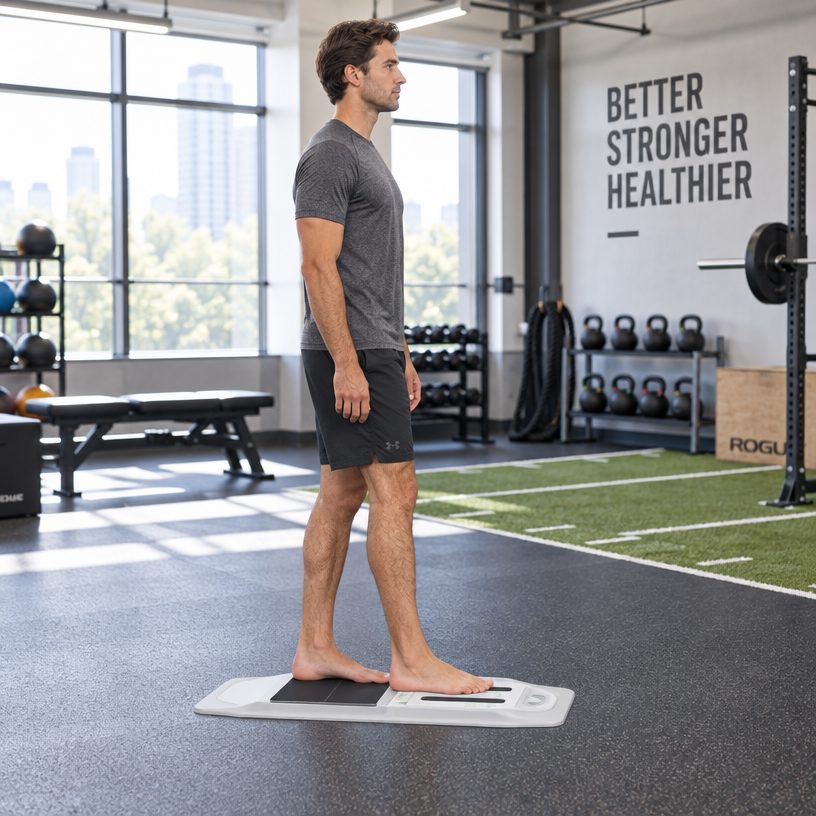
What a shoes-on capture can and cannot tell you
Used deliberately, the shod capture answers a specific and useful question: what does this person’s working or daily footwear do to their standing position, here, today, on this surface? Captured barefoot first and shod second, with nothing else changed, the pair shows what the footwear adds — where the centre of pressure moves, how the contact picture changes when the shoe’s geometry takes over. For the professional advising a client whose day is spent in particular footwear, that comparison can be worth more than either record alone, because it speaks directly to the container the client actually lives in.
What it cannot do is just as important. A shod capture produces no reading of the foot itself — no arch profile, no barefoot contact pattern, no plantar surface in any form. It cannot substitute for the baseline in any workflow that needs the foot rather than the footwear. It cannot be pooled with barefoot records for any comparison, across clients or across time, without first announcing itself. And it inherits everything about the shoe: the wear, the age, the fit, whether the client remembered to fully lace them, whether they wore thick socks today and thin ones last visit. A shoes-on record is a record of a foot-plus-container system, and the container is doing more of the talking than most people expect.
One boundary deserves its own paragraph because it gets crossed most often in busy rooms: the shod capture does not upgrade the record’s certainty about anything clinical. Whatever the platform reads, the interpretation of what it means for this person — and any decision about care or about building anything for their feet — belongs to the qualified professional, not to the equipment or to the operator reading the screen. We manufacture the measuring side of this workflow and we say so plainly: the machine produces measurements and images; it does not produce conclusions.
So the honest framing for a room’s protocol is this: the barefoot capture answers questions about the foot. The shoes-on capture answers questions about the shoe. A room that knows which question it is asking on a given capture has already solved most of the debate before the client finishes unlacing.
Keeping one variable: the working protocol
If a room decides to capture both ways — and for many fitting services and clinics the shod capture earns its place — the protocol that keeps the pair meaningful comes down to a single discipline: between the barefoot capture and the shoes-on capture, change the shoes and nothing else. In practice, that discipline has five concrete parts, and all five belong in the room’s written procedure rather than in the operator’s memory.
Same visit, back to back. A barefoot record from Monday and a shod record from Friday differ in fatigue, time of day, temperature and a dozen things nobody logged. Only a same-visit pair isolates the footwear. Same surface, same standing protocol: same platform or plate, same marks on the floor where the feet go, same instructions given in the same words. If the room uses a standard stance width or a standard quiet-stand instruction, it applies to both captures without exception.
Shoes in their habitual state. The client’s own footwear, laced the way they lace it, with the footbed and wear it actually carries — not a display pair, not freshly cleaned, not the good shoes they save for appointments. A shod capture of shoes the client never wears is a record of a shoe that does not exist in their life.
Order fixed, barefoot first. The baseline never depends on anything that came before it; the shod capture is always the derived one. This also protects the client-facing moment described earlier, where seeing their own barefoot contact does its explanatory work.
And a written label, in the file, at the moment of capture: footwear worn, model if known, age if known, socks noted, and any deviation from the standard protocol written down when it happens rather than recalled later. The cheapest failure in this whole workflow is a well-executed pair of captures that nobody can tell apart six months later. One line of text prevents it, and the operator who writes it will be thanked by whoever opens the file.
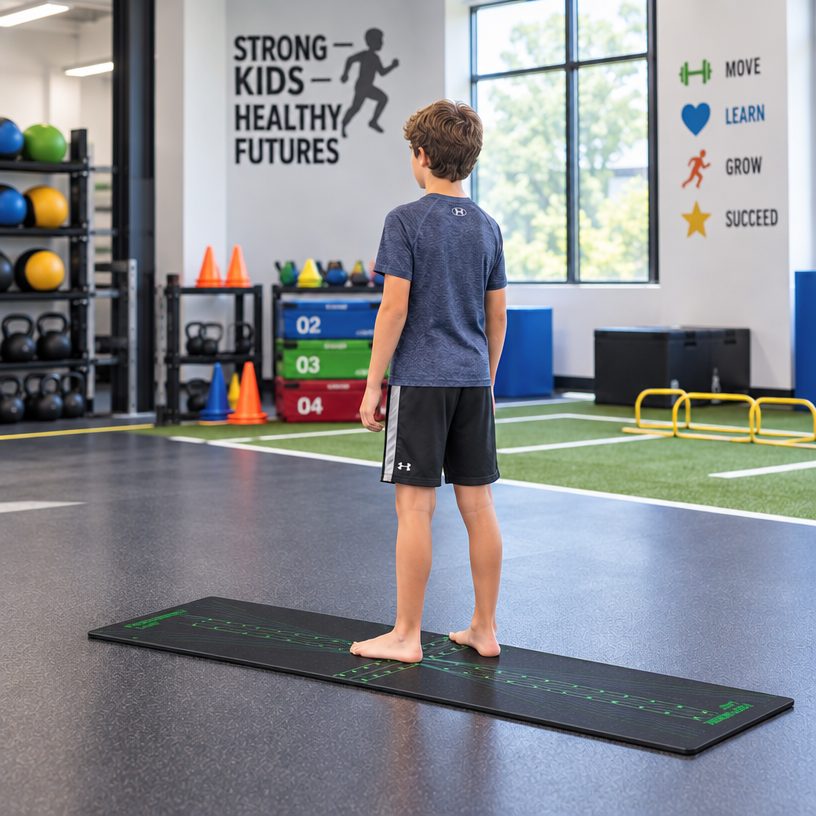
Comparing across visits without fooling yourself
The protocol above governs the pair inside a single visit. The harder discipline is the one across visits, where the temptation to compare everything with everything is strongest. The rule that survives contact with real caseloads is: the barefoot record is the only thing you compare across time. Baseline to baseline, same protocol, same terms — that comparison stays about the client. The shod capture is a same-visit instrument by design; it answers what this footwear does to this person on this day, and extending it across months implicitly assumes the shoe, the socks, the lacing, the wear and the surface all stayed constant. They did not.
Visits also drift in ways rooms underestimate, and most of the drift is invisible in the file. Time of day changes what standing fatigue contributes. Season changes temperature and footwear — a client captured in winter boots and again in summer trainers has not produced a comparable pair, whatever the calendar says. A client who has just walked from the car park and one who has been sitting in your waiting room for twenty minutes arrive with different legs. Earlier pieces in this series have argued that fair records need fair conditions, and the shoes-on-shoes-off question is simply the loudest member of that family: the condition it manipulates is the biggest one in the room.
Three practical habits keep cross-visit comparisons honest without slowing the schedule. First, fix the room’s definition of the baseline once, in writing, and let new staff inherit it rather than reinvent it. Second, keep the shod capture strictly optional and strictly labelled — a file should never contain a shod record that could be mistaken for a baseline. Third, when a client changes footwear as part of life — new job, new boots, new daily shoes — treat that as a new shoes-on capture and a legitimate reason to revisit, rather than silently comparing the new container against the old one’s record.
Rooms that follow these habits find the debate mostly dissolves, because most of its heat came from unlabelled files and cross-contaminated comparisons rather than from any real disagreement about footwear’s place in an assessment.
Reporting two records on one page
When the visit ends with both a barefoot baseline and a shod capture, the report carries an obligation the single-record report does not: it must keep the two records visibly distinct, so that every future reader — a colleague, a partner clinic, the client’s next professional — knows instantly which is which and what each was for. A one-line legend does the job: capture one, barefoot, standard protocol; capture two, client’s own footwear, same protocol, same visit, model and state of the shoe noted. Anything the reader would need to reconstruct the conditions belongs in that legend, not in the operator’s memory.
The presentation order should follow the same logic the capture order did: baseline first, footwear layer second, and the comparison framed for what it actually is — what the shoe adds to this person’s standing position today — rather than a verdict on either the foot or the shoe. Clients read these reports too, and they read them with hope; a legend that keeps the claims inside what was measured protects them from over-reading as much as it protects the professional from over-claiming.
Rooms running our own capture equipment — a posture and pressure capture system of the kind we manufacture and ship from our plant — will find the same discipline applies on any hardware: the machine records what stood on it, faithfully, and the meaning of the two records is carried entirely by the protocol around them and the label on them. That is by design. A measurement device that quietly editorialised its own readings would be far less useful to a professional than one that does exactly what it is told.
One more line belongs in the report, and it is the one most rooms omit: what was not compared. If the shod capture used a different surface than usual, or the client’s usual shoes were at the cobbler and a spare pair stood in, write that down. The reader in six months cannot ask the room what happened that Tuesday; the file is the only witness it has.
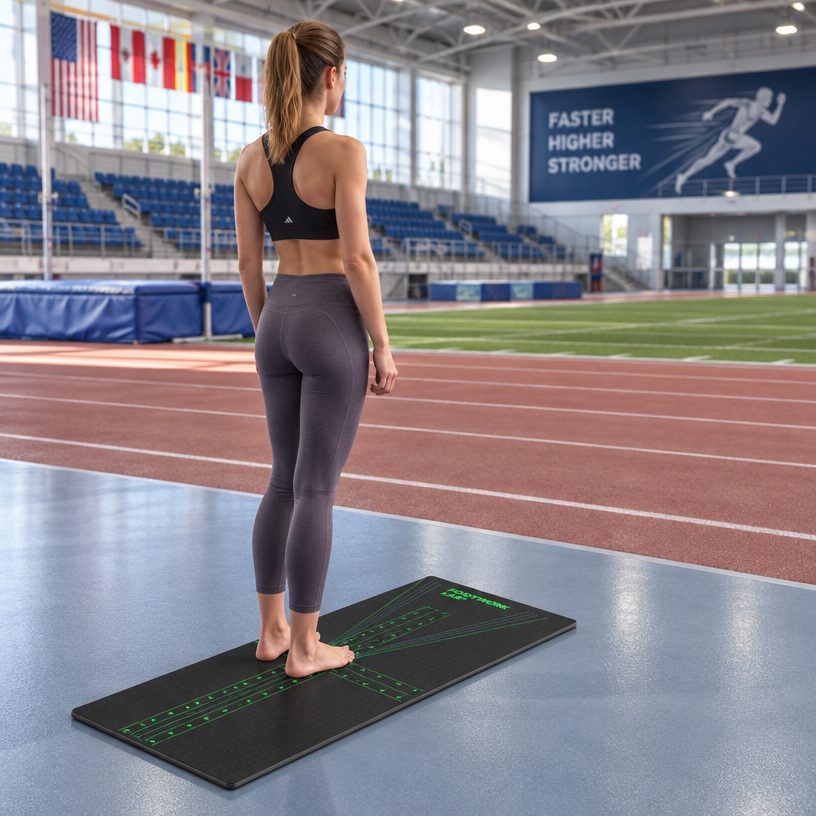
Writing the rule down, and keeping it alive
Everything above compresses into a procedure a room can write on one page and review once a year. The barefoot capture is the baseline of every posture visit and the only record compared across time. The shoes-on capture is optional, same-visit, ordered second, and reserved for the question of what the client’s actual footwear adds to their standing position. Between the two captures, the shoes are the only variable permitted to change: same surface, same stance, same instructions, same day. Every capture gets its label at the moment it happens — footwear, state, deviations — and every report keeps the two records visually distinct with a legend a stranger could read.
The review rhythm matters as much as the rule. Protocols drift the way footwear drifts: one operator at a time, one shortcut at a time, until the room’s practice and the room’s documents describe two different places. A short annual pass over the written procedure — does the practice still match the page, are the labels still being written, is anyone comparing shod records across visits — costs an afternoon and restores the comparability that the whole system exists to provide. Rooms that share files with partner clinics have a second reason to keep the discipline, because the label a stranger reads is the only version of your protocol they will ever see.
We build the measuring hardware and the protocol is yours; we do not interpret records and we do not promise outcomes, and a room that keeps that boundary in its procedure as well as its marketing will find clients trust both more. Which leaves the genuine question, the one rooms still disagree about after all of the above: in your practice, does the shoes-on capture earn its place on every posture visit, or only when the client’s footwear is itself part of the case? The answer differs by room, and the reasons behind each are worth hearing.
Frequently asked questions
Should a posture capture be taken with shoes on or barefoot?
Barefoot is the baseline of every posture visit, because it reads the foot itself — arch profile, contact pattern, centre of pressure in quiet stance — and it is the only record that stays comparable across clients and across time. A shoes-on capture is a useful optional layer for the specific question of what the client’s footwear adds to their standing position, taken second, on the same visit, with nothing else changed.
What can a shoes-on posture record tell you that a barefoot one cannot?
It shows what the footwear does to the person’s standing position that day: how the shoe’s geometry and support move the contact picture and the centre of pressure, measured on the same surface and the same protocol as the barefoot baseline taken minutes earlier. For a client whose life is spent in particular footwear, that same-visit comparison often speaks more directly to their daily reality than either record alone.
Can a shoes-on capture replace the barefoot record?
No. Shod, the measuring surface reads the outsole of the shoe filtered through everything the shoe is doing, not the plantar surface — so a shod record produces no arch profile and no barefoot contact pattern. It is a record of a foot-plus-shoe system, and it cannot substitute for the baseline in any workflow that needs the foot itself.
What has to stay constant between the barefoot and shoes-on captures?
Everything except the shoes: same visit, back to back; same surface; same marks and stance; same instructions in the same words; and the client’s own habitual footwear, laced as they lace it, with its real wear and footbed. Anything else that changes — fatigue, time of day, socks, surface — quietly contaminates the comparison.
Can you compare a shoes-on record from one visit with one from another?
Not usefully, and the room’s protocol should say so in writing. Across visits the shoe, its wear, the socks, the season and the surface all drift, so the comparison stops being about the client. The barefoot baseline is the only record compared across time; shoes-on captures are treated as same-visit instruments, and a client’s change of footwear is a reason for a new capture, not a comparison.
How should the two records be labelled and reported?
At the moment of capture, one written line in the file: footwear worn, model and state if known, socks noted, and any deviation from the standard protocol. In the report, a legend that keeps the records visually distinct — barefoot baseline first, footwear layer second — framed for what it is: what the shoe adds to this person’s standing position today, not a verdict on the foot or the shoe.
Does equipment interpretation differ when the client wears shoes?
The equipment records faithfully whatever stands on it; the meaning is carried entirely by the protocol and the label. What never changes is the boundary: the machine produces measurements and images, and the interpretation — what the record means for this person, and any decision about care — belongs to the qualified professional, not to the device or the operator reading the screen.
What we would do next
If your room has never written the shoes question down, the version to steal fits in five lines: barefoot baseline always; shod capture optional and second; shoes the only variable; label at the moment of capture; legend in the report. Put it where new staff will find it, because a protocol that lives in one operator’s habits dies with that operator’s rota. For the neighbouring disciplines, our earlier pieces on keeping conditions fair across a day of records and what a single-leg stance check adds cover the rest of the fairness family this question belongs to.
We manufacture posture and pressure capture systems at our own plant and ship them worldwide, and we take the measurement side seriously precisely so the professional side stays where it belongs: the interpretation of any record, barefoot or shod, is the qualified professional’s work, not ours and not the machine’s.
And the question, as promised: in your room, is the shoes-on capture routine or conditional? If it is conditional — and most of the experienced rooms we talk to have landed somewhere conditional — what is your actual trigger for adding it? A job change, a footwear complaint, a client who insists? We are collecting the triggers, because the answers seem to differ more between rooms than between the clients they serve.
This article is intended for professional and educational reference. It is not medical advice. Foot assessment equipment produces measurements and images; clinical interpretation and any decision about care remain the responsibility of a qualified professional. Certification scope is limited to the documentation we hold: European Union certification and ISO quality system certification.