
The customer steps off the plate, picks up their shoes, and the next one is already sitting down. In that gap — three minutes if the queue is short, five if it is not — the operator wipes the capture area, and whether anything else happens in those minutes decides far more than the schedule. Watch a busy screening station for an hour and you will see the whole range: some operators reset nothing but the surface, some reset everything including themselves, and the records that come out of each station look exactly as different as you would expect.
Between one record and the next there is a small window with more jobs in it than the wipe-down. The plate has to be clean, the position marks have to mean the same thing they meant for the previous customer, the previous customer’s posture has to have left the room, and the operator’s own attention has to reset too. None of these is difficult. All of them are easy to skip when the waiting area is full, and the cost of skipping never appears on the day — it appears later, as a record that reads strangely and cannot be compared with the one taken an hour earlier. This article walks through what a complete handover between customers actually includes, and how to make it standard instead of optional.
What actually happens in the five minutes
Written down as a list, the handover is short. The capture area gets cleaned. Anything the previous customer moved — a mark, a mat, a posture reference, a stool — goes back where the procedure expects it. The operator glances at the workspace the way a pilot glances at a panel, confirms the setup is the same one the next record assumes, and only then calls the next customer. Around all of that, the operator takes one breath and drops the previous case before the next person sits down.
In practice, under queue pressure, the list collapses. The wipe survives because it is visible — an operator wiping a plate in front of waiting customers is doing hygiene theatre that everyone understands. The rest is invisible, which is precisely why it is the first to go. Nobody watching can tell whether the position marks were re-set, whether the previous customer’s habit of standing toed-out has contaminated the stance reference, or whether the operator is still mentally inside the last case’s odd finding while the next one is already placing their feet.
The collapse is not carelessness; it is economics. The handover is unpaid time squeezed between two paid appointments, and every operator discovers independently that the queue forgives skipping it. What the queue does not forgive shows up somewhere else entirely: in the record taken twelve customers later that reads differently for reasons nobody can name, and in the follow-up capture that cannot be compared with the first because the setup drifted somewhere between the two.
The fix is not telling people to be careful. The fix is deciding, once, what the handover includes, writing it down, and making it short enough that a full version is actually faster than the shortcuts — because a record that has to be retaken is the most expensive item on the schedule.
Why carryover is a measurement problem, not just a hygiene one
The obvious reason to reset between customers is hygiene, and it is a real one: bare feet on a shared surface, all day, in a clinic or a retail setting. But the quiet reason is measurement. Every capture inherits the state of the capture area, and the capture area is never neutral by default — it is neutral only after someone makes it neutral. A footprint left in the wrong place, a mark nudged a hand-width sideways, a mat that folded under the last customer’s heel: each one reshapes how the next person places their feet before any measurement begins.
Foot placement is the upstream variable of the whole record. Where the customer puts their feet is set by what they see and feel — the marks, the edge of the plate, the habit they picked up from watching the person before them. Change the reference and you change the stance; change the stance and every line on the record moves with it. Two captures taken in the same morning with a drifted reference can look like two different feet, and the operator who took both has no way to see the drift because each moment felt normal.
This is why the problem matters more in high-volume settings than quiet ones. In a slow clinic, an operator who sees four customers a day has the spare attention to notice when something looks off. In a screening station doing a customer every few minutes, the drift is invisible at human speeds — it accumulates across the morning and surfaces only when someone finally compares an early record with a late one and finds they disagree in ways the feet cannot explain.
The comparison test makes the point to any sceptical colleague: take the same person twice in one afternoon, with the handover done fully both times, and the records should agree closely. Run the same test with a rushed handover the second time, and the disagreement between the two captures is the size of the problem, sitting there in black and white.
A handover sequence that survives a full queue
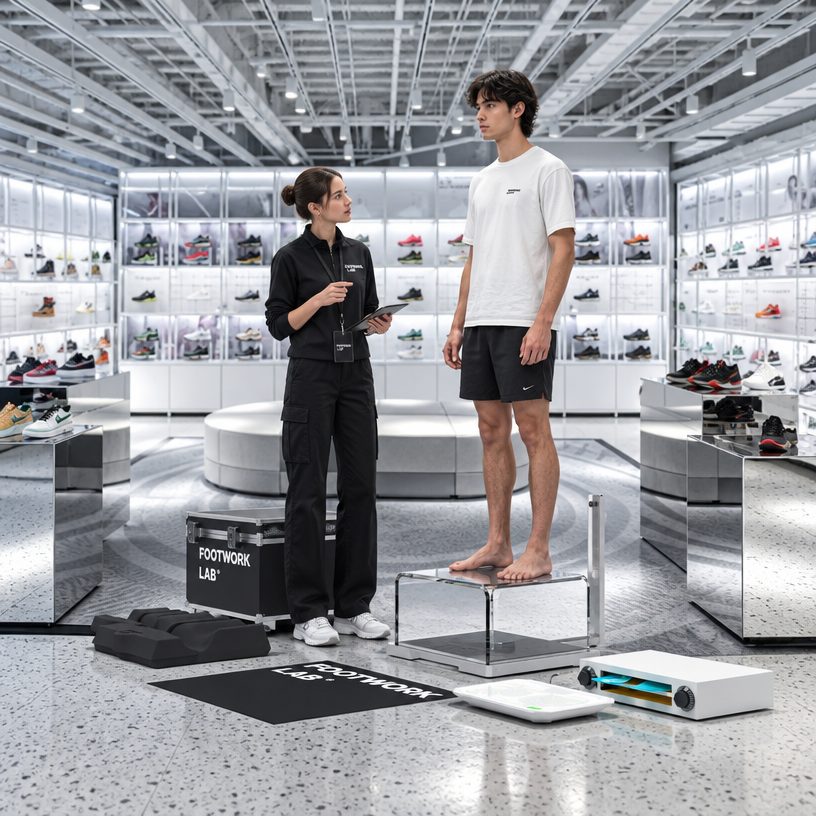
The version that works under pressure is short, ordered, and always the same. Write it down and tape it where the operator can see it, because the sequence is for the hundredth customer of the week, not the first. A practical version, in order:
One — clean the capture area, the full surface and not just the visible footprint. This is the part customers watch, and it sets the standard they will judge the station by. Two — reset the geometry: position marks back to their reference points, mats flat, stool or support where the procedure expects it. Check the marks against a fixed point, not against memory; memory is what drifted. Three — clear the previous case: close it on screen, file it, and physically turn away from it. The last customer’s odd finding has a way of leaking into how the next capture is taken, because the operator half-expects to see it again.
Four — reset the customer’s reference: let the next customer place their own feet without commentary, on the marks as they now are. Commenting on the previous customer, or steering the stance before the record starts, imports the last case into this one. Five — reset the operator: one breath, eyes on the next person, first sentence spoken to this customer and not the last one. It sounds soft, and it is the difference between an operator who is present for the record and one who is still somewhere in the previous appointment.
The whole sequence takes less time than retaking one capture, which is the arithmetic that justifies it. Put the five steps on a card, number them, and make the card the standard — then the handover stops depending on who is at the station that afternoon.
One more habit worth adding: whenever anything in the sequence gets skipped, note it on that customer’s record. A capture taken with a skipped step is still a record; it is just a record with a known asterisk, and the asterisk costs nothing now and explains a great deal later.

Hygiene that respects the equipment
Cleaning between customers has its own failure mode: doing the surface good while quietly doing the equipment harm. Capture plates and scanning surfaces are finished, sealed, and in some designs optically relevant — aggressive solvents, abrasive wipes, and spray-anything habits shorten the working life of exactly the component the whole service depends on. The honest check is what the manufacturer actually specifies, followed exactly, rather than what the cleaning cupboard happens to stock.
The practical rules that keep both boxes ticked: the right cleaning agent, the right cloth, the right frequency, and no improvisation. Sprays that pool and seep into edges do more harm than a well-dampened wipe. Paper towels on a finished surface over a year leave a different surface behind. And anything not specified for the capture surface — hand gels, disinfectant wipes bought in bulk for the whole clinic — stays off it, however convenient.
Volume changes the calculation, too. A station that captures a customer every few minutes spends its whole day in the hygiene cycle, so the products involved get chosen once and lived with for years. Worth choosing deliberately: a wipe that cleans effectively in one pass (fewer passes, less rubbing, less wear), a stock that never runs out on a busy afternoon, and a bin within arm’s reach so the used wipe never migrates onto the plate edge.
The equipment side of this deserves its own sentence. A capture device is a precision instrument wearing the uniform of furniture, and it rewards the clinics that treat it that way — our own units leave the factory after a week of testing precisely so that the surface a customer stands on behaves the same way in year three as in week three, and the modular design means a worn part is a service call rather than a retirement. The device’s contribution to a fair record, though, only holds if the daily handover treats the surface as part of the instrument, not as a floor.
The operator’s own reset
The least visible item in the handover is the operator, and the effects are real even though they never show on a checklist. The previous case follows the operator into the next capture in predictable ways: a strange result on the last record makes the operator look harder for a repeat, a smooth morning makes the next capture feel like a formality, and a queue running late makes every stance look close enough. None of this is conscious, and all of it is normal — it is just what attention does under volume.
Two habits contain most of the risk. The first is the clean break already in the sequence: the previous case gets closed, filed, and physically turned away from before the next customer sits down. The second is scripted neutrality in the opening seconds: the same first sentences, in the same order, for every customer. Scripting sounds mechanical until you notice what unscripted operators drift into — explaining the equipment differently to different customers, coaching the stance before it is recorded, starting the capture before the customer has settled. A fixed script keeps customer number nine’s experience identical to customer number two’s, which is the only way their records end up comparable.
Fatigue is the third factor, and it lands exactly where the queue is worst. Handovers done at the end of a long afternoon are shorter than the same handovers at opening time, and the operator rarely notices the difference. This is where the taped card earns its space a second time: a written sequence does not get tired, and following it mechanically for the last ten customers of the day protects exactly the records most likely to be re-done later.
Worth saying to any operator who feels the card is beneath them: the most experienced people at any screening station tend to have the most fixed routines, not the loosest. The routine is not what they do instead of judgement — it is what they do so that judgement has something reliable to work on.
When a redo is faster than a rescue
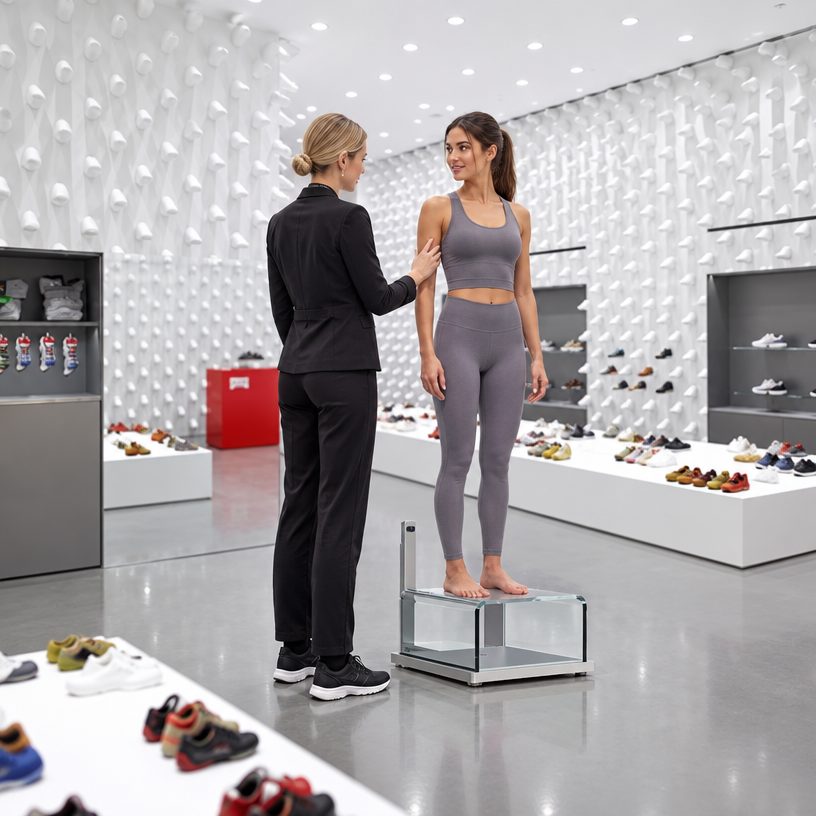
Even a disciplined handover does not make every capture a keeper, and the professional judgement at the station is knowing which problems to fix and which to restart. The rule of thumb that holds up: placement problems restart, anything else gets reviewed. If the customer’s feet landed outside the capture area, or the stance was coached mid-capture, or the reference marks had drifted — starting again is faster than saving something whose foundation is wrong, and infinitely faster than explaining the record to a colleague two weeks from now.
The restart itself is a handover in miniature. The same five steps apply, compressed: surface back to clean, geometry back to reference, previous attempt closed and set aside, customer re-settled, operator re-settled. Skipping the miniature version is how a redo inherits the flaws of the attempt it replaced, which is the most frustrating way to lose two captures in a row.
It helps to name the common restart triggers for a new operator, because experience recognises them automatically and trainees do not yet: feet placed before being asked to, weight shifting during the capture, a stance that was corrected rather than recorded, and any doubt about the capture area’s state at the start. When one of these appears, the decision is already made — the question is only whether the operator admits it now or later.
None of this equals a diagnosis, and the boundary is worth restating because screening settings blur it. The equipment produces measurements and images of how load distributes; what those mean, and what if anything happens next for this customer, is decided by a qualified professional. The handover discipline exists so that the professional later receives a record that is worth interpreting — clean surface, honest placement, comparable setup. That is the whole point of the five minutes: not speed, but a record the interpretation can stand on.
Making the handover standard across operators
A handover that lives in one experienced operator’s habits dies when that operator takes a holiday, which is why the last step is making the sequence a property of the station rather than of a person. The written card comes first. Then the training: every new operator learns the five steps on day one, on the card, the same way everyone before them did. Then the check: once a week, someone compares an early-morning record with a late-afternoon record taken from the same returning customer, and if the two disagree in ways the feet cannot explain, the handover is the first suspect.
The comparison check doubles as the training feedback loop. A new operator whose afternoon records drift has a symptom, not a character flaw, and the card plus the comparison gives them a tool rather than a criticism. Most drift has a specific, fixable cause — a mark that has lost its reference, a mat that curls at one corner, a shortcut that crept in during a busy week — and finding it takes one afternoon when the sequence is written down.
Teams running more than one station should make the sequences identical across stations. The point of a standard is comparability: a record taken at station two should mean the same thing as a record taken at station one, and two different handover habits quietly undo that. Where two operators disagree about a step, the argument gets settled once, in writing, and both follow the result.
The support infrastructure around the equipment plays its part too, and it is worth knowing what to expect: a dedicated WhatsApp support group with an engineer on the other end, remote assistance when something behaves oddly, and upgrades delivered over the air to connected units. What no support channel can do is restore a capture that was taken on a drifted reference — that record’s fate was decided in the five minutes before it started. The standard protects what the support cannot reach.
Frequently asked questions
How should you clean a foot scan plate between customers?
With the cleaning agent and cloth the manufacturer specifies, on the full capture surface, every customer. Sprays that pool at the edges, abrasive wipes and improvised disinfectants shorten the life of the surface, so the cleaning routine should come from the equipment documentation rather than the general clinic cupboard.
Does the wipe-down actually affect the measurement, or is it only hygiene?
Both. The wipe is hygiene, but the handover around it — resetting position marks, flattening mats, closing the previous case — decides how the next customer places their feet, and foot placement is the upstream variable of the whole record. A drifted reference changes the measurement before it begins.
What steps belong in the handover between customers?
A working five-step version: clean the full capture area, reset the geometry against fixed reference points, close and file the previous case, let the next customer place their feet without commentary on the reset marks, and give the operator one breath before the first sentence of the next appointment.
How can a team tell if capture setups have drifted over a day?
Compare an early record with a late record from the same returning customer, taken the same day. If the two disagree in ways the feet cannot explain, the handover is the first suspect. Run the comparison weekly and the drift is caught while its cause is still findable.
When should a capture be redone rather than adjusted?
Placement problems restart, everything else gets reviewed. Feet outside the capture area, a stance coached mid-capture, or any doubt about the state of the capture area at the start are restart triggers — saving a capture with a wrong foundation costs more than taking it again.
How do you keep handover standards consistent across several operators?
Write the sequence once, tape it at the station, train every new operator on the card, and use identical steps across all stations. A weekly early-versus-late record comparison keeps the standard honest, and disagreements between operators get settled once, in writing.
What should operators avoid saying while a customer places their feet?
Anything imported from the previous case, and any steering of the stance before it is recorded. The customer places their own feet on the marks as they are; coaching the stance turns the capture into an intervention and makes the record say something the customer’s own pattern does not.
What we would do next
If the handover at your station is currently a habit rather than a standard, tomorrow morning is enough to change that: write the five steps on a card, tape it where the operator stands, and run the comparison test once this week — an early record against a late record from the same returning customer. The result either confirms the setup is holding or names the drift, and both outcomes cost one afternoon.
Two adjacent reads on this site: four retakes in a morning, on the usual reasons a capture gets redone, and keeping one variable in a posture capture, on why shoes on or shoes off deserves the same discipline as the plate itself. Both extend the same argument: the record is only as fair as the least-remembered step before it. Equipment such as a screening podoscope makes the measurement possible; the handover makes it comparable, and for a screening podoscope or any capture device, comparability is what turns a picture into a record.
The question we would leave with colleagues: in your setting, who noticed last time the position marks had drifted — and if the honest answer is nobody, what would it take to make the five minutes a written standard instead of a habit?
This article is intended for professional and educational reference. It is not medical advice. Foot assessment equipment produces measurements and images; clinical interpretation and any decision about care remain the responsibility of a qualified professional. Certification scope is limited to the documentation we hold: European Union certification and ISO quality system certification.