
Put a client on a pressure platform, record the standing map, then ask them to walk across the same platform, and the two maps will not match. Not slightly, and not because something went wrong. The standing record and the walking record are answers to different questions, taken under different loads, at different speeds, with different contact geometry, and often on different days. A practitioner who expects them to agree will spend the first month convinced the equipment is unreliable. A practitioner who expects them to diverge will spend that month learning which record answers which question.
This is the single most common source of confusion in foot assessment, and it is rarely explained at the point of sale. Vendors demonstrate the standing map because it is beautiful and immediate, then show the walking sequence because it looks technical, and leave the buyer to assume the second is a more advanced version of the first. It is not. It is a different measurement of a different state.
We build both kinds of system, and we make insoles from the records they produce, so we have a commercial interest in clinics using both well. We also have a practical interest in buyers understanding the difference before they order, because a clinic that expects agreement will blame the hardware for a property of the human foot.
Two records of the same foot, minutes apart
Start with what is physically happening. In a static test, the client stands still on the sensing surface, weight distributed as they choose to distribute it, and the system records a single frame — or an average of frames taken while nothing moves. In a dynamic test, the client walks across the surface, and the system records a sequence of frames as the foot arrives, accepts load, rolls forward and leaves.
Those are not the same measurement at two levels of detail. They are two different experiments. One asks what the foot looks like under a steady load it can feel and adjust to. The other asks what the foot does when the load arrives faster than the client can think about it. The client’s own behaviour differs between the two, and so does the loading itself.
There is a third difference that rarely gets mentioned: the static record is bilateral and simultaneous, so it captures how the two sides share the body’s weight at one moment. The walking record is a sequence of single-foot events, so the comparison between sides is a comparison of two events separated in time, not of two halves of one instant. That distinction alone explains a large share of the disagreements practitioners notice.
None of this makes either record wrong. It makes them partial, in the way that a photograph and a film are partial descriptions of the same room.
What the static record is made of
The static record is a snapshot of contact. It shows the area of the sole in contact with the surface, the shape of that area, and how load is distributed across it at the moment of capture. Because nothing is moving, the record is stable: repeat the capture without changing anything and you get nearly the same map. That stability is its main virtue and the reason it is the right starting point for a fitting.
It also shows the left-right share in a way that walking cannot. When a client stands on two sensors at once, the system can report how much of the body’s weight each side is carrying. A client who stands with most of their weight on one side will show it clearly, and so will a client who is guarding one foot without saying so.
The static record is honest about geometry and quiet about time. It cannot show how long a region stays loaded, because nothing is loading or unloading. It cannot show the path the load takes across the sole during a step, because there is no step. And it cannot show variability, because a single frame has none.
Its weakness is that it is easy to influence. Clients arrange themselves when they know they are being recorded. They shift weight to look symmetrical, they stand with the feet placed where the operator indicated rather than where they would put them, and they hold a position that is not the position they hold while waiting for a bus. A static map is therefore a record of a pose as much as a record of a foot, and the operator needs to know which one they captured.
Two static variants are worth capturing whenever the schedule allows. The first is the client’s habitual stance, feet wherever they put them. The second is a placed stance, with the feet at a marked separation and the toes pointing in a stated direction. Comparing the two tells you how much of the map is the foot and how much is the way the client chose to stand on the day. In our experience the difference between those two captures is often larger than the difference between two visits, which is a useful thing to know before drawing conclusions from a comparison across months.
What the dynamic record adds, and what it costs
The walking record adds time, and time is where the useful information lives. With a sequence of frames the software can report when load arrives at the heel, how long the forefoot carries it, when the toes unload, and how those timings compare between the left and the right. It can trace the path of the centre of load across the sole during a step, which is the closest thing the equipment has to a description of how the foot rolls.
It also records forces that a standing test never produces. Walking is not a static activity with movement added; the body’s mass is decelerating and accelerating, and the surface sees more than the client’s weight for part of each step. That is why a walking map can show a peak under a region that looks unremarkable when the client stands. The peak is real, it is brief, and it exists only because the body was moving.
The cost of all this is noise. A walking record varies between passes because people do not walk identically twice. It varies with speed, with footwear, with how many passes were captured, with where the client looked, and with whether the surface was approached from a standing start or a run-up. A dynamic record with one pass is not a measurement; it is an anecdote. A dynamic record with several passes and a stated condition is a measurement.
There is also a reporting decision hiding inside the dynamic record. A sequence of frames has to be summarised before it reaches a screen: peak values, averages, or a single composite frame. Each summary answers a slightly different question, and two systems that summarise differently will produce maps that look unlike each other even when the underlying data is similar. When you compare systems at a demonstration, ask what the displayed frame represents. A map labelled as an average will smooth away the peaks that a map labelled as a maximum makes obvious, and neither is wrong until someone compares them as if they were the same thing.
That is the trade a buyer is making. The static record is stable and shallow. The dynamic record is rich and variable, and it only becomes trustworthy when the protocol around it is disciplined — a set number of passes, stated speed, stated footwear, stated approach.
Why the two records diverge
Four mechanisms account for most of the disagreement, and knowing them turns a confusing pair of maps into a readable pair.
Time. A static map has no duration. A dynamic map is made of instants, and the highest value in the sequence may last a small fraction of a step. A region that shows moderate load while standing can show a sharp peak while walking, because the peak is a moment rather than a state. Neither reading contradicts the other; they are reporting different quantities.
Contact geometry. The sole does not contact the surface identically under both conditions. Under the faster loading of walking, the contact area changes shape — often spreading in some regions and narrowing in others — and the load path shifts with it. Comparing the outline of a standing map with the outline of a walking map is comparing two different footprints of the same foot.
Behaviour. Clients pose when they stand and stop posing when they walk. The standing map often shows a more symmetrical, more deliberate arrangement than the walking sequence, because the client has had time to arrange it. This is not dishonesty; it is what people do when asked to stand still for a camera.
Protocol and equipment. Different footwear, a different number of passes, a surface approached at a different angle, a platform that was recalibrated between sessions, an operator who gave different instructions. These produce differences that belong to the session rather than to the client, and they are the first thing to rule out before reading a divergence as a finding.
One practical way to learn the difference in your own room is to run the divergence deliberately. Record a static map, then a walking sequence, then a second static map immediately afterwards. If the two static maps agree and the walking sequence differs from both, you are looking at the effect of movement. If the two static maps differ from each other, you are looking at how much the client’s stance varies within a single appointment, which sets a floor under every comparison you will ever make with that client. Running this once on a colleague takes a few minutes and changes how you read every record afterwards.
Which record should drive the specification
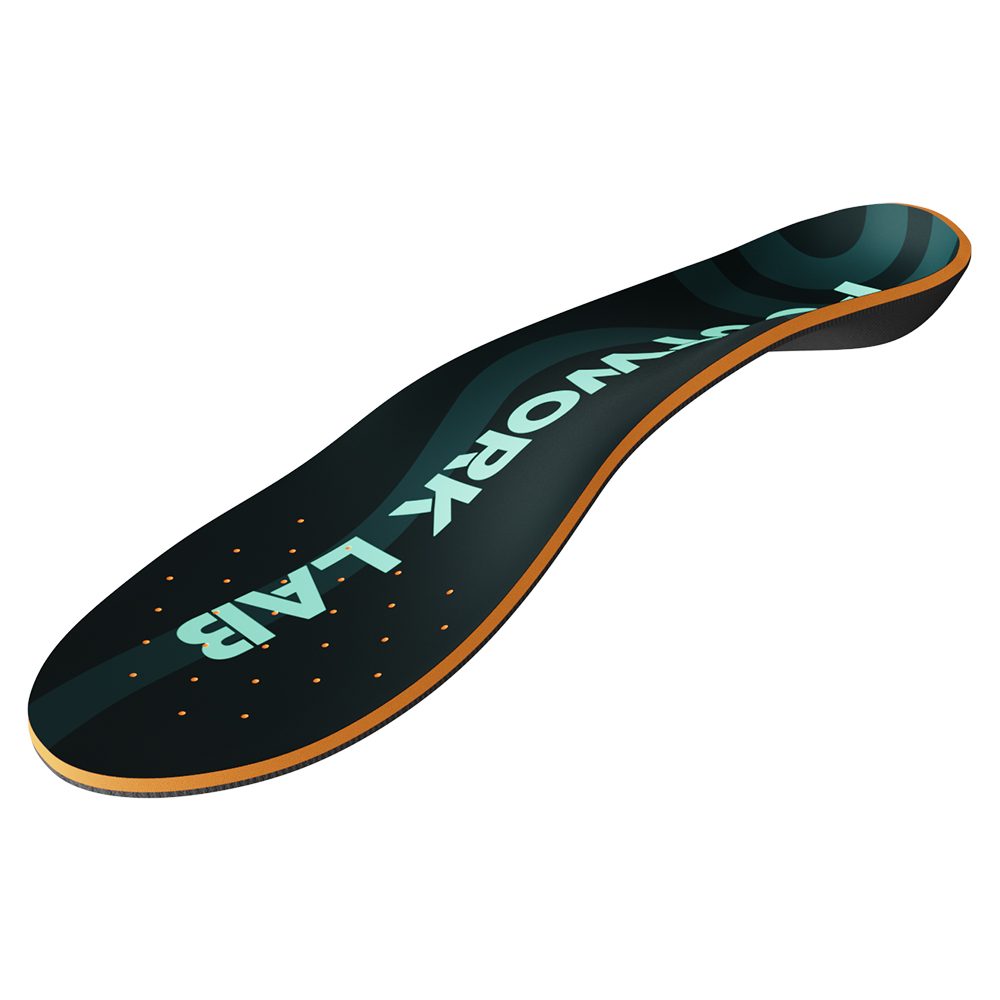
When the output is an insole, the two records answer different parts of the specification, and mixing them up produces devices that either do not fit or do not do anything useful.
The static record is the better guide to the shell. It shows the contact area the device has to sit within, the shape of the heel and the forefoot, and the left-right difference in how the client stands. It is stable enough to be repeated, which matters because a shell is a physical object that has to accommodate a foot in a shoe, not a foot in motion. Volume, length, width and heel cup depth are decisions made against a standing or partially loaded foot, not against a moving one.
The dynamic record is the better guide to where support is placed and how much of it. If the walking sequence shows load concentrating along one edge of the foot through the middle of the step, that is information about how the device should distribute load during gait rather than about how the shell should be shaped. It also informs the top cover choice, the position of any medial or lateral addition, and the review interval, because a pattern that only appears under load is a pattern worth re-checking.
What neither record supplies is the constraint set that decides whether the specification is realistic: the shoe the client will wear, the volume available inside it, the condition of the skin, and how much change the client will tolerate in the first week. Those come from the shoe on the table and the conversation. Our own insole line builds to submitted foot data and accepts orders from 200 pairs with mixed styles and sizes, which means the specification has to be unambiguous before it reaches the production floor; a record that is read differently by two people in the same clinic will be read differently again in a factory.
A routine that uses both without doubling the appointment
The routine that works is sequential and short. Static capture first, in the client’s habitual stance, then a second static capture with the feet placed at a marked position. The pair takes very little time and gives you both the pose and the position. Then the walking passes, with one discarded pass at the start and several kept. Total capture time is modest; the appointment is dominated by intake, explanation and review.
Label everything by condition. Barefoot static, shod static, barefoot walking, shod walking, treadmill at a set speed. Five conditions is not excessive if the clinic’s protocol calls for them; what is excessive is capturing five conditions and storing them under names that do not say which is which. Six months later, the label is the only thing that makes the comparison legitimate.
Review with one number from each record, not with everything. A useful review sentence runs: standing, your load sits slightly more on this side; walking, that difference mostly disappears and the load path runs along this edge instead. That sentence uses both records, admits the divergence, and gives the client something concrete. It is also honest, which is the point.
Finally, decide in advance what would make you change the specification. If neither record would alter the device, the second capture is documentation rather than assessment, and documentation is a legitimate reason to capture — but it should be a deliberate one, priced into the appointment rather than discovered at the end of it.
The report should say which record produced which statement, in words a client can follow. “Standing, the load sits slightly more on the left” and “walking, the load path runs along the outer edge on the right” are two sentences that a client can repeat to a family member. A report that merges them into a single impression of asymmetry will be repeated inaccurately, and the inaccuracy will be attributed to the clinic rather than to the summary. Writing the two records as two records costs a line of text and protects the whole assessment.
Frequently asked questions
Why do the standing and walking maps look so different?
Because they are different experiments. The standing record captures one steady state; the walking record captures a sequence of fast-loading events. Contact geometry, load magnitude and the client’s own behaviour all change between the two, so divergence is expected rather than a sign of a fault.
Which record should we trust more?
Neither in isolation. Use the static record for the shape and fit of a device and the dynamic record for how load behaves during a step. A conclusion drawn from one without the other is a conclusion about half the behaviour.
Do we need two separate machines to capture both?
Not necessarily. A system with a pressure-sensing platform and the right software can capture a standing record and a walking sequence. What a standing-only surface cannot do is produce the walking sequence, so if gait is part of your service, that capability has to be in the original purchase.
How many walking passes should we record?
Several, and keep all of them. One pass is an anecdote; the variability across passes is part of what you are measuring. Discard the first exploratory crossing and tell the client why you are doing it.
Does body weight affect the comparison?
It affects the magnitude of both records, and it affects them differently, because a walking step involves deceleration and acceleration that a standing test does not. That is one reason the two records should be compared in shape and distribution rather than in absolute values.
Should the client be barefoot or in shoes?
Both conditions are legitimate and they answer different questions. Record them separately and label them. A barefoot record set against a shod record will show differences that belong entirely to the shoe.
Can you make insoles from these records?
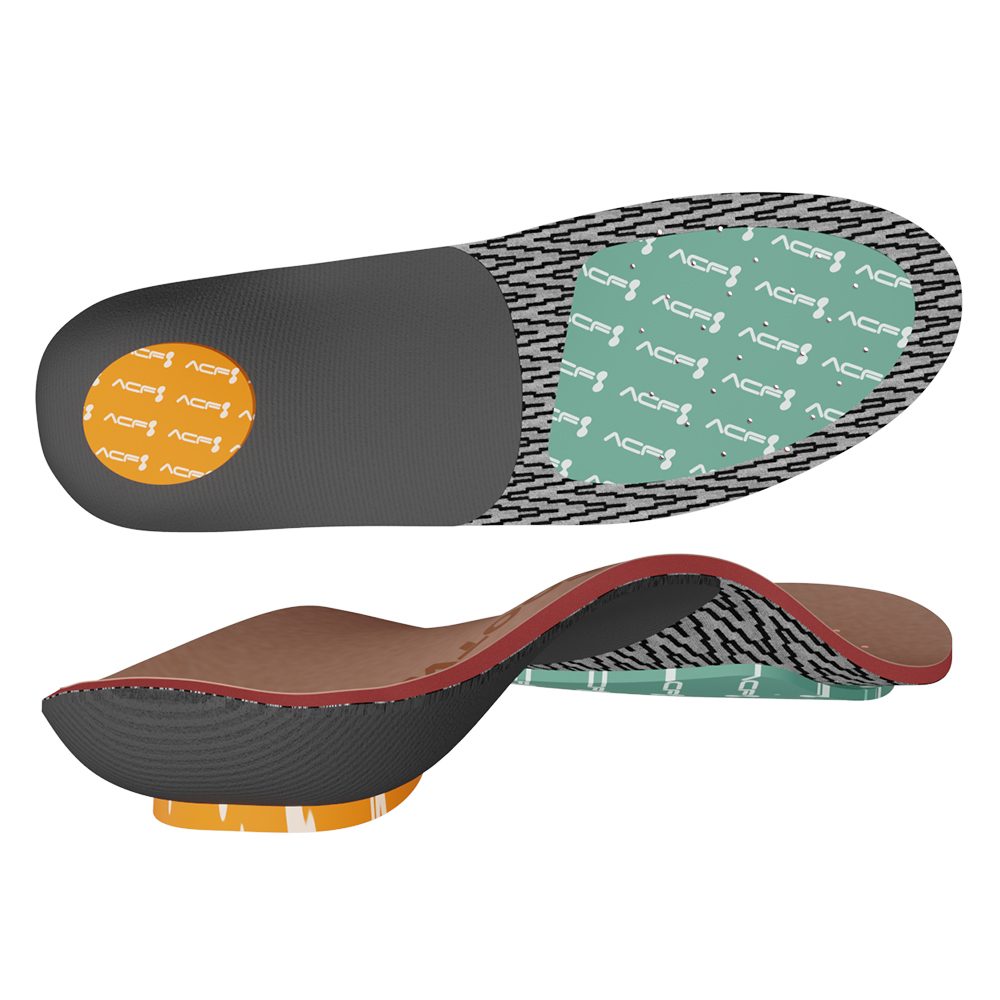
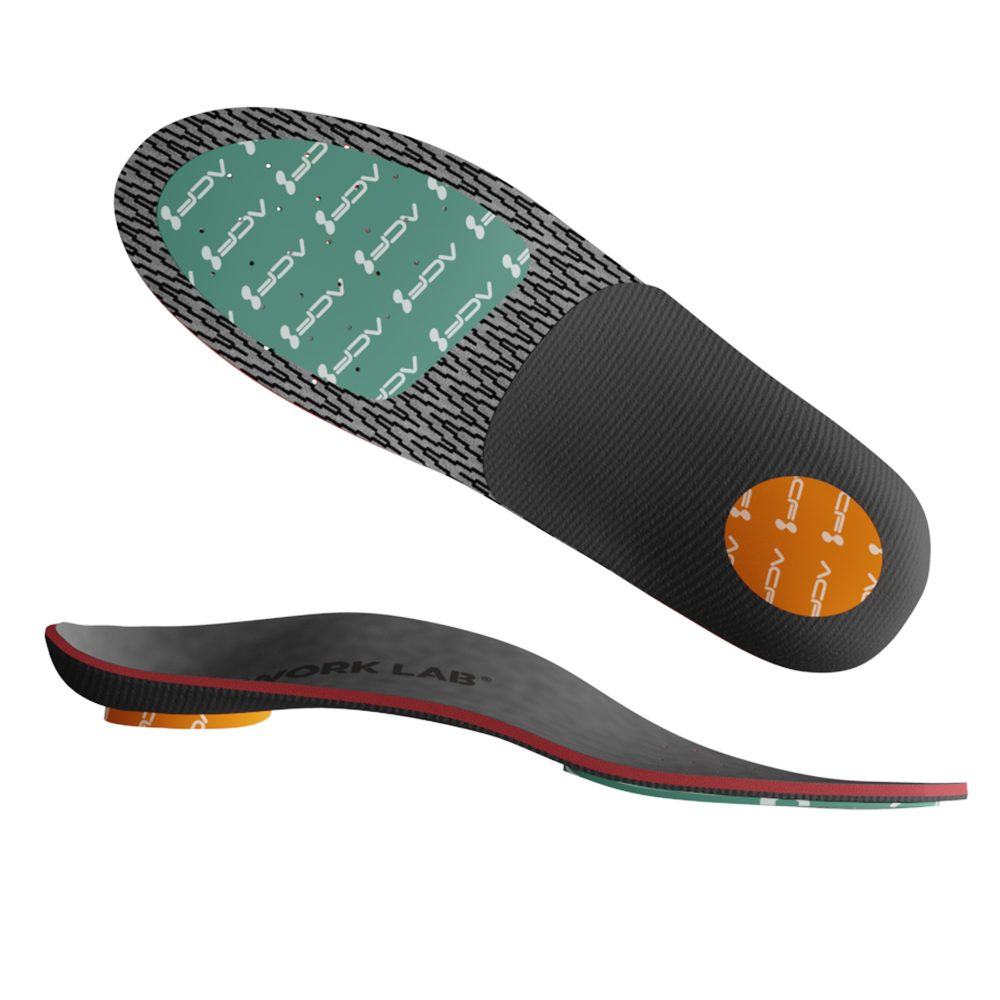
Yes. We are a factory rather than a trading company, with research and production in house. Insole orders start from 200 pairs with mixed styles and sizes allowed, ODM and OEM are both accepted, and samples are dispatched within three days.
What we would do next
If you are specifying a system, decide first which record your service cannot do without, then check that the configuration you are buying produces it. The F2 plantar pressure system covers the standing and pressure side, the F5-LAB dynamic gait platform adds the walking sequence, and the insole categories page shows what the specification step produces. For the interpretation side, our guide to reading a plantar pressure map walks through what the colours and the numbers actually represent. If you want a second opinion on the protocol before you commit, send us the sequence you plan to run.
This article is intended for professional and educational reference. It is not medical advice. Foot assessment equipment produces measurements and images; clinical interpretation and any decision about care remain the responsibility of a qualified professional. Certification scope is limited to the documentation we hold: European Union certification and ISO quality system certification.