
A department that starts with a catalogue ends up with equipment that does not fit its paperwork. The sequence usually runs the wrong way round: a budget appears, three suppliers are asked for quotations, the list is assembled from what is available, and the record the department actually produces is discovered afterwards. The equipment then either shapes the service or sits unused, depending on how well the two happen to align.
The reverse sequence is less exciting and much cheaper. Write the session first — what is captured, by whom, how long it takes, what is filed, who reads it — and let the list follow. A department that can describe its session in one page will recognise the machines that serve it within minutes, and will also recognise the ones that would require changing the session to suit a catalogue.
We supply assessment equipment to rehabilitation departments and produce insoles from the same plant, so we see the consequence of that sequence from both directions. What follows is a way to run it: session, record, room, then equipment list, in that order.
Write the session before the list
A session has a length, a start and an end. Someone brings a patient in, someone captures something, someone explains something, someone writes something down. Writing those four verbs down, with a time against each, produces a document that equipment can be measured against. Departments that skip this step compare brochures, and brochures are written to be compared with other brochures.
The session also has a purpose, and the purpose decides the depth. A department documenting progress across a rehabilitation block needs comparison; a department screening new referrals needs speed; a department supporting a return-to-activity decision needs a record a third party will accept. Those three purposes point to three different configurations, and a department that names its purpose stops arguing about features.
The third element is the reader. Who opens the record afterwards — the same clinician, a colleague, a referring physician, an insurer? The reader decides the report format, and the report format decides whether the equipment is useful. A department that never names its reader ends up with a system that produces records nobody opens.
Writing this document takes an hour and saves a purchase. It also survives staff changes, which is more than can be said for a decision that lives in one person’s memory of a demonstration.
A useful version of the document fits on one side of paper. Five lines for the session: who brings the patient, what is captured, how long each step takes, what is filed, and who reads it. Three lines for the room: where the equipment stands, what surface it sits on, and when the space is free. Two lines for the purpose: what decision the record supports and what would count as a change. Departments that can fill those ten lines can compare any quotation in the category within an afternoon, and they can explain to a finance committee exactly what the money buys.
What rehabilitation actually records
Rehabilitation records two kinds of thing: a state and a change. The state is where the person is today — how load is distributed under the foot, how they stand, how they walk. The change is the difference between today and a previous session, and it is the reason the record exists. Equipment that captures a state well but cannot compare two states is only half a tool.
The second distinction is between what the equipment measures and what the clinician observes. A pressure distribution is measured; a hesitation before a step is observed; a comment about footwear is neither. A useful report has fields for all three, and the observed fields are the ones that make a record specific to a person rather than to a condition.
The third is what the department deliberately does not record. Some departments avoid images for consent reasons, some avoid storing patient identifiers on the device, some keep records only in the practice management system. Those decisions belong in the session document, because they constrain which software is acceptable and where the data may live.
Room, routine and the limit of a purchase
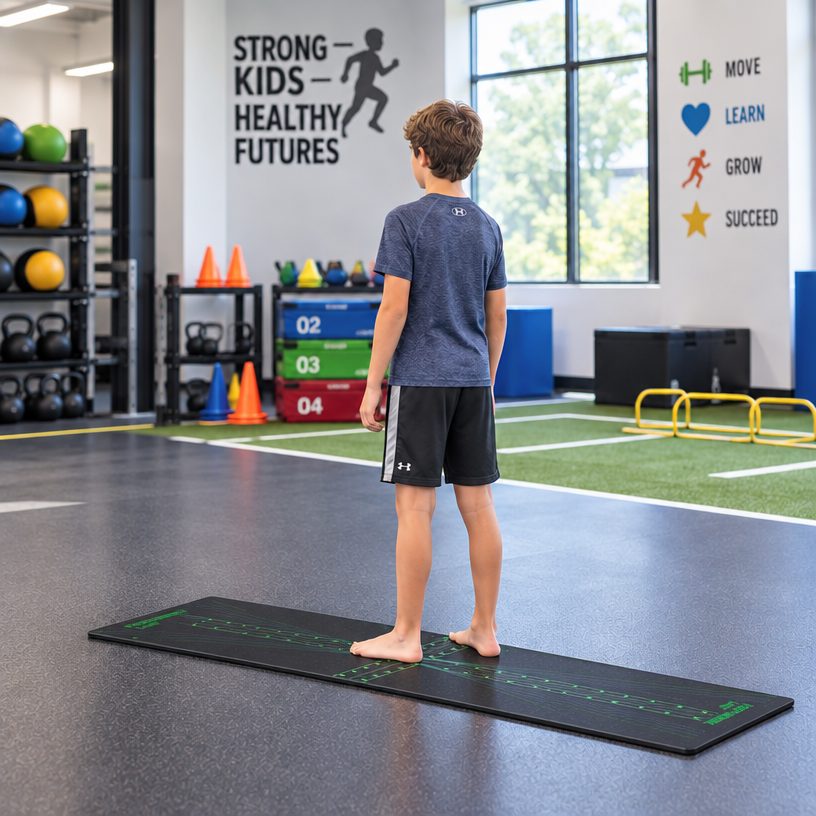
A rehabilitation department usually has less space than it would like and more equipment than it has room for. That reality should shape the list. A device that needs a dedicated room will displace something; a device that sits on a bench and is put away will be used less. Neither is wrong, and both should be counted before the order rather than after delivery.
Routine is the second constraint. A department that captures during a session has a natural slot for it; a department that captures in a separate appointment has to create one, and creating one requires staff time that may not exist. Equipment bought without a slot in the day is equipment that is used when the department is quiet.
The limit of a purchase is worth stating plainly: no device improves a service that has no protocol. A department with a protocol and no device will borrow one, borrow a room and manage. A department with a device and no protocol will capture inconsistently and eventually stop. The order of those two things is not negotiable.
Reading and using the record in a department
A department reads a record for three purposes: to explain something to a patient, to decide what to do next, and to show a colleague or a funder that something changed. Each purpose wants a different part of the same record, which is why a report with an image, a distribution and a note covers more ground than a report with any one of them alone.
Explaining is where the image earns its place. A patient who sees their own standing posture understands a conversation about loading in a way that a verbal description does not achieve. Departments that use the image as a teaching tool report better engagement, and engagement is what makes a rehabilitation block continue.
Deciding is where the distribution earns its place. The numbers support a choice about which side to work on, which shoe to recommend, or whether to refer. That is the clinical use, and it depends on the capture being consistent rather than on the report being elaborate.
Showing is where the note earns its place. A funder or a referring clinician wants a short statement of what was found and what was done, and that statement is written by a person rather than generated by software. Departments that build the note into the session have records that can be shown; departments that leave it to memory have records that cannot.
It is worth naming the failure mode that sits between those three uses. A department can capture diligently, explain well, decide sensibly, and still lose the value of the record because nobody can find it three months later. Storage convention is not an administrative detail in a rehabilitation setting; it is what makes a comparison possible at all. Date-first filenames, a folder per year and a field for the treating clinician cost nothing and turn a pile of sessions into a history that a colleague can pick up, which is exactly the continuity a rehabilitation block depends on.
Building an equipment list that holds together
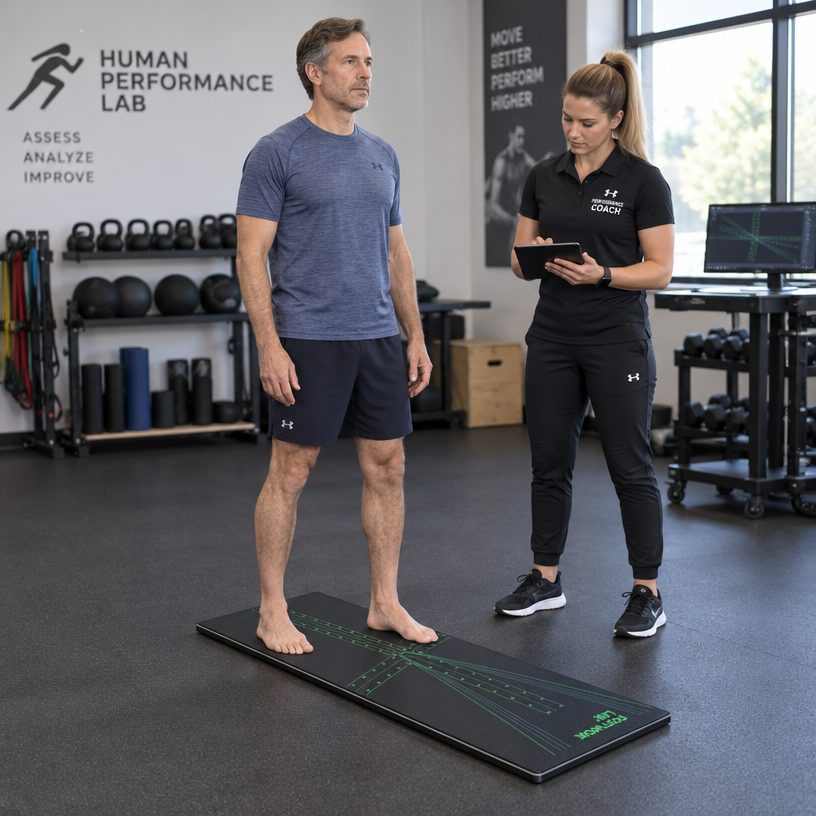
A coherent list has three layers: capture, record and space. Capture is the sensing and camera hardware. Record is the software and the storage. Space is the room, the surface, the light and the furniture. Departments that buy only the first layer are buying a device; departments that buy all three are buying a service.
The list should also name what each item replaces. A department adding a dynamic platform may be replacing a treadmill session, or adding to it, and the difference decides whether the platform is used or admired. Naming the displaced activity is the most reliable test of whether a purchase will change anything.
Consolidation is worth considering before expansion. One system that captures standing and walking with a fixed camera relationship is often more useful than two systems that each do one thing, because the records share conditions and can be compared. A department with two unrelated devices has two datasets that cannot be laid side by side.
The list should also carry the maintenance line, which departments often omit because it falls into a different budget. Calibration, spares, a replacement sensing surface and the staff time for a support conversation are all real costs, and a list without them is a wish rather than a plan. Departments that show the maintenance line to a finance committee get fewer questions in year two, because the questions were answered before they were asked.
Sequencing a purchase over two budgets
Most departments cannot buy everything at once, and pretending otherwise produces a list that is cut arbitrarily at the last meeting. A better approach is a sequence: the capture layer first, the comparison software second, the space improvements third. Each step delivers something usable on its own, which is what makes a two-budget plan credible.
The sequence should follow the session. If the department captures standing only, a static system with a camera is a complete first step. If the department captures walking, a platform is the first step and the camera may follow. If the department already has a device and no report habit, the first step is training rather than hardware.
Buyers should also plan the second year in the first budget. Warranty, spares and support belong in the plan from the start, and a supplier who describes those terms in writing helps a department argue for them. Our units carry twelve months against non-human damage with free parts, ship after seven days of testing, and are supported through a dedicated WhatsApp group with engineers, remote assistance and over-the-air updates where connected.
Working with a supplier’s specification
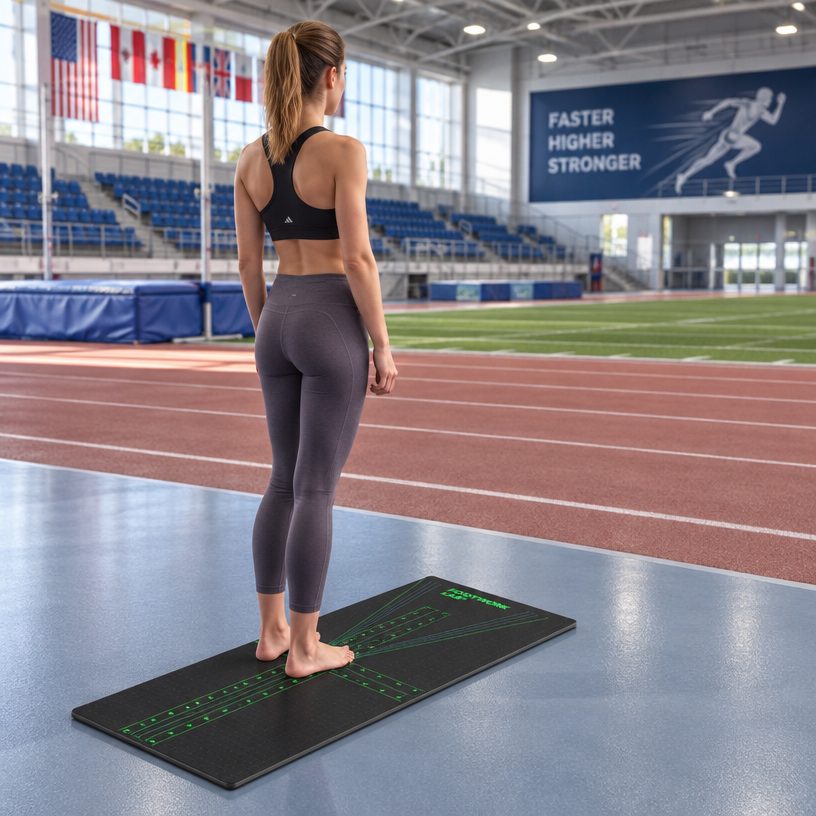
A supplier’s specification is written to be compared with other specifications, and a department’s session document is written to describe its own work. The two documents rarely match, and the department has to do the translation. That translation is easier when the department asks three questions: what does the device record, what does the report contain, and what does the second session look like beside the first.
Those three questions sort almost any quotation. A supplier who can answer them from a real capture on the department’s own floor is describing a workflow. A supplier who answers from a brochure is describing a product, and a product may or may not serve the session.
The department should also ask what the supplier would advise against. A supplier who recommends the smallest configuration that fits the session is more useful than one who recommends the largest that fits the budget, and the second type is easy to recognise because every answer expands the order.
One question deserves a place in every department conversation and it is about the room rather than the hardware: what happens when the equipment is not in use? A device that must be packed away needs a home that is not a corridor cupboard, and a device that stays out needs a cover and a rule about trolleys. Departments that answer this before delivery avoid the most common cause of a damaged sensing surface, which is not misuse but storage.
A first-quarter plan
The first quarter has four tasks: establish the protocol, train two people, capture consistently, and review once. Departments that do those four things have a working service by the end of the quarter. Departments that spend the quarter buying and installing have equipment and no habit.
The review at the end of the quarter should be about the record rather than the device. Did anyone open last month’s records? Did a comparison change a decision? Did a patient understand something they had not understood before? Those three questions tell a department whether it bought the right thing, and they are answerable without a supplier in the room.
Frequently asked questions
Where should a rehabilitation department start?
With the session document: what is captured, by whom, how long it takes, what is filed and who reads it. Equipment follows from that document, and departments that write it first compare quotations far more quickly.
Do we need dynamic capture as well as static?
It depends on the protocol. A department documenting standing posture and load can work with a static system and a camera. Walking capture needs a platform and a repeatable protocol, plus a room that supports both.
Can two sessions be compared?
Only with the same protocol and the same conditions, and only if the software places two records side by side. Ask to see that function on a real capture before purchase.
What warranty and support are typical?
Our units carry twelve months against non-human damage with free replacement parts, ship after seven days of testing, include training at installation, and are supported through a dedicated WhatsApp group with engineer access and remote assistance.
Is training included?
Yes, at installation. A refresher after six months is usually worth more than a longer initial session, and the support channel absorbs most questions as they arise.
Can the equipment be funded across two budgets?
Many departments sequence a purchase: capture layer first, comparison software second, space improvements third. Each step needs to deliver something usable on its own for the plan to be credible.
What we would do next
If your department is building a list, send us the session document — even a draft — through our contact page, and we will return the configuration that serves it and the one that would require changing it.
Our F2P system is the unit most rehabilitation departments start with, and the FAQ page covers warranty, support and transit.
This article is intended for professional and educational reference. It is not medical advice. Foot assessment equipment produces measurements and images; clinical interpretation and any decision about care remain the responsibility of a qualified professional. Certification scope is limited to the documentation we hold: European Union certification and ISO quality system certification.