
Plantar 3D scanning is a search phrase that covers several different technologies, and buyers using it are often not all looking for the same thing. Some mean pressure mapping under the sole. Some mean shape capture of the foot. Some mean a camera-based posture record. The systems behind them are built differently and answer different questions.
This is not a criticism of the phrase. Buyers search with the words the market uses, and the market uses one label for a category that has not agreed on a name. The practical problem is that a supplier can honestly fulfil a request written in that phrase with a system that does not do what the buyer assumed.
We build capture systems in this category, and a fair share of our enquiries arrive using exactly this wording. What follows is what the phrase usually covers, what each method actually records, and the two questions that settle which one a buyer needs.
Three methods behind one phrase
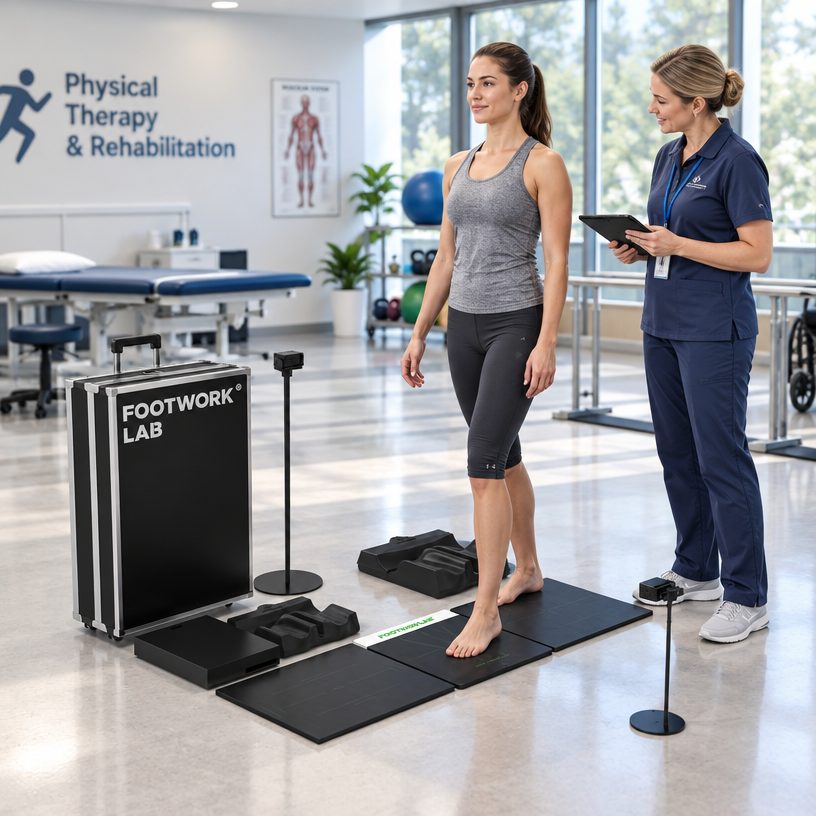
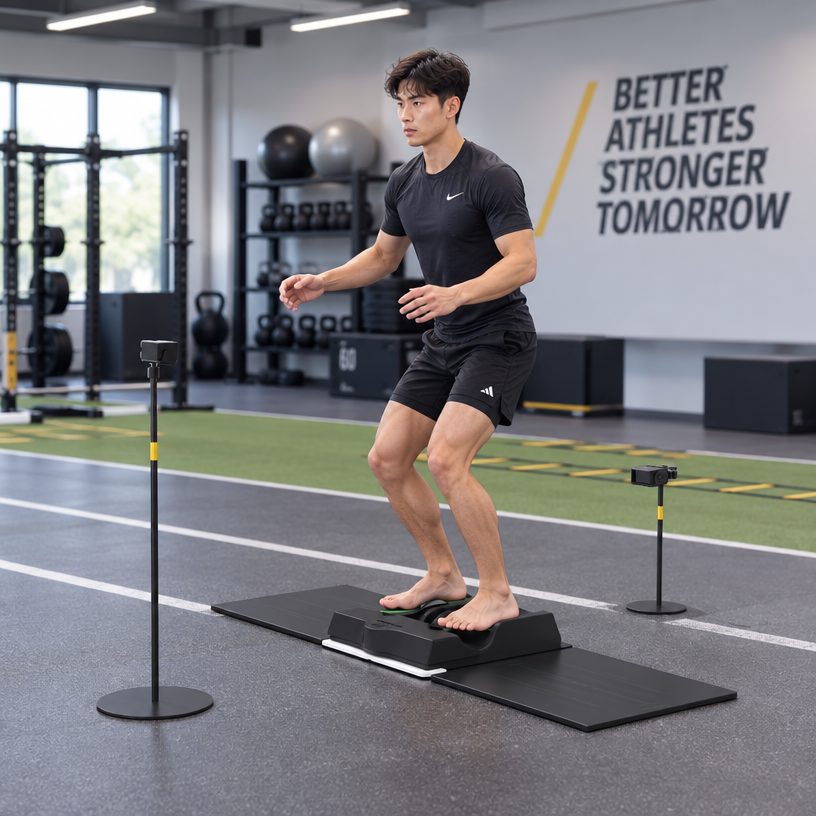
The first method is pressure mapping: a sensing surface that records load distribution underneath the foot, either standing or across a walk. Its output is a distribution over time, and it is what most gait and load questions are answered from.
The second is shape capture: recording the geometry of the foot itself, typically for producing a device that matches its form. Its output is a shape, and it is what a moulded device is built from.
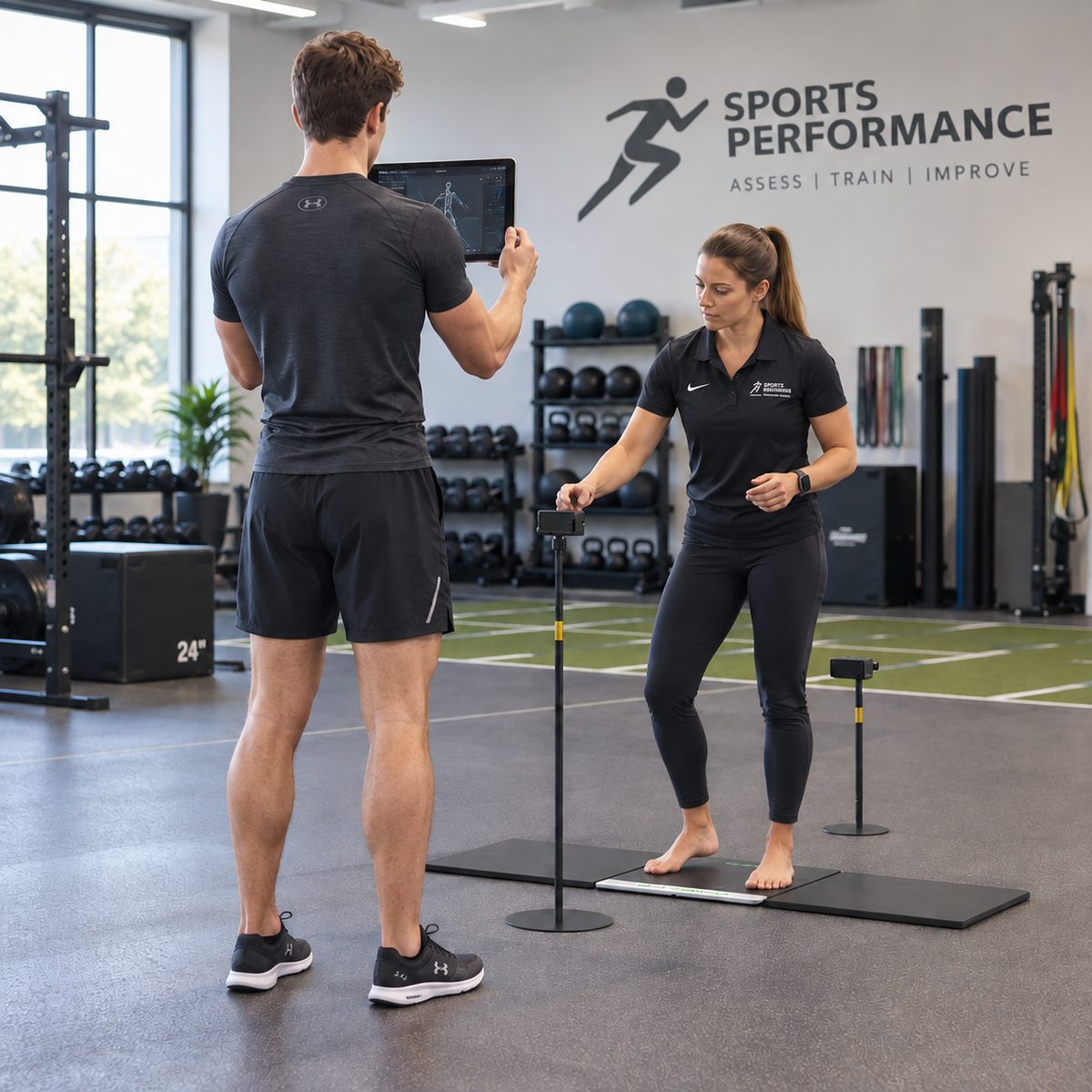
The third is camera-based posture and alignment capture: images of how a person stands, used to record alignment above the foot. Its output is a visual record with measurements taken from it, and it is what most fitting decisions above the sole are based on.
A single system can contain more than one of these, which is part of why the phrase is confusing. A system that captures pressure and posture is neither purely the first nor purely the third, and a buyer reading a listing has to know which parts are present.
What each record is good for, and what it is not
A pressure record is good for questions about load: where it goes, how it shifts between sides, how it changes across a walk. It is not good for questions about the shape of the foot, because it records force rather than form. A high-pressure area on a pressure map may have several different structural explanations.
A shape record is good for producing a device that matches the foot. It is not good for questions about load, because a shape does not say how the person uses it. Two feet of identical shape can load very differently, and a device built to shape alone will not address that difference.
A posture and alignment record is good for questions about how the person stands above the foot, which is what most clinical fitting decisions turn on. It is not a substitute for either of the other two, and it is often the most immediately useful of the three in a consultation because the wearer can see it.
Where the confusion costs money
The cost of the confusion shows up after delivery. A buyer who wanted load data and receives a shape capture has a system that produces forms but no information about use, and the intended service cannot be run on it. The equipment is not faulty; the specification was ambiguous.
The reverse happens as often. A buyer who wanted to produce devices and receives a pressure-only system can measure beautifully and still has to capture shape separately, which puts a second step in the workflow that was not budgeted for.
Both are avoided by writing the requirement in terms of output rather than category. “We need to know where load goes during a walk” and “we need a form to build a device from” are two specifications that no supplier can confuse, and neither uses a category label.
How to read a listing that uses the phrase
Listings in this category are written to be found rather than to be precise, so reading them means looking for what is measured rather than what it is called. Three things to look for. Does the specification mention a sensing surface or a sensor count? That indicates pressure. Does it mention cameras and posture? That indicates alignment. Does it mention producing a form or a model? That indicates shape.
If a listing uses the phrase and mentions none of the three, it is worth asking directly. A supplier who can say in one sentence which method their system uses, and what it does not do, is usually worth continuing with. One who cannot is usually reselling.
It is also worth asking what the software outputs, because the output is the product. A pressure map with no report is a demonstration. A shape with no specification attached is a file. The report is what the workflow runs on.
The two questions that settle it
The first question: will this session produce a device, or a document? A device needs shape or a written specification derived from measurement. A document needs load and posture. Most practices need the document first and the device second, and buying in that order means the second purchase is specified from experience rather than from a listing.
The second question: is the question about standing or about movement? A standing record with posture answers fitting and footwear questions. A walking record answers questions about change over time and about how load moves. The two need different equipment and different rooms, and choosing between them is the decision that most affects layout.
Our own range splits along these lines rather than along a category name. The F2 and FMP systems record plantar pressure standing, walking and in balance; the F5-LAB platform records walking and running gait cycles with video; the X3 adds alignment and posture. Each answers one of the questions above.
Comparing quotes that describe different things
Two quotes for equipment in this category can differ by a wide margin and both be honest, because they may not be quoting for the same thing. One may be a pressure system with a report package; another may include camera-based posture capture; a third may add a production workflow. Read as prices for the same item they look contradictory, and read as prices for different scopes they make sense.
The way to compare them is to reduce each quote to the same four lines. What does it capture? What does the software output? What is included in installation and training? What happens after the warranty period? Four lines, answered by each supplier, and the comparison becomes possible in a way that a feature list never makes it.
The second line is the one that usually decides it. A system that outputs a report a practice can edit and store produces a service; one that outputs a display produces a demonstration. Both are sold in this category, both are legitimate products, and they are not substitutes. Asking to see a sample report before buying is the single most informative request a buyer can make.
The fourth line matters more than buyers expect. Software that receives updates keeps pace with how a practice actually works after six months, and support that can see the bench remotely resolves in minutes what would otherwise be a visit. Neither appears in a specification sheet, and both are worth asking about directly.
It is also worth asking what is not included, in writing. Consumables, spare parts, a second licence, a mould set, and training for a second member of staff are the items most often quoted separately. A supplier who lists them without being asked is usually easier to work with than one who does not, and the list tells a buyer more about the relationship than the total does.
Buyers in this category also ask, reasonably, whether a more expensive system is a more accurate one. The honest answer is that accuracy in the sense that matters is mostly about repeatability rather than resolution, and repeatability is a property of the protocol as much as of the sensor. A modest system run to a fixed protocol produces comparable records; a high-resolution system run differently each time does not.
This is worth saying plainly because it cuts against how the category is marketed. Specifications invite comparison on resolution and sensor counts, and those numbers are not meaningless. But the question that decides whether a service works is whether a record taken in March can be compared with one taken in September, and that is decided by the operator’s convention far more than by the hardware.
The practical conclusion for a buyer is to spend the first money on the protocol and the second on the equipment. Write the conditions line, the settling time and the report structure before comparing sensors. Once those exist, the equipment comparison becomes much easier, because the requirement is finally stated in terms of output.
There is a version of this question that arrives by email about once a week, in some form: which system is the correct one. The honest answer is that correctness here is a property of the question being asked rather than of the equipment. A sports lab asking about landing mechanics, a shoe shop asking about fitting, and a clinic asking about change over time need three different records, and any of the three would be the wrong purchase for the other two.
That is why the output-first specification matters so much in this particular category. The labels do not separate the technologies; the outputs do. A buyer who writes the sentence they want to be able to say at the end of a session has specified the equipment, whether or not they know the category vocabulary, and a buyer who starts from the vocabulary has not.
For buyers who are still deciding, the least risky sequence is to see two sample reports before seeing any demonstration. Demonstrations are designed to be impressive and succeed at it. Reports are the thing the practice will live with, and reading two of them answers in ten minutes what a specification comparison often does not answer in ten days.
A closing note for buyers comparing across languages and marketplaces. The same phrase is translated differently in different markets, and a listing in one language may describe pressure while its translation describes shape. Asking for a sample output side by side with the specification resolves it, and it is the only method that reliably survives translation.
What we would do next
Write the requirement as an output: a load distribution across a walk, a form to build from, or a posture record with measurements. Then ask any supplier which of the three their system provides and which it does not. That single exchange resolves most of the ambiguity in this category. Our FAQ page states what each system records, and a short conversation usually settles it faster than a specification sheet.
Frequently asked questions
What does plantar 3D scanning usually refer to?
Three different methods: pressure mapping under the sole, shape capture of the foot, or camera-based posture and alignment recording. The market uses one phrase for all three, so it is worth confirming which is meant.
Which method do I need to produce a device?
A form to build from, or a written specification derived from measurement. Pressure alone records load rather than shape, so a device specified from pressure needs a specification step to accompany it.
Which method answers questions about load?
Pressure mapping, either standing or across a walk. A shape record does not say how a person loads the foot, and two feet of identical shape can load very differently.
Can one system do all three?
Some combine pressure with camera-based posture and alignment. Very few combine genuine shape capture with load recording, and it is worth asking which parts are present rather than assuming.
How should I write the requirement to avoid confusion?
In terms of output rather than category: a load distribution across a walk, a form to build a device from, or a posture record with measurements. No supplier can confuse those three.
What minimums and support apply?
One unit for machines. Twelve months against non-human damage with free parts, seven days of testing before dispatch, installation training, and support through a dedicated WhatsApp group with engineers and remote assistance.
This article is intended for professional and educational reference. It is not medical advice. Foot assessment equipment produces measurements and images; clinical interpretation and any decision about care remain the responsibility of a qualified professional. Certification scope is limited to the documentation we hold: European Union certification and ISO quality system certification.