
Most foot scans fail before the first frame is recorded. The capture itself is a few seconds of standing or walking, and the software will accept whatever reaches it. What decides whether the record is worth keeping happened a minute earlier: whether the socks came off, whether the feet landed in the same place twice, whether the person understood what standing naturally means, and whether anyone looked at the screen before saving. Buyers who compare systems on capture speed are comparing the smallest part of the workflow, and the part they cannot see in a showroom. It is also the part that decides whether the equipment earns its place.
This article is about the two minutes that sit either side of the capture, and why they decide the quality of everything downstream. We build plantar pressure systems with camera posture capture in Ruichang, Jiangxi, and have shipped them since 2014, with our own plant running from 2018. In that time the questions that come back from clinics are rarely about software features. They are about a record that looked fine on the day and could not be compared six months later, or a footprint that sat half off the sensing surface and was saved anyway. Both are preparation failures, and both are cheap to prevent.
The distinction that matters here is between measuring and concluding. A pressure record measures how load is distributed under the foot at a moment in time; a posture image records alignment as the camera sees it. Neither of those is a conclusion, and neither becomes one because the software drew a colour map. The operator’s job is to produce a clean measurement, describe how it was produced, and hand it to someone qualified to interpret it. Preparation is the part of that job which protects the other two, and it is the part a buyer can actually specify.
The capture is quick, and that is the problem
A capture feels finished the moment the screen fills. That is precisely why poor records get saved: the interface rewards completion, not validity. A person steps on, the map renders, the operator sees colour and shape, and the session ends. Nothing in that sequence asks whether the foot was fully on the surface, whether the stance was held long enough for the reading to settle, or whether a second attempt would match the first. Speed is a genuine benefit in a busy room, but it removes the natural pause in which a careful operator would have noticed something wrong. The screen rewards finishing, and finishing is not the same as recording something true.
The practical remedy is to slow down two specific moments rather than the whole appointment. The first is the half minute before the person steps on, when feet, stance and instruction are set. The second is the twenty seconds after the capture, when the operator reads the record instead of closing it. Everything between those two moments can stay fast. Rooms that adopt this pattern keep the throughput of a quick system while removing most of the records that have to be repeated, and repetition is the real cost in a clinic running assessments back to back. Two pauses, and the rest of the session runs at full speed.
There is a staffing dimension too. In a clinic the operator is usually trained and the routine holds. In a retail or fitness setting the person at the device may be covering a shift, and the routine has to survive that. A preparation step that depends on one experienced colleague remembering it will not survive a rota change. Writing the step down, taping it beside the device and building it into onboarding is what turns a good habit into a repeatable process, and it costs nothing but attention. It also survives the week when that experienced colleague is on leave, which is when most bad records are produced.
Bare feet, socks and what the surface receives
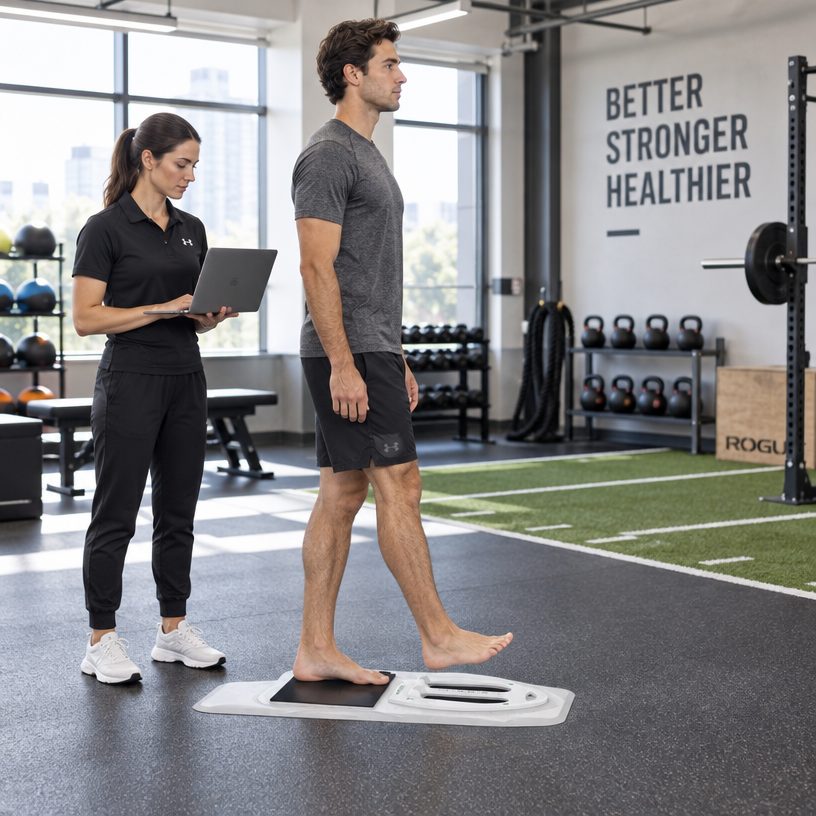
Pressure sensing measures load through contact, so anything between the foot and the surface changes the measurement. A sock spreads load across its own fibres, blunts the edges of the footprint and softens the distinction between areas of high and low load. Thin hosiery does this less than a cushioned sports sock, but it still does it, and the effect is not consistent between one sock and another. The only defensible protocol is bare feet on a clean surface, stated in advance so that nobody arrives unprepared for it. That is a physical fact about the sensing layer rather than a preference about protocol.
That sounds trivial until it meets a real customer journey. People arrive in boots, in tight laced shoes, in hosiery, in a hurry. Asking them to remove footwear is a small social request that staff often skip in order to keep the mood light, and skipping it is the most common source of unusable data we hear about. The fix is procedural rather than technical: a stool, a wipe for the feet, a place to put shoes, and a sentence at the booking stage saying the assessment is done barefoot. None of those items is expensive, and together they remove the most common reason a session has to be repeated.
Surface condition belongs in the same paragraph. Dust, grit and moisture all sit between the foot and the sensing layer, and a surface that has been walked on all morning is not the same instrument as one cleaned at opening. Wiping between people is a hygiene habit and a measurement habit at once. It also gives the operator a reason to look at the surface, which is how lifted edges, trapped debris and worn areas get noticed before they turn into a run of odd-looking records. A surface cleaned on a schedule, rather than when somebody remembers, is part of why two rooms with the same machine get different results.
Stance, camera line and the frame that gets cropped
Posture capture depends on the camera seeing what it needs to see. Feet, ankles, knees, pelvis and shoulders form the chain an operator reads, and clothing that hides a joint, a chair arm across the frame or a bag left on the floor will remove part of it. The camera does not know what it is missing. It records the frame it is given, and the software will present that frame as though it were complete, which is why framing is a preparation task rather than a post-processing one. A frame that cuts the knee is not a smaller version of a full frame; it is a different measurement carrying the same file name.
Stance position matters for the same reason. Feet placed too far apart, too close together, or turned out at different angles from one session to the next produce records that cannot be compared, even when each looks reasonable on its own. A marked position on the floor, or a pair of reference points on the sensing surface, removes the guesswork. The aim is not a perfect stance but a repeatable one, so that a difference between two records reflects the person rather than the placement. Marking the floor takes a few minutes once, and it is the cheapest improvement most rooms can make to their own data.
Camera height and distance belong to installation rather than to daily use, but they drift. A unit moved for cleaning, a mount that is knocked, a room rearranged over a weekend: each of those changes the frame. A short reference capture at the start of a week, taken with a colleague standing in the standard position, will show a shift before it contaminates a month of records. It is a habit of a minute that protects the comparison value of everything stored afterwards. Installation sets the geometry, and only a habit protects it, which is why the drift we hear about is usually found late.
The instruction script nobody writes down
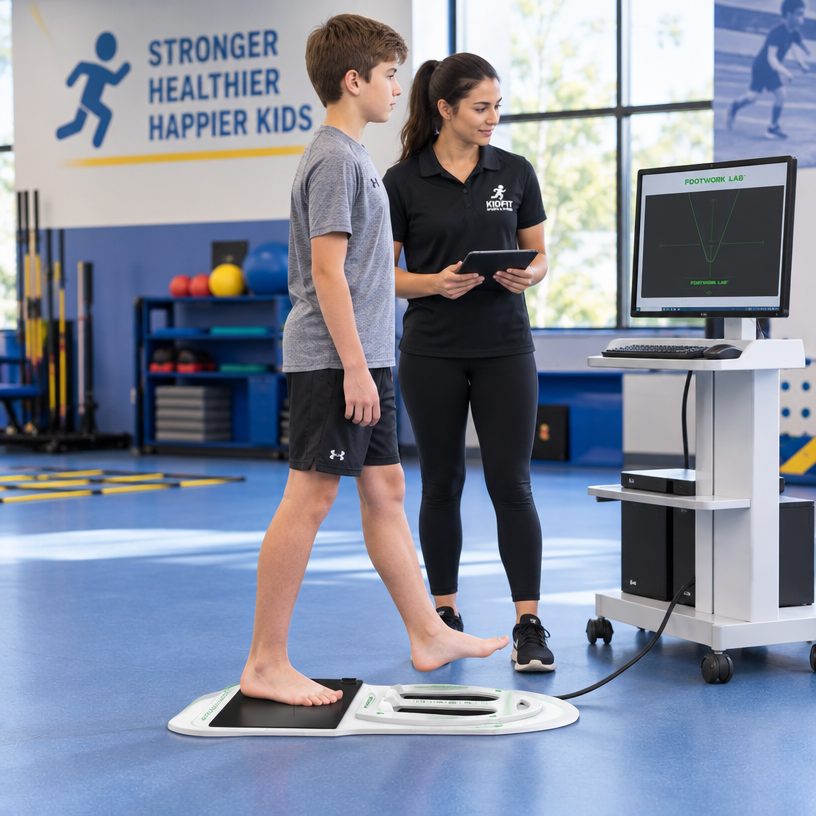
What the operator says changes how the person stands. Ask someone to stand up straight and most people will straighten, lift the chest and shift weight back, which is not their habitual stance. Ask them to stand as they usually do and you get something closer to daily life but less repeatable. The honest solution is to choose one instruction, use it every time and write it down, so that the record notes how the position was produced rather than leaving the next operator to guess. It also makes onboarding faster, because a new operator inherits a sentence rather than a technique.
Instructions also carry expectation. A person who has been told the device will show which foot is causing trouble will stand in a way that favours the other one, and the record will show exactly that. Neutral wording avoids the problem: describe the task, not the outcome. Say that the device records how weight is spread, that there is no right or wrong answer, and that the person should look ahead rather than at the screen. Those three sentences remove most of the accidental performance from a capture. They also keep the operator’s own expectations out of the room, which is harder than it sounds when the screen fills with colour.
Language access is part of the same script. In a market where the assessment room may hold two or three languages, a written instruction card with simple diagrams does more than a fluent explanation delivered once. Demonstration beats description: the operator stands on the surface, then invites the person to take the same position. For walking captures, an agreed count and a clear start word keep the sequence consistent, and consistency is what makes a gait record comparable across visits. Where the person cannot read the card, the demonstration carries the instruction, and the record says so.
The twenty seconds before the save
The most valuable twenty seconds in the workflow happen after the capture and before the save. Look at the footprint: are the toes and the heel both inside the recorded area, or has one edge been clipped by the boundary of the surface? Look at the load map: is there a plausible pattern under both feet, or does one side look flat and featureless, which usually means partial contact rather than a finding? Look at the posture frame: are the landmarks visible, or has a sleeve or a chair removed the knee? Three looks, a few seconds each, and the decision is whether to keep the record or repeat it.
Then compare the two feet within the same record. A large difference in total load between left and right is more often a stance problem than a discovery, particularly when the person has been standing for a while and has shifted weight onto the more comfortable side. The operator does not need to interpret that difference in order to notice it. Noticing is enough: it is the trigger to reset the stance and capture again while the person is still on the device, which is far cheaper than calling them back. A record produced from a shifted stance is worse than no record, because it looks like evidence.
A short checklist beside the screen turns this into a routine that survives busy days: full contact, both feet, landmarks visible, stance held, second capture matches the first. Five items, read in order, no interpretation required. Where a unit is connected, the software can hold the checklist as part of the session flow, which is the sort of small workflow decision that matters more in daily use than an extra report page nobody opens. Printing the list and fixing it to the wall works better than storing it in a folder, and it keeps the habit alive after the first month.
Static and dynamic ask for different preparation
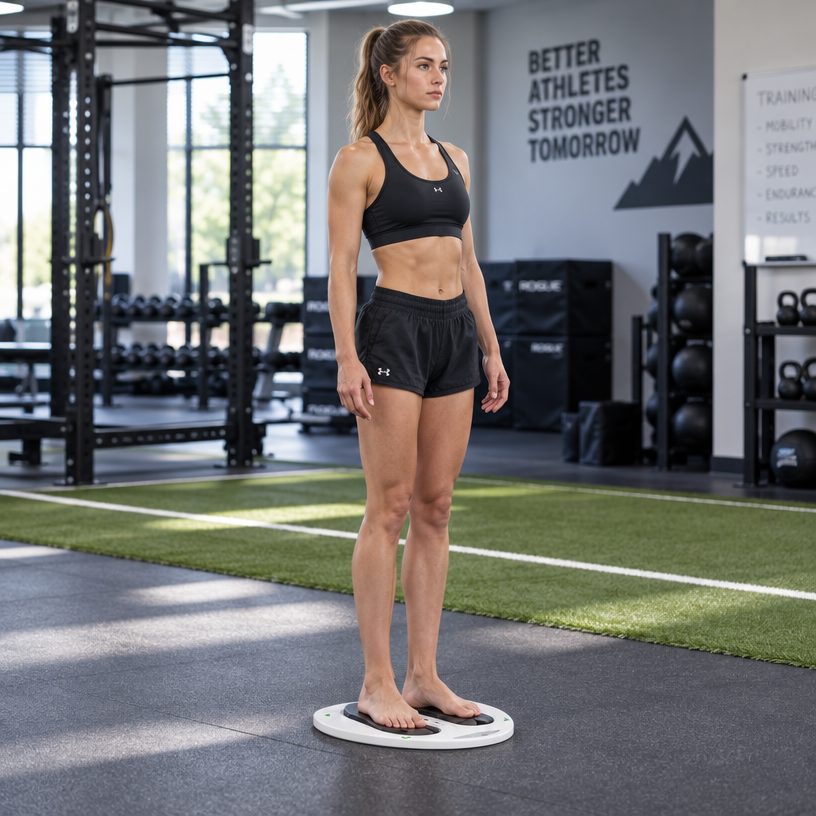
A static standing record and a walking record answer different questions, and they fail in different ways. Static capture is a snapshot of load distribution at rest, and its enemies are stance inconsistency and insufficient settling time. Dynamic capture follows load through a gait cycle, and its enemies are speed, turning and the first step. A person who starts walking from a standing position accelerates into the first contact, and that first step is rarely representative of the rest of the pass. Both records are useful, and neither is a substitute for the other, which is the point operators most often miss.
The preparation for a walking capture therefore includes a run-up. The person should take a few steps before the recorded pass, arrive at a natural pace, and continue past the surface rather than stopping on it. Where the protocol records several passes, the first is usually discarded and the rest compared. Turning around at the end of the room, rather than on the sensing surface, keeps the recording clean and removes a common source of odd frames that operators then try to explain in the report. The run-up is not a formality; it is what makes the recorded pass representative of how the person actually walks.
Mixing the two in one session is fine as long as the order and the labelling are fixed. Static first, while the person is still and attentive, then walking once they are warm; or the reverse, if the protocol calls for it. What matters is that the record says which was which, because a static image and a dynamic one look similar on a printed page and mean entirely different things. Ambiguity here survives all the way to the person reading the file months later. A reader who cannot tell one from the other will draw the wrong conclusion from a good record, which is the quietest failure in the workflow.
What a clean record can carry, and what it cannot
A well-prepared session produces three things worth keeping: a load distribution record, a posture image, and a note of the conditions under which both were taken. From those, a qualified reader can describe where load sits, how the center of pressure moves through a step, and how the force line relates to the base of support. That is a description of a measurement. It is not a diagnosis, and no amount of colour on the screen converts it into one. The vocabulary is the shared language between the room and whoever reads the file afterwards, and it defines what the operator may say at the end of the session.
The limits are worth stating plainly because they protect the buyer. A pressure record cannot tell you why a pattern exists, and it cannot predict what will happen next. It shows what the foot did on that surface, at that speed, on that day. Comparisons become meaningful only when the method is held constant, which is the whole argument of this article: the value of the equipment is bounded by the discipline of the preparation, not by the sensor count on the specification sheet. That is a narrow claim, and it is the only one the hardware can defend in front of a professional audience.
This is also where service shows. Our units ship after seven days of testing before dispatch, are built in modules so that a worn part can be replaced without returning the whole machine, and are supported through a dedicated WhatsApp group with engineers in it, remote sessions and over-the-air updates where the unit is connected. None of that improves a stance. It does mean that the hundredth session runs like the first, which is the only version of quality a clinic can actually feel, and it is what buyers ask about when they order a second unit.
Frequently asked questions
How long does a full foot assessment take?
The recording itself takes a few seconds for a standing capture and a little longer for a walking sequence. The appointment around it is what takes time: removing footwear, setting the stance, explaining the task and checking the record before saving. A prepared room usually completes a static and a walking session inside a normal consultation slot, while an unprepared one spends that slot repeating captures.
Do people need to take their socks off?
Yes. Pressure sensing measures load through direct contact, and a sock spreads load across its own fibres, softens the edges of the contact area and reduces the difference between high and low load regions. Thin hosiery affects the reading less than a cushioned sock but still affects it, and not consistently. Bare feet on a clean, wiped surface is the only protocol that can be repeated between visits.
Can we compare a scan from this year with one from last year?
Only if the method was the same. Stance position, footwear condition, instruction and capture type all change the record, so a comparison is meaningful when those are held constant and noted in the file. Our software stores each session with its capture type so two records can be viewed side by side, but the discipline of the preparation is what makes the comparison honest.
What should the operator check before saving a capture?
Full contact inside the recorded area, both feet present, landmarks visible in the posture frame, stance held long enough for the reading to settle, and a second capture that matches the first. A large left and right difference in total load is usually a stance problem rather than a finding, and it is the most common reason to reset and record again.
Can one unit handle standing and walking assessments?
Yes, and the two protocols are prepared differently. A standing capture needs a settled, repeatable stance; a walking capture needs a run-up, a natural pace and a route that continues past the surface rather than stopping on it. Our systems record both, and each session is labelled by capture type so a reader months later knows which one they are looking at.
What is the minimum order for a system, and how does it ship?
One unit. We are a factory rather than a trading company, so a single machine ships from the same line as a larger order, after seven days of testing before dispatch. Express delivery runs six to seven working days, air freight ten to twelve days, and sea freight thirty to thirty-five days for full programme shipments.
What support comes with the equipment?
A twelve-month warranty against non-human damage with free replacement parts, operator training at installation, and a dedicated WhatsApp group with our engineers in it. Connected units can receive over-the-air updates, and remote sessions let an engineer look at a screen with the operator rather than describe it. Buyers running several sites usually keep one group per site.
What we would do next
If you are setting up an assessment room, send us the floor plan, the number of sessions you expect in a week and the person who will operate the device, and we will reply with a short written note on the preparation routine that fits it. The FAQ page carries order minimums, warranty terms and transit times in one place, and a short reply from us is usually enough to see whether the room can take the routine.
Buyers comparing systems can run the same test in every demonstration: capture one person twice, then ask the supplier to show what a poor capture looks like and how the operator would catch it. The answer separates a product designed for a room from one designed for a brochure, and it takes less time than reading another specification table. Buyers who ask it twice, once in the showroom and once before signing, tend to describe the same answer both times.
This article is intended for professional and educational reference. It is not medical advice. Foot assessment equipment produces measurements and images; clinical interpretation and any decision about care remain the responsibility of a qualified professional. Certification scope is limited to the documentation we hold: European Union certification and ISO quality system certification.