
The gym customer does not have a sport. She has an hour, twice a week, that contains more movement variety than a tennis player meets in a month: a warm-up on the treadmill, a circuit class with sideways shuffles and box jumps, a few sets on the rowing machine, a sled push to finish, and a cool-down walk to the car in trainers she calls comfortable. When she asks for insoles, she does not ask for four pairs. She asks whether one pair can live in her training shoe and survive all of it — and that question is harder than it sounds, because the loads in a gym session point in opposite directions. Rowing drives through the heel with the foot strapped flat. Sleds and loaded carries pile weight onto the forefoot. Circuit work arrives from the side, from above, and from angles no single shoe was designed for. This article walks through the hour as the build has to live it: what circuit classes demand of the midfoot, what the rowing stroke does at the heel, where sleds concentrate load at the front of the foot, how shoe rotation changes the specification, and which parts of a build give out first when they are specified carelessly. It is written for the partner who takes the order — an honest map of what the hour asks.
A gym hour is four different jobs
Run the hour back in load terms and the variety becomes obvious. The treadmill warm-up is rhythm: the same moderate stride, heel to toe, repeated for minutes at a time, the least demanding job on the list. The circuit is chaos: step-ups, shuffles, jumps, lungs at angles, the foot landing on its outside edge one second and flat the next. The rowing stroke is a hinge: feet fixed, heels lifting through the drive, load travelling backwards through the foot with every pull. The sled is compression: the body leaning into the push, the forefoot carrying most of it, the heel barely involved until the deceleration. Four jobs, four directions, one pair of feet.
This variety is the reason gym insoles get specified differently from running insoles, and the reason a running-style specification so often disappoints in this setting. A running build answers a question the gym customer is only asking for the first ten minutes of her hour. The other fifty minutes ask about sideways stability, forefoot loading and a shoe whose interior volume changes completely when she swaps trainers for a flatter pair. The partner who hears I do everything at the gym and specifies for the treadmill has answered the smallest part of the question and shipped a pair that disappoints in the middle of her own circuit class.
The first job of the specification conversation is therefore to make the hour visible. Ask the customer to describe a real session, not an idealised one, and write down the exercises in the order she names them — the list itself is a build document, worth more than any adjective about support. Our article on moving from the customer’s own words to a build spec covers that translation; the gym customer is its clearest test case.
Circuit classes: sideways steps, jumps and tired form
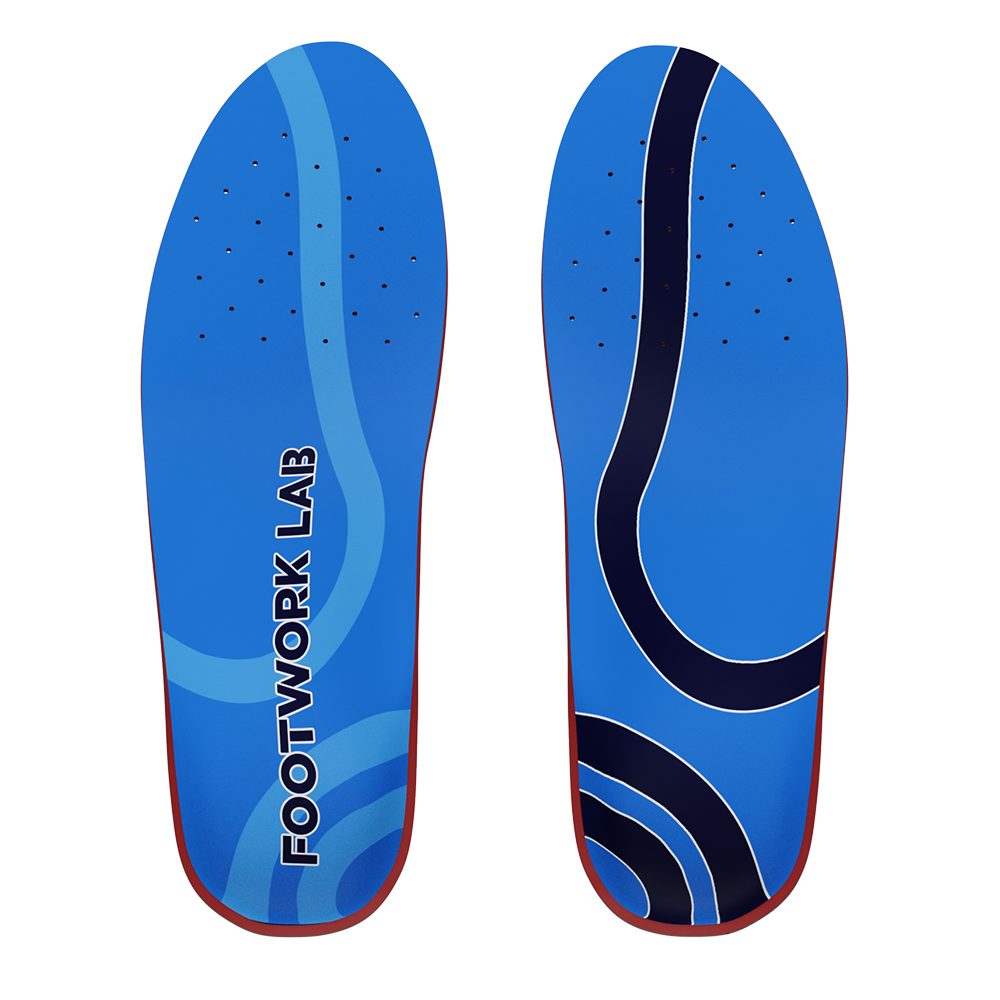
Circuit work stresses a build from the edges. Lateral shuffles, side planks on the feet, quick changes of direction under fatigue — these load the foot through its outside border and push against the insole sideways, where a build that was only ever designed for fore-and-aft forces simply slides or compresses unevenly. The phrase our production team uses for this part of the specification is the midfoot bridge: the middle of the insole has to hold its shape when force arrives from the side, because a midfoot that folds lets the foot roll inside the shoe exactly when the customer is moving fastest and least carefully.
Jumps and step-ups add the vertical component, with a detail worth naming: tired form. The first box jump of a class lands with an attentive foot; the last one, in minute forty-five, lands however it lands, and the build has to be honest about the second landing, not the first. This is where gym builds differ most from court-sport builds, which our article on sock layers, tape and a full-length insole in a court shoe touches from the other direction — court athletes play in purpose-built shoes, while circuit customers arrive in whatever trainer felt good at the shop.
What customers report back about a circuit hour is specific, and it is worth hearing before the build: the pair that slides forward inside the shoe during lateral shuffles, the arch that feels absent during step-ups because the build thins out too early, the top cover that squeaks on jumps because it was fitted against a sock thickness the customer does not actually wear to the gym. Each report is a specification failure with an address, and each is preventable at the order stage — particularly the sock question, which nobody thinks to ask.
Rowing: the drive, the heel and the strap
The rowing machine inverts the picture. Feet are fixed in the footplates, the strap holds them across the forefoot, and the drive — the leg push that powers each stroke — sends load backwards through the foot with the heel rising and dropping in a rhythm the treadmill never produces. A build specified only for standing and walking can feel wrong within a few strokes: too much material under a heel that needs to pivot in the plate, or too little grip where the strap presses down, so the foot lifts inside the shoe at the catch and the customer loses the connection to the stroke.
Customers describe this precisely when asked, and the two sentences worth collecting at order time are: my foot slides at the front of the stroke, and my heel sits oddly when the plate lifts. The first points to the fit against the shoe and the top cover’s surface; the second to how the heel region of the build is shaped for a foot that moves inside a fixed plate rather than over open ground. Neither is a diagnosis of anything — they are fit descriptions from the only person who experiences the hour.
Rowing also changes the shoe question, because indoor rowing usually happens in the same flat, flexible trainer that the rest of the session uses, and a flat shoe gives the build less help and less volume. Where a customer alternates between a cushioned trainer for the warm-up and a flatter shoe for lifting, the pair has to live in both — which brings in the volume decision described later, and the honest trade-offs it carries.
Sleds, carries and the forefoot hour
The sled is the most concentrated test a gym build faces. Pushing it, the body leans forward into the load and the forefoot carries nearly everything: the ball of the foot presses into the insole with the whole effort of the movement behind it, rep after rep, while the heel idles. Loaded carries — farmer’s walks, weighted marches — do the same more slowly, adding time under compression to the concentration of force. A build whose forefoot region was specified by the treadmill hour folds here, and the customer’s report is always the same shape: fine on the treadmill, gone by the sled.
The fix is decided in the specification, not in the shoe: how much structure the forefoot region carries, how it distributes the push across the ball rather than letting one spot take it, and how the build behaves when the foot is angled — because sled pushes rarely happen with the foot perfectly flat, and the last metres of a hard push are done on the front of the foot with the toes working. Our article on where softness stops helping makes the general point this section depends on: padding alone fails under concentrated load, and the gym customer is the person most likely to discover that in a single session.
Partners taking gym orders should also collect the frequency line: sleds once a fortnight in a general fitness hour are a different specification conversation from a strength block where the sled appears three times a week for six weeks. Frequency is a number the customer knows without being asked twice, and it changes how the forefoot is built more than any other single word on the sheet.
Flat trainers, court shoes and the volume question
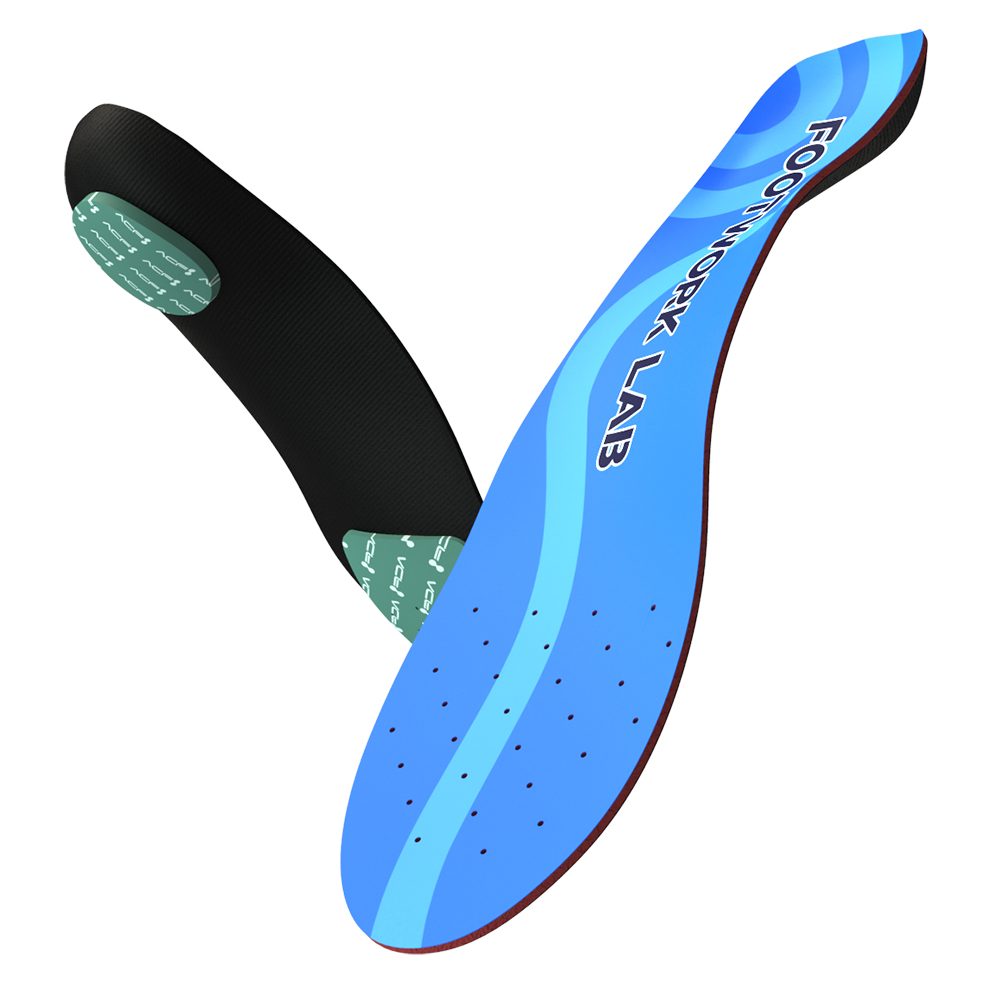
The shoe decides what the build can be. A cushioned trainer with a removable stock insole offers depth and a home for a full-length pair; a flat lifting shoe offers almost no volume and no patience for thickness; and many gym customers own both and rotate them by the day’s programme. The specification has to name the shoes the pair will actually live in — specifically, by model where possible — because the same build cannot be thick underfoot in a trainer and invisible in a flat shoe, and pretending otherwise is how pairs end up worn only on cushioned days.
The volume conversation is worth having out loud with the customer, because it sets expectations honestly: a build made for the trainer’s depth will feel substantial in the shoe that fits it and will not transfer to the flat shoe; a build kept slim enough for everything will give up structure exactly where the sled hour needs it. Most gym customers, given the trade-off in plain words, choose the shoe they train hardest in and accept the limits elsewhere — which only happens when somebody asks. Layering on top of an existing insert the customer already owns follows our article on layering when a customer already owns an insert.
Where the customer’s shoe is itself worn out — the inner lining collapsed, the stock footbed flattened — the honest advice happens before the build: a new build inside a dead shoe inherits the shoe’s faults. Our article on reading a footbed we did not make describes what a worn interior tells the eye.
What wears first, and what customers report
A gym build lives a harder week than its daily-use cousin, and the wear arrives in a predictable order. Top cover first, at the two places the hour concentrates: under the ball of the foot, where the sled and carries compress it, and at the outside edge of the midfoot, where lateral shuffles grind it sideways. Then the midfoot structure, which softens at its edges before it fails in the middle. The heel region usually wears slowest in gym use — the rowing drive loads it in a rhythm rather than a grind — which is the reverse of a running build’s wear pattern and one more reason the two specifications should not be confused.
The reporting habit that catches problems early is the three-month check: the customer brings the pair back, the top cover is read for wear rather than age, and the wear pattern is compared against the session list from the original order. Our article on reading a top cover for wear, not age describes the check. What it turns up in gym customers is often a session mix that has changed — the class replaced by strength work, the sled retired, a running habit started — and the report conversation is where that drift gets noticed.
We hear the wear in production terms too, because partners send pairs back with questions, and the questions arrive in a consistent vocabulary: cover smoothed at the forefoot, edge compression at the midfoot, a squeak that turned out to be a fit issue rather than a build one. Every one of those maps to a specification decision that could have been made differently — which is why this article keeps returning to the order sheet.
Writing the build spec from the customer’s own session
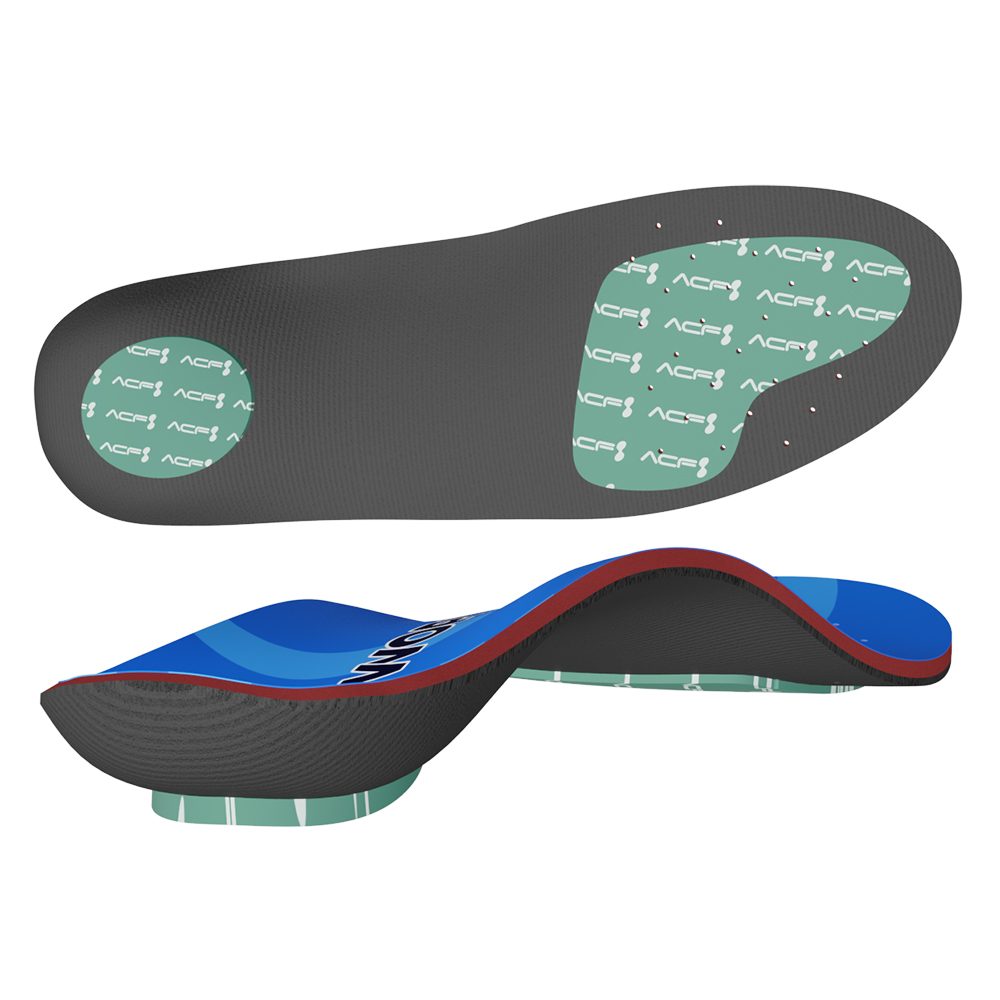
The specification for a gym pair, done properly, reads like a timetable of the customer’s week translated into build decisions: the session list she dictated, the shoe models she trains in, the sock she actually wears, the frequency of the heaviest movements, and the sentences about what the last pair did wrong. None of it is exotic. All of it arrives before the build is scheduled, because a specification written after the batch starts is a specification somebody guessed.
On our side, the process is the same as for any build: the order sheet must answer its questions before the batch enters the line, the build follows the specification agreed with the professional who owns the order, and production capacity runs at roughly five hundred to a thousand pairs a day, with samples shipped within three days of a trial specification being agreed and production orders starting at two hundred pairs, mixed across models and sizes. We build to specification; what a build does inside any particular person’s training week stays with the professional who fitted her — the measurement and the build are our product, and honest boundaries around them are part of the product too.
The closing advice to partners is the least technical sentence in this article and the one that prevents the most disappointment: make the customer describe her real hour before you make her describe her feet. The feet appear in the footprint and the numbers; the hour appears only in her words.
Frequently asked questions
What is the minimum order for custom sport insoles?
Production starts at two hundred pairs, mixed across models and sizes, so a partner can batch builds for several customers in one order. Before committing, most partners trial the specification with a sample pair fitted to one gym customer, then carry what they learn into the production batch.
How quickly can a sample pair be shipped?
Insole samples ship within three days of the trial specification being agreed. The trial pair is built to the same specification discipline as a production pair — session list, shoe models, frequency — so the feedback from the customer’s first week transfers directly into the batch order.
How many pairs can the factory build per day?
Production capacity runs at roughly five hundred to a thousand pairs a day, depending on the mix of models in the order. Where a specific batch sits in the schedule depends on order size and specification, so delivery dates are quoted against the current order book rather than as a general figure.
How long does overseas delivery take?
Dispatch options are courier at roughly six to seven working days, air freight at ten to twelve, and sea freight at thirty to thirty-five, depending on destination and volume. The clock starts once the order sheet is complete and the batch has entered production, which is why complete order sheets protect the delivery date.
Do you accept OEM and ODM for sport insoles?
Yes, insoles accept both OEM and ODM arrangements: a partner can supply their own specification and branding or work from ours. The arrangement is agreed before the first sample is built. Machine OEM is handled separately from insole arrangements.
Can one pair work in both a cushioned trainer and a flat lifting shoe?
Not fully, and it is more honest to decide than to hope. A build sized for the trainer’s depth gives structure where the heaviest movements need it but will not sit correctly in a flat shoe; a build slim enough for everything gives up forefoot structure. Ask the customer which shoe carries her hardest session and specify for that one, in the words of our volume conversation above.
Does the insole treat foot pain from training?
No. We build to the specification agreed with the professional who owns the order, and how any particular person responds to a build belongs with that professional and the customer. What we take responsibility for is that the pair matches its specification — the session list, the shoe volume, the load pattern it was built for.
What we would do next
Put the session list on your order sheet: exercises in the customer’s own order, shoe models named, sock thickness asked, sled and carry frequency written down. Then trial one pair on your most vocal gym customer — the one who reports everything — before batching. Browse the insole categories to see the sport builds, and the FAQ page collects the ordering and shipping questions we answer most often. To set up gym orders with us directly, write to us and start with the session list, not the shoe size.
This article is intended for professional and educational reference. It is not medical advice. Foot assessment equipment produces measurements and images; clinical interpretation and any decision about care remain the responsibility of a qualified professional. Certification scope is limited to the documentation we hold: European Union certification and ISO quality system certification.