
The shoe reaches the counter before the foot does: a black ballet flat, worn pale at the ball, with a footbed that turns out to be glued and stitched into the lining. The customer has brought it because she owns four pairs of the same model, because they are the only shoes that go with her working wardrobe, and because after an hour in them her feet are tired in a way that trainers do not make them tired. She wants to know whether something can be put inside. The honest answer takes five minutes and begins with the shoe rather than the foot: how much room sits above the toes, whether anything can be lifted out, where the topline crosses the instep, and whether the leather has any give left.
Most of the work in a build for a shallow shoe happens before anything is cut, in deciding what the shoe will tolerate. That is a different conversation from the one most customers expect, and a more useful one. Below is the bench routine we use for loafers, flats, dress shoes and the growing category of trainers with a footbed sealed in at the factory: what can be done, what cannot be done however carefully it is drawn, and how to say so without losing the customer.
The shoe answers before the foot does
A build is a negotiation about volume. Three volumes matter, and a shallow shoe is short of all three. The first is depth above the toes: the space between the top of the foot and the upper. The second is depth at the heel, which decides how much of a cup can exist before the heel starts to lift. The third is width at the ball, where most of the load sits and where most shoes are already close to the foot.
Then comes the question that decides the whole job. Does the shoe have a footbed that comes out? A removable footbed is a gift: the manufacturer has left a cavity, and the cavity has a shape you can copy, a depth you can use, and an edge you can trim to. A sealed footbed is a different trade. The shoe is the cavity, and everything you add has to be taken from somewhere else — usually from the toes.
The topline is the third constraint and the one most often missed on a bench check. On a loafer or a flat, the upper edge cuts across the instep at roughly the height where a heel cup wants to rise. Lift the heel and the leather spreads; spread the leather and the shoe looks a half size small; make the shoe look small and the customer stops wearing it. A build that cannot be worn is not a conservative build. It is a failed one.
None of this says the shoe is unsuitable. It says the shoe has a budget, and the build has to be drawn inside it. Professionals who build for dress shoes spend their first years learning to read that budget at a glance, and the reading is mostly done with a thumb.
A thumb, a ruler and five minutes at the bench
Five checks settle almost every case, and all of them happen before the customer takes her socks off. Do them in order, because the first one sometimes ends the conversation.
Press a thumb into the upper just behind the toes, where the big toe joint sits. Watch the leather. If it dimples easily and springs back, there is room to play with. If it feels like a board, the shoe has no spare depth and anything added will press on the toes. This is the check that decides between a thin full-length piece and a forefoot pad that stops short of the toes.
Next, try to lift the footbed at the heel with a fingernail. Many look removable and are not. If it lifts, work it out slowly and keep it intact, because it is the best template in the room: it is the shape the factory intended, at the depth the factory allowed. Trace it, note where it was glued, and note whether the cavity underneath is flat or moulded.
Third, look at the topline from the side while the customer stands. A topline that bulges outward is telling you the shoe is already full. A topline that sits away from the foot has room. Fourth, run a finger inside along the seam across the toes; a raised seam plus a thin build equals a ridge under the toes, and the customer will feel it on the second day rather than the first. Fifth, measure the heel: the height of the sole under the heel, and whether the shoe was made with a heel that already puts the foot at an angle. That angle uses up cup depth before you have cut anything.
What still fits inside
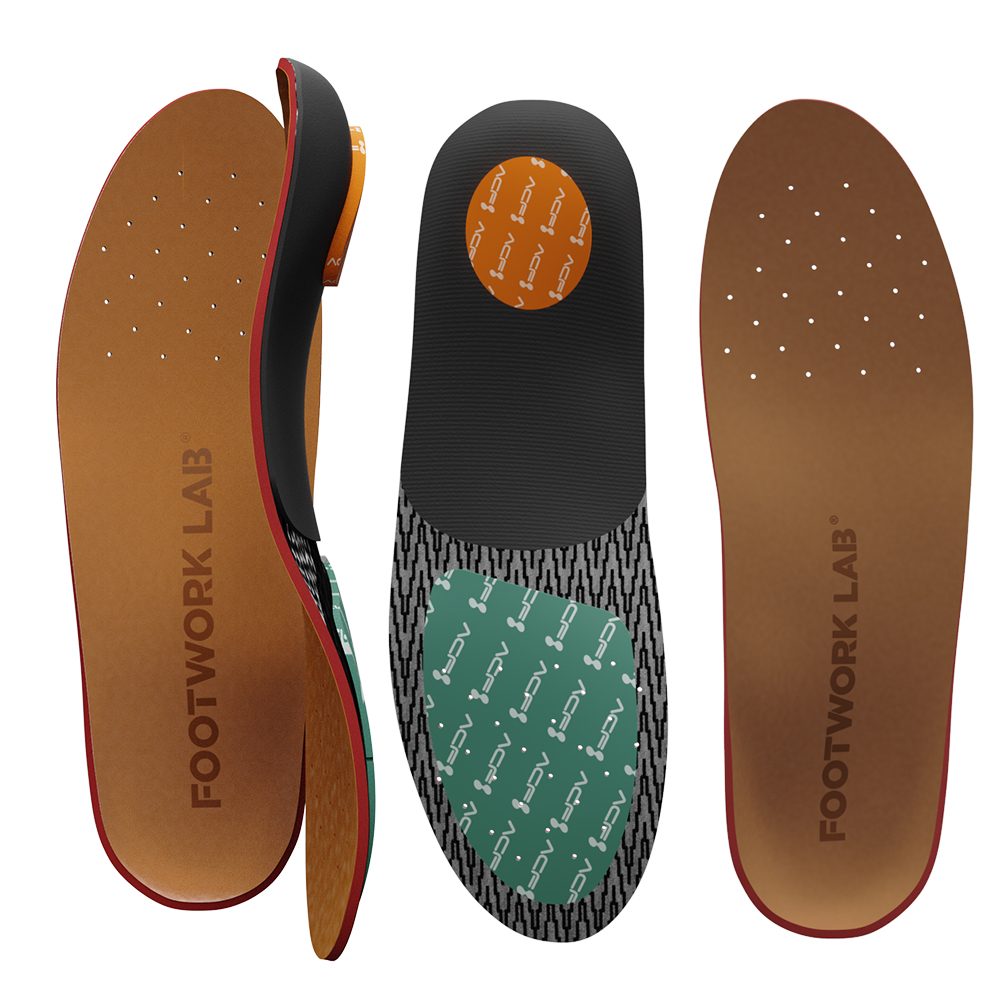
A thin full-length piece, trimmed to the outline of the original footbed, is the workhorse answer. It changes what the foot rests on without asking the shoe for room it does not have. The material question matters more than the thickness question: a soft base that compresses under load behaves very differently from a firm one that does not, and inside a shallow shoe the soft base is usually the kinder choice, because it steals less height from the toes.
A forefoot piece that stops behind the toes is the second option, and it is underused. Where the complaint lives under the ball of the foot, a pad that ends before the toe joints gives support exactly where it is wanted and leaves the toes free. The trade-off is coverage: nothing is happening at the heel, and if the customer’s heel moves inside the shoe, this piece will not address it.
Third, a heel wedge or a thin heel insert, where the shoe already has a heel and the customer’s foot slides forward inside it. This is a small intervention with a visible effect on how the shoe feels, and it is the kind of thing a retailer can fit in the shop in ten minutes. It is not a substitute for a full build, and saying so is part of the job.
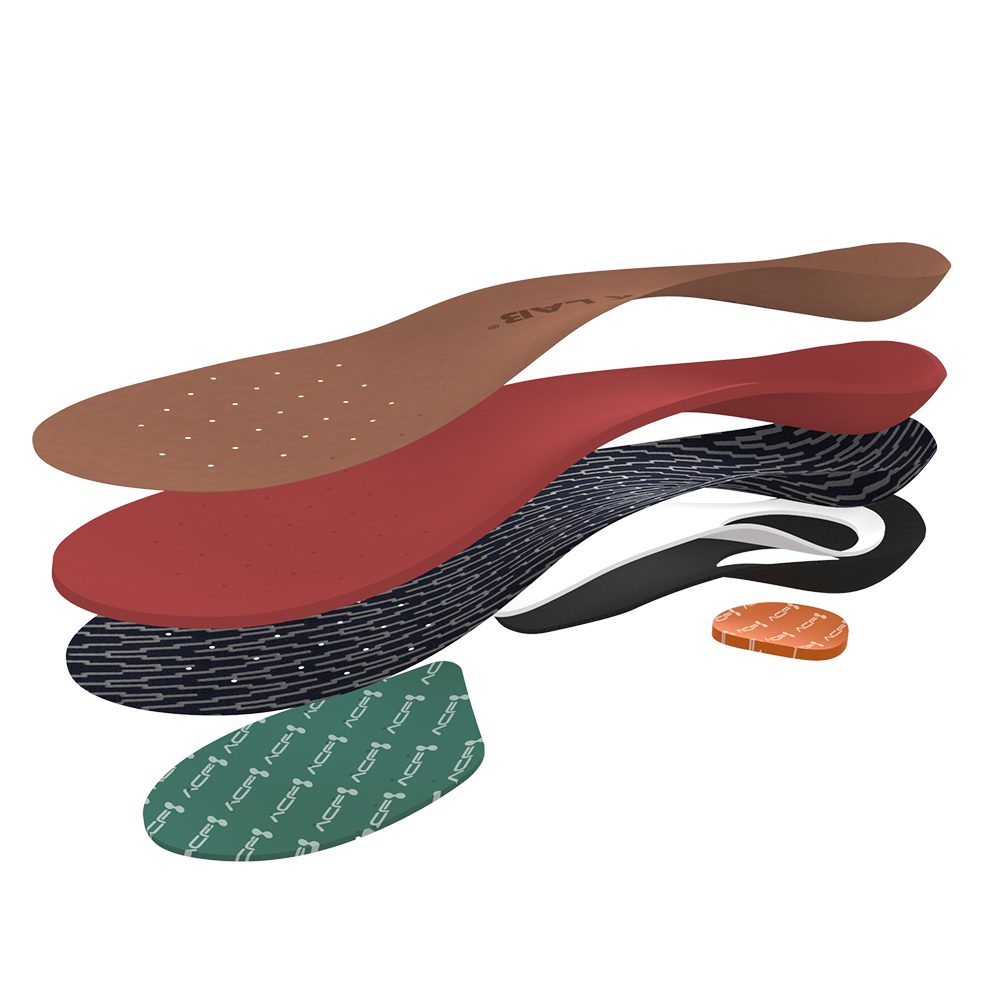
Fourth, replacing the topcover. In a shoe worn barefoot or in thin hosiery, the original lining is often the first thing to fail: it polishes through, wrinkles, and starts to smell of the shoe’s history. A new topcover over the existing base restores the surface the foot meets, at almost no cost in volume. On the custom insole range we produce, the thickness of the base and the topcover are chosen separately for exactly this reason, so a shallow shoe gets a thin base and a durable surface rather than a compromise on both.
Fifth, and least discussed: trimming the customer’s own aftermarket insole rather than building from scratch. If she already owns a pair she likes and the shoe will only take a shortened version, cutting it down and skiving the new edge is a legitimate service. It is cheap, it is fast, and it keeps a pair out of the bin.
What will not fit, whatever the drawing says
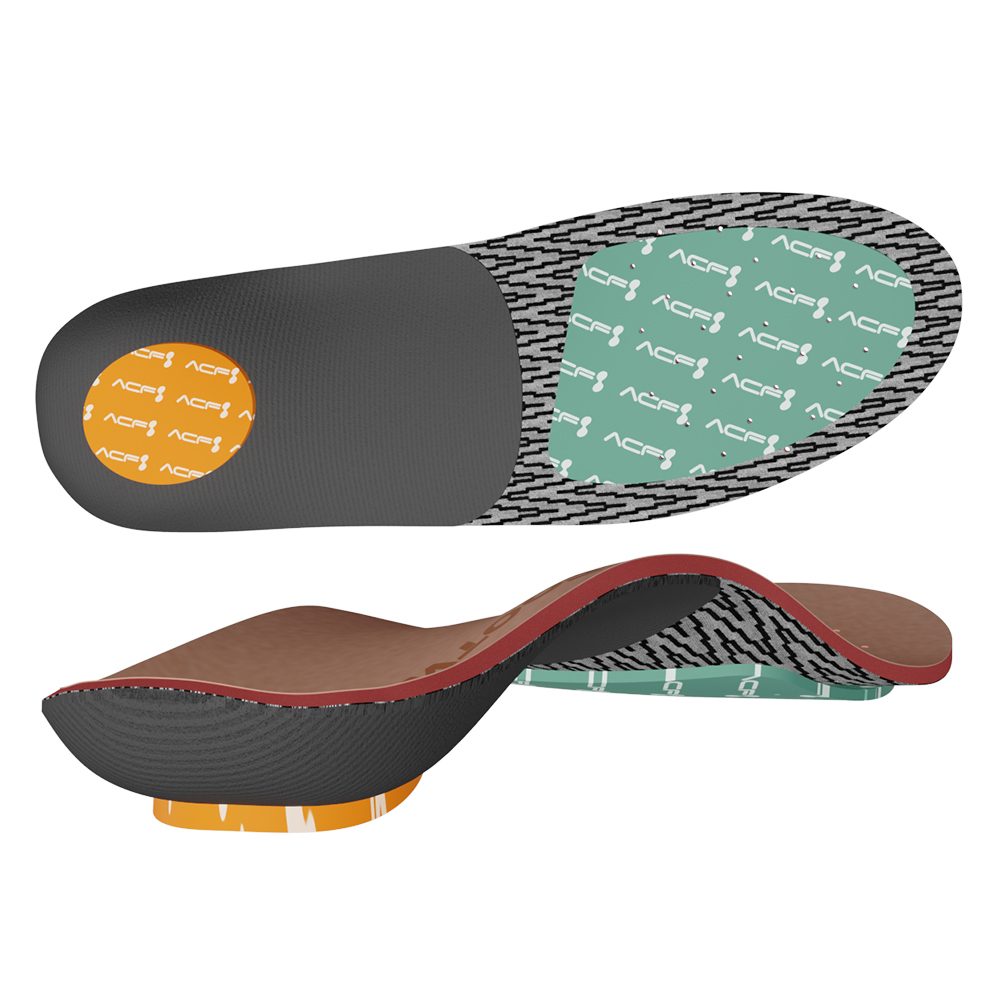
Some requests are physically impossible, and the sooner that is said the better for everyone. A deep heel cup in a ballet flat is the classic. The cup needs vertical wall; the flat has a topline where the wall would be; the wall wins. A rigid shell through the rearfoot in a loafer has the same problem in a different place: the shoe cannot hold the shell still, so the shell moves inside the shoe, and a build that moves is worse than no build at all.
Posting under the heel of a shoe with a raised heel is a third. The shoe has already spent the available angle. Adding more inside it does not create support; it creates a foot that sits at an angle the shoe was not made for, and the customer feels that at the topline long before she feels anything under the arch.
Anything that needs a flange, a medial extension, or a shell that wraps the foot is out of the question for the same reason. These designs work by controlling the foot from the sides. A shallow shoe has no room at the sides. Press them in and the upper bulges; the shoe looks damaged, the customer returns it to the shop, and the shop stops sending you work.
The arithmetic of a sealed footbed deserves its own paragraph. When nothing comes out, everything added comes off the toe box. A piece thick enough to change load distribution is thick enough to bring the toes into contact with the upper, and toes that touch the top of a shoe change the way a person walks — the foot grips, the stride shortens, and the shoe starts to feel like a shoe that does not fit. That is the opposite of the intended effect, and it happens with builds that looked reasonable on paper.
We say this plainly to buyers and to the shops we supply: the equipment in this trade produces measurements and images, and the decision about what a particular foot needs belongs to a qualified professional who has seen the person. The same discipline applies to the shoe. What the bench can measure is depth and room. What it cannot do is talk a shoe into having more of either.
Telling the customer what she is actually buying
The sentence that works is short and slightly deflating: this will change what your foot rests on inside this shoe; it will not change the shoe. Said early, it prevents the disappointment that arrives on day three, when the customer decides the build has failed because the shoe still feels like a thin shoe on a hard pavement.
Then offer the shape of the compromise, in plain terms, with the trade-offs attached. A thin full-length piece will feel different under the whole foot and will take a few days to disappear from awareness. A forefoot pad will be noticeable for an hour and then not at all, and it will do nothing at the heel. A heel insert will stop the foot sliding forward, and it will not change how the ball of the foot feels. Customers choose better when the options are described by what they do rather than by what they are called.
Give the honest no as well, and give it early. There are shoes where the correct professional answer is that nothing worth wearing will fit, and the customer deserves to hear it in the first five minutes rather than after a week of waiting. The way to say it is concrete: the toes have no room above them, the footbed cannot come out, and anything thin enough to fit would be too thin to do anything. Then offer the alternative — a build for a different pair, a made-to-order shoe in a wider fitting, or simply keeping these flats for the short walks and building for the shoes worn longest.
What not to do is promise. A build inside a shallow shoe is a compromise between what the foot wants and what the shoe allows, and a customer who has been told it is a compromise trusts the result far more than one who has been told it is a solution. Our article on a pair for a wedding and one long day in unfamiliar shoes makes the same point from the other direction: the shoe sets the terms, and the build works inside them.
When the right answer is a different shoe
Retailers have a harder version of this conversation, because the customer is standing in the shop with a shoe she has already decided to buy. The temptation is to say yes to everything and let the workshop sort it out. The shops that keep their reputations do the opposite: they say which shoes in the range will take a build and which will not, and they say it before the sale.
That honesty sells more shoes, not fewer. A customer who is told that the flat will not take the build but the lace-up in the same size will often buy the lace-up as well, because she has been given a reason rather than a refusal. She also learns which of her existing pairs to bring in next time, which is how a shop builds a repeat service instead of a one-off sale.
There is a useful piece of arithmetic for the customer who insists on the flat. One pair of shoes worn every day wears out in a season; two pairs worn alternately last longer than either would alone, and the second pair can be the one that takes the build. Framing the choice as which shoes get the build, rather than whether the flats get one, moves the conversation somewhere productive. Our piece on slippers, sandals and a pair that never leaves the house covers the same logic for footwear that barely travels.
And for the workshop rather than the shop: a customer who has been turned down honestly for one pair comes back with three. The refusal is the marketing.
The order sheet that survives the week
Builds for shallow shoes fail later, not sooner, and they fail in ways that are hard to reconstruct from memory. The sheet needs four lines beyond the usual measurements.
First, the shoe: make, model if it is printed inside, size, and a photograph of the shoe from the side with the build in place. Second, the footbed: removable or sealed, and if it was removed, whether it went back in under the build or stayed out. This single line answers most of the questions that arrive three weeks later. Third, what was trimmed and how: the outline used, where material was skived away, and where the piece stops relative to the toes. Fourth, what was deliberately left out, and why. A line that reads no heel cup, topline would spread is worth more than a page of description, because it tells the next reader that the omission was a decision rather than an oversight.
Two habits make the sheet trustworthy. Photograph the shoe with the build inside before it goes back to the customer, because the shoe is the record and the build alone tells you nothing about what it had to fit into. And keep the traced outline in the file. When the customer returns with the same model in a different colour a year later, the outline is the whole job, and the second pair takes a fraction of the time.
None of this is glamorous work. It is the part of the trade where a workshop’s reputation is actually made, one loafer at a time, by people who know which shoes will take a build and say so.
What customers remember a month later is rarely the material or the drawing. They remember whether the shoe still fitted, whether the thing inside it stayed where it was put, and whether anyone told them the truth at the start. All three are settled by the lines above, written at the bench while the shoe is still in front of you.
Frequently asked questions
Can a custom insole be fitted into ballet flats?
Sometimes, in a reduced form. A thin piece trimmed to the outline of the original footbed, or a forefoot pad that stops behind the toes, is usually the most the shoe will take. A full-length build with a deep heel cup will not fit, because the topline sits where the cup needs to rise. Check depth above the toes before promising anything.
The footbed is glued in. Should I cut it out?
Only if the customer accepts that the shoe will be altered and the cavity underneath is usable. On most flats the footbed is stitched into the lining as well as glued, and removing it damages the shoe. The safer route is to build on top of it, thin, and to write on the order sheet that the original footbed stayed in place.
How thin can a build be before it stops being useful?
That depends on what it is meant to do rather than on a number. A topcover that restores a worn surface can be very thin and still do its job. A piece meant to change load distribution needs enough substance to spread load without collapsing, and in a shallow shoe that requirement often decides the answer: if there is no room for it, there is no build.
Will an insole make a shallow shoe feel tighter?
Yes, by exactly the volume it adds. That is why the topline check matters: a shoe already full at the instep will feel a size smaller once anything goes in. Where the shoe is close, shortening the piece so it stops behind the toes keeps the forefoot free, and the customer notices the difference immediately.
Can one pair of insoles be moved between several shallow shoes?
Only between shoes of similar depth and similar internal shape, and only if the piece was trimmed to the smallest of them. Moving a build from a trainer into a loafer rarely works, because the loafer has less depth and a different heel. Where a customer wants one pair for several shoes, choose the tightest shoe as the template.
The loafers are half a size small. Should I build anyway?
No. A build cannot create room, and a shoe that is already tight will be tighter with anything inside it. Explain what would have to be true for a build to work — room above the toes, a footbed that comes out or a cavity deep enough to sit on — and offer a build for a pair that meets those conditions.
What do I tell a customer who wants the same build as her trainers?
That the build is made for the shoe, not for the foot alone. The same foot in a trainer and in a flat has different room around it, so the two builds will differ in thickness, length and heel depth. Showing her both outlines side by side usually settles it faster than any explanation.
What we would do next
Pick the next three shallow shoes that come through the door and run the five checks before quoting anything: thumb into the upper, lift the footbed, topline under load, seam across the toes, heel height. Write the result on the order sheet even when the answer is no, and keep the traced outline when the answer is yes. Our article on what to do when a customer asks for something softer is the natural next conversation, because a thin build in a shallow shoe is exactly where that request turns up, and the FAQ page collects the questions retailers send us most often about what a given shoe will take.
The measure of a workshop in this corner of the trade is not how many pairs it makes but how few come back. That number is decided at the bench, in five minutes, by somebody willing to say that this shoe will take a thin piece and that one will take nothing at all.
If you build for dress shoes, what do you do when the customer’s favourite pair has just enough room for a topcover and nothing else — do you make the topcover, or do you send her away with the shoe and a recommendation?
This article is intended for professional and educational reference. It is not medical advice. Foot assessment equipment produces measurements and images; clinical interpretation and any decision about care remain the responsibility of a qualified professional. Certification scope is limited to the documentation we hold: European Union certification and ISO quality system certification.