
“The flat is fine,” she says, half into her second shoe. “It’s the stairs.” The consultation room has heard the sentence a hundred times in a hundred accents. The walk across your floor looked unremarkable. The questions about the working day produced ordinary answers. And then, almost as an afterthought while packing up, the customer mentions the staircase at home — the one between the kitchen and the bedrooms, crossed first thing in the morning and last thing at night, every day, without anyone ever thinking to measure it. If you work in a podiatry clinic, a physiotherapy practice, a rehab centre or a shoe retail fitting room, the sentence comes up constantly, and it usually arrives too late in the session to change anything.
This piece is about moving stairs to the front of the conversation: why stair climbing is a different walk from the one your room measures, what questions find the staircase before the customer is putting their coat on, and what a build shaped for stair work can honestly offer.
Stairs are a different walk
Level walking and stair climbing share a vocabulary and almost nothing else. On the flat, the gait cycle runs with both feet on the ground for part of every stride, momentum carries the body through, and each landing is cushioned by the whole rhythm of the walk. On stairs, the rules change from the first step. Each stride is spent mostly on a single leg. The front of the foot takes work that level walking spreads differently. Going down is its own skill entirely — a controlled lowering, where the muscles brake the body on every step, and the forefoot takes a slow, deliberate, repeated loading that the flat never asks for.
The geometry compounds it. Every step is a small hill: a rise to climb or a drop to control, an ankle working through a range the flat floor never visits, a heel that lands on an edge rather than a plane. Nobody walks up stairs the way they walk along a corridor, and the difference is not subtle. A customer can be competent, unbothered and entirely typical on the flat, and still find the daily staircase the hardest thing their feet do between waking and sleep.
That is why the flat record and the staircase complaint can both be true at once, and why neither contradicts the other. An assessment that measures level walking produces a real measurement of level walking — nothing more and nothing less. It does not capture the single-leg support, the edge landings and the controlled lowering that the customer’s actual difficult task is made of. The gap between what the room measures and what the customer does at home is the subject of the rest of this article.
What the flat record misses
Rooms measure what rooms can hold. The assessment floor is flat, the equipment expects crossings along it, and the whole session architecture — shoes off, walk across, walk back — is built around level ground. That is not a flaw; it is what a floor is. But it means the record that comes out of a session is a portrait of flat walking, and a customer whose complaint lives on stairs leaves the room with a file that never met the stairs.
The miss has consequences further down the file. Whatever support or load distribution is planned later is planned against a record of the task the customer finds easier, while the task they named is known only through a sentence spoken in passing. We have written before about what happens when the customer’s own account and the record pull in different directions (He Walked Fine Until You Watched: The Observer Effect in a Gait Record), and the staircase is a quieter version of the same problem: the record is honest, the account is honest, and they describe different tasks.
The fix is not equipment — few rooms can host a staircase — it is the conversation and the sheet. A sentence on the worksheet that says “difficult task named: home staircase, up and down daily” changes how every later reader weighs the flat record beside it. The measurement keeps its honest limits; the file stops pretending those limits are the whole picture. That is a documentation discipline, costs nothing, and survives every kind of room.
Descent deserves its own attention
When customers answer the up-or-down question, the answer deserves follow-up, because descent is not climbing in reverse — it is a different mechanical job with a different feel. Climbing is a push: the front of the foot drives against an edge and the body rises. Descending is a brake: the muscles lower the body under control while gravity does the pushing, and the foot takes a slow, deliberate, repeated loading through exactly the structures that hurry never forgives. Where climbing is effort, descent is precision, and precision is what tires and what people start avoiding first.
Descent also carries the fear factor. Customers who say nothing about climbing will sometimes volunteer, more quietly, that coming down is the part they no longer trust — the edge looks smaller, the drop registers, the handrail gets taken earlier and held harder. That shift in confidence is itself part of the task description: a descent approached cautiously is a different walk from a descent taken in stride, and the difference shows in how the foot meets every step. Write the customer’s own phrasing on the sheet; “I come down sideways holding the rail” describes a task in a way no checklist item does.
The asymmetry has a practical consequence for the session: record the two directions separately, in observation and on paper, rather than folding them into one line about stairs. Which foot leads going up, which foot takes the first drop going down, whether the cautious direction matches the complained-about direction — these are short observations, each worth its own line, and together they give whoever plans support a two-sided picture of the daily task instead of a single blurred one. Stairs are crossed in both directions every day; the file should know both of them.
Questions that find the staircase
Most customers do not volunteer stairs, because they have filed them under life rather than under the problem. The questions have to go looking. Three do the work. First: “How do you get around at home — is everything on one floor?” A no opens the whole topic in one move. Second: “Which is harder, going up or coming down, and where exactly — the knees of the legs, the front of the feet, the heels?” Let the customer answer in their own words; the wording is data. Third: “How many times a day does that staircase get crossed?” Frequency turns an anecdote into a load figure: a staircase crossed twice a day and one crossed twenty times are different jobs.
Ask about the other staircases in the life, not just the one at home. The entrance steps, the station stairs, the shop mezzanine, the step down to the garden. Customers routinely discover, while listing them, that stairs run through their day far more than they assumed — and the list itself belongs on the sheet, because the build that follows has to answer the whole week’s stairs, not only the domestic ones.
Time the questions early. The usual failure is ordering: complaints get collected at the end, when shoes are going back on and attention has moved to the door. Put the home-layout question into the opening script, before the flat record is made, and the session changes shape — you now know, before anything is measured, that the flat record is a baseline beside a named difficult task rather than the whole answer. That order also gives the customer a reason to mention the stairs at all: they have just been asked.
Watching stairs when the building has them
Where the building offers actual stairs, use them — carefully and within safety limits, with the customer deciding how far to go. A few steps up and down, watched plainly, produce observations the flat floor cannot: which foot leads on the way up, whether the rail is taken out of habit or out of need, how the descent is braced, whether the front of the foot takes the edge steadily or searchingly. Safety comes first, always; a hand within reach and the customer’s own pace are non-negotiable, and a customer who declines the stairs has told you something worth writing down too.
Where there are no stairs, the closest proxies still earn their place. A firm step or low platform in the room lets you watch the front-of-foot work of a single controlled step. A single-leg stance check, which many rooms already run as part of a session, says something about the support side of stair work that double-support walking cannot. None of these reproduce a staircase; all of them sample the abilities the staircase uses. Say on the sheet what was and was not observed — “flat crossings plus a single controlled step; no stair descent observed” is an honest, useful line.
Keep the interpretation where it belongs. Observing that a descent is braced and cautious is an observation; what it means, and what if anything should be done, is the qualified professional’s call on the whole file. The session’s job is to collect the observations cleanly — flat and stair work both — and to hand over a file that says exactly which it did.
What a build can hold up on a slope
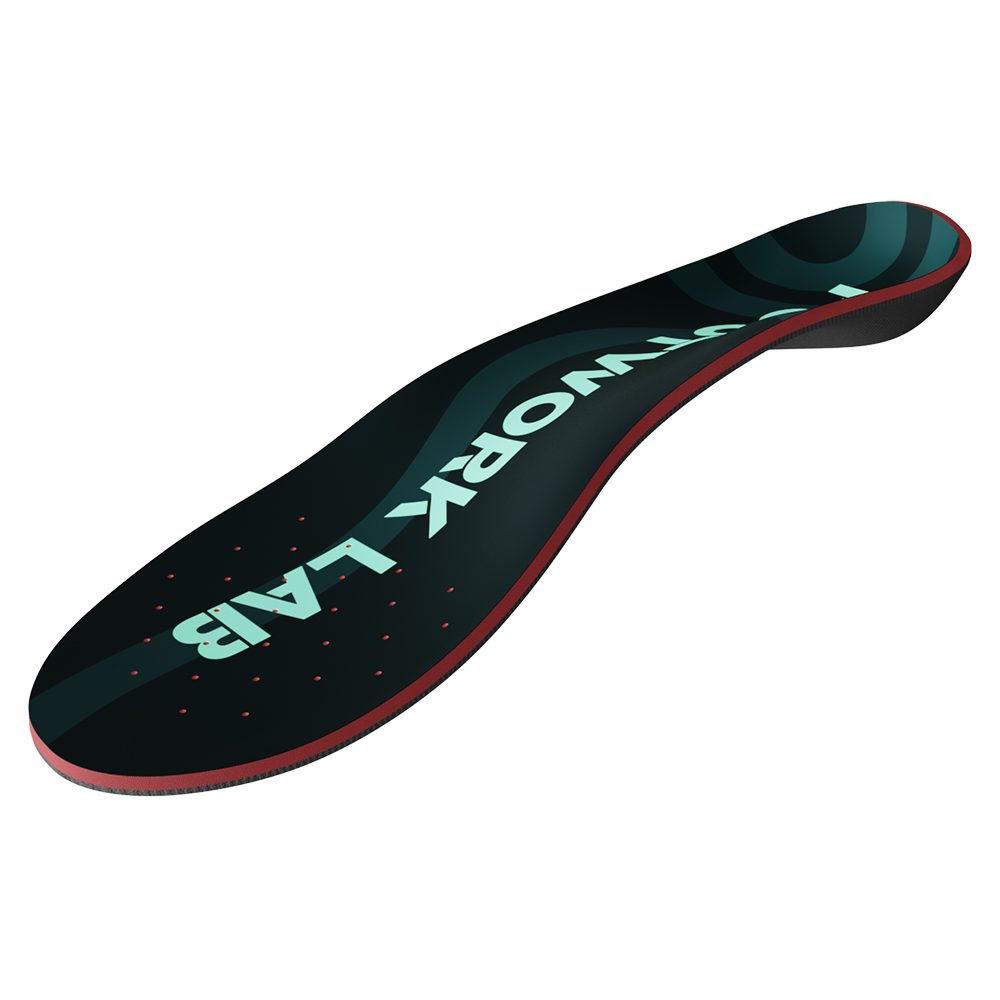
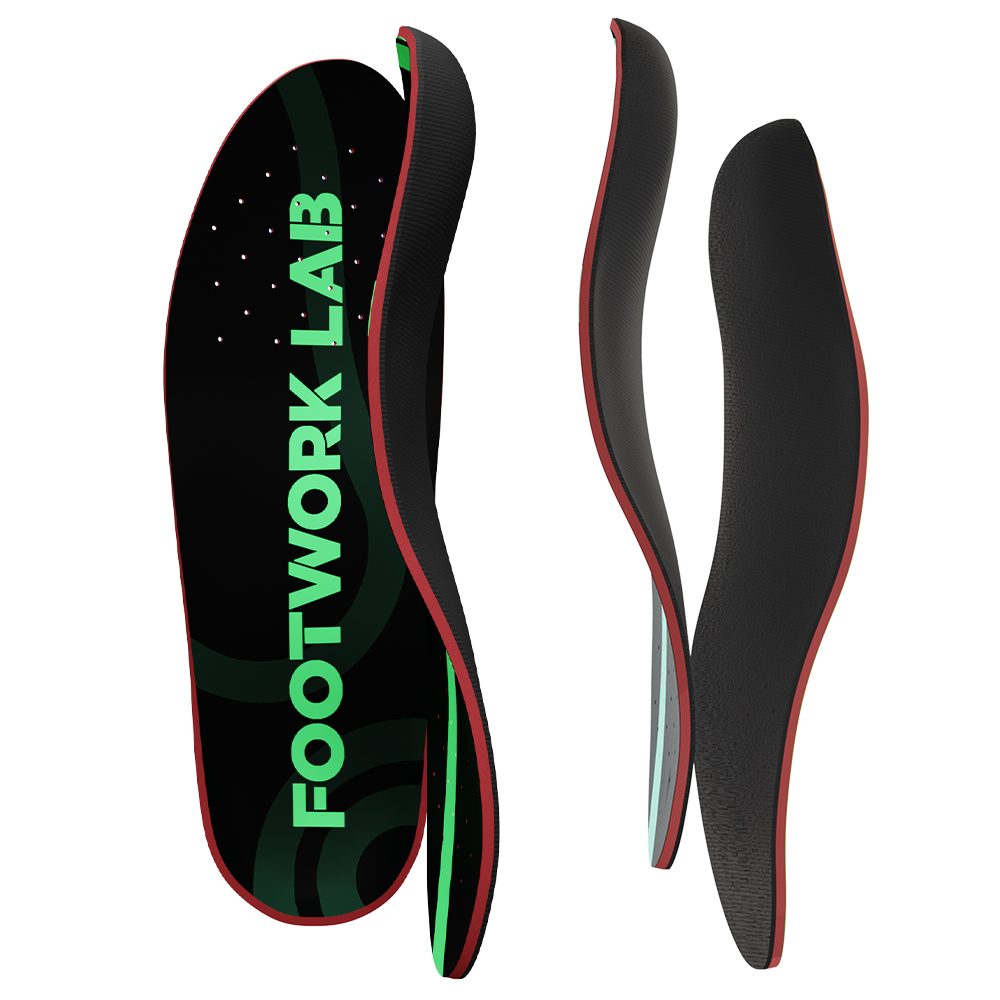
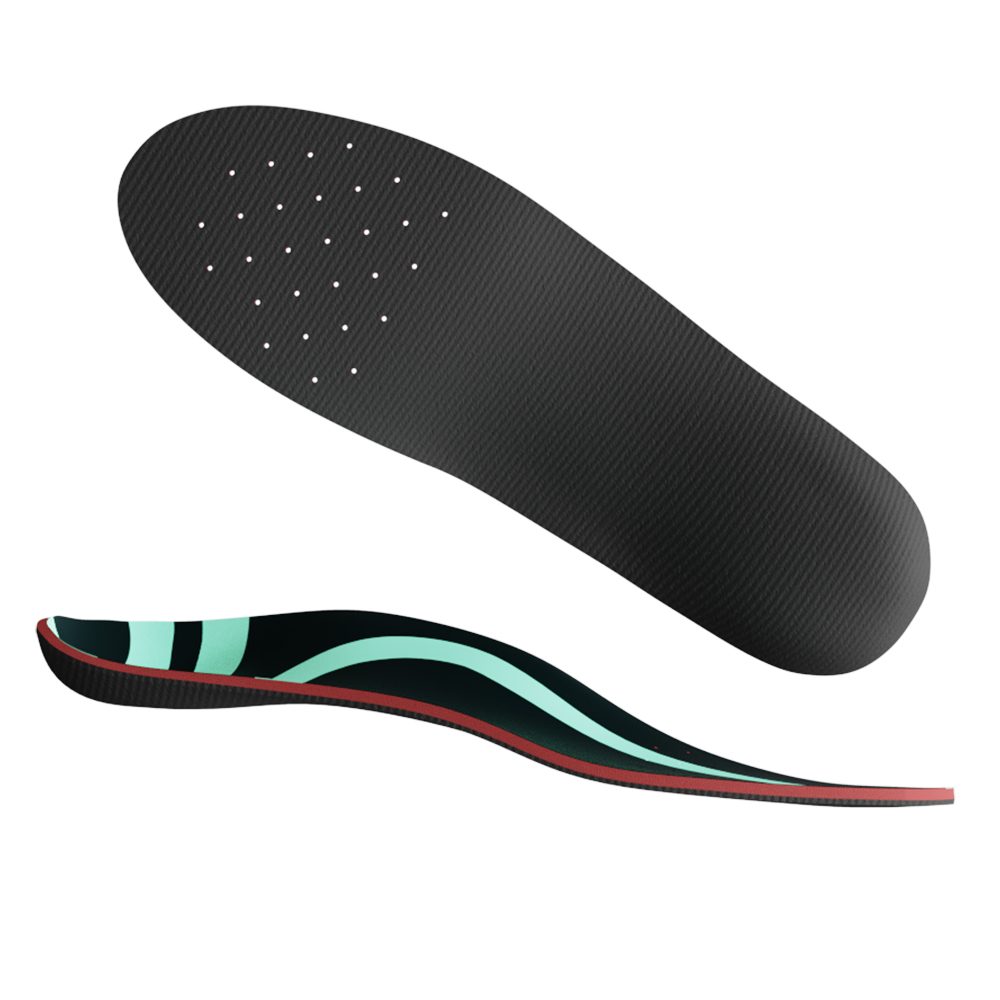
What can custom orthotic insoles such as those in the FX Rehab range honestly do for feet whose hardest daily task is stairs? The useful frame is support and load distribution. A build shaped to the wearer’s foot profile gives the arch a defined surface to work from during the single-leg support phase of each stride, and it can spread the repeated forefoot loading of climbing and the deliberate braking load of descent across more of the foot than bare contact does. Those are support tasks — the same tasks a build performs on the flat, applied to a harder geometry.
What the build cannot do is remove the geometry. Every stair is still a small hill, the descent still has to be braced, and the handrail is still worth holding. Any conversation that drifts toward promising easier stairs has drifted too far and should be pulled back deliberately. The fair framing is this: the assessment described the tasks; the build offers support under those tasks; what the customer notices on the real staircase over the following weeks is information that comes back at follow-up, in their words — not a promise made on fitting day.
Because each foot may meet the staircase differently — one leading on the ascent, one braking first on the descent — the question of whether each foot needs its own answer comes up naturally here, and it is worth asking openly rather than assuming the pair matches. The file records what was decided and why, so the follow-up conversation starts from the plan rather than from memory.
Handrails, shoes and the rest of the staircase
The build is one part of the staircase conversation, and the honest ending of a fitting makes room for the others. The handrail first: a customer who never uses the rail they have may be declining it out of habit, pride or an unconsidered risk, and the observation is worth a sentence, not a lecture. Shoes next: stair work in flexible, worn-out soles is a different task from stair work in a firm, intact heel, and many customers climb in shoes they would never present in a session. Ask what the staircase is actually climbed in — slippers included, because the first crossing of the day is often made in them.
The step edges themselves deserve a look in the conversation. Loose carpet on a stair nose, a shallow tread, poor light on the basement steps — these are facts about the customer’s daily task that no build will touch, and mentioning them is not beyond a fitting conversation’s remit. Nobody expects the shoe professional to survey a house; but a file that says “mentions loose stair carpet, mentioned to customer” has served the customer better than one that pretends the foot is the only variable on the staircase.
Book the follow-up against real weeks, not convenient ones, and ask the same three questions again: which staircase, up or down, how often. Same questions twice is how a practice learns whether the plan is answering the task the customer actually named. And the customer’s words at follow-up — not the fitting-day conversation — are the evidence the file has been waiting for.
Frequently asked questions
Why do stairs bother customers whose flat walking looks fine?
Because stairs are a different task. Each stride is mostly single-leg support, the forefoot takes edge landings, and descent is a controlled lowering the flat never asks for. A customer can be entirely typical on the level and still find the home staircase the hardest thing their feet do daily.
Can I measure stair walking in a normal session?
Usually not fully — few rooms have stairs. But you can sample the abilities stairs use: a controlled step from a firm platform, a single-leg stance check, and a watched climb on real stairs if the building has them and safety allows. Record exactly what was and was not observed on the sheet.
What questions find the staircase problem early?
Three: is everything at home on one floor; which is harder, up or down, and where exactly, in the customer’s own words; and how many times a day the staircase gets crossed. Ask them at the start of the session, not while the shoes are going back on.
Should I ask about stairs outside the home too?
Yes. Entrance steps, station stairs, garden steps and shop mezzanines all add to the week’s stair work. Customers often discover while listing them that stairs run through the day far more than they assumed — and the build has to answer the whole week’s stairs, not only the domestic ones.
What can an insole honestly do for stair climbing?
The honest framing is support and load distribution: a defined arch surface for the single-leg support phase, and spreading of the repeated forefoot loading of climbing and braking descent across more of the foot. It does not remove the geometry — the stairs are still stairs — and real outcomes come back at follow-up, in the customer’s words.
Do both feet do the same work on stairs?
Not necessarily. One foot may lead on the ascent while the other brakes first on the descent, and habits vary widely between customers. Ask openly rather than assuming the pair matches, and record what was decided so the follow-up starts from the plan.
What else belongs in a stair conversation besides the insole?
The handrail habit, the shoes the staircase is actually climbed in — slippers included — and any facts about the steps themselves the customer mentions, such as loose carpet or poor light. A sentence noting what was mentioned serves the file better than pretending the foot is the only variable.
What we would do next
Two changes for the week. Put the home-layout question into the opening script of every session — “is everything on one floor?” — and add a line to the worksheet for the named difficult task, whatever it turns out to be. Where the building has safe stairs, decide in advance how your team will use them, so the observation happens the same way every time instead of depending on the day.
The habit worth keeping is describing the task before describing the foot. The flat record stays honest and useful — it is the baseline every file deserves — but the customer’s staircase, named early and written down, is what gives that baseline something to be measured against. Files that carry both age well; files that carry only the flat crossing quietly lose the sentence that mattered most.
And a question for the rooms that hear “it’s the stairs” regularly: when you ask whether it is the climb or the descent that is harder, do your customers overwhelmingly answer the same way — and has anyone checked whether that answer predicts anything else in the file? We would genuinely like to hear what your notes show.
This article is intended for professional and educational reference. It is not medical advice. Foot assessment equipment produces measurements and images; clinical interpretation and any decision about care remain the responsibility of a qualified professional. Certification scope is limited to the documentation we hold: European Union certification and ISO quality system certification.