
At closing time the cashier steps off her spot for the first time in hours, and her first two steps out from behind the till look like someone testing ice. She has not walked far today — she has barely walked at all. The belt moved, the queue grew, the shift filled itself with scanning and small talk, and her feet stayed planted on one hard strip of floor from open to close, shifting weight between them in a slow, private dance that nobody designed and nobody documented. By the time she reaches the staff room, the day’s arithmetic has arrived all at once.
For the professionals who advise workplaces — occupational health teams, physiotherapy practices, footwear retailers with a fitting service, insole workshops — the checkout is a reminder that standing is not the mild cousin of walking. It is its own load case, with its own pattern, and a build that works beautifully for a postman can be wrong for a cashier. This piece is about what one square metre of floor does to a person over a shift, what to ask before building anything for a fixed station, what such a build has to cope with, and how to follow up once the pair is actually on shift.
One square metre, all shift
The defining feature of checkout work is not the hours. It is the geometry: nearly everything the job demands happens inside a space you could mark out with a broom handle. The cashier walks to the till, walks to the break room, and otherwise stands. Within that space she reaches, twists, leans to the belt, braces against the counter edge, rocks heel to toe and back, and loads one leg for long stretches while the other rests — all of it invisible in any step count, which is exactly why step-count-based assumptions mislead here. A wearable will report a quiet day. Her feet will report otherwise.
The quietness is the trap. Walking forces constant load-sharing: every stride hands the job to the other foot, moves blood up the leg, and gives each region of the sole a rhythmic break. Static standing denies all three. The same regions of the same foot stay loaded for minutes at a time, the calf muscles idle, and the venous pump that walking operates for free simply does not run. Ask any cashier where the discomfort lands by mid-afternoon and the answers cluster with striking consistency: the underside of the heel, the ball of the foot under the standing leg, and that heavy, full feeling in the calves that makes the walk to the car feel twice as long as it is.
Notice what is not on that list: walking-related complaints. Cashiers rarely present with the story of a long march. Their story is the opposite — immobility — and a professional who hears it and prescribes for distance has misread the job. Everything in the sections that follows flows from getting this one fact right: the build is for a person who stands, and only occasionally walks.
What standing still does that walking does not
It is worth being precise about the mechanism, because it drives the whole recommendation. During walking, pressure sweeps across the foot — heel strike, roll through the midfoot, push from the forefoot — so no single region carries load for long, and the alternating contraction of the calf muscles pushes venous blood back up the leg on every step. During static standing, the sweep stops. Load concentrates wherever the foot happens to be planted, most often the heel and the forefoot of the weight-bearing leg, and it stays there. The muscles that would normally pump blood are holding a posture instead, isometrically, which is why legs ache in standing work in a way that feels heavier than the activity seems to justify.
The posture adds its own tax. Checkout work is not parade-ground standing; it is a lean toward the belt, a reach to the card terminal, a twist toward the bagging area, repeated hundreds of times within the same small footprint. Each repetition shifts the centre of pressure a little, and the foot micro-adjusts on a surface that never changes. Over a shift, the load pattern is less a line and more a small, dense cloud centred on the heel and the metatarsal region of the standing leg — a pattern that a proper assessment can actually show, which is why a measurement taken during a simulated standing task, not just a walk, is so much more informative for this population.
The measurement-versus-interpretation line matters here as everywhere. The equipment shows where load concentrated and how the person shifted over time; what that means for this individual’s foot, this footwear and this workplace is the professional’s judgement, made with the full history in hand. What the measurement reliably gives you is a starting question: is the load spreading when she shifts, or is it staying pinned in the same two regions all shift?
The strip behind the till
Before any build is discussed, inspect the workplace itself, because the floor is a co-author of every complaint. Checkout floors divide into three common cases. The bare hard strip — terrazzo, tile, sealed concrete — offers nothing back, transmits every vibration, and is the case most complaints describe. The anti-fatigue mat, common in better-run stores, changes the picture genuinely: a compliant surface invites micro-movement, which restores some of the circulation that still standing loses. The third case is the worst of both: a mat so worn it has compressed flat, or a mat with a curled edge that introduces a new hazard of its own, giving the employer the comfort of having provided something and the employee a surface that no longer does anything.
Ask three questions about the strip and write down the answers. What is the floor material where she actually stands, not where the store brochure photographed the till? Is there a mat, and if so, when was it last replaced? And is the footwear issued, chosen from an approved list, or the employee’s own? The third question decides more than the first two, because any build lives inside the shoe, and a shoe chosen for slip-rated soles and a safety toe can be shaped in ways that quietly fight the foot rather than carrying it.
Footwear policy deserves its own paragraph, because it is where good intentions go to die. Many retailers issue or mandate work shoes for good reasons — dropped stock, wet floors, liability — and those reasons are legitimate. But a mandated shoe with a narrow toe box and no removable inseat turns any recommendation into a compromise. Part of the professional’s job is finding out, before promising anything, whether the issued shoe has a removable footbed. If it does not, say so plainly at the start rather than after the build.
What to ask before building for a fixed station
A short, structured interview separates the builds that get worn from the builds that get resigned to a locker. Start with the shift, not the foot: how long are the blocks of standing, how many breaks, and does she rotate between tills and other tasks or stay planted? A cashier who alternates tills, stocking and returns has a different day from one who scans for a full block, and the build should reflect the real distribution. Then the footwear questions from the last section — floor, mat, issued shoe, removable footbed — plus one more: does she wear the same shoes across commuting and work, or change at the store?
Move to the body next, with open questions that let her narrate rather than confirm. “Where do your feet end up by the end of a shift?” produces better information than any symptom checklist, because cashiers have usually mapped their own discomfort precisely. “What have you already tried?” prevents you from recommending the insoles she abandoned two years ago. “What do you do when it gets bad?” — the answers are often a free field study: leaning onto the counter, parking one heel on the base rail, standing on one leg. Each habit is her own improvised solution, and each is a clue about where load needs to go instead.
Finally, ask about measurement before asking about products. For a fixed-station population, a record taken while standing on a pressure platform tells you where her load parks, while a walking pass tells you how she moves between stations, and both are measurements rather than verdicts — which ones matter, and what they mean for this foot, belong to the professional building the recommendation. The combination of a standing record and a walking record, read together, is the most honest picture of a checkout day you can get, and it is also the picture that makes any later build defensible.
What the build has to cope with
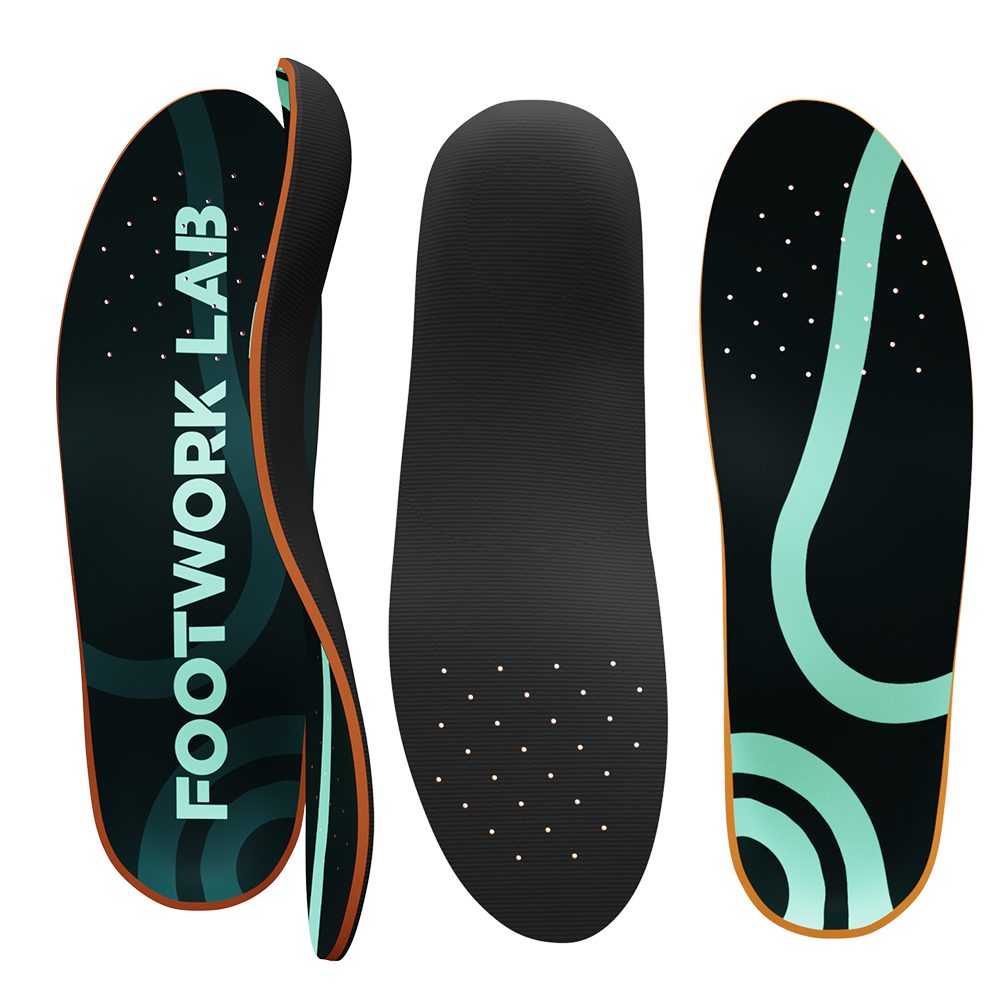
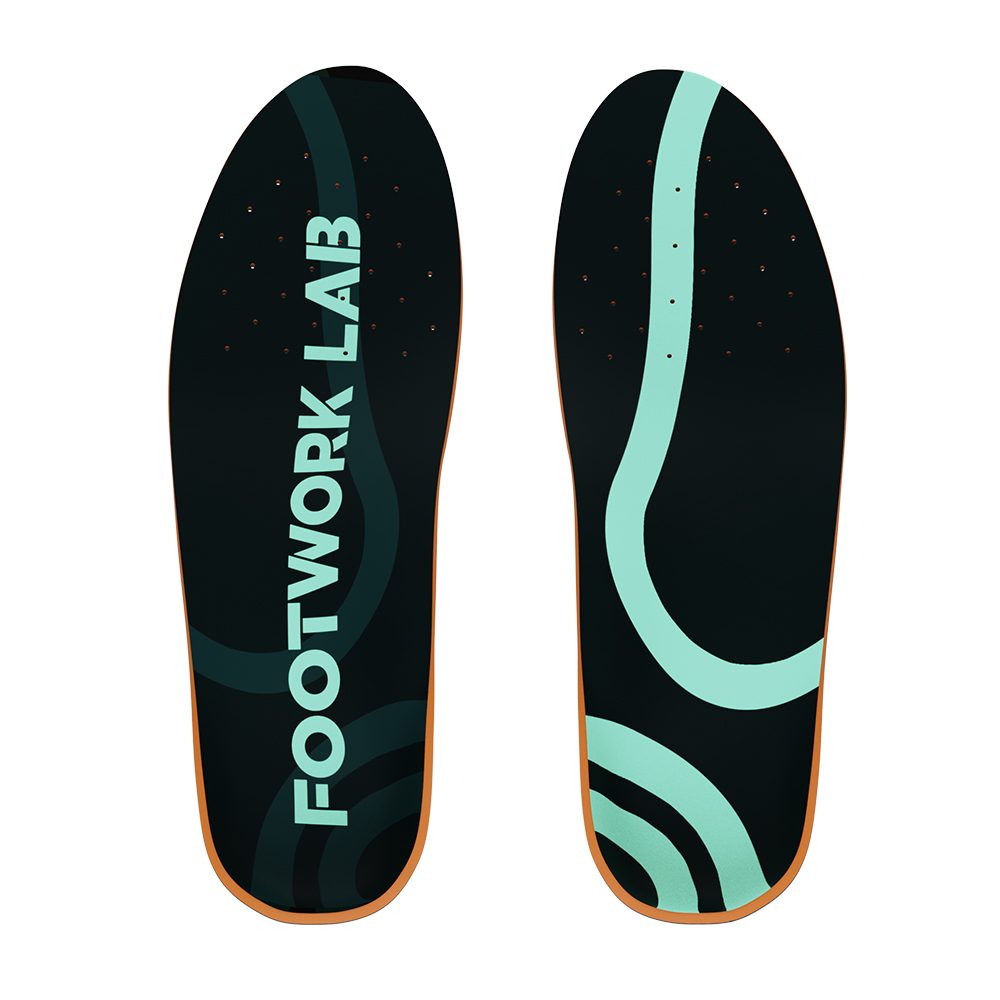
A build for a fixed station is not a walking build made shorter. Its first job is load distribution under sustained contact: spreading the parked load away from the two regions that carry it all shift, toward the whole plantar surface, using the arch profile and the contours that a proper build can address. For workers whose problem is one square metre of floor, a pair of custom orthotic insoles shaped to a measured standing and walking pattern is one of the few interventions that travels with the person instead of with the workplace. Where a walking build manages peaks that arrive and depart in fractions of a second, a standing build manages plateaus that last minutes — which is why generous, well-placed contact area matters more than aggressive correction, and why the goal is usually described as support and load distribution rather than anything more dramatic.
The second job is surviving the shoe. Checkout footwear is typically stiff-soled, slip-rated and closed, with less internal volume than a running shoe. A build that is technically excellent but makes the shoe tight will be removed by lunchtime on day one, and no follow-up will rescue it. Volume, thickness at the toe area, and the height the foot sits in the shoe all need checking with the actual work shoe on the foot, not the shoes she wore to the appointment. If the employer issues shoes, build against the issued pair.
The third job is respecting the micro-movement. A good standing build does not immobilise; it gives the small rock and shift of a working station somewhere better to happen, so her improvised habits — the counter lean, the heel park — have less reason to exist. Judge success by that, quietly: three weeks in, is she still leaning onto the belt to unload her heel? If the answer is no, the build is doing its job even if she cannot articulate why. If the answer is yes, the build and the shoe need re-reading together, because the workstation has told you something the first fitting missed.
Getting the pair actually worn
The graveyard of workplace recommendations is not bad builds; it is builds that lose arguments with the dress code, the commute and the break schedule. Prevent the obvious losses at the fitting itself. Have her try the build inside the exact work shoe she wears on shift, laced as she laces it, standing the way she stands. Walk her through the first weeks honestly: most people need an adjustment period in which a new pair changes how load sits under the foot, and advising “wear them for short stretches at first, then full shifts” prevents the common failure of one brutal first day followed by quiet retirement of the pair.
Deal with the rotation question directly. Many stores issue or require more than one pair of work shoes per employee, for hygiene and wear reasons, and a build that lives in only one of them will be forgotten on the wrong days. Either build for the pair she wears most, or be explicit that the recommendation assumes those shoes. Offer a simple habit anchor instead of a lecture: insoles go in when the work shoes go on, at the start of shift, every shift. Anchored habits survive; remembered intentions do not.
Set expectations with the same honesty you would want as a customer. What a standing build can realistically offer is better load distribution and support across a long shift — measurable, felt, and worth having. What it cannot do is refund a decade of hard flooring in a fortnight, or compensate for a shoe that fights the foot. Saying that at the fitting is not underselling; it is the difference between a customer who reports back honestly at follow-up and one who quietly disappears, taking the failure story with her to the next counter she stands behind.
After the first month on the floor
Schedule the follow-up before she leaves the fitting, because “come back if it hurts” filters out everyone for whom it does not hurt enough to complain and everyone who has simply given up. A month is long enough for the adjustment period to be over and short enough that the work shoes have not yet reshaped themselves around a bad fit. At the review, look at three things in order, and let the pair do the talking before she does.
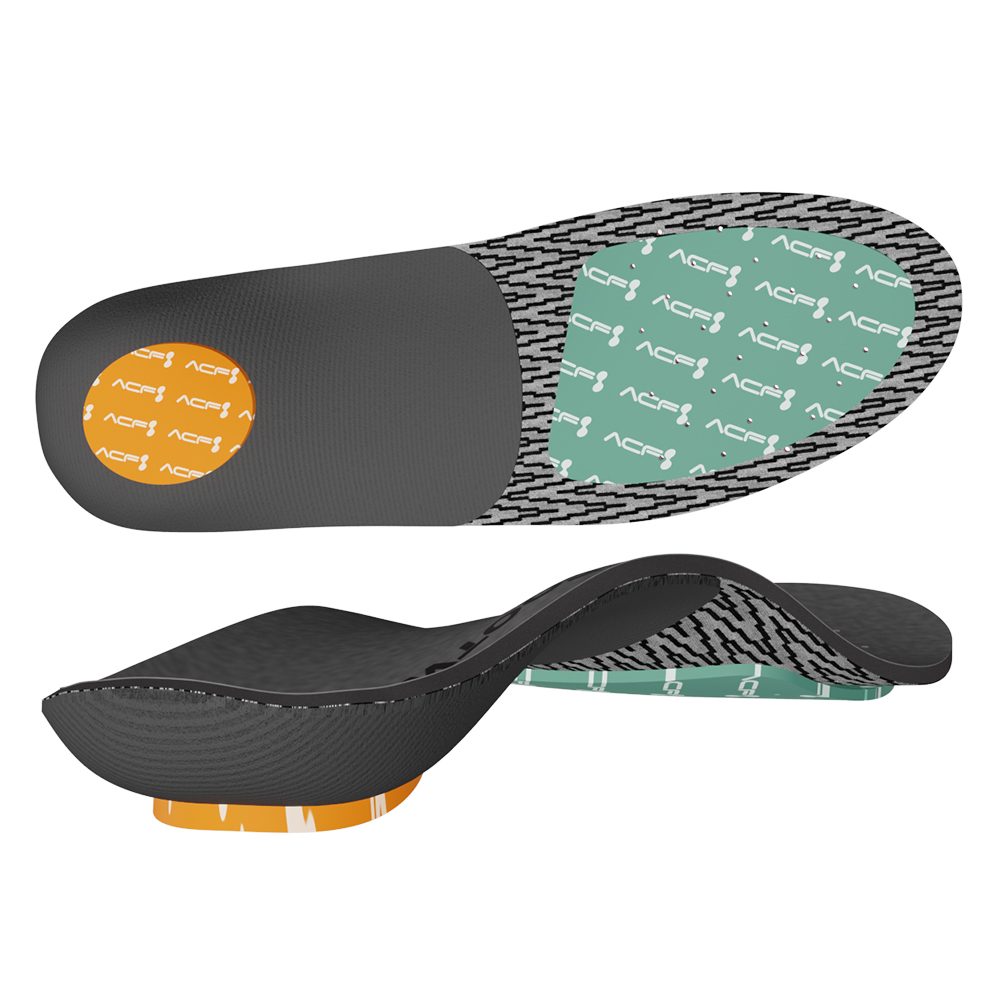
First, the wear surface. Where the build has compressed, darkened or creased tells you where her shift actually happened — often a very different picture from the fitting-room guess. Wear concentrated under the heel and the forefoot of one leg is the checkout signature; wear that has punched through at one spot means the load never redistributed, and the build needs re-reading against a fresh measurement, not more reassurance. Second, the habits: is she still parking a heel on the base rail, still leaning into the counter? Habits that persist are data. Third, her own account, in her words: better, same, worse, or the most useful answer of all — “I stopped noticing my feet,” which is what success sounds like from behind a till.
Then close the loop with the workplace, not just the foot. If the floor strip, the mat or the issued shoe is working against the build, say so to whoever manages the store — the recommendation carries further when the professional names the environment as part of the problem. And log what changed, because a workshop that can show a year of fixed-station cases, with their follow-ups, is a workshop that store managers learn to call first rather than last.
Frequently asked questions
Why do cashiers’ feet suffer if they barely walk all day?
Because standing is its own load case, not a mild version of walking. Walking shares load across the foot stride by stride and runs the calf muscle pump; static standing parks load on the same heel and forefoot regions for minutes at a time while the pump idles. The result is the classic checkout complaint — heavy calves, sore heels, a forefoot ache — on a day whose step count looks almost empty.
Is an anti-fatigue mat enough on its own?
A good mat genuinely helps, because a compliant surface invites the micro-movement that still standing loses, and a worn-flat or curled mat helps nobody. But the mat cannot follow the worker to the stockroom, the bus or the second job. A build travels with the person, which is why the professional answer usually combines the two and starts by checking whether the store’s mat is still actually doing anything.
What should we ask a cashier before recommending insoles?
Shift structure first — block length, breaks, rotation. Then the environment: floor material where she actually stands, mat condition, whether footwear is issued and whether it has a removable footbed. Then open questions: where her feet end up by end of shift, what she has already tried, and what she does when it gets bad — her improvised habits are the best clues about where load needs to go.
Does a build for standing differ from one for walking?
It should. A walking build manages load peaks that arrive and pass in fractions of a second; a standing build manages plateaus that last minutes. That shifts the priority toward generous, well-placed contact area and load distribution across the whole plantar surface, using the measured arch profile, rather than features tuned for gait. Judged in the actual work shoe, not the shoes worn to the appointment.
Can one pair work across different stations and shifts?
Often yes, if the stations share the same footwear and the same footwear rules. The pair lives inside the shoe, not inside the till. What matters is that the build was made against the shoe she actually wears on shift and that the habit is anchored — insoles go in when the work shoes go on, every shift. Rotation between several pairs of issued shoes is the usual way this fails, so it needs deciding at the fitting.
How long before a new pair feels normal on shift?
Most people need an adjustment period during which load sits differently under the foot, and advising short stretches first, then full shifts, prevents the classic failure of one brutal opening day followed by the pair living in a locker. By roughly a month the adjustment should be over and the wear surface on the build will show where the shift actually happened — which is why the follow-up belongs in the diary at the fitting itself.
When should a pair for a fixed station be rebuilt or replaced?
At the follow-up, read the wear surface first. Wear concentrated under the heel and forefoot of one leg is the checkout signature; wear that has broken down at a single spot means load never redistributed and the build needs re-reading against a fresh measurement. Persistent improvised habits — the counter lean, the heel park — are also data that the build and the shoe need to be re-read together.
What we would do next
If your service covers workplaces, take two things into your next fixed-station fitting: a printed question sheet built from the interview above, and the habit of checking the removable footbed before you promise anything. Then add one standing record to every fixed-station assessment alongside the walking pass, because the checkout foot lives in standing and deserves to be measured there. The same principle — measure the task the worker actually performs, not the one the job title suggests — runs through other standing professions too (Standing by Choice Now: Insoles for the Standing-Desk Convert).
For teams rather than individuals, the arithmetic changes again: whole checkout crews can be measured and built for in production runs, and workshop capacity for custom orthotic insoles — around five hundred to a thousand pairs a day at our own plant — exists precisely so that a store can outfit a staff rather than a staff member. If you run fits like these, here is the question we would put to you: when a cashier reports back at the month review that she has stopped noticing her feet, what do you log as the reason — the build, the mat, the shoe, or the combination? We ask because our own answer has changed twice in as many years.
This article is intended for professional and educational reference. It is not medical advice. Foot assessment equipment produces measurements and images; clinical interpretation and any decision about care remain the responsibility of a qualified professional. Certification scope is limited to the documentation we hold: European Union certification and ISO quality system certification.