
By eleven, the capture has been done four times and the sheet says the same thing four ways. The customer is patient, the staff member is apologetic, and somewhere in the room everyone has quietly decided that the equipment is fussy. Most mornings it is not the equipment. The record is fair only when the walk is fair, and four things in particular keep knocking the walk off its ordinary shape.
Retakes are a normal part of running a foot assessment room, but they are expensive: they cost minutes, they erode the customer’s confidence, and when they pile up they tempt staff to accept a record nobody quite trusts. This article is for the clinics, physiotherapy studios and retail teams that run capture sessions on a pressure system. It names the four causes behind most retakes we see and hear about, gives a pre-capture script that prevents them, and explains when a second recording is not a failure at all but the most honest thing in the file.
Four retakes before lunch
Set the scene, because every experienced operator has lived some version of it. The first customer of the day walks the platform and the record looks hesitant, so you repeat it. The second customer walks in new shoes, takes them off halfway through the explanation, and the second half of the walk is in socks. The third customer walks beautifully except that they slow down as they approach the plate, watching where to step. The fourth walks well twice, and the two records disagree, and now nobody knows which one to keep. Four retakes, four different causes, one shared result: the morning is late and the staff are blaming themselves.
Nothing in that morning is unusual, and none of it is the operator being careless. Capture sessions put a person in an artificial situation, observed, at a set pace, across a defined strip of floor, and small human factors leak into the record constantly. The mistake most rooms make is treating each retake as its own random event. In practice the causes repeat so reliably that they can be named in advance, scripted against, and nearly eliminated, which is what this article sets out to do. The equipment itself, a pressure and force-line system like the one on our X3 page, is usually the steadiest element in the room; the walk is where the variability lives.
There is a second reason to name the causes out loud, and it matters more than speed. A record that the room quietly distrusts tends to travel: it gets interpreted with a shrug, filed without confidence, and referenced later with a caveat. A record the room trusts gets used. Fairness in foot assessment is mostly a room-culture problem before it is a technology problem, and retake hygiene is where that culture shows itself first.
Retake one: the pace that was never theirs
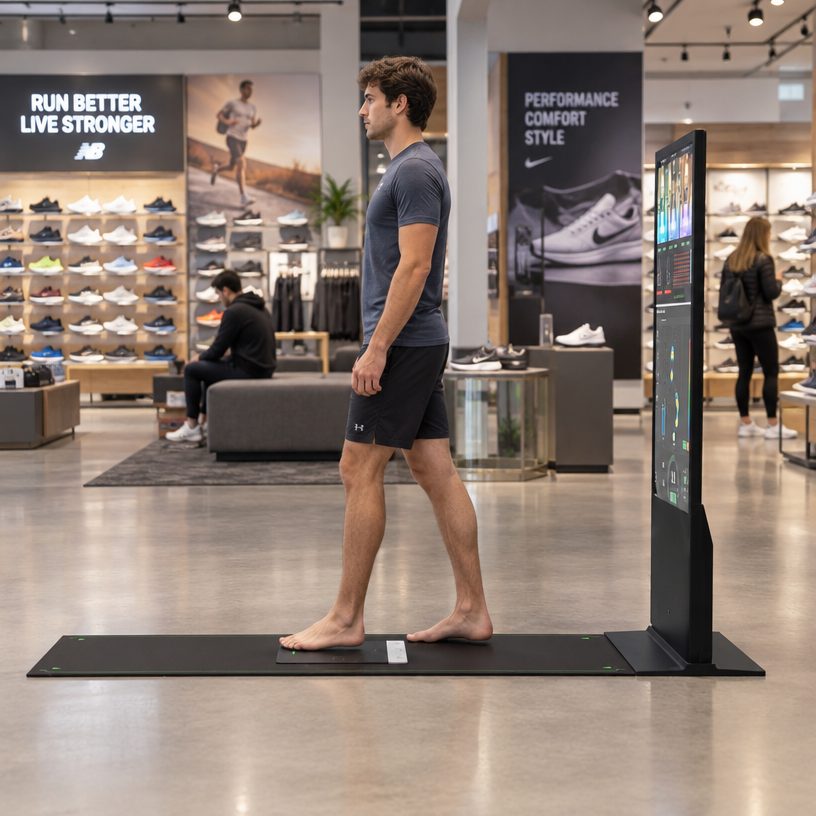
The most common single cause of a retake is a walking speed that does not belong to the person. It happens in two ways. In the first, the customer sees the platform, realises it is a target, and begins managing their steps: shortening the last stride, aiming the foot, adjusting the approach to land correctly. The record then shows a walk that was assembled rather than performed, and the asymmetry on it is the aiming, not the foot. In the second way, the customer is told to “walk normally”, which is an instruction nobody can follow while being watched, and the result is a self-conscious shuffle that belongs to nobody’s real life.
The fixes are unglamorous and they work. Have the customer start far enough back that the platform is a stretch of floor they cross, not a target they land on. Give the instruction in terms of a destination rather than a task: walk to the far door, as if you were crossing the room at home. Watch the approach from the side rather than from behind the equipment, because a watcher standing at the end of the walk is a finish line, and finish lines change pace. Our article on how many passes make a fair record (/news/6381//) covers the walking-pattern side of this in more depth.
Learn to recognise the signature of a managed walk on the record itself. It tends to show an irregular rhythm, a shorter final stride, or a first contact that lands deliberately near the middle of the sensing area rather than wherever the foot naturally arrives. When you see it, do not score it and do not explain it; simply repeat the pass with the instruction changed. One repetition with a destination-based instruction usually replaces four repetitions with the same sentence said more slowly, and it leaves the customer feeling helped rather than corrected.
Retake two: footwear changed halfway through the story
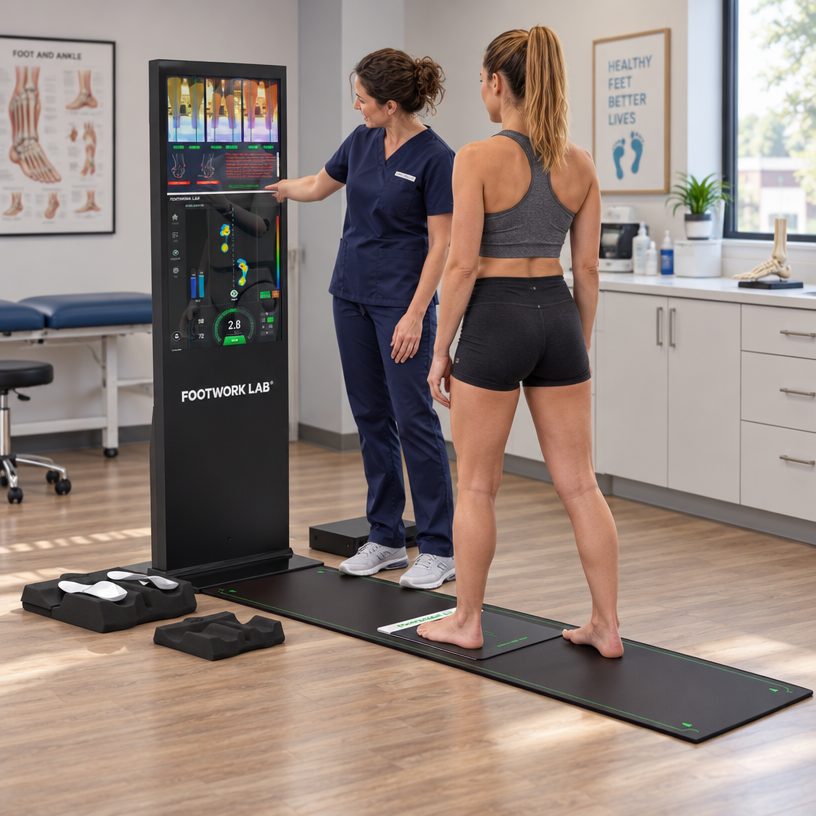
The second cause is clothing, usually shoes, sometimes socks, occasionally a heel that slips. It rarely announces itself. A customer arrives in winter boots, is asked to remove them for the record, and walks in thick socks that slide on the platform surface. Or they take the shoes off for the conversation and put them back on for the walk, and the room does not notice that the record and the conversation now describe different situations. Or a lace loosens during the walk and the last third of the record carries a slightly different foot position than the first.
Decide the room’s policy before the customer arrives and apply it the same way every time. Record barefoot when the question is about the foot itself, which is the default for most assessment work. If the session intends to look at the foot inside its usual shoes, that is a separate record with its own label, not an accidental mixture of the two. Whatever the policy, put it on the sheet: shoes on or off, sock type if socks are involved, and any note about footwear state. One line of writing prevents the most confusing retakes of all, the ones where both records are technically valid and describe different worlds. Rooms that adopt the rule report a second benefit within a month: customers start answering the footwear question before it is asked, because the policy is visible and consistent.
Watch for the small physical details too. Socks with grippy soles behave differently on a smooth platform from ordinary cotton socks. A heel that slips inside a shoe changes the whole contact pattern. Long trousers that brush the platform edge can catch a stride. None of these are equipment faults; they are ordinary conditions, and the room that notices them before the pass runs a calmer morning than the room that discovers them by retake.
Retake three: the customer performs for the machine
The third cause is the most human one. Put a person on a strip of equipment in a quiet room, tell them the walk matters, and they will walk like someone giving evidence. Head down, arms stiff, steps measured, breathing controlled. The record from that walk is not wrong exactly; it is simply a portrait of politeness rather than of the person. Customers do this out of a wish to help, which is worth remembering before anyone corrects them with a sigh.
Two approaches soften it. The first is conversation during the walk. A customer who is answering an ordinary question about their day walks far more like themselves than one walking in silence toward judgement, and the question costs nothing. The second is de-emphasising the platform itself: start the walk well outside the capture area, end it well beyond, and let the equipment be a stretch of floor the person crosses rather than a stage they perform on. Both are free, and together they remove most of the performance effect before it reaches the record.
Recognise the performance signature when it appears. Stiff arm swing, unusually short and even steps, a head held lower than the customer’s natural carriage, contact patterns that look tidy to the point of being bloodless. When you see it, the retake is not a correction but an invitation: same walk, same room, now with something to talk about. Rooms that treat this retake as routine rather than as customer error keep the customer relaxed, and the relaxed second walk is nearly always the fair one. It helps to name the effect out loud with new staff, because an operator who expects the performance walk recognises it in one pass instead of three, and a room that recognises it keeps its mornings on schedule.
Retake four: the room and the setup disagree with the plan
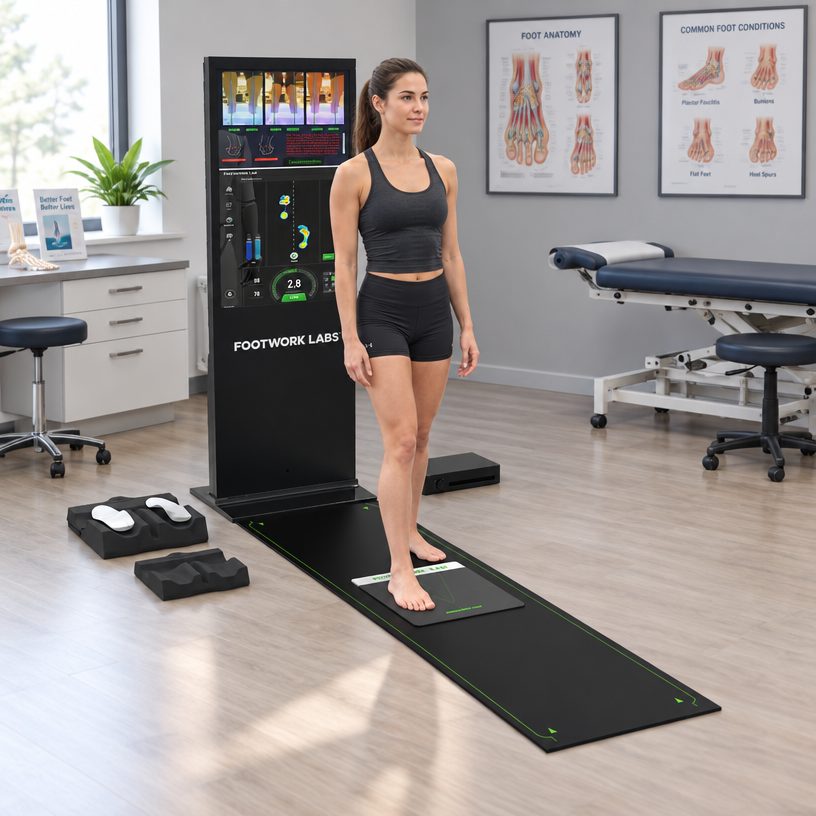
The fourth cause belongs to the room rather than the person. The approach is too short, so the customer is still settling into their stride when the record begins. The walk ends too close, so the customer slows onto or just past the platform. The start point was never marked, so every pass begins from a slightly different place and the passes are not comparable. A mat sits half a stride before the entry edge and every customer adjusts for it without being asked. None of these shows up as an error message; they show up as records that look subtly wrong and get retaken without anyone naming why.
Walk the path yourself before the first appointment. Start where the customer will start, cross at the pace the customer will use, and look for everything that invites an adjustment: mats, thresholds, a doorframe in the line of sight, a chair parked in the run-out. Mark the start point with something the customer cannot miss and the staff can reposition after every pass, so the tenth walk of the day starts where the first one did. Give the run-out enough floor that nobody has to brake over the sensing area, because braking is just aiming with worse manners.
One further habit closes this category almost entirely: record the setup on the sheet the same way you record the customer. Approach length, start point, direction of travel, footwear state. A record without its setup notes is only half a record, and a retake without setup notes is a guess about what changed. Rooms that write these lines down can compare a Tuesday pass with a Thursday pass and know what they are looking at, which is the whole point of keeping records at all. The habit also makes staff changes painless, because a new operator inherits a room whose setup is written down rather than remembered.
The pre-capture script worth taping to the wall
Everything above compresses into a script a room can run without thinking, and writing it down is the difference between a policy and a hope. Before the customer enters: walk the path yourself once, confirm the run-out is clear, confirm the start mark is where it should be, and decide shoes on or off. First words to the customer: where you are walking to, and that the walk matters less than the destination. During the walk: talk about something ordinary, and watch from the side.
After the first pass, before deciding anything, check the record against three questions. Does the rhythm look like a walk or like an assembly? Did the last stride arrive from the same world as the first? Is there anything on the sheet, footwear, setup, sock, that changed between the conversation and the pass? If all three come back clean, the record is probably fair, and the next decision belongs to the professional reading it, not to the room’s impatience. If any of them comes back doubtful, retake immediately, with one instruction changed, and note which instruction changed on the sheet.
The script takes a week to become habit and saves more than it costs from the first morning. It also transfers: the same script works for the customer who has never been on a platform and the customer who arrives with opinions about theirs, because it makes no assumptions about either. Rooms that run it consistently report the same two changes: the retake count drops, and the retakes that remain are the honest ones, the second passes where the first record was genuinely ambiguous rather than merely unlucky. That is exactly the ratio a busy room wants, and it arrives through writing and repetition rather than through any change of equipment.
When a retake is telling the truth
The last section of this subject is the one rooms resist longest. Sometimes two clean records from the same person, same day, same setup, simply disagree. Human walking varies; fatigue, attention and ordinary biology see to that. A disagreement between two fair passes is not automatically a failed capture. It can be the most informative line in the file, because it says something real about how stable this person’s walking pattern is today, and that is information no single flawless record could have carried.
The practical rule most rooms settle on is to keep both records and label them, rather than deleting one to make the file tidy. Write down what was identical between the two passes and what was not, however small it seems: time in the session, footwear state, the instruction used. The comparison is a measurement question, and what it means, like everything else on the platform, belongs to the qualified professional who interprets the record. The room’s job is to make sure both passes were fair and both were labelled; the interpretation is not the room’s to make.
There is a confidence dividend here that pays over months. A room that keeps both passes and explains the labelling to the customer demonstrates that its records are honest, including the inconvenient ones. Customers notice that kind of behaviour, and so do the professionals who receive the file later. The cheapest way to build trust in an assessment service is not a new feature; it is the visible discipline of fair captures, honest retakes and labelled records, repeated until it is simply how the room works. Customers feel that discipline even when they cannot name it, and they describe the room to others in exactly those terms.
Frequently asked questions
How many retakes are normal in a capture session?
Rooms vary, but a well-run session usually needs at most one retake, and many need none. If retakes are routine, the cause is almost always in the four repeatable categories: managed pace, footwear changes, performance for the machine, or setup drift. Naming the cause on the sheet after each retake shows within a week which category dominates in your room.
Should customers walk barefoot or in shoes for a capture?
Both records answer different questions, so decide by purpose rather than by habit. A barefoot pass shows how the foot itself behaves; a shoed pass shows the foot inside its usual environment. Whichever the session intends, state it before the walk, keep it consistent across passes, and write it on the sheet so the record and the file agree.
What is the most common cause of a retake?
A walking pace that was managed rather than natural, usually because the customer aimed at the platform or was watched from the end of the walk. It is also the easiest to fix: start the customer further back, give a destination rather than an instruction, and watch from the side. One changed instruction usually does the work of several repeated passes.
Can the customer be told they are walking oddly?
Gentle and sparing is the rule. Telling someone to walk naturally rarely produces a natural walk, because the instruction itself creates the self-consciousness. Conversation during the walk and a destination beyond the capture area achieve more than correction does. Save any direct coaching for after the session, when the record is already fair.
What should be written on the sheet with each record?
Five short lines: footwear state, start point and approach, direction of travel, time in the session, and the instruction used. With those lines, any two records in the file can be compared honestly months later. Without them, a second pass is only a rumour about what changed, and the file loses most of its value.
Two clean records disagree. Which one should be kept?
Keep both and label them. Human walking varies between passes, and a disagreement between two fair captures is information about how stable the pattern is, not proof that the equipment failed. Deleting the inconvenient record makes the file tidier and less true. The meaning of the disagreement belongs to the qualified professional who interprets the records.
How do you keep customers relaxed during a capture?
Treat the walk as the least important thing in the room. Give a real destination, chat about something ordinary while they walk, and keep the equipment out of their line of sight until they are on it. Customers walk like themselves when the session feels like a conversation, and the record shows it within a single pass.
What we would do next
The immediate work is a page of writing: tape the pre-capture script where the operator stands, add the five setup lines to the sheet, and ask the room to name the cause of every retake for one week. The pattern that emerges will tell you more about your mornings than any equipment review would, and it costs one sheet of paper. If the wider workflow questions come up, how sessions are structured, how records move to the professional who reads them, the contact page is a direct route to us.
The discipline that pays longest is labelling. A file where every pass carries its setup lines and every retake carries its reason is a file a visiting professional can read without a guide, and that file earns the room a reputation no marketing material can buy.
So here is the question we would hand to colleagues who run capture sessions: when the second pass changes nothing and the first one still looks doubtful, what do you write on the sheet, and which record does the file keep? We ask because we hear different answers from every experienced room, and the ones who have settled the question in writing run calmer mornings than the ones still deciding it case by case.
This article is intended for professional and educational reference. It is not medical advice. Foot assessment equipment produces measurements and images; clinical interpretation and any decision about care remain the responsibility of a qualified professional. Certification scope is limited to the documentation we hold: European Union certification and ISO quality system certification.