
The customer paid for an assessment, sat through it patiently, and is now waiting to hear what she is buying — and the honest answer is: nothing. Her shoes are appropriate for what she does, her load distribution across a measured walk falls inside what the professional considers ordinary variation, and nothing on the record argues for a build. The room goes slightly awkward. She asks if the machine is working. The practitioner starts explaining the pictures. Somewhere in that exchange, a service that did its job perfectly is at risk of being remembered as a service that failed, simply because the ending was not a product.
This piece is for clinics, fitting services and retail teams who offer foot assessments: it is about the craft of concluding that nothing needs changing. How to reach that conclusion honestly, how to say it so the customer believes it, what to write on the record sheet so the decision is defensible next year, and which observations should make you reconsider. An assessment that ends without a build is not a lost sale and not a wasted visit — handled well, it is the strongest trust-building appointment in the whole service.
The customer who came for a pair
Most people do not book an assessment because they want data. They book because a colleague mentioned theirs, because their feet have been talking to them at work, or because a shop displayed a scanner and curiosity did the rest. Many arrive carrying a decision that was already half-made: they are there to get insoles, the way one goes to a barber to get a haircut. That expectation is not a problem to be corrected bluntly; it is context that shapes how the entire appointment must be run, and it explains why the ending feels so fragile when the honest answer is that no build is needed.
The fragile part is the gap between what the customer thinks she is buying and what she is actually buying. She thinks she is buying a pair. What the service actually offers is an examination — measurement, picture, explanation, and a recommendation that may well be “not at this time”. If the practitioner never surfaces that gap early, the ending will feel like a bait-and-switch no matter how carefully it is worded. If it is surfaced in the first five minutes — “we will look at how your feet carry you, and sometimes the honest answer is that nothing needs changing, and you will leave with advice instead of a product” — the same ending becomes a demonstration of professionalism.
So the first craft skill is not measurement at all. It is expectation-setting in the opening minutes, before any data exists to argue with. Practitioners who skip this step often end up over-explaining at the close, and over-explanation reads as doubt. One clear sentence at the start buys a calm, short close at the end, whatever the record turns out to say.
Why an empty outcome is a real outcome
An assessment service that always ends in a pair is not an assessment service; it is a sales funnel wearing a white coat. Every experienced clinician and every honest fitter knows that some feet, in some shoes, for some working lives, simply do not need a build — and that detecting that fact is exactly what the customer is paying for. The equipment’s job is to make the negative finding as rigorous as the positive one, so that “nothing needs changing” rests on a record rather than on a shrug.
There is a commercial discomfort to sit with, and it helps to name it plainly within the team. A clinic that books assessments and sometimes closes them with no product is trading short-term revenue for the reputation that fills next year’s diary. Customers who were told honestly that they did not need anything become the service’s most persuasive advocates, because their testimony is structurally credible: nobody suspects the person who reports spending less than expected. The negative appointment is, in effect, a marketing asset that cannot be bought, only earned by actually doing it.
The discipline matters on the practitioner’s side too. A professional who never concludes “no build” has usually stopped looking, because feet and jobs vary far too much for one outcome to be universal. Building a team habit of reviewing each other’s negative conclusions — not to overturn them, but to check they were reached the same way positive ones are — keeps the standard honest. A negative result that would not survive a colleague’s reading is not a negative result; it is a missed one.

What the record looks like when nothing needs changing
A “no build” decision should look ordinary on paper — ordinary in the sense of complete, not in the sense of thin. It contains the same elements as any assessment: the history in the customer’s own words, the footwear read, a static record, walking passes at her own pace, and the notes that connect them. What distinguishes the negative case is not missing content but the character of the findings: load distributing across the plantar surface without isolated hotspots that persist across passes, a centre of pressure line that progresses smoothly through stance, no asymmetry between feet that the history fails to explain, and footwear that matches the demands of her actual week.
Two reading habits make negative findings trustworthy. First, cross-check the static against the dynamic: a static map can look asymmetric while the walking passes even out, or the reverse, and the negative conclusion is safest when both readings agree. Second, test the finding against the complaint. If she came in because her feet ache at work and the record shows nothing unusual, that is not a contradiction to be papered over — it is a prompt to look at the workplace variables, the shoes she wears for those hours, and the things the record cannot see. The record supports the conclusion; it does not replace the history.
The measurement-versus-interpretation line is at its most important here. The system produces measurements and images; saying “nothing needs changing” is an interpretation, and it belongs to the qualified professional, made with the full picture in hand. Teams should be able to say, for every negative case, which specific observations the conclusion rests on — because “the machine said I was fine” is never what actually happened, and never what should be written down.
How to say it: the language of a clean result
The wording of a negative close decides how the appointment is remembered. The frame that works is medical and matter-of-fact: the assessment did its job, the job included checking, and the checking came back with good news. Avoid the apologetic register — long justifications, repeated reassurance, hovering over the printout — because customers read apologetic tone as uncertainty, and uncertainty makes them go looking for a second opinion that will sell them something.
A close that works has three beats. Beat one, the finding, stated in one sentence: “Your record falls within what we would expect for someone doing what you do, in the shoes you do it in.” Beat two, the evidence, offered not imposed: show the map and the pressure line, point to the specific features that support the conclusion, and let her look. Beat three, the deliverable, which must exist even when no product does: practical advice she takes home — a footwear change, a stretch her physiotherapist can approve, a plan to re-check in a year. An appointment that ends with advice rather than a pair still ends with something in her hands, and that something is what she will describe to colleagues.
Teams should agree on the wording in advance, the same way they agree on clinical protocols. Rehearse the three beats until the negative close takes under two minutes and contains no hedging. The paradox is that the clearer and shorter the “nothing needs changing”, the more professional the whole service sounds — and the fewer customers leave the room wondering whether the machine was broken.
What goes on the record sheet
A negative conclusion that lives only in conversation cannot be defended, compared or followed up. The record sheet is where the appointment becomes durable, and it should carry, at minimum, four things. First, the reason for the visit in her words — not the clinic’s category, her phrasing, because next year’s comparison starts from what she actually noticed. Second, the observations the conclusion rests on, written as specifics: “load distribution even across both feet across three walking passes”, “centre of pressure progresses smoothly, no lateral drift”, “footwear appropriate to reported daily activity”. Vague entries like “no issues found” are the ones that unravel when a customer returns with a new complaint and asks what was true last time.
Third, what was advised instead. Even a clean negative appointment should produce a written recommendation — footwear guidance, a workplace note, a self-check she can run monthly, whatever the case warrants — because the advice is the deliverable, and undelivered advice cannot be followed up. Fourth, the re-check interval with a date attached: what would make this worth re-recording, and when the team suggests that review happens. A negative finding with no re-check date is a finding the service has silently abandoned.
The sheet should also state explicitly what the record does not cover. The equipment captures load distribution during the passes recorded, under the conditions recorded — shoes on or off, that floor, that day. It does not capture tomorrow, a different workplace or a change of job. Writing the boundaries on the sheet is what makes next year’s comparison meaningful, and it protects the customer from treating one good record as a lasting bill of health — a phrase worth avoiding on paper precisely because records are snapshots, not promises.
The conditions that would change the answer
Saying “nothing needs changing today” is only honest alongside the conditions that would change it, and naming those conditions is what turns a close into a plan. Three families of conditions deserve a place in the conversation and on the sheet. The first is change in the person’s working life: a new job with different surfaces, a promotion from desk to site, a role that swaps sitting for standing. Load patterns follow tasks, and a record taken in one context does not license conclusions about another.
The second is change in the complaint. If the feet begin to ache in ways the original visit never discussed, or the ache moves to regions that were quiet on the day, the old record’s negative finding has expired for that question. Customers should leave knowing that the conclusion applies to the feet, shoes and tasks of that week — and that a new symptom is a new question, not a betrayal of the old answer.
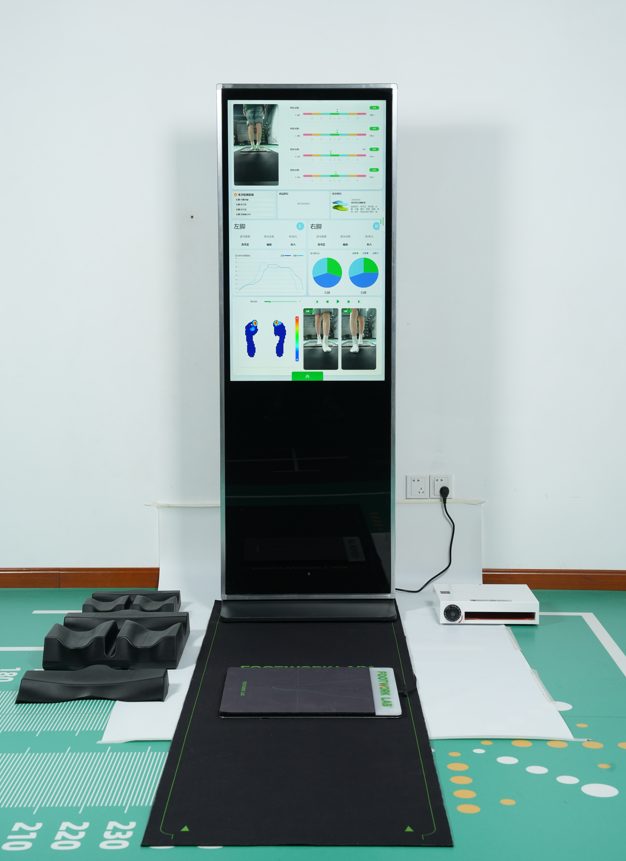
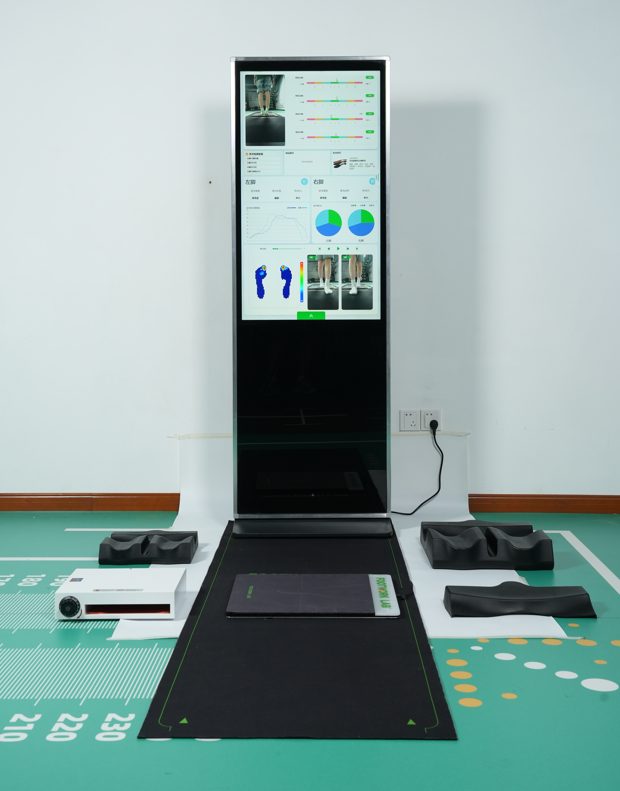
The third is change in the footwear. The record was taken against specific shoes; replace them and the equation changes, because the build or the absence of one lives inside the shoe as much as inside the foot. For a service using a pressure and force-line system, this is also the natural moment to mention what a re-record adds: a fresh capture under the new conditions, read against the old one. What the equipment produces remains measurement; the decision that follows remains the professional’s — which is exactly how the conditions clause should be worded to the customer, so the boundary stays as honest as the finding.
The return visit and the year after
The negative appointment is finished only when the follow-up is booked. Handled well, it becomes the start of the longest and most loyal relationships a service has: the customer who was told she needed nothing this year returns next year because the advice was real, the record was kept, and nobody tried to sell her anything she did not need. The re-check appointment itself should be light by design — history updated, footwear re-read, fresh passes compared with the old record, and the same three-beat close either way.
Comparison is where the value compounds. Two records a year apart, taken under conditions the sheet documents, show what changed and what did not: wear patterns in her actual shoes against the pressure record, load distribution shifts after a job change, the effect of the footwear swap she was advised to make. A service that can show a returning customer her own line moving — or staying steady — is offering something no walk-in fitting can match, and the customers who experience it rarely shop around again.
Log the negative cases with the same care as the built ones, and count them. The ratio of assessments to builds is a service’s honesty metric, and it is worth watching over time: a ratio that drifts toward “everyone gets a pair” is drifting toward the sales funnel, and a team that can discuss its own ratio openly is a team the negative findings can trust. The appointment that ends with no pair is not the exception to manage; it is the proof that the rest of the recommendations mean something.
Frequently asked questions
Can an assessment legitimately end with no insoles at all?
Yes, and a service that never reaches that outcome should look at its own process. Some feet, in appropriate footwear, for their actual working tasks, show load distribution that gives no grounds for a build. Detecting that is part of what the customer pays for. The negative finding should rest on the same evidence as a positive one — history, footwear read, static and dynamic records — and be written down with the same care.
How do you tell a customer who arrived expecting a pair that they need nothing?
Surface the possibility in the first five minutes, before any data exists, so the ending is never a surprise. At the close, use three beats: the finding in one plain sentence, the evidence shown and pointed to, and a written deliverable — advice she takes home even though no product does. Keep it under two minutes and avoid apologetic tone, which customers read as uncertainty.
What should the record sheet contain for a “no build” appointment?
Four things at minimum: the reason for the visit in the customer’s own words; the specific observations the conclusion rests on; what was advised instead, in writing; and a re-check interval with a date. Add the boundaries of the record — shoes, conditions, that day — so next year’s comparison is meaningful. Entries like “no issues found” are too vague to defend or compare later.
Does “nothing needs changing” mean the feet are healthy for good?
No, and the wording should never suggest it. A record is a snapshot of load distribution under recorded conditions — that floor, those shoes, that week. A change of job, a change of footwear or a new complaint opens a new question that the old finding does not answer. The close should name the conditions that would change the answer, and the sheet should carry a re-check date.
When would you re-record a customer who left with no pair?
When the conditions the record depended on change: a new job with different surfaces or loads, new symptoms the first visit never discussed, or a change of footwear. Each of those expires the old conclusion for the new question. Otherwise, a light annual re-check — history update, footwear re-read, fresh passes compared with the old record — keeps the baseline current and the relationship alive.
Is a pressure record alone enough to justify a negative finding?
No. The equipment produces measurements and images; “nothing needs changing” is an interpretation that belongs to the qualified professional, made with the full history, the footwear read and the customer’s own account in hand. The record supports the conclusion by making it specific and reviewable — the team should be able to name which observations any negative conclusion rests on.
Is it bad business to end appointments without selling anything?
Short-term revenue says yes; the diary says otherwise. Customers who were honestly told they needed nothing become the most credible advocates a service can have, and they return for the re-check because the advice was real. The ratio of assessments to builds is worth tracking openly — a ratio that drifts toward “everyone gets a pair” is a service turning into a sales funnel, and customers sense that before the team does.
What we would do next
If your service offers foot assessments, take two things into the week: agree the three-beat negative close as a team protocol and rehearse it once, and add a “conclusion rests on” line to your record sheet so every negative finding is written as specifics rather than a shrug. Then look back at last quarter’s appointments and count how many ended with no pair, and whether each of those has a re-check date on it. For the cases where a customer returns after a job change or a footwear swap, the craft of comparing an old record with a fresh capture under documented conditions is its own skill (Same Feet, One Year On: Comparing This Year’s Record With Last Year’s).
The equipment side of this is deliberately unglamorous: a pressure and force-line system such as the X3 foot pressure scanner exists to make the negative finding as specific as the positive one, and everything else is professional judgement. If you run assessments like these, here is the question we would put to you: what is your service’s ratio of appointments to pairs, and has anyone on the team ever audited the negative findings the way a colleague would audit a build? We ask because the honest answer to that question is the difference between an assessment service and a counter that sells insoles.
This article is intended for professional and educational reference. It is not medical advice. Foot assessment equipment produces measurements and images; clinical interpretation and any decision about care remain the responsibility of a qualified professional. Certification scope is limited to the documentation we hold: European Union certification and ISO quality system certification.