
Insoles sold for plantar fasciitis are one of the largest search categories in foot health and one of the least specified, which is a difficult combination for anyone buying a range. The label is a search term; the product behind it is a set of decisions about cushioning, heel geometry, cover material and wear context, and those decisions are what customers actually experience.
Retailers and clinics ordering these insoles face a predictable problem: the market expects a promise, the product can only offer a construction. The gap is usually closed with adjectives, and adjectives are what generate returns and awkward conversations at the counter.
This article sets out the construction decisions that matter, how to inspect a sample before committing to a range, and how to describe the product in language that survives scrutiny. We produce insoles at our own plant, so the production view below reflects what can be specified and checked rather than what can be claimed.
The label and the product
A search term describes what a customer is looking for, not what a factory builds. Under the plantar fasciitis label the market sells several different constructions: a soft full-length cushion, a firmer shell with a defined heel cup, a heel-only insert, and a night-wear device that is not an insole at all.
Those products behave differently in wear, and a range that carries only one of them is not a range; it is a single answer to a family of questions. Distributors who stock two or three constructions serve more customers with fewer complaints than those who stock one product with a strong claim.
The distinction matters commercially because the customer’s first question is comparative: which of these should I take. A shop that can answer with a construction difference — cushioning depth, heel stability, cover — sells a decision. A shop that answers with an adjective sells a hope.
So the first task in buying a range is to name the constructions, not the condition. That single change in vocabulary makes the rest of the range plan tractable.
It also helps to know which construction the customer is likely to be replacing. A person who has worn a soft gel insert for a year will judge a firmer shell as uncomfortable at first, and a shop that explains the difference in the first minute keeps the sale instead of processing a return.
Cushioning depth and what it changes
Cushioning depth decides how much the insert absorbs under load and how much it transmits. A deeper cushioning layer feels softer at first contact and compresses over a long day; a thinner layer feels firmer and holds its shape longer.
The choice interacts with body weight, shoe volume and hours of wear. A deep cushioning insert inside a shallow shoe lifts the heel out of the counter, which is the opposite of what a heel-sensitive customer needs. The shoe volume is therefore part of the specification, not an afterthought.
Depth also interacts with the cover. A soft cover over a firm base gives a gentle first contact with a defined structure underneath; a firm cover over a soft base transmits the base’s shape without the cushioning feel. Two products with similar descriptions can therefore feel entirely different.
When inspecting a sample, compress it with a thumb at the heel, the arch and the forefoot and note whether the response is uniform. Non-uniform response is not a defect; it is a design decision, and it should be a decision someone made rather than a consequence of material availability.
Cushioning depth also interacts with the shoe’s own midsole. A shoe with a soft, thick midsole already provides cushioning, and adding more under the foot can make the combination unstable. A firmer insert in a soft shoe is often a better pairing than a soft insert in a soft shoe.
There is also a seasonal dimension. Cushioning that feels right in a winter boot can feel excessive in a summer sandal, and a range that offers two depths covers both without doubling the shelf. Distributors in markets with strong seasons usually discover this in the first year.
Heel geometry and stability
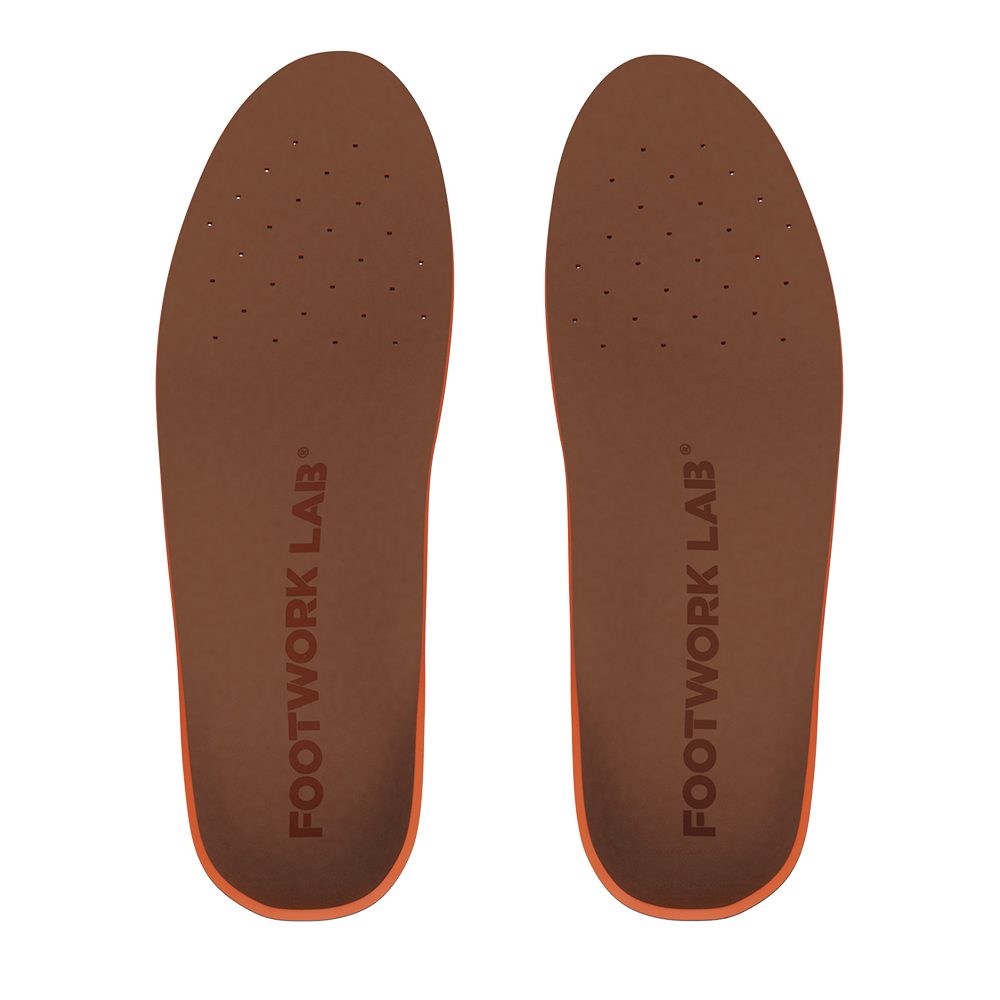
The heel cup is the part of the insert that most affects how stable the foot feels on standing. Depth, flare and the firmness of the cup’s wall decide whether the heel sits in a cradle or on a surface, and customers notice the difference immediately even when they cannot name it.
A deep, firm cup is useful where the shoe’s own counter is soft, because the insert supplies the stability the shoe lacks. A shallow cup suits a shoe with a firm counter, where an additional cup would compete with the shoe rather than complement it.
Heel-only inserts concentrate the design on this question. They fit more shoes, cost less, and answer a narrower brief. A range that includes a heel-only option alongside a full-length construction covers the customer who wants to keep their own footwear.
Inspection is straightforward: put the sample on a flat surface, press the heel down and watch whether the cup holds or collapses. A cup that collapses under thumb pressure will collapse under a heel, and no amount of cover material will change that.
Heel geometry also affects how the insert behaves in a shoe with a low heel counter. A deep cup in a low-backed shoe can sit above the counter and rub, which is a fitting problem that shows up as a complaint about the shoe rather than about the insert.
It is also worth checking how the cup behaves when the insert is warm. A cup that holds at room temperature and softens in a shoe worn all day is a cup that changes its behaviour by mid-afternoon, and customers describe that change as the insert wearing out rather than as a design property.
Cover material and the first thirty seconds
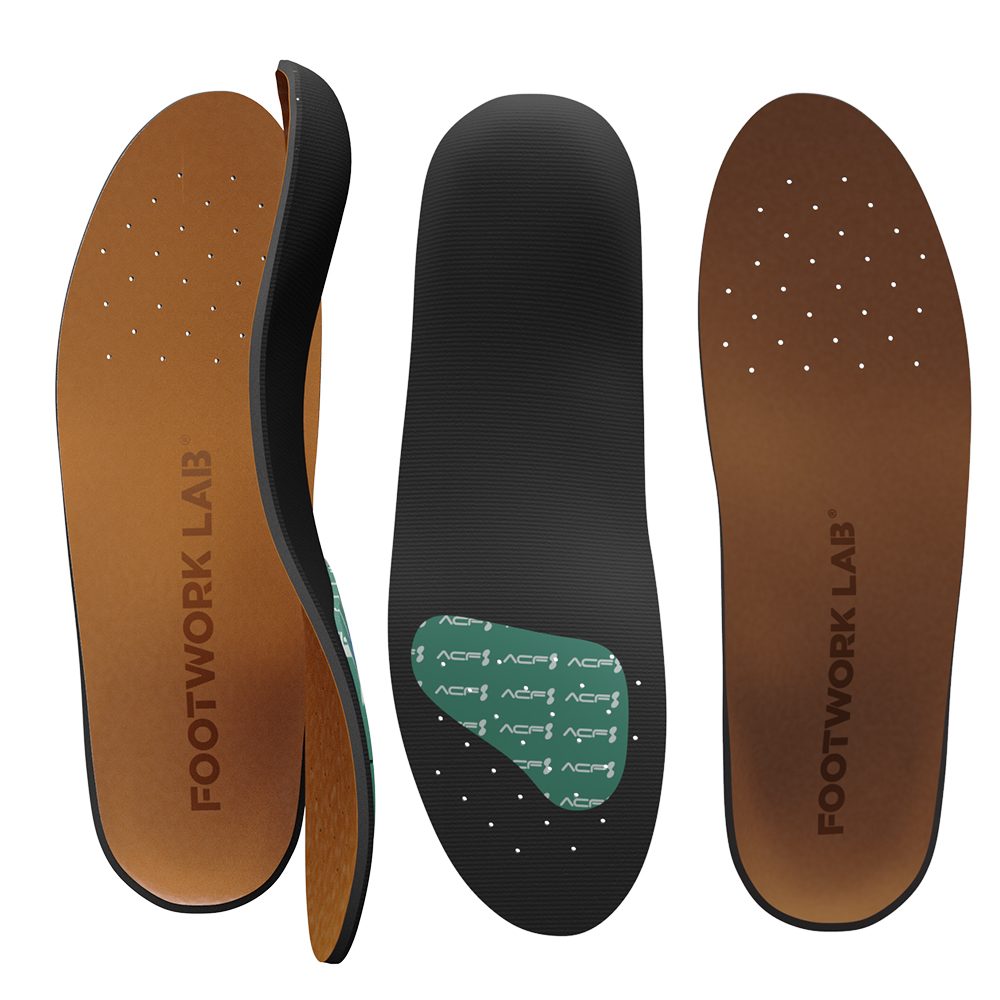
The cover is what the foot touches, and it decides the first thirty seconds of the experience. Fabric covers feel familiar and manage moisture; synthetic covers are durable and easy to clean; leather covers are durable and less forgiving of a bad fit underneath.
Covers also hide or reveal the geometry. A thick cover rounds off a defined arch region and softens a heel cup edge; a thin cover transmits both. Since the geometry is the product, the cover choice is a design decision with a visible consequence.
Durability follows wear context. A cover that survives a walking shoe for a season may fail in a work boot within weeks, not because the material is poor but because the loading is different. Selling the same cover into both contexts without saying so is how a range acquires a reputation it does not deserve.
Ask the factory which covers it recommends for which context, and ask for a written statement rather than a verbal one. A factory that produces at volume will have opinions; a reseller will have a catalogue.
It is worth asking whether the cover is replaceable. A cover that can be replaced extends the life of the construction and gives the shop a service to offer, which is a small commercial advantage that costs the factory very little.
There is also a cleaning question that affects returns. A cover that cannot be wiped will be judged as unhygienic in a clinic context, and a clinic that resells or lends products needs a cover that survives a simple cleaning routine.
Wear context: the field buyers skip
Hours per day, surface, activity and shoe type are the four fields that decide whether an insert performs. A pair worn eight hours on concrete and a pair worn forty minutes on a treadmill are different engineering briefs, and the same product rarely serves both well.
Replacement expectation belongs in the same conversation. Cushioning materials lose resilience with use, and a customer who expects two years from a product designed for one season is a customer who will complain about quality rather than about wear.
Stating replacement expectation openly is commercially sensible. It sets a repeat-purchase rhythm rather than a disappointment cycle, and it gives the shop a reason to see the customer again — which is the beginning of a programme rather than a transaction.
A range plan written around those five fields — hours, surface, activity, shoe, replacement — is more useful than a range plan written around conditions, because it matches how the customer actually uses the product.
A range plan should also state which context each product is not for. An insert designed for a walking shoe is not a work-boot insert, and saying so on the page prevents the return that would otherwise arrive in week three with a compressed forefoot and a frustrated customer.
It is worth writing the replacement expectation on the packaging rather than on a website. A customer who reads it at the point of purchase keeps the expectation, and a shop that prints it turns a future complaint into a future sale.
Inspecting a sample in ten minutes
Step one: measure the thickness at heel, arch and forefoot with a simple gauge or by comparison with a known sample, and write the three figures down. Consistency across a batch is what a factory controls; consistency within one pair is what a customer feels.
Step two: bend the insert along its length and across its width, and note where it resists. The resistance pattern is the design. If it resists nowhere, the insert is a cushion; if it resists sharply at one line, that line will be felt.
Step three: put it in the target shoe and stand on it with the shoe on a flat floor. Note whether the heel sits in the cup, whether the arch region contacts the foot, and whether the insert moves when you shift weight. Three observations, no equipment.
Step four: leave it in the shoe for a week of ordinary wear before ordering volume. Samples that survive a week in a real shoe tell you more than any laboratory description, and a factory that welcomes the test is a factory that expects to pass it.
A fifth step is worth adding: weigh the pair. Two inserts of the same construction should weigh within a small margin of each other, and a large difference suggests the material distribution is not controlled. It is a crude test and it catches crude errors.
A sixth step is worth adding for clinics: check whether the pair can be cleaned between clients without losing its cover. A product that cannot be cleaned twice a week will be replaced twice as often, whatever its construction.
Describing the product honestly
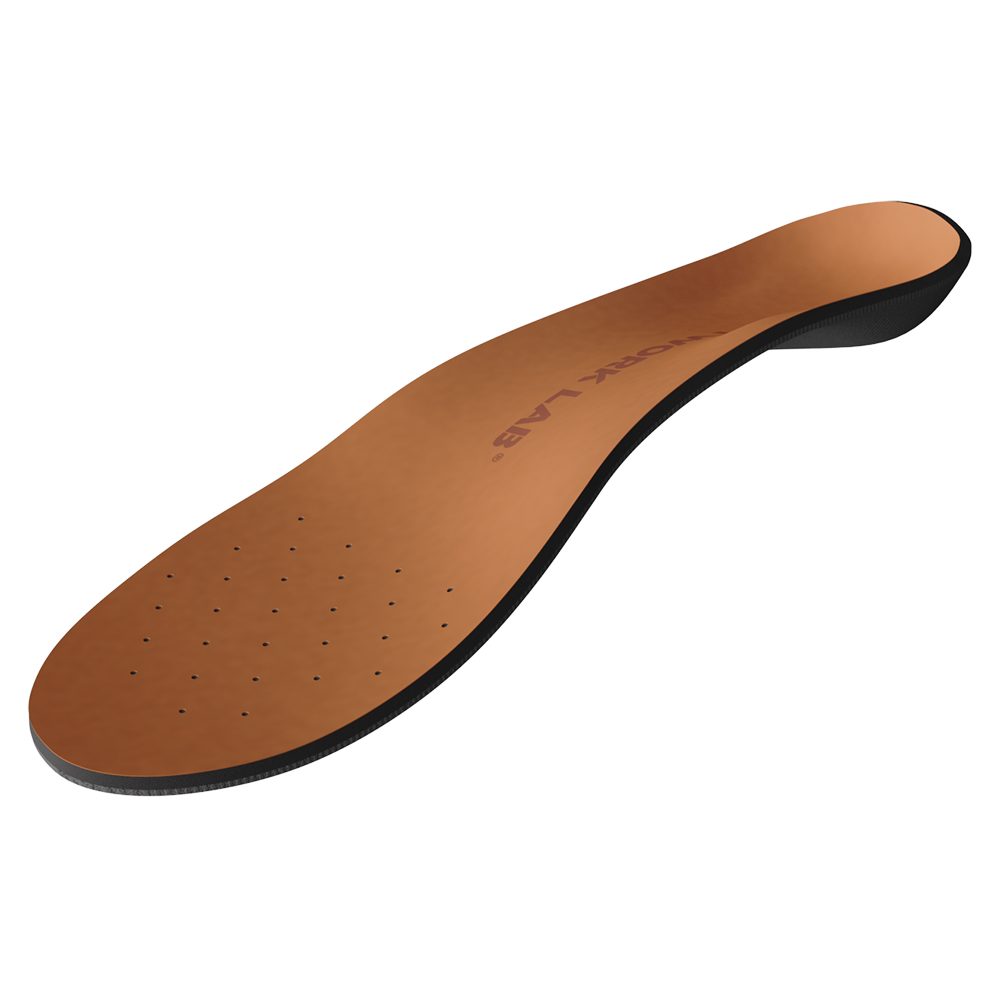
The description we would write for a retail page: this insert provides a defined heel cup, a cushioning layer under the whole foot, and a cover suited to daily wear in a walking shoe; it is available in a firmer and a softer construction, and it is not a medical device.
That paragraph does three things: it names the construction, it names the context, and it states a boundary. It gives the customer enough to choose between two products and enough to know when the product is not the answer.
It also protects the shop. Words that promise an outcome invite a complaint when the outcome does not arrive; words that describe a construction invite a conversation about which construction fits.
For a distributor, the same paragraph becomes the training note for staff, and the same fields become the order specification. One piece of language doing three jobs is a sign it was written carefully.
It is also worth training staff to ask one question before recommending: what do you wear most days? The answer determines the construction more reliably than the condition the customer arrived with, and it takes four seconds.
The paragraph should also name what the product is not: not a medical device, not a substitute for an assessment. That sentence is the difference between a page that survives scrutiny and one that has to be rewritten after a complaint.
Frequently asked questions
Do these insoles treat plantar fasciitis?
The products we produce are insoles: they provide cushioning, a heel cup and a defined arch region. They are not medical devices and they do not treat a condition. What a person needs is a professional assessment.
What should a buyer look for in a sample?
Thickness at three points, the resistance pattern when bent, whether the heel sits in the cup in the target shoe, and how the pair performs over a week of real wear.
Should we stock heel-only inserts as well as full-length?
Often yes. Heel-only inserts fit more footwear and answer a narrower brief; a range with both serves customers who want to keep their own shoes.
What is the minimum order for custom insoles?
Two hundred pairs, mixable across models and sizes, which allows a range to be built from several constructions at once.
Can we order samples before committing?
Yes, samples ship within three days. Testing in the target shoe under real wear is more informative than any specification sheet.
Can the insoles carry our brand?
Yes. Insoles are available as ODM and OEM, with the design following an agreed specification and the branding applied to your requirement.
What is your production capacity?
Roughly five hundred to a thousand pairs a day on our own line, which is what makes sampled checking of a batch meaningful.
What we would do next
Build the range around constructions rather than conditions, and inspect a sample in the shoe before ordering volume. The Insole Categories page lists the ranges we produce, and Our Factory covers how a specification becomes a batch.
The article on arch geometry explains the fields behind the arch region, which is where most of the difference between two insoles of the same depth actually sits.
This article is intended for professional and educational reference. It is not medical advice. Foot assessment equipment produces measurements and images; clinical interpretation and any decision about care remain the responsibility of a qualified professional. Certification scope is limited to the documentation we hold: European Union certification and ISO quality system certification.