
Podiatry testing, seen from the consulting room door, is a patient, a walk and a report. Seen from behind the equipment, it is three subsystems handing work to each other. A pressure sensing layer builds the plantar pressure map and its timeline. A camera captures posture and alignment frames — ankles, knees, pelvis. Analysis software then assembles the two into a record a professional can read. Every purchase question about a session traces back to one of the three.
Buyers rarely ask about subsystems directly; they ask what the report shows. The honest answer is that a report shows what the three layers captured, and no layer can compensate for another. A sharp pressure map without alignment frames explains the sole but not the stance above it. Alignment frames without a usable timeline describe posture but not load. And both streams, captured in the same session, are what let a professional read the sole and the stance side by side — the comparison the whole session exists to enable.
We manufacture custom orthotic insoles and the foot assessment systems that feed them, at our own plant in Ruichang, Jiangxi — a factory producing since 2018, from a company founded in 2014. This article describes podiatry testing from the production side: what each subsystem contributes, why synchronisation decides what the report can honestly say, where the session sequence comes from, and the checklist we suggest buyers carry into any supplier conversation, including the one with us.
Three subsystems, one session
A single podiatry testing session moves through three hands. The pressure sensing layer takes the sole of the foot: a plantar pressure map showing where load concentrated, and a timeline showing how that concentration travelled from heel strike through the standing phase to push-off. The camera layer takes everything above the sole: frames of the ankles, knees and pelvis during the same task, so alignment is on record alongside load. The analysis software takes both and assembles them into a single report the clinician can annotate, store and revisit. Three jobs, three components, one session.
The division of labour is worth understanding before purchase, because each layer fails differently. A pressure layer with weak timing resolution produces a map that looks right and a story that cannot be read. A camera without a defined capture routine produces frames too inconsistent to compare across visits. Software that cannot export the underlying record locks the session into a summary nobody can question later. A buyer who knows what each subsystem contributes can ask specific questions instead of general ones, and specific questions are what separate a working room from a display piece.
We build all three subsystems at our own plant, which is why we describe them together. The company was founded in 2014, and the Ruichang factory in Jiangxi began production in 2018; since then the assessment systems and the custom insole line have shared one specification discipline. The same team designs, assembles and tests every unit, so what follows comes from the bench. Exhibiting at the Canton Fair and at shows in Dubai, Vietnam, Brazil and Hong Kong has meant explaining the three-layer structure to buyers from many markets, and those conversations are the source of the checklist this article closes with.
The pressure sensing layer: map and timeline
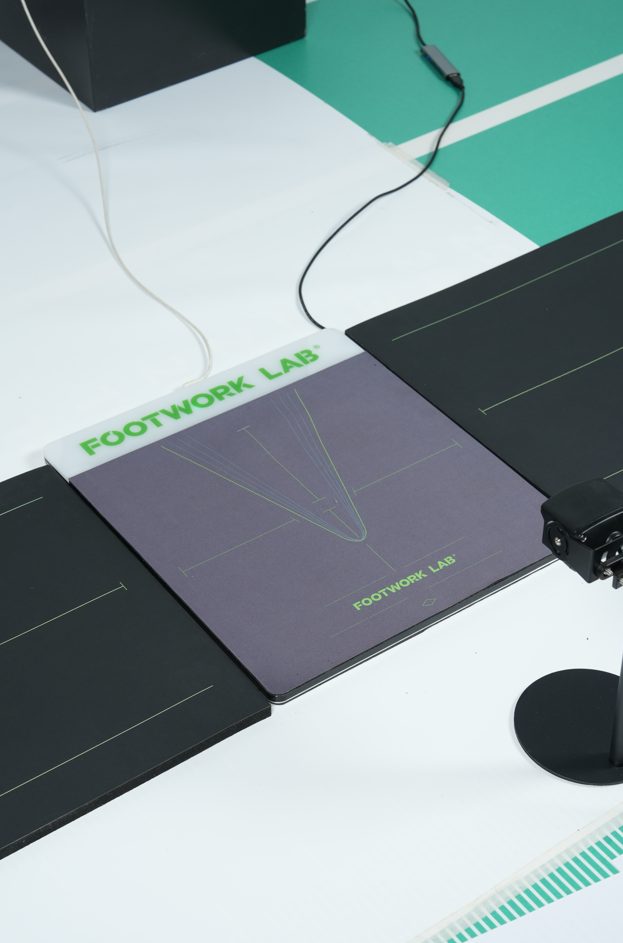
The plantar pressure map is the layer most people picture first. Standing on the sensing surface, a foot produces a distribution: how load shares between heel, midfoot and forefoot, how the left foot compares with the right, and where any concentration sits under the arch or the metatarsal region. The map is intuitive enough that patients read it themselves, which makes it a useful consultation tool as well as a measurement one. Captured in seconds, it belongs at the start of the session, before fatigue or instruction changes how the person stands. It is the fastest record of the day and the easiest to schedule.
The timeline is the quieter half of the record and the more informative one for gait questions. It reports how load moved through each step: how quickly weight transferred from heel to forefoot, how long each foot carried the standing phase, and how the left-right split behaved across a walk of several steps. A static map answers where; the timeline answers when and how fast. Rooms that capture only the standing record routinely discover that the referral question was about walking, and the session has to be repeated. A walking capability is the other half of the question.
What the pressure layer does not do deserves equal space in a buying conversation. It records where load landed during a task; it does not establish why the foot distributes load that way, and it does not attach a clinical conclusion to the pattern. Reading the record against a patient’s history, mobility and examination findings is the professional’s work, and our reports are structured to hand that work over cleanly — measurements labelled as measurements, with space for the professional’s notes beside them rather than conclusions printed in their place. Buyers should read a sample report before they read a specification sheet.
The camera layer: posture and alignment frames
Above the sensing surface, the camera records what the sole cannot: how the ankles line up under the shins, whether the knees track inward or outward during the task, and how the pelvis sits while load moves underneath. These alignment frames are captured in the same session as the pressure data, which is the whole point. A foot rarely misbehaves alone; a load pattern that looks unusual on the map often has a visible counterpart in the stance above it, and a professional who sees both writes a better-informed note than one working from a curve alone.
For the buyer, the questions to ask are practical rather than technical. How are the frames captured — during the walking task itself, or as a separate posed step? Are they stored with the session record, so a review visit twelve months later shows the same views? Are they presented alongside the pressure data in one report, or exported separately and compared by hand? Suppliers who designed the camera capture and the pressure capture together answer these fluently; suppliers who assembled the two from different origins tend to answer them defensively. Both answers are information, and only one of them is reassuring.
One boundary keeps the camera layer honest. The frames document alignment during a recorded task; they do not grade posture, and they do not attach a conclusion about the person standing there. The vocabulary matters when a clinic explains the session to its own patients: the camera shows how the body lined up during the test, in the same way the pressure map shows where load landed. Both are records. The professional decides what the records mean, and a device brochure that promises more than documentation should be read twice. The same discipline applies to the vocabulary a clinic inherits.
The analysis software: where a session becomes a report
The software is the subsystem buyers see most and ask about least, which is backwards. It is where the pressure map, the timeline and the alignment frames become one document: synthesised into a report that carries the session forward. A capable report does three things — it presents the two data streams side by side, it keeps the underlying record retrievable rather than collapsing everything into a summary image, and it lays the measurements out in language a clinic’s staff can read without engineering training. Everything else in the session exists to feed this document.
Export capability is the field to test before the purchase order, not after. Ask the supplier to demonstrate exporting a completed session: what format leaves the system, whether the timeline data travels with it, and whether the exported file can be reopened alongside later sessions for comparison. A record that exports cleanly makes the clinic independent — free to store, back up, print or share with a second professional. A record trapped inside a proprietary viewer makes the clinic dependent, and the dependence usually surfaces during a follow-up that needs the original data. The question costs nothing to ask and weeks to regret skipping.
Software also ages differently from hardware. Sensor surfaces and cameras are physical and change little; the analysis layer receives refinements for as long as the supplier maintains it. That is why our connected units receive over-the-air updates, and why remote assistance sits inside the support package rather than behind a per-visit charge. A buyer should ask how long a software generation is maintained and what an update costs, because the answer determines whether the room’s capability in year three still resembles the one demonstrated at the trade fair. Maintenance terms belong in the quotation, not in a footnote.
Why the same session matters: synchronisation and sequencing
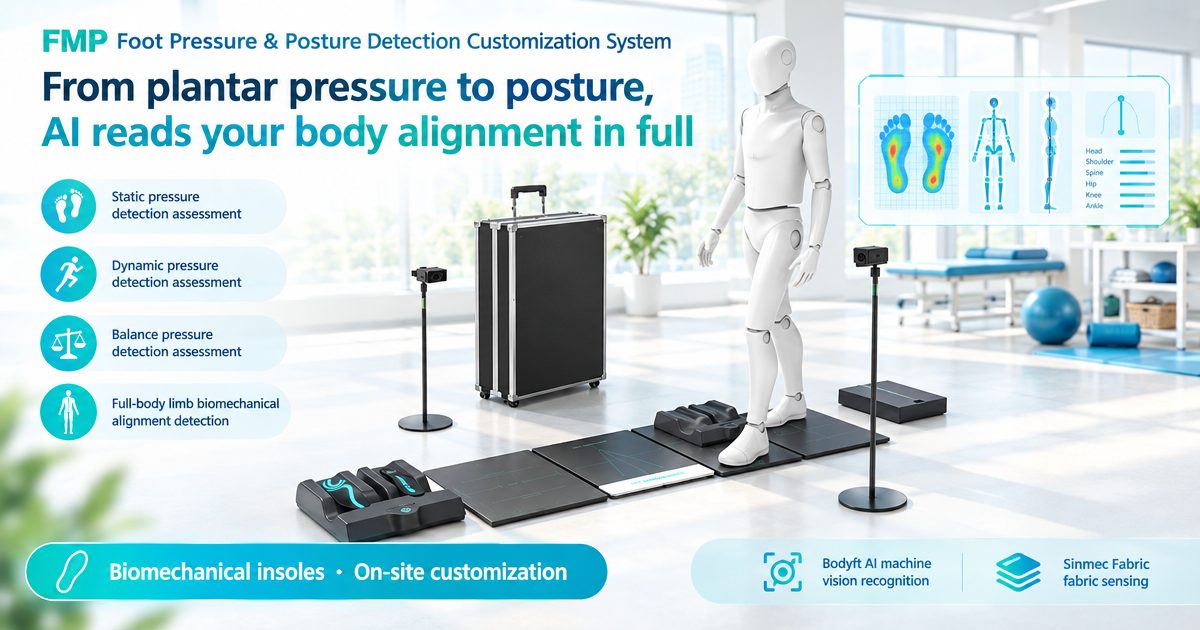
Two records captured together can be read against each other; two records captured apart cannot. That single sentence is the strongest argument for a system designed as one instrument rather than assembled from parts. When the alignment frames and the pressure timeline come from the same walk, a professional can point at a moment in the step and see both what the sole was doing and how the body was lined up while it did it. When the two come from different days, the comparison is a guess wearing the clothing of evidence. Synchronisation is the feature to verify, not to assume.
Sequencing inside the session follows a pattern most rooms settle on quickly. Intake and history first, since the professional needs context the device cannot supply. The static standing record next, because it takes seconds and anchors the map. Then the walking record with camera capture running alongside, which takes minutes and answers the questions the standing record raised. The report is reviewed with the patient while the session is still fresh. Rooms that invent their own order eventually converge on something similar, because the sequence follows the information rather than the hardware. Each step feeds the one that follows.
For purchasers planning a room rather than a machine, sequencing has a floor-plan consequence. The walking capture needs clear length; the standing capture needs little; the review conversation needs a screen the patient can see. A supplier who has equipped rooms, not only shipped boxes, will discuss this layout without being asked. We ship systems after seven days of factory testing, and the testing includes the capture sequence end to end, because a subsystem that performs alone but fails in sequence is the failure mode buyers report most often. The sequence rehearsal is also where staff training begins, before opening day.
A procurement checklist for a podiatry testing system
The checklist starts with the report. Confirm the system exports the underlying record, not only the summary page, and confirm the export was demonstrated rather than described. Confirm synchronisation in the same spirit: ask how the pressure stream and the camera frames stay aligned during a walking capture, and ask to see the side-by-side view live. These two answers eliminate more disappointment than any comparison of technical tables, because they determine whether the session you run in month twelve resembles the demonstration that sold you the system. No other two answers on the list carry that weight.
After-sales is the second block, and it should be quoted in writing. Our structure is a dedicated WhatsApp group per customer, with an engineer on the other end rather than a call-centre script, remote assistance for software questions, and over-the-air updates for connected units. Every system ships after seven days of factory testing and carries a twelve-month warranty. Buyers comparing suppliers should put their own structure next to it: who answers, how fast, at what cost, and whether the answer comes from someone who can open the software. Structured support terms keep a room running between service visits.
Qualifications and price structure close the list. Our equipment carries European Union certification and our production runs under an ISO quality system certification; buyers should verify whatever certificates any supplier presents, including ours. On price, the structured questions matter more than any figure quoted in haste: what the base system includes, what arrives as paid software options, what a service year costs, and what happens when a component fails out of warranty. A supplier who answers all four in writing can be compared like for like. A supplier who answers none of them is quoting a box.
The boundary: records from the device, interpretation from the professional
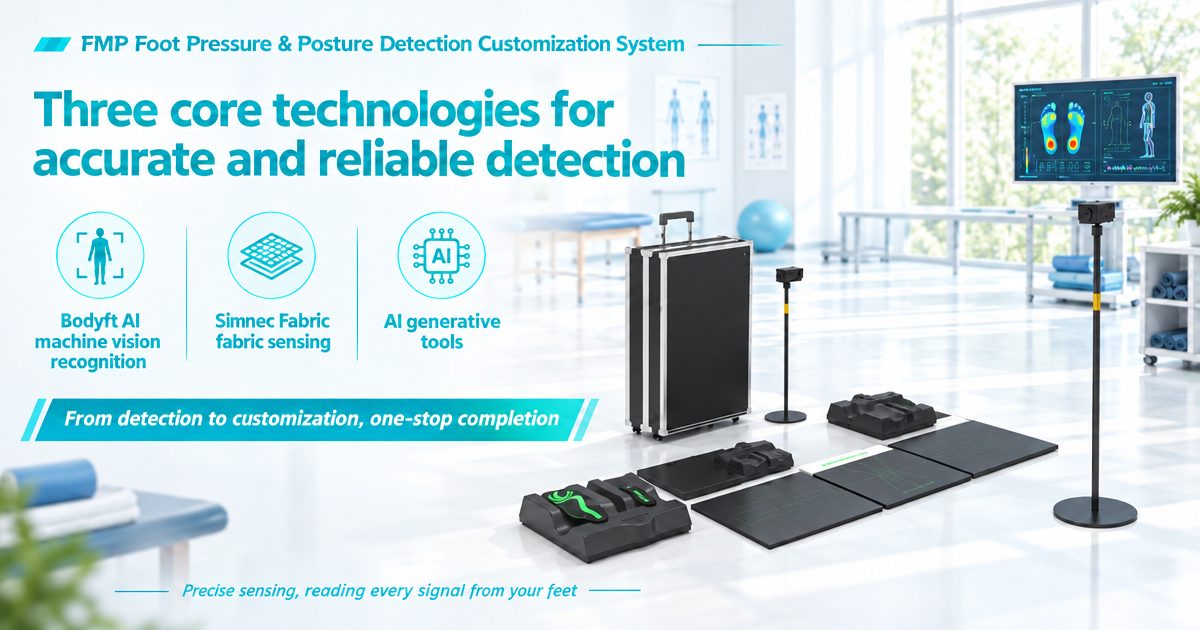
Every claim in this article rests on one division of labour: the equipment produces records, and the professional interprets them. The pressure layer measures load. The camera documents alignment. The software assembles both into a report. None of the three attaches a clinical conclusion to a patient, and none should. Where a supplier’s brochure promises that the machine will reach conclusions, the buyer should read the promise as a sales posture rather than a specification, because the conclusion in a clinical setting can only come from the professional who examined the person. That is a structural fact, not a modesty.
The boundary protects the buyer as much as the patient. A clinic that presents the session as a record — here is where load landed, here is how you lined up — sets expectations the equipment can meet. A clinic that lets a machine speak clinically inherits every disappointment the machine cannot prevent. Retailers introducing assessment into a shoe-fitting context find the same rule: the record supports the fitting conversation, it does not replace the professional judgement behind it, and saying so openly builds the trust that repeat business runs on. The boundary also keeps marketing claims inside what the record can show.
We state the boundary in quotations and manuals because it costs us nothing and protects both sides. We are a manufacturer of assessment equipment and custom orthotic insoles; we produce to specifications and we do not make clinical judgements about the feet behind them. Buyers who want the same sentence in their own patient-facing materials are welcome to it. A market where devices document and professionals decide is a market with fewer disputes, and every dispute a session avoids pays for more than any feature on a comparison table. It is also the feature buyers thank themselves for checking.
Frequently asked questions
Are you a factory or a trading company?
We are the manufacturer. The company was founded in 2014 and our own plant in Ruichang, Jiangxi began production in 2018, building both the assessment systems and the custom insole line. Buying factory-direct means quotations, specifications and after-sales all come from the team that assembles the equipment, and a technical question reaches an engineer rather than a middleman.
What is the minimum order for the equipment?
One unit. We build assessment systems for clinics, rehabilitation centres and retailers who often start with a single room, so there is no multi-unit threshold on the machine side. Distributors planning several rooms can order progressively and keep software, support and spare-part arrangements consistent across the fleet through the same dedicated channel.
What support comes after purchase?
A dedicated WhatsApp group for your account, staffed by an engineer who can answer capture and software questions directly, plus remote assistance when a session needs hands-on help. Connected units receive over-the-air software updates. Support is part of the written quotation rather than a verbal promise made at the demonstration, so the terms survive the sale.
How is the system checked before shipment?
Every unit runs seven days of factory testing before it leaves Ruichang, covering the full capture sequence end to end — standing record, walking record, camera capture and report generation. The twelve-month warranty starts from shipment, and the testing record travels with the machine so you know exactly what was verified before it reached your room.
Can the reports be exported?
Yes. The report exports the underlying record as well as the summary view, so review visits can be compared against the original session and records can be stored, backed up or shared with a second professional. Ask for an export demonstration during your quotation — it is the fastest way to judge any supplier’s software honestly.
Are the pressure and posture records synchronised?
Yes. The pressure stream and the camera frames are captured in the same session and presented side by side in one report. This is a deliberate design decision rather than an accessory: records captured together can be compared, and the comparison between load and alignment is what a podiatry session exists to enable in the first place.
Do you also manufacture the insoles?
Yes, in the same factory. Custom orthotic insoles are produced as ODM and OEM with a minimum of two hundred pairs, mixed freely across models and sizes. Samples ship within three days of agreement, and daily capacity runs from five hundred up to around a thousand pairs, which supports seasonal programmes as well as clinic-level reorders.
What we would do next
Tell us how your sessions run — static, dynamic, or both — and we will return a proposal that answers the export and synchronisation questions in writing, alongside after-sales, testing and warranty terms. Our FAQ page lists minimums, transit times and support in plain figures, and our contact page routes your enquiry to the team that builds the systems.
If the insole side of the practice is the gap, our assessment records feed written insole briefs directly, and the custom line produces to specification as ODM and OEM. Ask for the specification template through the contact page and keep it — it works with any workshop you shortlist, not only with ours.
This article is intended for professional and educational reference. It is not medical advice. Foot assessment equipment produces measurements and images; clinical interpretation and any decision about care remain the responsibility of a qualified professional. Certification scope is limited to the documentation we hold: European Union certification and ISO quality system certification.