
Adding a capture device to an insole business changes the front of the workflow and almost nothing at the back. That sentence is the most useful thing we can say to a clinic or a retailer considering a scanner, because the expectation on the other side of it is usually reversed. Buyers imagine that the device will shorten production, reduce remakes, and make the finished pair better. What it actually does is make the conversation with the customer concrete and the handover to production written down.
Both are worth paying for. A customer who sees their own load picture and posture image on a screen engages differently from one who is asked to stand on a sheet of paper, and a specification written from a record is more complete than one written from memory. But neither of those is a production improvement, and a business case built on the wrong half of the claim will disappoint in year one.
We build both sides: the assessment systems that produce the record and the insoles built to a specification in our own plant in Ruichang. That position makes the division obvious to us — capture informs the decision, the specification carries it, the production line executes it — and it is the division we would encourage any buyer to test before spending.
What changes at the front of the business
The first change is the conversation. A customer who has seen a pressure distribution and an alignment image has a shared object to discuss, and the discussion moves from a description of discomfort to a description of load. That shift is worth a great deal in a retail setting, where the alternative is a sales conversation based on shoe wear patterns and guesswork.
The second change is the record. A session that produces a document changes what a business can claim about its own service. Instead of ‘we fit insoles’, the offer becomes ‘we assess, record and fit’, and the record is something a customer can be given, compared next season, or sent to a colleague. That is a different product, and it prices differently.
The third change is speed of qualification. A scan can tell a fitter within minutes whether a customer is a candidate for a stock product, a specification product, or a referral. That triage is the most commercially valuable thing a capture device does in a retail setting, and it is almost never mentioned in listings, which tend to describe the device rather than the decision.
The fourth change is marketing. A clinic or shop that can show a session, a report and a follow-up comparison has content that a competitor selling from a shelf cannot produce. That is a slow benefit and a real one, particularly in a market where insole retailing is otherwise indistinguishable between shops.
What does not change at the front is the need for a person. The device produces a record; the professional produces the recommendation. Businesses that install a scanner and expect it to sell for them usually find that the scanner becomes a fixture with a dust cover, while the shops that treat it as a conversation tool use it every day.
What does not change at the back
Production does not speed up because a record exists. A specification still has to be written, a shell still has to be formed, a cover still has to be bonded, and a pair still has to be inspected. The record shortens the specification conversation and reduces the number of times a decision is remade, which is a real saving, but it is measured in hours per order rather than in throughput.
Remakes do not disappear either. A better specification reduces the frequency of a particular kind of remake — the pair built to a vague request — but it does not remove the ones caused by a material lot, a forming setting or a finishing decision. Buyers who expect the device to eliminate remakes will judge it as a failure when the first one arrives, which is unfair to the device and unhelpful to the business.
Margin does not change by itself. The device adds a cost line: the unit, the training, the time per session, the software habit. Those have to be recovered through a better conversion rate, a higher-priced service, or a specification product that replaces a stock product. Businesses that install a scanner without deciding which of those three pays for it tend to describe the purchase as a cost rather than an investment.
Staffing does not change either, and this is the most common blind spot. Someone has to run the session, save the record, write the observation and follow up. In a busy shop that someone is usually the person who was already doing three things. Unless the workflow is designed to fit the existing rhythm, the device will be used on quiet days only.
The honest summary is that the device moves work rather than removing it. It moves the specification conversation earlier, where it is cheaper, and it moves the customer relationship onto a record, where it is more durable. Both moves are valuable and neither is automatic.
The specification is where the gain lands
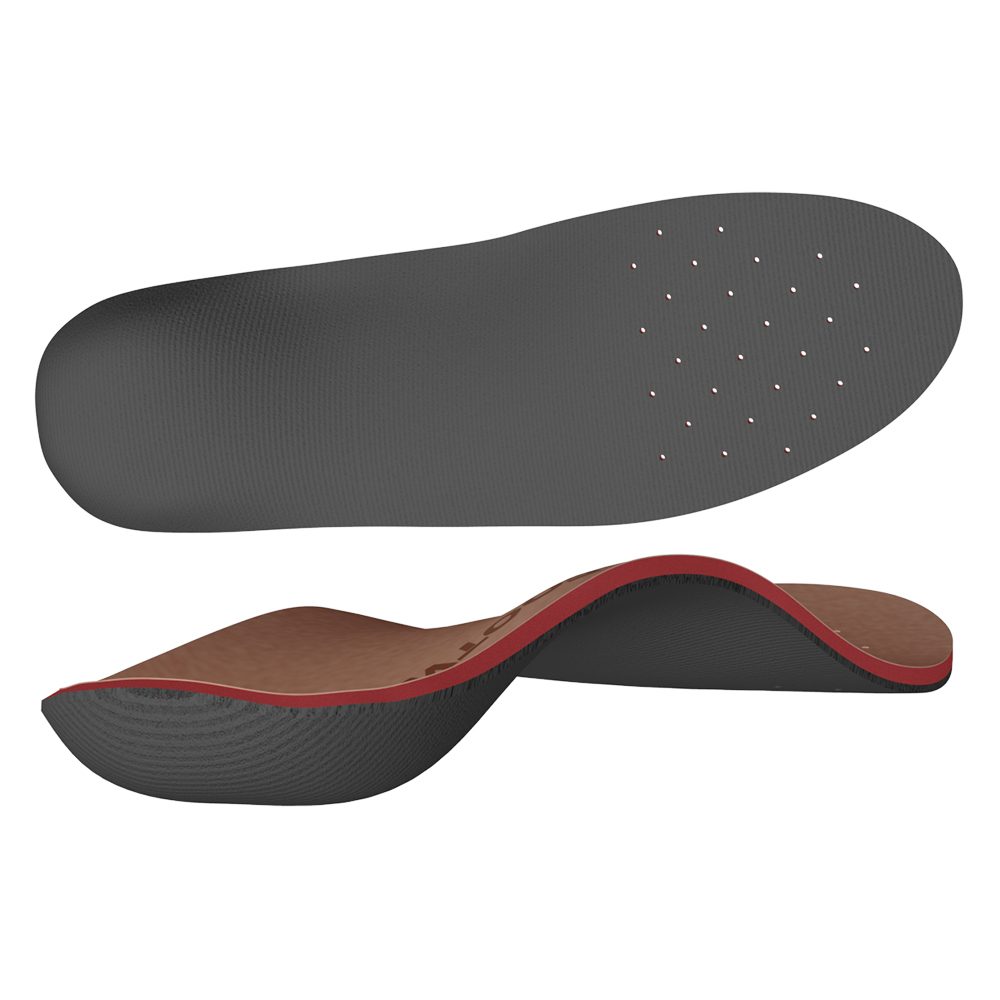
A specification is only as good as its fields, and the fields come from the assessment. Shell stiffness family, thickness at named regions, arch height family, heel cup depth, cover material and shoe context: each is a decision, and each can be made better with a record in front of the person making it. That is where the capture pays back, quietly, order after order.
The gain is easiest to see in the shoe context field. A record that includes a photograph of the customer’s own shoe, taken during the session, answers a question that clinics otherwise resolve by asking a customer to describe footwear. Factories receive specifications with that photograph attached far too rarely, and the pairs built from them come back far less often.
The second gain is in the observation field. A record can capture what the operator noticed — a worn heel, an asymmetrical stance, a hesitation when asked to stand still — and those observations are what make a specification specific rather than generic. Software with an empty free-text box and no prompt will produce empty boxes; software with a short prompt list produces notes.
The third gain is in the repeat. A specification written from a record can be amended next season against a new record, and the amendment is a decision rather than a guess. That is how a programme improves over three or four cycles, and it is the mechanism behind almost every well-fitting range we produce.
Costs, and who recovers them
The device is the visible cost. Training, session time, software habit and the occasional re-capture are the invisible ones, and in most businesses they exceed the unit cost in the first year. A realistic business case puts all of them in the same column and then asks how many additional pairs, or additional services, would recover the total.
For a clinic, the recovery usually comes through a service fee attached to the assessment, which is defensible because a record is produced and time was spent. For a retailer, it comes through conversion: the proportion of customers who buy an insole after a scan rather than after a fitting conversation. For a distributor, it comes through being able to support the accounts that buy the device, which is a different business model again.
The mistake is to plan recovery through the device’s novelty. Novelty attracts the first fifty customers and then stops, which is fine for a launch and useless for a business case. A device that is still being used in year three is being used because it is embedded in a routine, not because it is interesting.
We would rather a buyer take a small configuration and use it daily than take a large one and use it monthly. That preference is not commercial modesty; it is what we see in the after-sales channel, where the buyers who ask support questions about workflow are the ones still using the equipment two years later.
Choosing the configuration
A static capture with a posture image is enough for most insole businesses. It needs little space, it takes minutes, and it produces a record that supports a specification conversation. Dynamic capture adds walking sequences, which are valuable where the business documents change over time and less valuable where the question is a single fitting.
The camera layer is worth having where posture language is part of the offer, because it gives the session a second image that a customer can understand without training. It is not worth having where the business only ever discusses load, because an unused capability is a cost with no return.
Buyers should also decide whether the device will produce the specification or merely inform it. Our systems inform it: the record supports a written specification that our receiving desk can execute. Some businesses want the software to output a design file directly; that is a different product category, and mixing the two expectations before an order is the fastest way to a disappointment.
The last configuration decision is support. A unit in a shop with no technical staff needs a support channel that answers quickly and can see the screen. A unit in a clinic with a technician may need less. Our answer to both is the same group channel with engineers in it, and buyers should confirm the arrangement for their own site rather than assuming it.
What to ask before signing
Ask what the output file contains, and ask to see one produced from a real capture on your own floor. Ask which parts of a specification the software can populate and which the operator must type. Ask how a session is found a year later, and in what format a record leaves the system. Ask what happens when a capture is poor, and who notices.
Then ask the commercial questions in the same list: minimum order for the device, warranty terms, what is included in installation and training, and what is chargeable afterwards. Ours are one unit minimum, twelve months against non-human damage with free parts, seven days of testing before dispatch, training at installation, and support through a dedicated group with remote assistance and over-the-air updates where connected.
Buyers comparing a device from one supplier with insoles from another should check the handover. A record that cannot be turned into a specification is a marketing artifact. A specification that cannot be read by the factory is a delay. The two ends have to meet, and asking each supplier what they need from the other is the quickest way to find out whether they will.
Where the scanner does not belong
A scanner does not belong in a business that has not decided what it will do with the record. If the answer to ‘what happens after the scan’ is vague, the device will become a demonstration tool and then a storage problem. The order should follow the workflow, not the other way around.
It does not belong in a business that cannot give it a routine. Fifteen minutes a session, three sessions a day, five days a week is a habit; one session whenever someone asks is a novelty. Buyers should be honest about which pattern their shop or clinic can sustain before choosing a configuration.
And it does not belong in a business that expects it to replace judgement. The device records; the professional decides. Every listing that implies otherwise is selling something the hardware cannot deliver, and the businesses that buy on that promise are the ones that end up disappointed with a product that was, in fact, working as designed.
One more test is worth running before an order: use the device on a colleague and ask them what they understood. If a person who was not in the room can explain what the screen showed, the record is doing its job. If they cannot, the session is producing images rather than information.
Frequently asked questions
Will a scanner reduce my remake rate?
It reduces one kind of remake — the pair built to a vague request — because the specification becomes more specific. It does not remove remakes caused by material lots, forming settings or finishing decisions. A reduction, not an elimination, is the realistic expectation.
Do I need dynamic capture for an insole business?
Most insole businesses do not. A static capture with a posture image supports a specification conversation and needs little space. Dynamic capture matters where the business documents change over time and can sustain a repeatable walking protocol.
Can the software produce a design file directly?
Our systems produce a record that informs a written specification; they do not output a design file. Buyers who need that should confirm it with the supplier before ordering, because it is a different product category.
What is the minimum order for a device?
One unit. Equipment ships from the same line as larger orders, after seven days of testing before dispatch. The insole minimum is separate, at two hundred pairs mixed across models and sizes.
What support comes with the equipment?
Installation includes operator training. Support runs through a dedicated WhatsApp group with our engineers, with remote assistance and over-the-air updates where the unit is connected. The warranty is twelve months against non-human damage with free parts.
Can a record be sent to a colleague or a referring clinician?
Yes, and the export format matters. Ask to see how a record leaves the system before purchase; clinics that refer patients onward need to send a record without sending a login.
Is the equipment certified?
Our plant operates under ISO quality system certification, and insoles for European Union destinations carry our European Union certification. We describe the documentation we hold and do not extend its scope.
What we would do next
If you want to see whether a record would change your insole business, send us your current fitting process and the number of sessions you could sustain in a week through our contact page. We will answer with the smallest configuration that fits it.
Our insole categories page shows what a specification becomes in production, and the FAQ page carries minimums, warranty and transit details.
This article is intended for professional and educational reference. It is not medical advice. Foot assessment equipment produces measurements and images; clinical interpretation and any decision about care remain the responsibility of a qualified professional. Certification scope is limited to the documentation we hold: European Union certification and ISO quality system certification.